
Translated material
Ruthenius in the Urals: myth or catastrophe?
Why, despite the high -profile statements of ecologists, the source of radioactive emission was not found, and whether Mayak was involved in it
The story with the release of Rutheneniya-106 (RU-106) in Europe began in late September-early October. The presence of this radionuclide in the air was recorded in Germany, France, Austria and in three dozen countries of Europe. On October 6, the French IRSN Institute published RU-106 measurements at several European meteorological stations at the end of September. The discovered levels are much lower than permissible values and did not pose a threat to the life and health of people. Later, the International Atomic Energy Agency (IAEA) presented the results of measurements in 36 countries of Europe. The concentrations of the RU-106 reached the greatest values in Romania (145 MBK/m 3 ) and Italy (54 MBK/m 3 ), but were much lower than dangerous levels.
French scientists have simulated the release taking into account the available data and meteorological conditions and made the assumption that the most likely emission area could be somewhere in the Southern Urals or next to it. Later, the area of possible release was expanded to Kazakhstan.
RU-106 is an artificial beta-emitting radionuclide with a half-life period of about a year. He is not in nature. It is formed in the nuclear fuel of the reactors when the collapse of uranium nuclei. It is used for medical purposes for the treatment of cancer, as graduation sources and as an element of nutrition of some cosmic satellites.
In response to accusations of emission on the territory of Russia, Rosatom Corporation in an official statement of October 11 stated that there were no accidents and leaks of radiation at Russian nuclear facilities at the indicated time and that in Russia RU-106 was also found in the air at one of the weather stations near St. Petersburg in an insignificant concentration of only 0.115 MBK/m 3 , which is lower than the permissible significance At 40 thousand times. However, the question of the source of the release remained open.
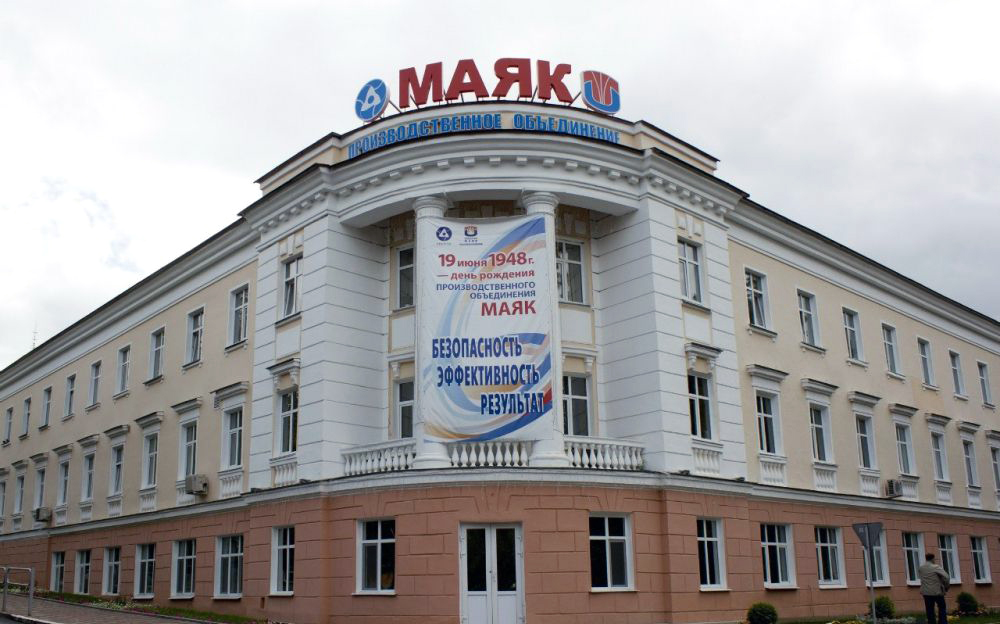
A few days later, the capital of the Middle Urals Yekaterinburg was overwhelmed by a wave of panic in social networks and messengers about the alleged accident at the Mayak plant and a nuclear cloud approaching the city. The Mayak production association is located in the neighboring Chelyabinsk region, in the very Southern Urals, which the French indicate, and is the largest Russian nuclear fuel processing enterprise.
Witting the situation, the Chelyabinsk authorities represented by the vice-governor of the region Oleg Klimov reported on October 19 that the rutheniya was discovered, but it is 200 times less than the norm, so he does not pose a threat. But where did he come from - you still need to figure it out.
With the filing of French experts in the public consciousness on Mayak, he became the main suspect in the emergency emission of ruthenium. The plant is really sadly known for serious radiation accidents in the past
On November 20, the story flared up again when Greenpeace spoke in the media about the report of Rosgidomet (lying in the public domain since October) about observations of the previous month, which confirmed the presence of RU-106 in the air at two measuring stations near Mayak in the last week of September. In the village of Argayash, 46 MBK/m 3 were recorded, and in the village of Novogorni-18 MBK/m 3 RU-106. These values are almost 1000 times more than conventional observed levels, but hundreds of times lower than the permissible RU-106 activity according to the NRB-99/2009-the main document regulating the permissible levels of radionuclides in the environment. According to the norms, the permissible content of the RU-106 in the air is 4400 MBK/m 3 , that is, 100 times more than it is recorded. Therefore, the data of Roshydromet only confirm the information voiced by Oleg Klimov in the media and not hidden from anyone all this time.
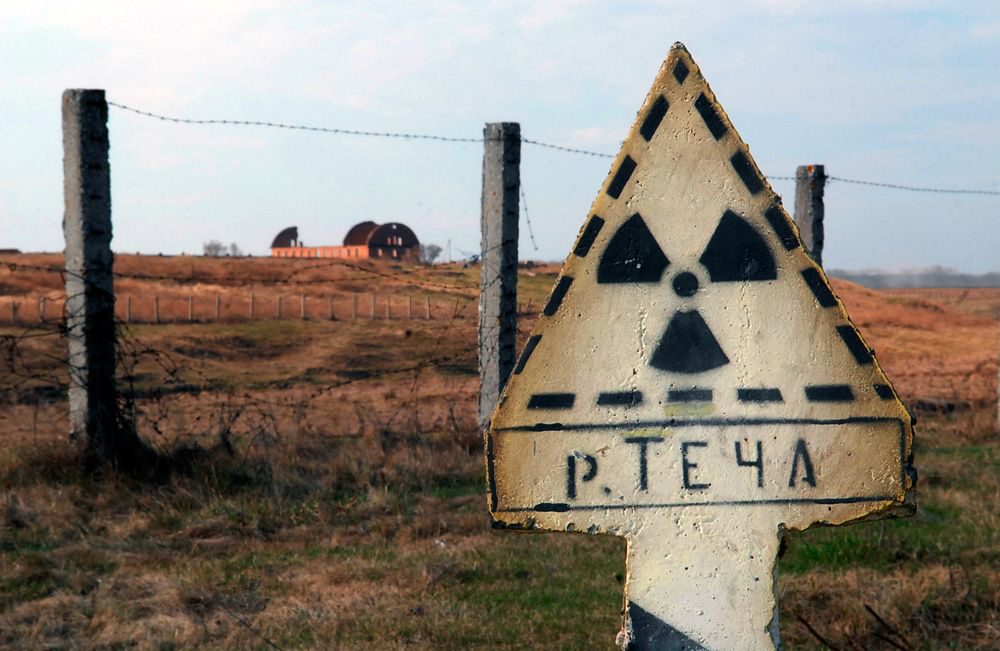
With the filing of French experts in the public consciousness on Mayak, he became the main suspect in the emergency emission of ruthenium. The plant is really sadly known for serious radiation accidents in the past. In the production of plutonium for nuclear weapons at the plant since the early 1950s, radioactive waste was dumped into the Techa River, and the most serious radiation accident in the Dolynobyl era occurred here-a capacity with radioactive waste exploded and radionuclides were released in the large territory of the Urals and Siberia. Therefore, folk fears about the “lighthouse” are clear, in any incomprehensible situation with radiation, he acts as a regular suspect, regardless of how just these suspicions are.
However, there are a number of points that allow you to doubt the version of the Mayak involvement. The plant really processes irrigated fuel in which there is RU-106. However, in the event of any accident and depressurization of equipment in the release, not only ruthenes, but also a large number of other fuel isotopes, much more dangerous-cesium, strontium, plutonium. But they are not in the emission. For the same reason, the Magate itself excludes an accident at the nuclear power plant as a possible source of emission.
In addition, according to the Roshydromet, the RU-106 concentration around the Mayak were at the level of those found in Europe. And even several times lower than the levels of the RU-106 in Romania. If the emission source was on the “Mayak”, then around it it would be much dirtier than several thousand kilometers from it in Europe. This also involves the modeling of French specialists, according to which the possible ejection in the area of the Southern Urals was supposed to contain more than 100 TBK RU-106. Such a power power could not go unnoticed and would lead to a significant growth of the radiation background, which was not observed.
In a situation of pollution after the release, which the special services would definitely know about, the meeting of Putin and Nazarbayev in Chelyabinsk would not take place
An indirect confirmation of the absence of a serious emission in the Southern Urals at that time can be considered on November 9 in Chelyabinsk, only 100 km from the Mayak, a meeting of Russian President Vladimir Putin and President of Kazakhstan Nursultan Nazarbayev at the Forum of Interregional Cooperation. In a situation of pollution after the release, which the special services would definitely know about, this meeting would not take place there.
Another version of the release is associated with the main type of use of RU-106 as a source in medicine. However, according to Mayak, the production of such sources is not engaged in the production of such sources. Their main and only manufacturer in Russia is the NIIAR STC in Dimitrovgrad of the Ulyanovsk region. However, according to Rosatom , the total activity of the RU-106 produced in Russia for medical institutions of the country since the beginning of 2017 did not exceed 3.7 GBK. Even if all this amount is dispersed once, it will be hundreds of thousands of times less powerful emission than predict the results of the French model.
Another exotic version is associated with the use of ruthenia in spacecraft power supplies. However, the Magate herself discards this version, making sure that no spacecraft fell to Earth on these dates.
Another option remains-abnormal disposal and depressurization of the source with Ruthenenia-106. However, according to the same Mayak , a typical source has an activity of about 100 GBK, which again is too much to remain unnoticed by a high radiation background at the ejection, but too little to match the emissions of the French model.
On the other hand, such cases were in history when sources with isotopes accidentally fell into remelting and led to emissions. For example, in 1998, throughout Europe, they searched for the reason for Cesia-137 that appeared in the air. It turned out that a source with this radionuclide accidentally hit the remelting at a metallurgical plant and literally flew into the pipe. Moreover, the factory employees themselves did not know about what had happened.
It is possible that now we are dealing with something like that. We still do not reliably know what happened and where. But sooner or later we will find out, just for this we all need a little more patience and trust - both between ordinary people and the authorities, and between Russia and Europe.
* Gorchakov-nuclear physicist, senior researcher at Ecorb NPP.