
Translated material
Loser
For which the former army commander of the Bosnian Serbs, General Mladic, will spend the rest of his life behind bars
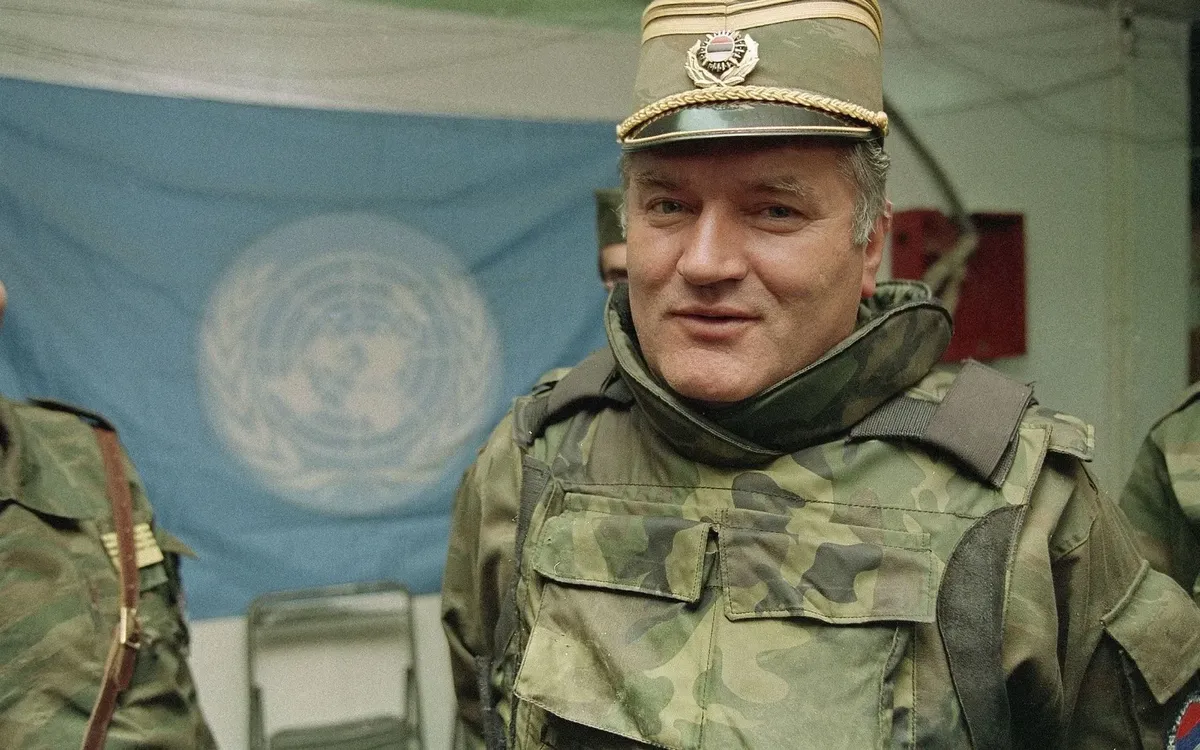
Ratko Mladich, who was on the international wanted list, was looking for 15 years. At the end of May 2011, he was arrested in the village of Lazrasvo near Belgrade. And the Serbian authorities transferred the general to the international tribunal created by the United Nations Organization to investigate crimes committed in the territory of the former Yugoslavia. But in Serbia, as in Russia, many consider to be the grave accusations unjust brought by Mladich and call him a patriot who fought for their people.
Decay and boycott
Bosnia and Herzegovina were one of the six republics that made up a single Yugoslavia. She is inhabited by Serbs, Croats and Bosnyaki professing Islam. The founder of the state created after the Second World War, Josip Broz Tito recognized the Bosnian Muslims as an independent nation, although the Serbs are sure that the Bosnyaks are the same Serbs who had to accept Islam during the rule of the Ottoman Empire. The Croats are exactly the same convinced that the Bosniks are actually Muslim Croats.
“Bosnyaks are people who have not lost Slavic blood but acquired Islam,” the Russian ambassador at the Ottoman Empire once wrote about them. And this is so: all those who participated in this war are the Slavs.
And the Bosnian Muslims themselves proudly say: do not call us Muslims, we are the Bosnians, Bosnyaki. Of all the peoples inhabiting the republic, only Muslims still want to preserve the One Bosnia and Herzegovin.
When the collapse of a single state began, the bosom also wanted to gain independence. The republic was headed by Aliya Posterovich, one of the main actors of the Yugoslav tragedy. Posetbegovich in his youth joined the organization "Young Muslims." During the Second World War in occupied Bosnia, the Nazis recruited Muslim youth to the SS troops. And Aliya Posetbegovich agitated others to put on the SS form, but he himself entered the agricultural school. This saved him. After the war, the Islamists who actively collaborated with the Nazis were shot. Posetbegovich escaped with three years in prison. The second time he was judged in 1983 for nationalism and the propaganda of Islam. In socialist Yugoslavia, it was a serious crime. And the verdict turned out to be severe - 14 years in prison.
In 1988, Izetbegovich was amnestied. In the 89th he created a party of democratic actions. In the 90s, she received most places in the election in the buying up, the parliament of Bosnia and Herzegovina. After that, Posetbegovich decided to create an independent state, held a referendum. Most of it spoke in for independence. The Serbs were boycotted a referendum. They made up a good half of the population of Bosnia and Herzegovina, would be perfectly represented in the parliament of the new state, without them it would be impossible to form a government. But Serbian politicians reasoned as follows: why should we be a minority in your state when you can be a minority in ours?
The dispute of the Slavs among themselves
What gave rise to the most bloody after the Second World War in Europe? In those years, the leaders of Serbia spoke nervously and ardently:
- Vatican, CIA, Germany and the Islamic world have developed a secret plan for the dismemberment of our country. Germany was united in order to destroy Yugoslavia, to take control of the Balkans, to complete what the German Nazis failed.
“In Belgrade, I was accepted by the Minister of Defense, General Velko Kadievich,” recalled Julius Kvitsinsky, who was then the first deputy minister of foreign affairs of the USSR. - He, like many other Yugoslav politicians, saw behind Yugoslav events the hand of the recently United Germany, which now achieves the expansion of the sphere of its influence. These arguments seemed to me not very convincing. Why did the Germans for the sake of penetrating Yugoslavia to arrange a crisis? After all, Yugoslavia itself persistently asked for the European Union. In this case, Germany would gain maximum access to the Yugoslav market. Why is Germany to divide Yugoslavia into parts? All this somehow smelled of naphthalin of past performances. ”
The countries of the European Union recognized the independence of Bosnia and Herzegovina. But Croatian President Franjo Tudzhman and the President of Serbia Slobodan Miloshevich considered Bosnia an artificial education. And they decided to share it. The presidents of Croatia and Serbia, for all their mutual hatred, suddenly became brothers. Both masterfully used long -standing fears and phobias, turning the story into a factor in current policy.
After the death of Josip Broz Tito in all Yugoslav republics, nationalists spoke out of all voice. And there was no one to object to them. The democratically thinking intelligentsia was crushed. If democratic reforms began under Tito, the fate of Yugoslavia would have developed differently. But instead of dealing with the past, finding out the historical truth, overcome the ranges and reconcile, people drew hatred and the desire to get even with old offenders in history. In Zagreb, the Serbs were called Bloody Chetniks, in Belgrade the Croats were called bloody ustes.
And in Bosnia, the confrontation acquired a cruel and inhuman character, because it was generated by evil nationalism. The enemy was declared anyone who belonged to another ethnic group. It was not those who have weapons in their hands, but to all who are "not their own."
A whole chauvinistic culture was formed, saturated with nationalist myths and hatred. The narrow -minded intelligentsia inspired their peoples that they were in the circle of enemies, and it is impossible to agree with enemies, they can only be destroyed.
The Croatians inhabiting Western Herzegovin, known for their stubbornness and ambition, announced the creation of the Croatian Republic of Herceg-Bosny. They received money and weapons from Frano Tudzhman and were preparing to join Croatia.
Siege Sarajevo
The main part of Bosnia was claimed by the Serbs. On January 9, 1992, the Serbian Republic of Bosnia and Herzegovina formed (later - the Republic of Serbskaya). She immediately gained impressive armed forces, because she was subordinated to units of the Yugoslav People's Army, which was already only from the Serbs.
How all this happened, Borislav Jovich, Deputy Slobodan Miloshevich in the party, told with all the cynical frankness:
- We knew that when the world recognizes the independence of Bosnia, we would look like aggressors, because our army was there. And we would have to withdraw it. Then Milosevich and I transferred all the Serbs from the Yugoslav People’s Army into the Army of the Serbian Republic and promised to pay for all their expenses.
On May 10, 1992, General Ratko Mladich was appointed chief of staff of the Second Military District (the headquarters was in Sarajevo). And literally a day later, Mladich became the chief of the General Staff of the Armed Forces of the Republic of Serbian.
The troops of General Mladic, who had absolute superiority in heavy weapons, surrounded the city outside the city and methodically destroyed them with artillery. The army of Mladic in the first months of the war (from April to November 1992) occupied 70 percent of the territory of Bosnia. The siege of Sarajevo began in the spring of 1992 and lasted three and a half years. But, even having a powerful army, the absolute superiority in tanks and artillery, the Serbs could not take the city. And they tried to take great.
There are not enough practices
Seeing that massacres and ethnic purges were taking place in Bosnia, Europe was forced to intervene. Nevertheless, the Serbs were perplexedly asked by foreigners: "What did we do so, that everyone took up arms against us?" And in fact: why was all world public opinion configured against the Serbs? Did the army of Croats and Bosnyaki behave better?
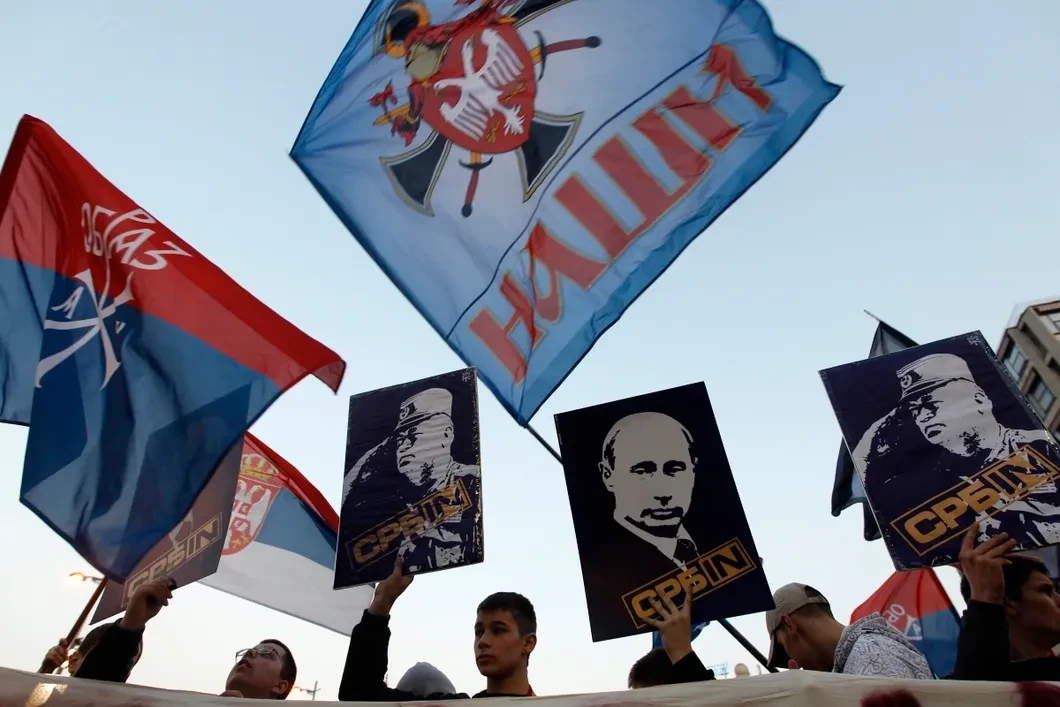
Of course, no! But the Serbian army was the first to take up weapons and committed significantly more crimes because it advanced and cleaned the captured territories. The Muslim government initially controlled the negligible part of the country. There was nowhere to turn around ... And only then the Bosnian and Croatian soldier contributed to this bloody war. Therefore, the International Tribunal in The Hague judges the Serbs, and the Croats, and the Bosnyakov.
Meanwhile, the Serbian troops did not pass to Sarajevo, devoid of warmth and light, convoys with humanitarian aid, condemning the urban population to half -starved. Sarajevo is a large densely populated city, surrounded by mountains from all sides. At their vertices, General Mladich established heavy artillery and mortars and methodically shot the city.
The first president of the Republic of Serbian (1992–1996) Radovan Karajich calmly explained to foreign correspondents:
- Muslim snipers shoot at the Serbs, and we are forced to answer. Just Serbian artillerymen are poorly prepared, they often miss, fall in a different quarter. There is not enough practice.
The international community demanded to stop the shelling of the city, to take artillery from Sarajevo.
“I never gave my troops an order to retreat,” Ratko Mladich replied proudly. “I would not have done this, even if I had to sacrifice a million lives.” For me, the word "back" does not exist.
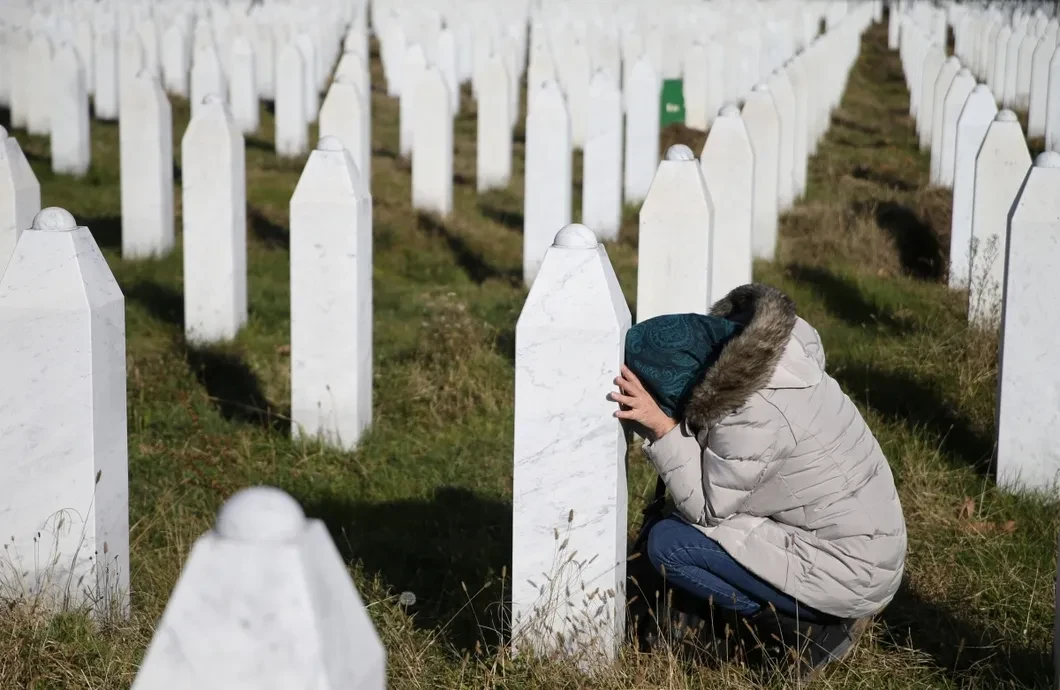
Cemetery in Srebrenitsa
Over the first years of the war, luck was on the side of the Bosnian Serbs. They occupied territories, the Muslim population fled, throwing a house. Those who dared to stay were expelled. Million boslayaks became refugees. This war led to the greatest resettlement of peoples after the Second World War. There were no Bosnyaks and Croats in Serbian territory, and the Serbs left Sarajevo who did not want to live with Muslims.
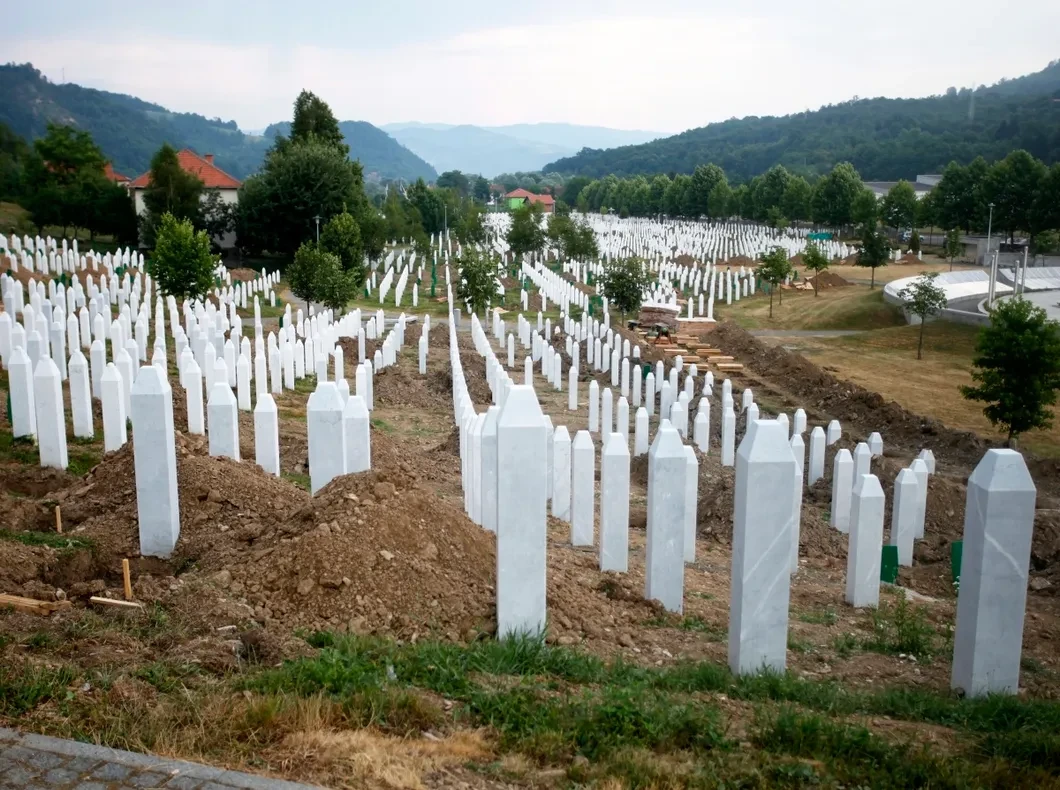
The UN created four security zones in Bosnia - Sarajevo, Horage, Lop and Srebrenitsa. Many Muslims found refuge in Srebrenitsa. In July 1995, she was captured by the Mladic troops. The city was guarded by almost unarmed 370 Dutch peacekeepers. The subordinates of Ratko Mladich mocked them, even selected helmets and body armor from them.
General Mladic ordered Muslim women and children from the city to deport, and shoot men and adolescents. From July 13 to July 19, 1995, more than seven thousand Muslims were executed. Then three months, from August 1 to November 1, the executioners tried to hide the tracks - they dragged corpses to other areas.
A year later, mass graves opened and found bodies in them with tied hands. According to investigators of the International Tribunal, people were killed with "unprecedented cruelty." Exhumation and anthropological examination lasted many years. The bones of the executed were mixed, it was very difficult to identify the remains.
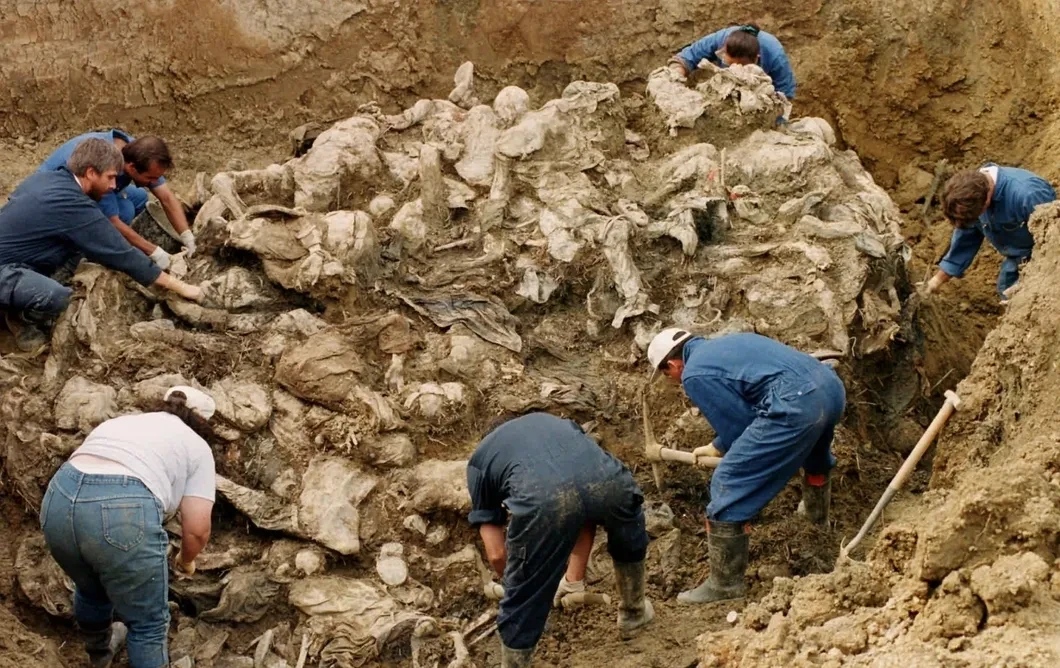
Investigators found both those who shot bosmen, and those who took out the corpses, and those who buried them. They gave confession. Former subordinates of Mladic - commander of the Drinsky corps, General Radislav Krstich, lieutenant colonel Dragan Obrengovich and captain Momir Nikolich have already been convicted. They said that Karadzhich ordered Muslims to expel the Muslims, and General Mladic led the executions.
At a meeting of the tribunal in the Hague, an amateur video of this action was shown. General Mladic on July 11, 1995 spoke to his subordinates:
- We are in the Serbian cut. On the eve of the Great Serbian holiday, we give this city to the Serbian people as a gift. It's time to take revenge on the Turks.
The international tribunal for the investigation of crimes in the territory of the former Yugoslav was established in 1993 by the UN Security Council. Justice in the Hague is carried out by 25 independent judges who are elected for a period of 4 years of the UN General Assembly on the proposal of the Secretary General.
How did you agree?
The international community offered the warring parties one peace plan after another. But it was not possible to find an option that would arrange everyone. Karadzhich and Mladich rejected the political settlement options that were proposed by international intermediaries, including Russian, and missed the chance to sign the world on favorable conditions for Bosnian Serbs.
Meanwhile, President of Bosnia Posetbegovich and President of Croatia Tudzhman signed an agreement, and the Croatian army came to the rescue of the Bosnyaks. The combined forces of the Croats and Muslims received heavy weapons, strengthened and counterattacked the Serbs. The army of Mladic suffered one defeat after another. In addition, the International Tribunal for the former Yugoslavia, created by the UN, issued a warrant for the arrest of Karadzhich and Mladich - for the destruction of the civilian population, an inhuman appeal with prisoners and prisoners of war. So it was impossible to lose the war Karajich and Mladich.
But then they lost the support of the President of Serbia Slobodan Milosevich. He always felt when the time of a steep turn came. And having made this next turn, Milosevich returned to partnership with the West. He forced Karadzhich and Mladic to sign the world on the worst conditions than they could have.
On November 1, 1995, three main actors of the Yugoslav tragedy - Miloshevich, Tudzhman and Posetbegovich met at the American military base near the city of Deuton in Ohio. Russia was represented by the future Minister of Foreign Affairs Igor Ivanov. We agreed on the principles of settlement in Bosnia and Herzegovina and the introduction of multinational forces into the republic in order to monitor the implementation of a peace agreement. The composition of multinational forces included the Russian airborne brigade. The Republic of Serbskaya (it received 49 percent of the territory) and the Bosnia and Herzegovin Federation (51 percent of the territory) formed a confederation.
They lost everything
Karajich and Mladich had to leave his posts, and soon disappear in the hope of avoiding arrest. Karadzhich was caught in the summer of 2008, Mladic was hiding for another three years.
Karadzhich, Mladich, Milosevich lost all the wars that waged! Over the years when they were in power, the territory in which the Serbs can feel free and confident, constantly declining. Before the war, the Serbs were the most prosperous people in the Balkans, and remained with a broken trough - with a sense of infringed national pride and bitterness for constant defeats and failures.
When foreign journalists wrote about the massacre in Srebrenitsa, the Serbs simply refused to admit that this could happen. Only in 2003, Serbian television said that the soldiers of Ratko Mladich were involved in the mass destruction of people in Srebrenitsa. On November 10, 2004, the Government of the Republic of Serbian turned to relatives of the dead Muslims: "We sympathize with the pain of relatives of the victims of the Srebrenitsa, we express our sincere regret and apologize for the tragedy."
The admission of own guilt is a huge step forward. Previously, politicians here made a career that they accused others.
Help "New"
On November 22, 2017, the Hague Tribunal sentenced the former army commander of the Republic of Serbian Ratko Mladic to life imprisonment. The 75-year-old general was found guilty of 10 of 11 points of prosecution, in particular in genocide and crimes against humanity. Ratko Mladich was the last key figure whose war crimes considered the Hague tribunal.Since 2001, the tribunal investigated the crimes of the former president of Serbia Slobodan Milosevich (he died in 2006, the verdict was not issued). In 2016, the Hague Tribunal sentenced to 40 years in prison of the First President of the Republic of Serbian Radovan Karadzhich.
In total, since 2001, the Tribunal examined 150 cases related to wars in the former Yugoslavia; 38 people were justified.