
Translated material
“It’s hard for people at home to imagine this loneliness.”
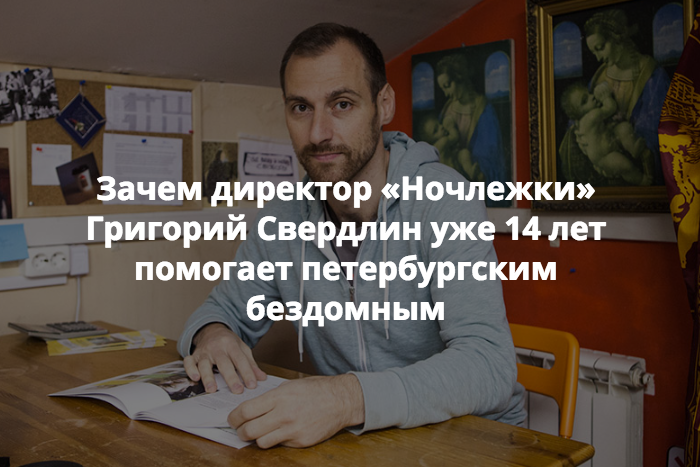
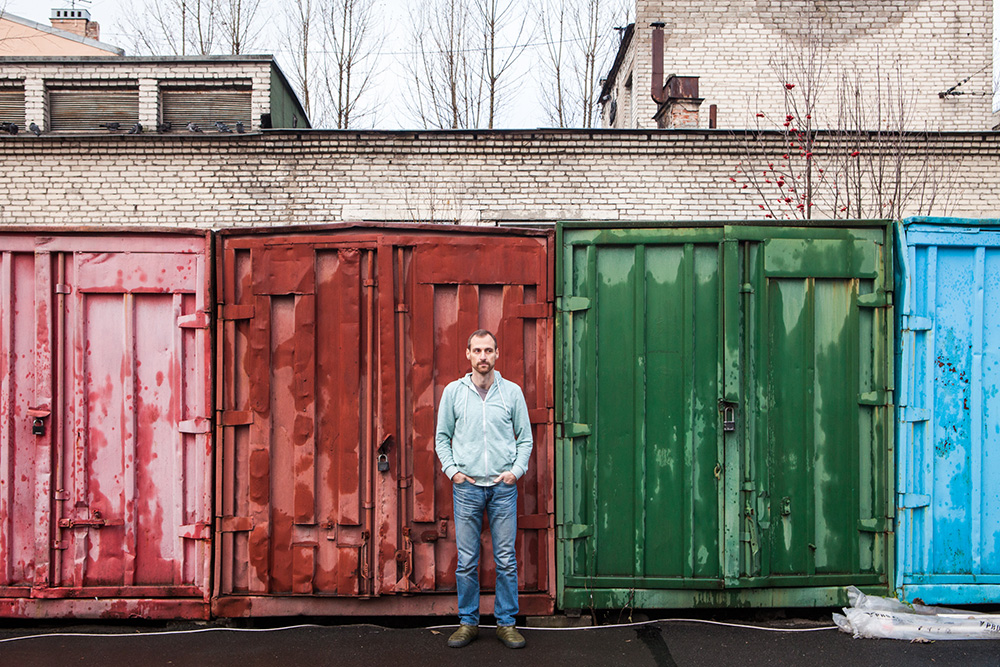
Nochlezhka director Grigory Sverdlin first came to the charity about 14 years ago. He volunteered to distribute food to the homeless. A former marketer and brand manager, Sverdlin says that he himself had never encountered life on the street - he just wanted to help someone whom society “try not to think about.”
Now Nochlezhka offers warming points, laundry and legal assistance to the homeless, and organizes music festivals and events in cafes for city residents. “Paper” talked with Sverdlin about how, after a year of work, he headed Nochlezhka, which at times “had enough money left for two weeks,” why he still goes with volunteers to feed the homeless, and why it is important for him to help people from whom everyone has turned their backs.

- I'm s-sorry! - a man with a thick beard and a warm jacket sharply opens the door and closes it, seeing a visitor inside the room. Staggering slightly, the homeless man walks down the white hallway of the counseling service and collapses onto a bench.
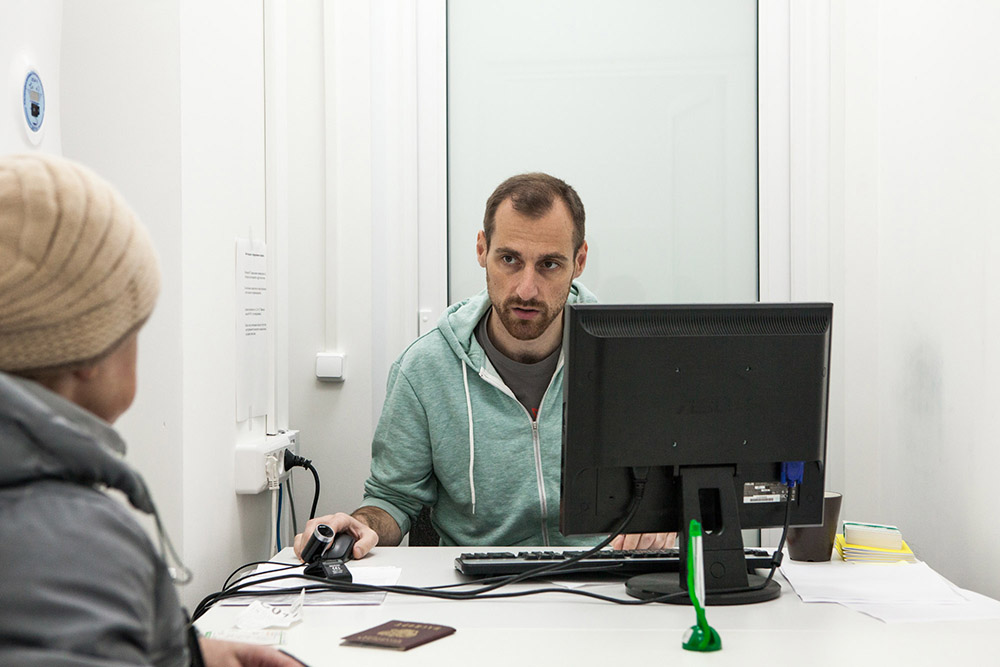
Inside the tiny room, Nochlezhka director Grigory Sverdlin is recording the woman’s details.
— Do you remember in which area you were registered? - He asks, looking at her carefully, to which the elderly woman silently turns her gaze to the floor. The homeless woman no longer remembers where her last registration in St. Petersburg was.
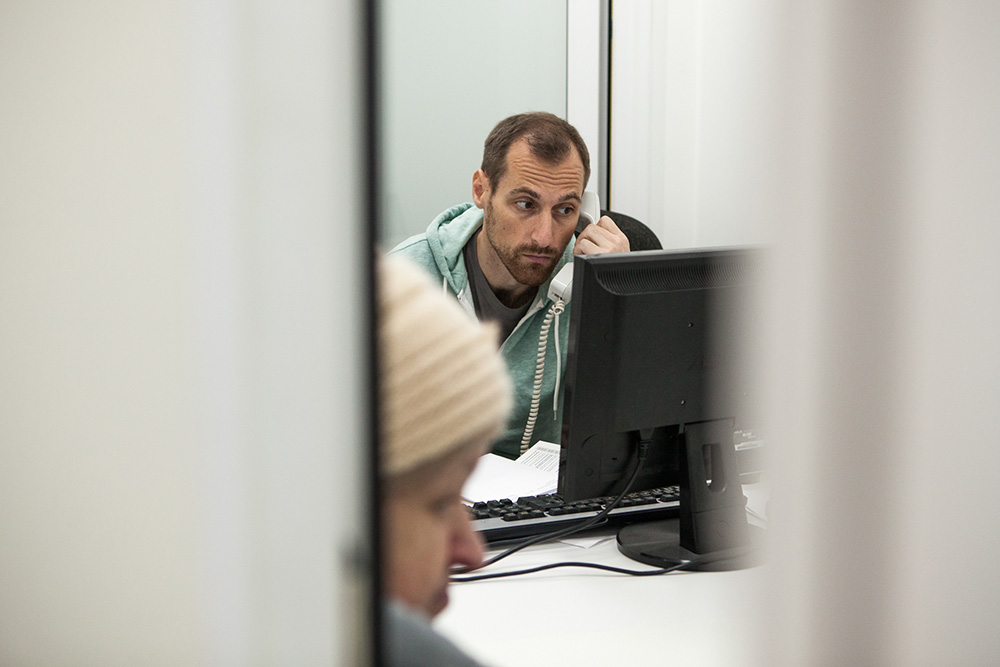
Such consultations are held here four days a week. People come for different reasons: some need to find out how to renew their passport, some need to know where they can spend the night, others just want to take clothes.
- And someone has a more complex request - up to the registration of disability. Let’s say, placement in a boarding school for the disabled with our bureaucracy means support for about a year,” Sverdlin explains on the go, moving to the employees’ office for a short break.
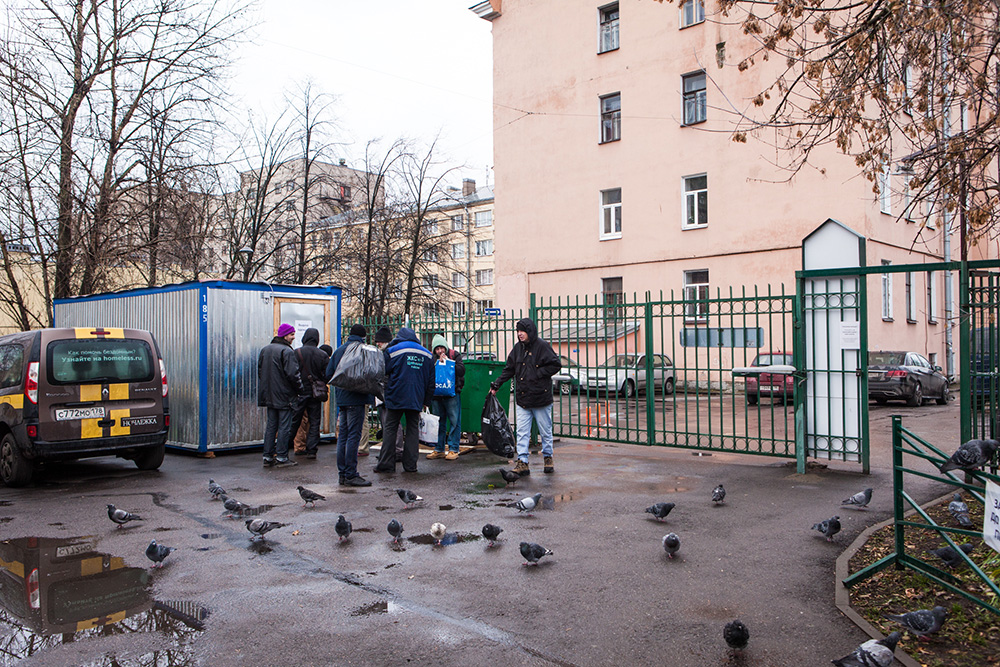
As the director of the organization, he tries to work at a reception once a month. And sometimes he rides a “night bus” with volunteers: every evening the car goes into the city and makes several stops where food is distributed to homeless people. Sverdlin says that finding time for such flights is “humanly important” to him.
“I understand, of course, why I work as a director and what the results are, but still this is a speculative understanding. Meetings with officials and donors, meetings, correspondence - this is very different from the situation when you provide assistance directly and, for example, participate in feeding 150 people.

“There is no one to help the homeless, except for a limited circle of people”: how and why Sverdlin ended up in Nochlezhka
Grigory Sverdlin came to Nochlezhka in 2003 as a volunteer. At that time, having studied at the Faculty of Economics, the young man worked in a bank. And, as the head of Nochlezhka recalls, he simply had an abstract desire to help someone: he had no idea who exactly.
A friend of Sverdlin traveled as a volunteer on the “night bus” and gave him contacts of a charitable organization, which by that time had already existed for more than ten years. So Sverdlin also began to participate in flights.
— Wasn’t it difficult for you at first to communicate with people who live on the street?
“No, I didn’t have any problems: people are like people,” Sverdlin shrugs and recalls that during the first flights he was surprised by how often the words “thank you” and “please” were heard on the “night bus.” — The “night bus” parking lot is a safe place for everyone. People come there, it seems to me, not only for food, but also for some kind of participation. Simply by treating them as people, and not as outcasts.
“I used to transfer money to Nochlezhka, but now I ended up here myself.”
paperpaper.ru
Homeless women talk about life on the street and dreams of work
The bus, which still runs today, is frequented by homeless people or simply poor people from neighboring houses. Moreover, recently not only Nochlezhka employees have been volunteering, but also shelter guests who want to take part in distributing food.
After months of volunteering, Sverdlin says, he realized why Nochlezhka was the right choice.
“It’s important for me to help those who, except me and a limited circle of people, have no one to help.” Homeless people, they smell bad in the public consciousness, supposedly it’s their own fault, supposedly they chose it themselves. I think that if I had ended up in a project to help the homeless, I would have helped people in prison or released from prison, or those who are in psychoneurological boarding schools, or HIV-positive people. Someone they try not to think about.
People come there not only for food, but also for some kind of participation. For treating them as people, and not as outcasts
After volunteering with Nochlezhka and several other organizations, including the Red Cross and Perspectives, Sverdlin continued to work for commercial companies as a marketer and brand manager. But a few years later he decided that “this period of life had come to an end” and began to look for a new job.
Sverdlin, who had been involved in mountaineering for a long time, considered, for example, the option of becoming a mountain rescuer. But the choice was still on charity. True, realizing that there were not many vacancies in this area, I began to think about opening something of my own. “But, as often happens, if you formulate a clear request, then the answer comes to it quite quickly.”
Soon he accidentally ran into the then director of Nochlezhka, Zoya Solovyova, whom, while working as a volunteer, he did not know personally. Sverdlin recalls that he began to ask her about opening her own organization, to which the head of the organization “looked carefully” and invited her to work with her.
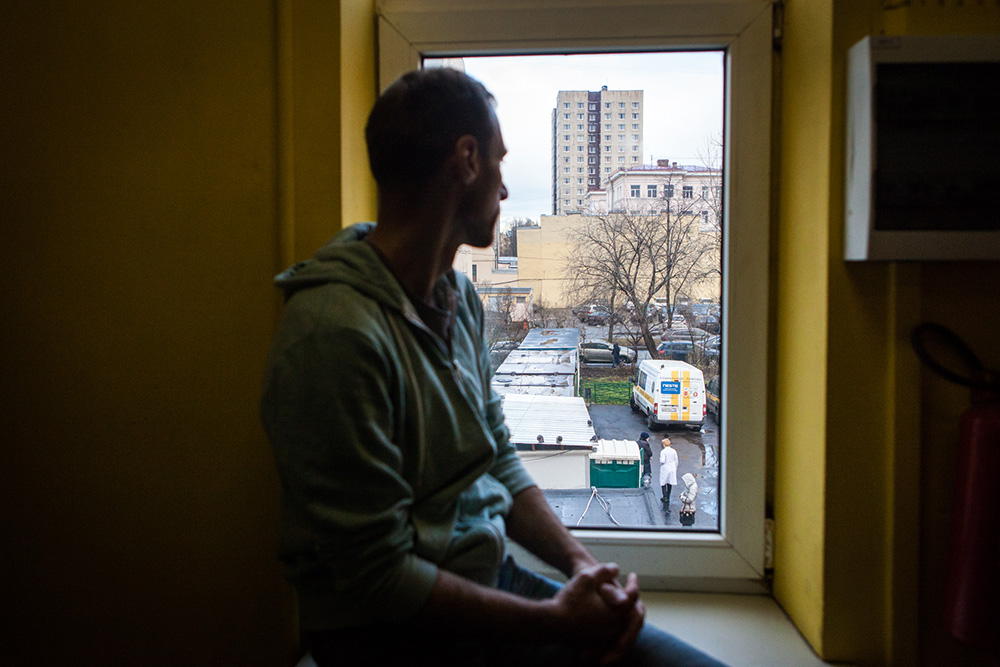
— Did you have any personal history that made you start helping the homeless?
- No, I didn’t have that. None of my loved ones, nor I myself, found myself on the street.
— How did your family and friends react to the fact that you switched from business to charity?
“Most people understood why I was taking such a step. Even my grandmother, who periodically asked when I would find a normal job, began to be proud,” Sverdlin answers, mentioning that someone, “of course, was worried that the salary had become four times less.”
At first, Sverdlin worked as the coordinator of the only heating point at that time, but rather quickly moved to the position of coordinator of the consulting service. Another six months later, the head of the organization, Zoya Solovyova, was getting ready to leave Russia and, before leaving Nochlezhka, she invited him to take over leadership. The candidacy was supported at the general meeting, and after a couple of weeks of deliberation, Sverdlin agreed.

What has changed at Nochlezhka and how the organization now helps the homeless
— Was it difficult to lead a charity organization after leaving business?
- There are many difficulties. I thought that somehow I would get the hang of it within a year, but in fact, the first three years were very difficult.
It was not easy, partly because of the unsettled situation with the rental of the building and financial difficulties: “There were times when there was money in the account for two weeks of work and it was not clear whether we would close or not.”
When he became director in 2011, says Sverdlin, money from foreign charitable foundations was becoming less and less and Nochlezhka began to focus on donations. If earlier, according to the manager, they made up only a couple of percent of the budget, now they make up the majority of it. Funds also come from charity concerts such as NochlezhkaFest, where DDT, Boris Grebenshchikov and Oleg Garkusha performed.
St. Petersburg homeless people before and after a haircut from a world-famous hairdresser from Melbourne
paperpaper.ru
Eight portraits
— I would say that we have become more professional during this time. Each employee now has a clearer specialization. Because it is important to be as professional as possible, not only in a broad sense, but also in a specific area. Maybe this is something that I partly brought from my experience working in commercial organizations,” says Sverdlin, having a hasty snack in a small kitchen separated from the office by a glass door.
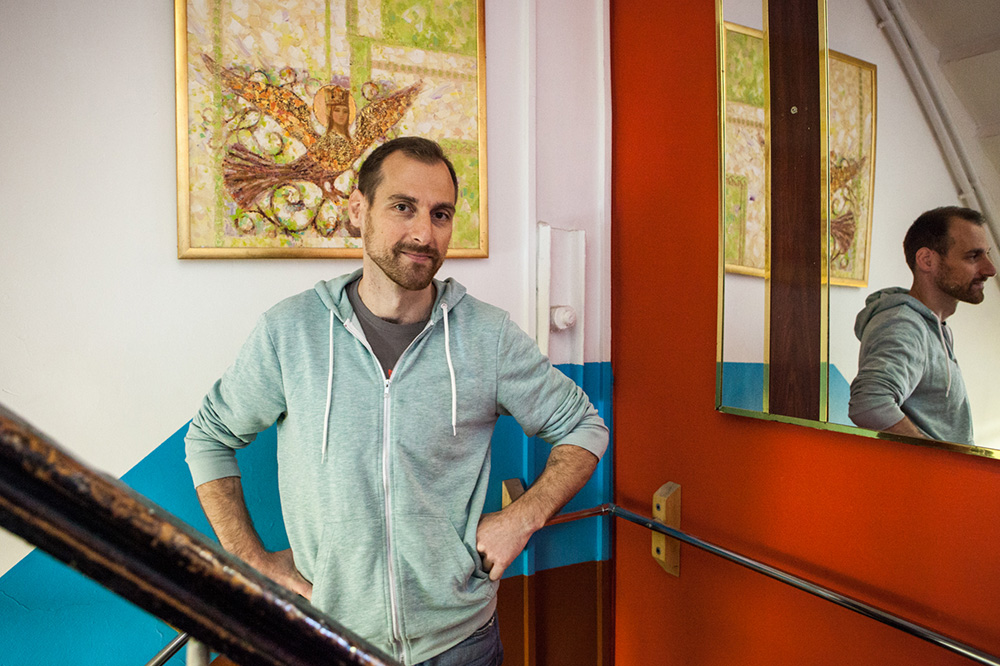
On the bright orange walls of the room where Nochlezhka employees sit, there are reproductions of da Vinci, letters of the organization, graphics and postcards. The roof of the building was designed by Nochlezhka caretaker Ivan Lendyashov, a former architect, Sverdlin mentions, nodding at the sloping ceiling of the attic.
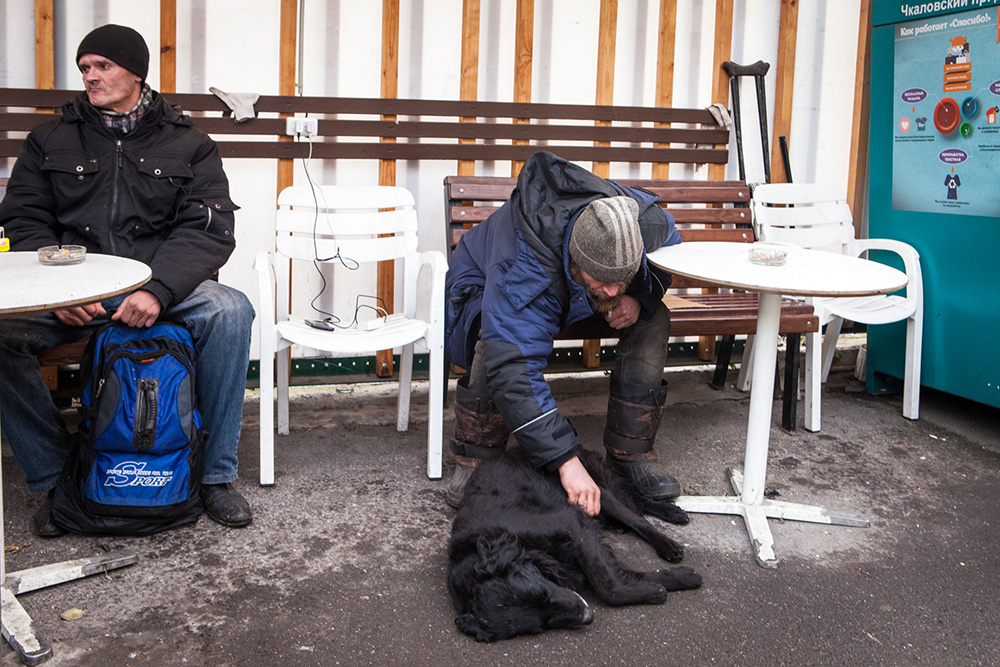
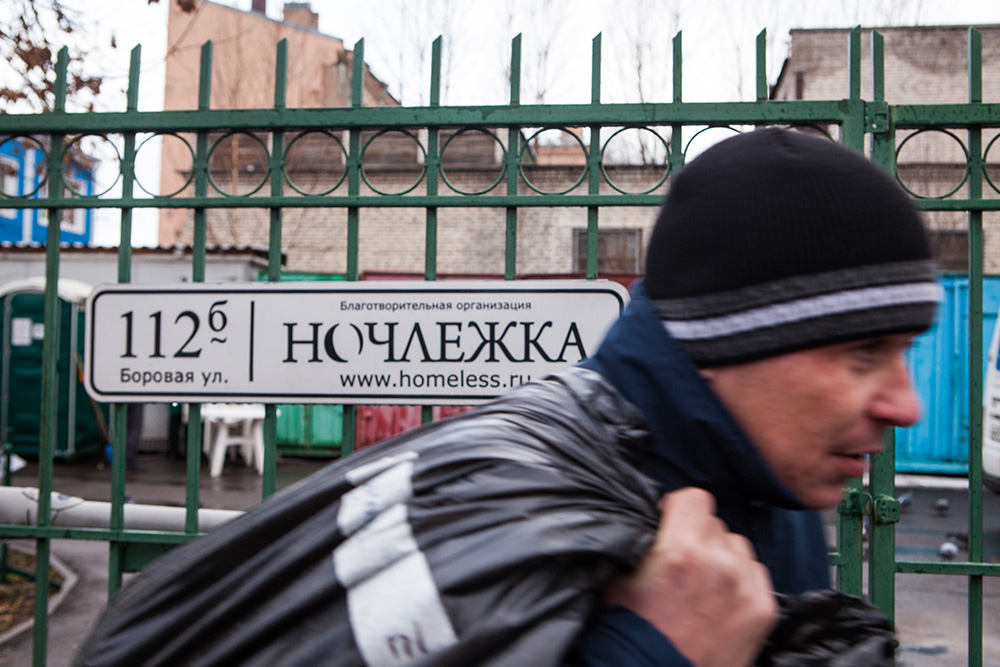
In the courtyard of the shelter, homeless people smoke, talking quietly. Some of them are shelter residents, some are waiting for consultation. There was a line of people who had come to buy clothes near the gate.
The shelter has a capacity of 52 beds and is currently fully occupied. 40 places are for men, 12 are for women, which approximately corresponds to the ratio of homeless people on the street, Sverdlin clarifies. There is no time limit on your stay.
“If a person needs to live in a shelter for six months in order to then have a better chance of living independently, getting back on his feet and no longer needing our help, then he will live for six months. No one will kick him out in three. Because there is no reporting here.
But the shelter has its own rules: for example, people cannot be here under the influence of alcohol. Since the organization’s employees help many people for a long time - to restore documents or dispute the right to property - it is important that the guests are sober and participate in the process themselves.
If a person needs to live in a shelter for six months to have a better chance of living independently, then he will live for six months. No reporting here
But the “night bus” or warming points, where homeless people come only for food and shelter, can be used by everyone. “Among the people living on the streets, many have started drinking. At some point, a person runs out of resources and no longer believes that the situation can be changed. But even if a person comes drunk, but is calm and does not disturb others, they will let him in,” explains Sverdlin.
Over the past few years, the number of winter heating points in Nochlezhka has increased to three; last year, the Cultural Laundry opened, where homeless people can wash their clothes for free. In addition, the organization is now planning to install a shower next to the Finlyandsky Station and open a year-round heating point, which, however, is still being delayed due to coordination with the authorities.
One of the significant changes in recent times, Sverdlin believes, is the possibility of individual support for homeless people by lawyers and social workers. Currently there are about 250 people under such escort. Some of them are residents of the shelter, the rest continue to be on the street. Each of the homeless is assigned a Nochlezhka employee who helps solve one problem or another: restore documents, get a placement in a boarding school, seek the cancellation of fraudulent real estate transactions.
Last year, of the 185 people who went through the shelter, about half never returned to the streets, Sverdlin notes with satisfaction. Most of them began to work and rent housing on their own, some reunited with relatives, and others moved to a boarding school for the disabled or nursing homes.
In the library, where general activities are held for shelter residents or where they come to look for work, several people are watching TV. In the center, a woman, animatedly telling something, cuts another woman's hair.
“What’s happening here in the office is just the tip of the iceberg,” notes Sverdlin. According to the organization’s estimates, there are now about 50–60 thousand homeless people in the city. Every year Nochlezhka requests mortality statistics: in 2016, says Sverdlin, more than 1,900 people died on the streets in St. Petersburg and the Leningrad region.
You find yourself on the street, and society tells you by all means of communication: “It’s your own fault, don’t touch us and don’t get noticed.”
Sverdlin is confident that the number of homeless people can be reduced primarily through preventive measures. As examples, he cites insurance for real estate transactions or changes in the registration system, in which a person only needs to notify the authorities about where he currently lives. Because approximately one in five ended up on the street as a result of property fraud, and many homeless people are graduates of orphanages.
“All these misfortunes have superimposed, you find yourself on the street and at the moment when society, it would seem, should come to the rescue, it tells you with all its means of communication: “It’s your own fault, you made your own choice, you can’t be helped anyway, don’t touch us and don’t get caught.” A person finds himself in absolute loneliness, which is difficult for us, home people, to imagine. This is a situation when no one in the whole world needs you and you cannot ask to be held by anyone. And whether you wake up tomorrow or not, no one’s mood will change in the slightest.