
Translated material
Britain: budget problems
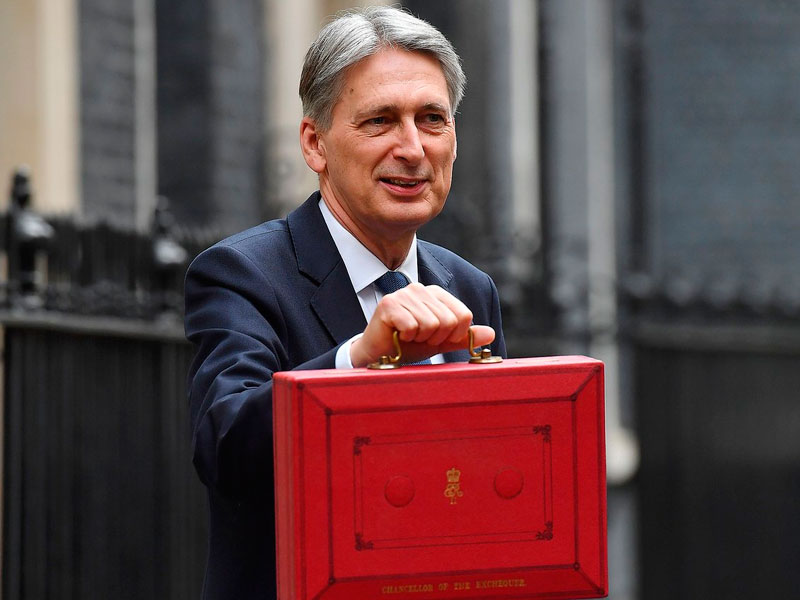
On Wednesday, the Chancellor of the British Treasury, Philip Hammond, in an appeal to the parliament, announced a reduction in the predicted state budget. The reduction is primarily associated with the prospect of Britain’s separation from the EU. It is also expected to reduce the rate of economic growth with a probable return to current indicators no earlier than 2021.
Bloomberg writes that the British government is preparing for the economic problems that he considers inevitable. Against the background of these forecasts, it, however, sets itself ambitious tasks: firstly, to allocate 3 billion pounds for a department from the EU, and secondly, to provide young citizens with affordable housing. It is expected that this year the British economy will grow by only 1.4%. Earlier, in March of this year, this figure was estimated at 1.6%. And even earlier, in 2016, before the referendum on the branch from the EU, they predicted an increase of 2.2%. This dynamics is contrary to the general world tendency, where the rates of economic growth for the most part increase.
 London. Shoe cleaning / pixabay.com
If Britain, following the results of the department, comes to a state of economic stagnation, writes the editors of Wall Street Journal , then the reason for this will not be in the specifics (or even absence) of a trade transaction with Brussels. The main reason will be that Britain does not want to reform its internal economy. Hammond is now experiencing pressure from different sides. Financial “hawks” from conservatives require that he reduces the budget deficit and refuse Keynesian methods of spending funds (including with the aim of reducing taxes). Other conservatives, on the contrary, insist on the Keynesian approach.
The most competent edition considers those Tori that recognize the need for radical deregulation. In their opinion, this will help maintain investment and performance when Britain loses access to the European single market. Their opponents (including the Prime Minister of Britain Teresa May), on the contrary, want to “modernize” Tori so that they master the policy of social spending and subsidizing-that the editors generalize “tricks to attract electoral votes”.
Hammond, the editorial office believes, chose the worst option. In tax policy, he wants to reduce the corporate tax, but by, by, by, by, by, by, by, by, by, by a certain level of income, remains high, which means that in fact, no one will notice such a decrease in taxes. At the same time, the expenditure of state funds remains extensive and generous. For example, an additional 15.3 billion pounds were determined on housing construction subsidies. Another 6.3 billion pounds are intended for the healthcare system, which has not yet been reformed, that is, it will spend them obviously inefficiently. 8 billion pounds should go to the State Investment Fund to finance new developments in the field of transport and technology.
 London, subway entrance / pixabay.com
The government thus tries to win the location of voters, comments on the editorial office, but it turns out just the opposite. Voters begin to lose patience, because they do not see the conservatives of either understanding how to establish a situation, or a serious desire to develop such an understanding. Publishing polls already reflect a reduction in confidence that the party is copeing with the management of the economy. If this will also be superimposed on the situation related to changes from the EU department, for Tori this may end deplorable: voters will redirect their sympathies to the Labor.