
Translated material
Mobilization as it is
What will arrange the Russian army in the next decade
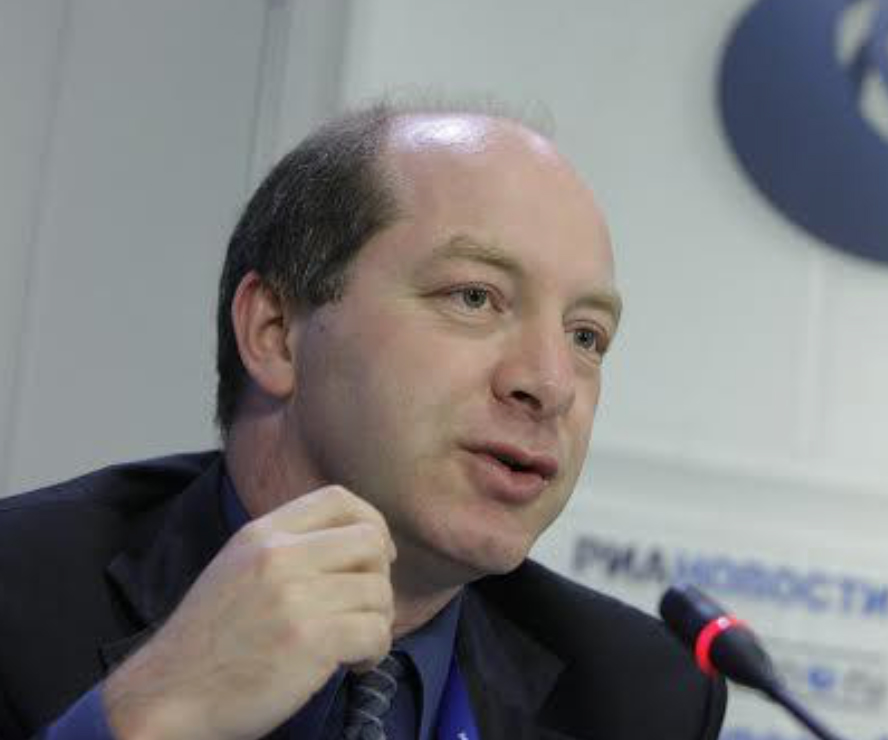
Senior researcher
CNA Corporations : Ponarseurasia.org
At an expanded meeting of the College of the Ministry of Defense of the Russian Federation, Vladimir Putin called for increasing the country's mobilization readiness and analyzing the possibilities of defense enterprises to promptly increase the volume of production of military products. At the same time, until the end of 2017, Putin must approve the state arms program (GPV) for 2018–2027. What directions in it will be priority, what kind of troops will win the battle for financing and what Russia in the military field is capable of today - a detailed analysis is contained in a study conducted on the basis of open sources Dmitry Gorenburg, a senior researcher at CNA and the associated member of the Davis Center (the Center for Russian and Eurasian Research) of Harvard University (USA). The study is published on the Ponars Eurasia website (a program of new approaches to research and security in Eurasia, Ponars Eurasia).
Twisting the rope
The previous state arms program (GPV), planned until 2020, operated since 2011, and its total amount amounted to 19.3 trillion rubles.
Initially, the arms program until 2027 ( we are talking about a program that Vladimir Putin should approve. -NT) was considered as a “lifting stick”: too expensive and long-term projects from the previous program should have smoothly barking into a new one. It is expected that the GPV-2027 is allocated about the same amount in rubles-19 trillion. This suggests that the costs of military purchases do not actually change. At the same time, purchases are made from Russian suppliers - they did not affect the fluctuations of the exchange rate of the ruble.
The Russian Ministry of Defense and the Ministry of Finance for a long time argued about the amount of financing GPV-2027. In 2014, the military requested about 30–55 trillion rubles. For the next ten years. The Ministry of Finance, in turn, said that this amount should be reduced to 14 trillion.
Against the backdrop of the deterioration of the economic situation in the country in 2015, both parties had to adjust their wishes: in 2016, the Ministry of Defense already asked for 22–24 trillion rubles, and the Ministry of Finance answered - no more than 12 trillion.
After long and sometimes very tense negotiations, two departments finally agreed on the GPV budget - 17 trillion rubles. But since the duration of the program increased to ten years (it was originally calculated until 2025, now until 2027), then this was also expressed in an additional 2 trillion rubles.
As a result, the Ministry of Defense had to abandon a number of ambitious and costly projects, including a new aircraft carrier, a new destroyer with an atomic energy installation, a new strategic bomber PAK and an interceptor fighter.
The Russian Navy for financing will most likely lose and be at the very bottom of the list. The priority in the procurement of weapons will be given to the ground forces and strategic nuclear forces
However, the disputes regarding the financing of the GPV did not end there. Fierce discussions about who exactly will receive funding are now going inside the Ministry of Defense itself. The departments of the department prepared reports in which they defend the importance of what they are doing. At the same time, if you study, for example, the recently approved naval doctrine, it becomes clear that these documents often have nothing to do with the real assessment of what the military actually needs, nor the capabilities of the defense industry in terms of the production of requested equipment. It is already obvious that the Russian Navy for financing will most likely lose and be at the very bottom of the list. Priority in procurement (weapons) will be given to the ground forces and strategic nuclear forces.
Strategic nuclear weapons
The priorities of the development of Russian nuclear forces until 2027 are largely clear.
After 2021, the naval component of the nuclear triad ( Russia. -NT) will consist of six submarines of project 667BDRM Dolphin and eight submarines of project 955 (09551), 955A (09552) Borea, evenly distributed between the northern and Pacific fleets. This will constantly operate 12 submarines, and the remaining two at this time can be repaired or modernized.
As for aviation, modernization concerns the Tu-95MS bombers (Bear H) and 11 Tu-160 (Blackjack) bombers, which receive new engines, side electronics and weapons. The new K-101 long-range winged missile replaces the X-55, its flight range in the nuclear version is twice as high as the previous model-up to 4,500 km.
In addition, the Russian military announced the resumption of the construction of new aircraft called PAK DA ("Perspective Aviation Complex of Far Aviation"). They are designed to replace the Tu-95 and Tu-160 standing now in service; It is expected that serial production of PAK will resume after 2021. It is believed that from the financial and technological point of view, this model will be easier to introduce into serial production in a reasonable time.
The Russian military leadership has an understanding that in future conflicts it will be possible to use the ground forces more actively
The smallest confidence ( from the point of view of modernization. - NT) causes a ground component of the nuclear triad of Russia. Three projects are now being implemented: a missile system with an intercontinental ballistic missile "Rubezh", the Barguzin combat railway missile system and the fifth generation of the Sarmat mine with a heavy multi -stage liquid intercontinental ballistic missile.
The “line” project is close to completion, the tests are completed in 2015, and deployment is expected in 2017. RS-26 "Rubezh" is a further development of the Yars project (RS-24) with controlled combat units intended for the breakthrough of the missile defense.
BZRK “Barguzin” is expected to be ready for testing in 2019, although in 2016 there was a period of several months, when it seemed that the program would be suspended due to budget reduction. As for the Sarmatian, due to unforeseen delays at the development stage, it is unlikely to be deployed earlier than in 2020.
Ground troops
More than a quarter of the entire budget of the new state weapons program (GPV) will be aimed at equipping the Ground Forces and Airborne Forces. This is partly due to the experience of Russia in Ukraine: the Russian military leadership has an understanding that in future conflicts it would be more actively using ground forces. But basically, such a redistribution of funds is associated with the development of new armored vehicles and tanks, ready for serial production.
T-90 tanks (“Vladimir”) and T-14 (“Armata”), the caterpillar platform “Kurganets-25”, on the basis of which infantry and armored personnel carriers are created, equipped with a boomerang module, as expected, will enter service over the next eight years. Although the number of some machines, such as “Armata”, can be limited due to too high production.
The level of production of artillery systems and ground -based ground -based missiles in Russia is very high.
The deployment of the Iskander missile systems is on the planned schedule, all of them should be installed in their places by 2019.
In 2017, the troops of Tornado-S and the new Urachan-M1 missile systems were supposed to enter the Russian troops.
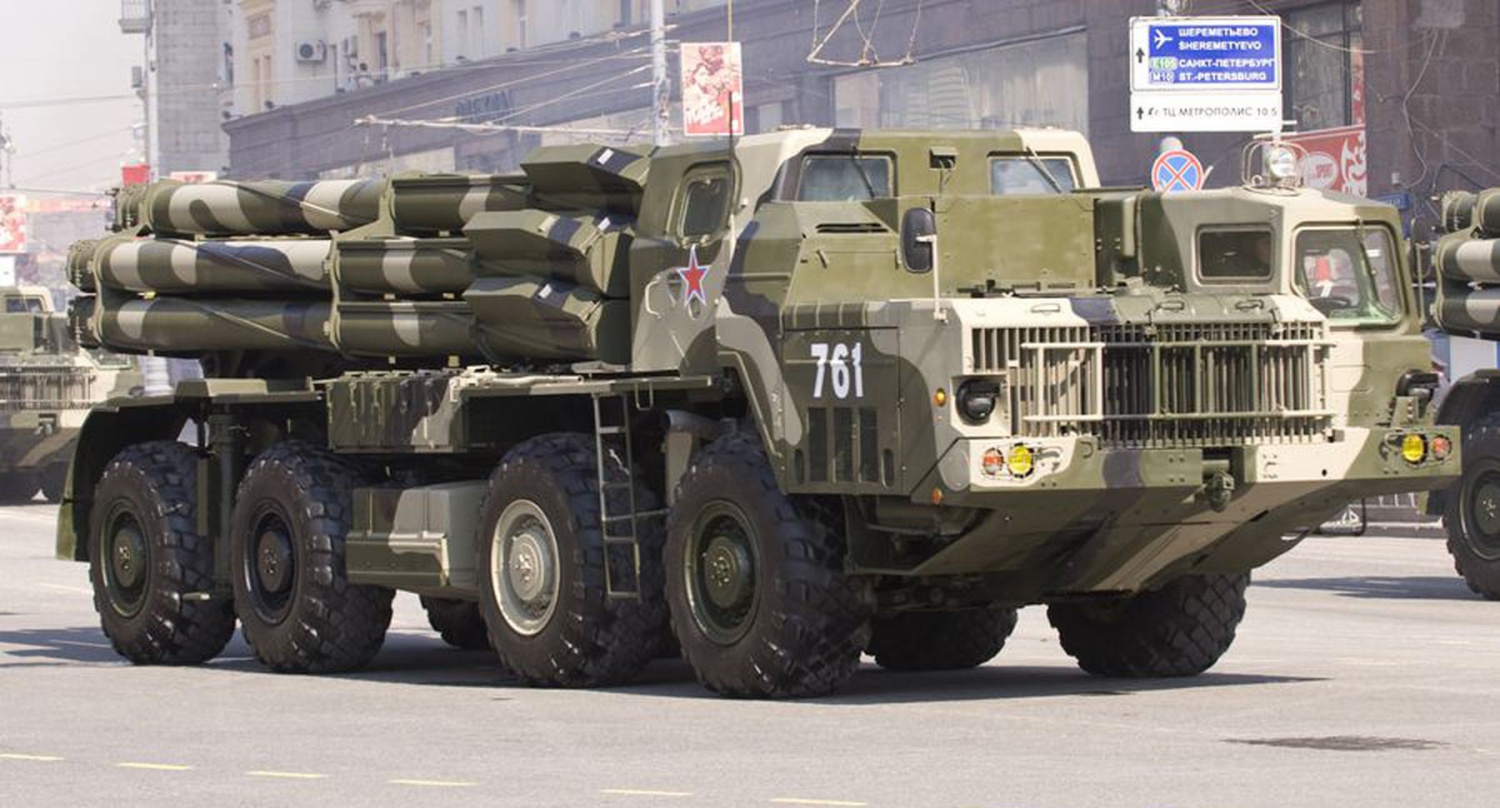
The tornado rack -wrap -filler system photo: wikipedia / * * aleksey toritsyn
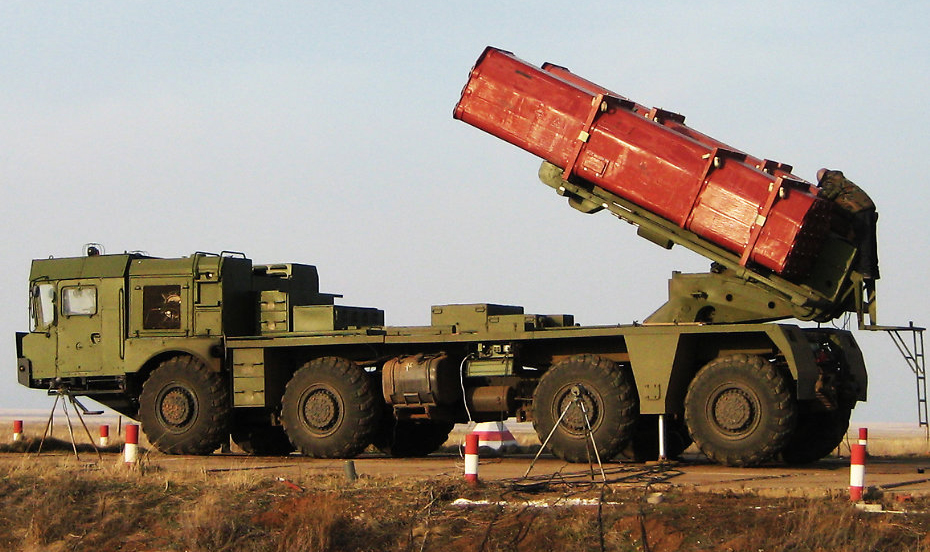
*Rocket complex "Hurricane-M1" *Photo: Defendingrussia.ru
Moreover, it is expected that purchases will continue as part of a new weapons program.
In 2016, the purchase of self -propelled artillery installations "Coalition" began.
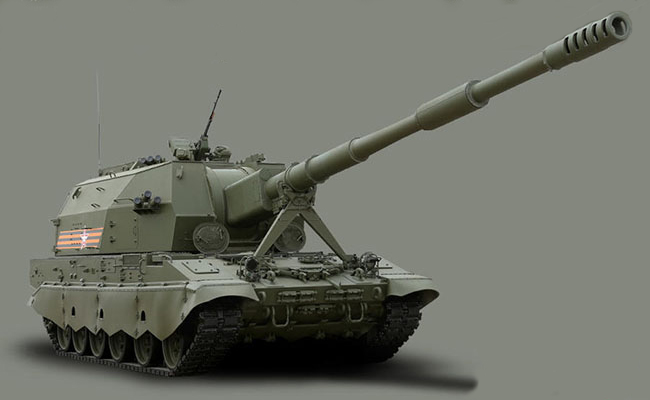
Self -propelled artillery installation "Coalition" Photo: Militaryarms.ru
As expected, in the end, they will completely replace the Msta-S system developed back in Soviet times. New air defense systems will also be purchased.
Problems are observed with automated troops control systems (ASUB) at the level of brigades and below. It was originally planned that 40 brigades will receive sets of a single management system in the tactical link (ESU TK). But the set for testing has been received so far only one team. The military is not yet sure whether ESU TK should already be adopted or is it better to finalize this system. This means that the full implementation of ESU TZ can be postponed until the next weapons program - after 2027. In the meantime, the ground forces continue to receive reconnaissance, management and communications (Cruz) complexes, which have already passed field tests in Syria.
Navy
After 4.7 trillion rubles were allocated to the fleet in the state program of weapons-2020, and he was not able to spend them (the problems with the Russian shipbuilding industry and Western sanctions were affected), it is expected that the financing of the Russian Navy within the GPV-2027 will be reduced to 2.6 trillion rubles. Despite the grandiose plans described in the recently approved naval doctrine, Russia plans to concentrate its sea construction on submarines and small ships. Due to the problems with the construction of the Admiral Gorshkov head frigate (until 2020, eight ships of this type were to be commissioned), the fleet will continue to build less advanced frigates of the Admiral Grigorovich class.
In the mid-2020s, the construction of the fifth-generation nuclear submarines, conditionally called the "Husky", will begin
The only new class of surface ships, which is expected, will be built during the action of the GPV-2027, is the so-called 8-ton frigate of the “super-butt”, which is increasingly considered as a cheaper and practical alternative to an atomic missile cruiser type “Leader”.
The Russian Navy seeks to increase the size of its small ships in order to increase their combat effectiveness and endurance and at the same time postpone the purchase of larger ships, such as destroyers, landing ships and aircraft carriers for an indefinite time.
As for the submarines, in the weapons program-2027, there will undoubtedly be found funds to complete the construction of six atomic submarines with cruise rockets of Yasen-M (perhaps enough for the seventh), as well as for the modernization of four to six boats of two classes-Antei and sharks designed in Soviet times. And in the mid-2020s, the construction of the fifth generation atomic submarines with the conditional name “Husky” will begin.
Russia is working on the creation of a new hypersonic missile, which, quite possibly, will pose an even greater threat to its opponents in the medium and long term
In the next eight years, the Russian fleet will concentrate on the development of new combat systems and on the improvement of existing ones. Thanks to the introduction of new Caliber cruise missiles, developed in three modifications-anti-ship, anti-submarine and missiles against ground targets-even a small ship moored near the Russian port can become a serious threat to the enemy, including NATO member countries. The Russian military, perfectly understanding the advantages of these missiles, equipped them with a large number of ships and submarines. Over the next eight years, Russia will continue to place these missiles on most new surface ships and submarines, modernize some existing vessels for transportation of missiles and work to increase the accuracy and reliability of the missiles themselves. Russia is also working on the creation of a new hypersonic missile, which, quite possibly, will pose an even greater threat to its opponents in the medium and long -term perspective.
Air Forces
The last seven years of the Russian Air Force ( the official name “Aerospace Forces” (VKS).- NT) began to receive modern aircraft in significant quantities. In addition, they continue to order the development of new models. Su-57 (previously known as the T-50, or PAK FA), the fifth-generation multifunctional fighter is expected to enter serial production until new improved engines are ready, which is unlikely to occur until 2027. Over the next eight years, the Ministry of Defense will continue to purchase these aircraft in small quantities for testing.
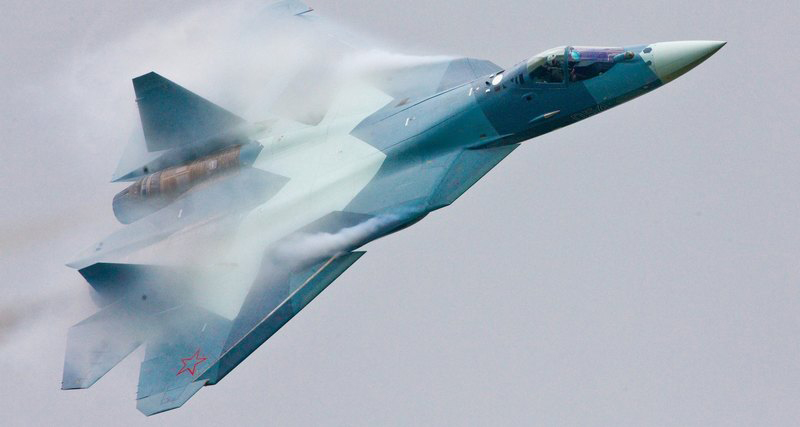
Fifth generation multifunctional fighter Su-57 Photo: Popmech.ru
Purchases of Su-35C fighters will also continue in accordance with a contract signed at the end of 2016 for 50 additional aircraft. The ruler of the department will also remain the Su-30SM fighters and the Su-34 fighter-bomber. Most likely, they will be purchased for 1218 cars of each type per year. MiG-35 fighters can also be purchased, but probably in a small amount.
In Russia, there is a boom of internal production of unmanned aerial vehicles (UAVs). By 2020, combat UAVs, as well as a new generation of intelligence vehicles will be launched into production
In general, since the Russian Air Force is now provided with modern fighters, the purchase of combat aircraft, like helicopters, will be reduced. Preference will be given to other types of aircraft. The development of a new high -speed helicopter will begin no earlier than 2027.
One of the main tasks will be ensuring the Air Force by transport aircraft and refueling. It is expected that serial production of military transport IL-76-MD-90A should begin in 2019, and the Russian military hopes to receive from 10 to 12 such aircraft a year.
It was assumed that since 2016, the Air Force plane will be delivered in the Air Force, A-100 (Avax) on the basis of IL-76MD90A will be delivered, but the beginning of deliveries was repeatedly postponed. Nevertheless, the purchase of this aircraft will be included in the State Armenia Program-2027.
Finally, in Russia there is a boom in the internal production of unmanned aerial vehicles (UAVs). By 2020, combat UAVs, as well as a new generation of intelligence vehicles, will be launched into production.
To strengthen the air defense, Russia will continue the deployment of (anti-aircraft) missile systems of a large-range S-400 and the missile system of the near-radius of the shell-S. At the same time, it is unlikely that in the near future the S-500 S-500 air defense system will be ready for serial production. The initial plans provided for the beginning of the S-500 serial production in 2015, now official sources report that the prototype of the rocket will be completed by 2020. As for the new low-range anti-aircraft missile system, it is still under development and is unlikely to be ready for production until 2030.
<...> Russia has accumulated sufficient military potential in recent years: in the case of a traditional (conventional) war, it will be able to protect herself from any enemy and defeat any neighboring state except China.
At the same time, Russia has more than sufficient nuclear deterrence potential. Thus, the new purchases according to the State Arms Program-2027 will be aimed at ensuring that the country technologically does not lag behind its main rivals (NATO member states and China). In some areas, such as air defense, anti -ship missiles and electronic military equipment, Russia will maintain an advantage. In other areas, such as UAVs, high -precision ammunition, as well as tanks and armored vehicles, the country seems to reduce the gap. But on surface ships, transport aircraft and automated control systems, Russia will still lag behind the United States and, possibly, China.
In recent years, Russia has accumulated sufficient military potential: in the case of a traditional war, it will be able to protect herself from any enemy and defeat any neighboring state except China
Translated from English Natalia Frolova