
Translated material
Red Palestine
70 years ago, the Soviet leadership tried to implement a plan for the construction of a socialist state in Palestine. Stalin and Zionists were on one side of the barricades in the struggle for the creation of Israel
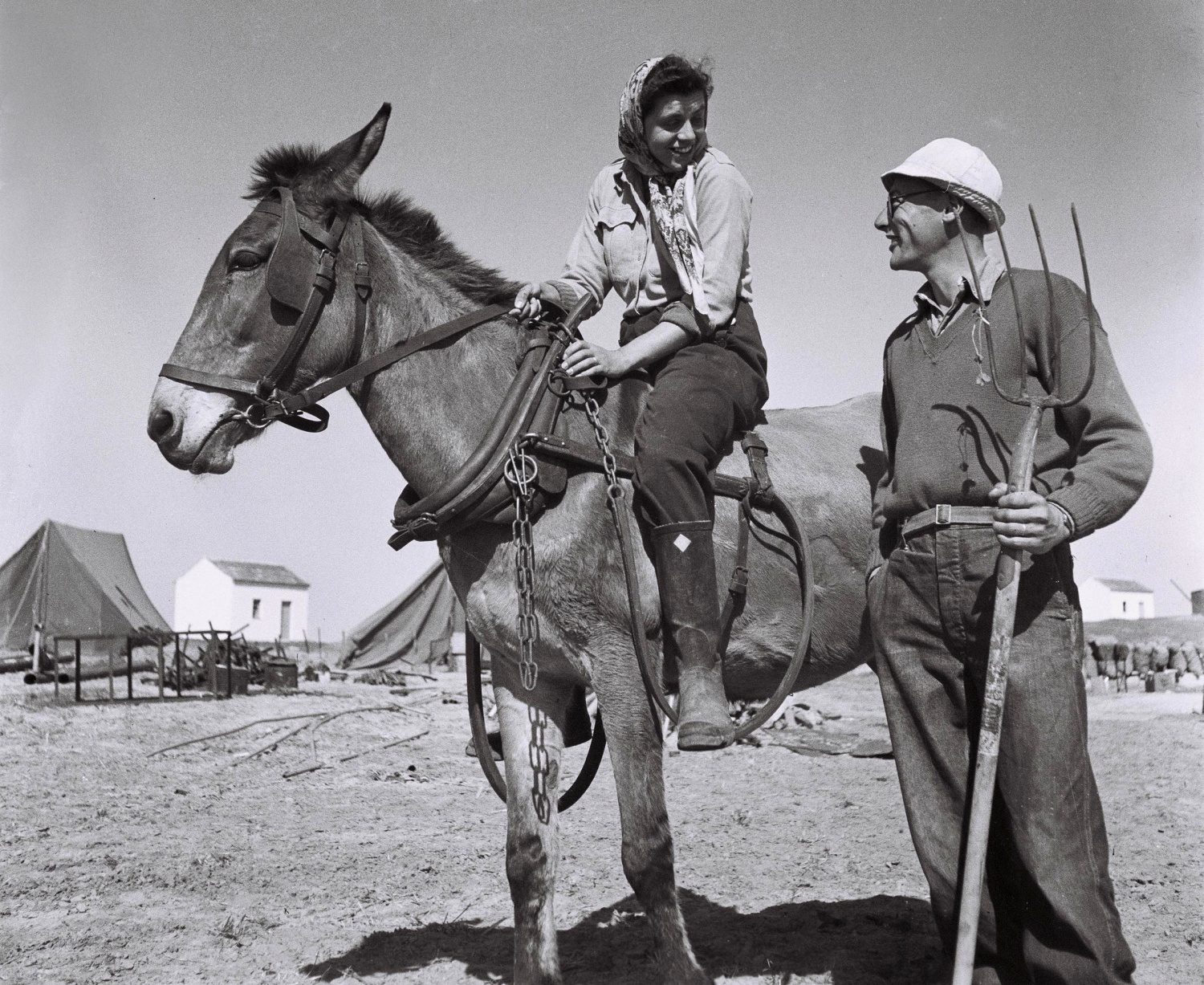
Photo: fotobank.com/gettyimages
The UN General Assembly on November 26, 1947 began discussing the issue of Palestine. On the same day, early in the morning, US President Harry Truman and key ministers received an analytical note of the CIA with objections to the creation of the Israel state. Intelligence warned its government that the emergence of a Jewish state, on the one hand, could deprive America of oil necessary for it, and on the other, will open the door for Soviet penetration into the Middle East.
Zionist Gromyko
The most influential opponents of the Zionists were three people in Washington: Secretary of State George Marshall, Minister of Defense James Forrestol and Director of the Central Intelligence Administration Rear Admiral Rosko Hillencueter. They proved to President Truman that the leaders of the Zionists were too pro-communist, so it is impossible to trust the future leaders of Israel, primarily David Ben-Gurion, known for his commitment to socialism. James Vincent Forrestlet before the war was very successfully engaged in business, he had major interests in the production of Middle Eastern oil production, so he turned out to be a fierce supporter of close cooperation with the Arabs. Forrestlet constantly proved that it is impossible to quarrel with oil producing countries, since America cannot exist without them. And without a Jewish state, the Americans will somehow manage ...
“You simply do not understand that forty million Arabs,” the Minister of his interlocutors convinced, “four hundred thousand Jews in the sea will collide. And all. Better think about oil: we must be on the side of oil. ”
The American administration desperately resisted the idea of creating a Jewish state in Palestine. But it was at that moment when the case of the Zionists seemed to be lost, at the session of the General Assembly, the Soviet representative at the UN Andrei Andreyevich Gromyko made his famous speech in defense of the rights of Jews to his state. Andrei Andreevich said that two options for resolving the issue of the future of Palestine are possible. The first is the creation of a single Arabo -Jewish state. If this option is unrealistic, since the Arabs and Jews say that they cannot live together, then Palestine must be divided into two independent states - Arab and Jewish. Obviously, the creation of a single state is impossible. So, the second option remains.
Perhaps no one better than Gromyko justified the rights of Jews to their state in Palestine: “Representatives of the Arab countries indicate that the Palestine section is historical injustice. But with this point of view, one cannot agree, if only because the Jewish people were associated with Palestine for a long historical period of time. In addition, we cannot lose sight of the situation in which the Jewish people found themselves as a result of the last world war. ”
Gromyko fell upon the British government, which stated that he was ready to leave Palestine and provide conditions for creating two states only if the Arabs and Jews come to an agreement.
Gromyko, in essence, supported the armed struggle of Jewish underground groups against the British authorities. He also answered those Arab delegations that insisted that the UN did not have the right to decide the fate of Palestine: “The General Assembly, as well as the United Nations, not only has the right to consider this issue, but in case of this situation in Palestine, it is obliged to make the appropriate decision. According to the Soviet delegation, the plan for resolving the issue of Palestine, according to which the practical implementation of measures to implement it should lie on the Security Council, is fully consistent with the interests of maintaining and strengthening the international world and the interests of strengthening cooperation between states. ”
Why is Stalin Israel?
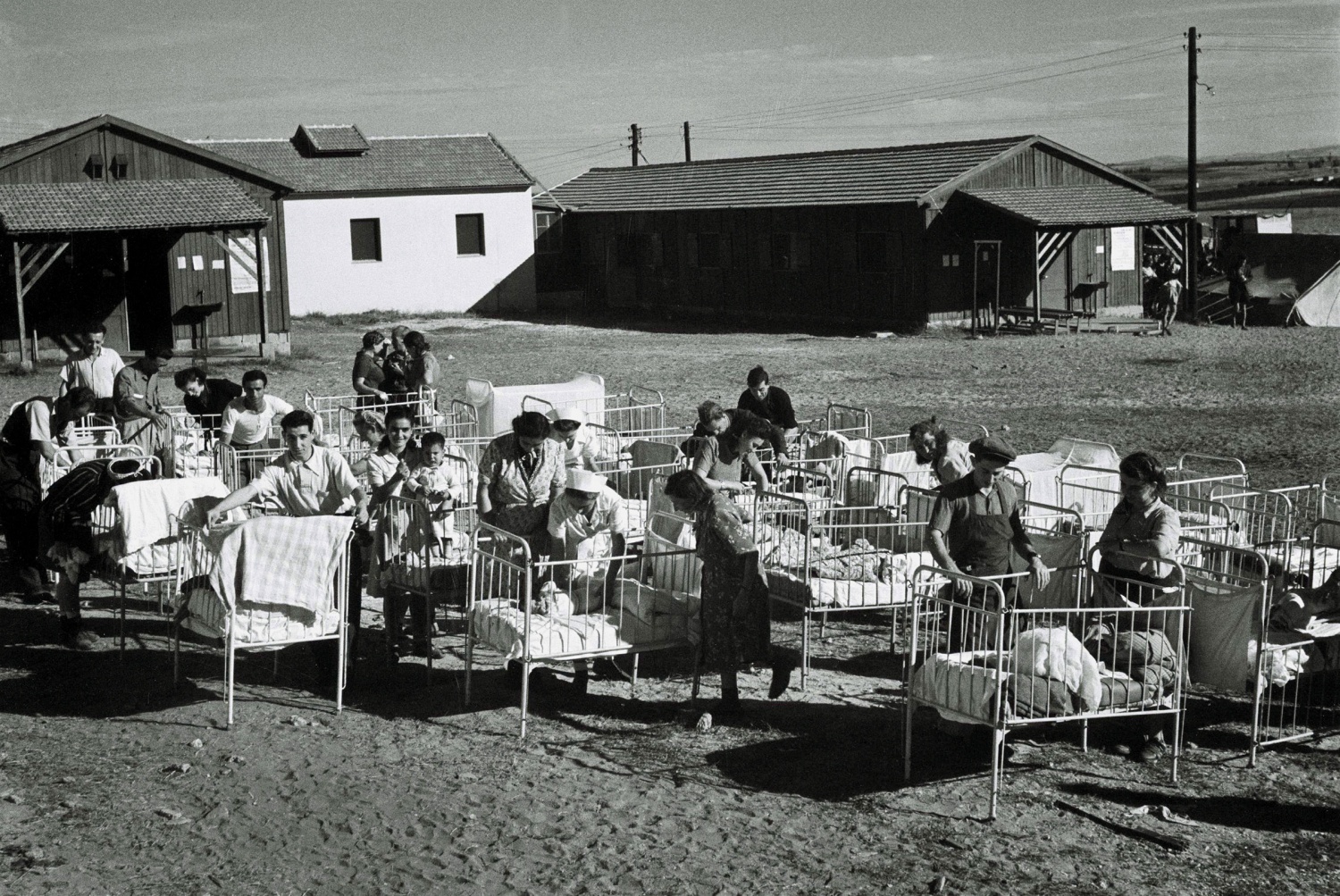
Take their children to bask in the sun photo: fotobank.com/gettyimages
Active participation in the creation of a Jewish state in Palestine was not only a way to annoy the British and reduce their influence in the Middle East, although this in itself was pleasant. The Soviet Union left the war the winner, and this provided not only territorial acquisitions, but also the spread of influence around the world.
“My task was to expand the borders of the Fatherland. And it seems that Stalin and I did a good job with this task, ”Molotov recalled smugly. Around the same time, the secretary of the Central Committee Alexei Kuznetsov said: “We are defending, but there is an indication that we, based on the results of the war, when we have become a very strong power, must pursue our independent, active foreign policy everywhere and everywhere.”
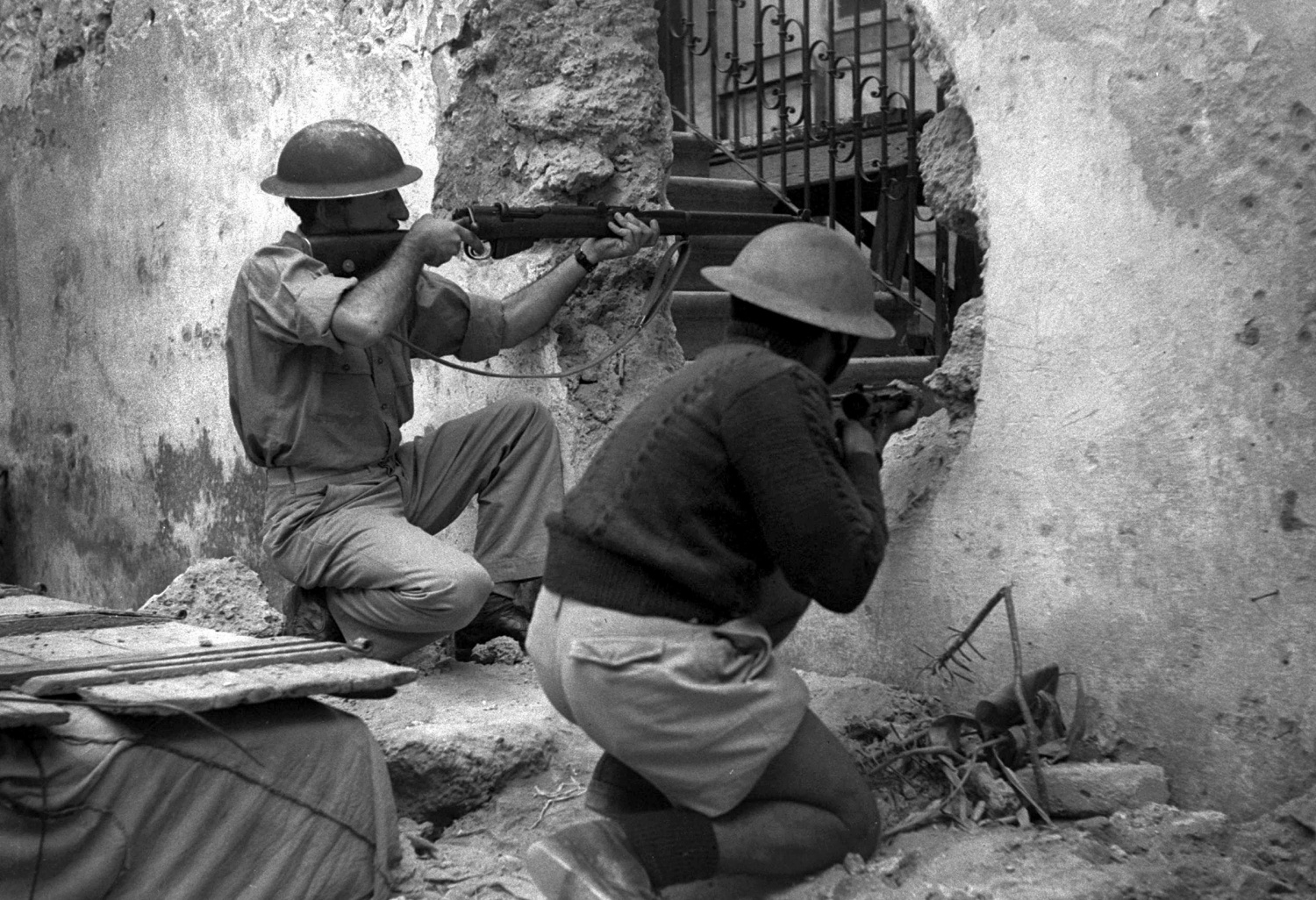
(Palestine still under the British mandate) Photo: Fotobank.com/gettyimages
Stalin wanted to gain control of the Black Sea Straits, tried to create a Soviet republic on the territory of Iran and Chinese Xinjiang. He created Soviet naval bases in Finland and China. The leader was counting on something similar in Palestine. If you do not create a socialist republic there, then at least get a reliable ally and military bases. If the new governments in Poland, Czechoslovakia or Bulgaria act in full accordance with the instructions from Moscow, then why not count on the same behavior of the leaders of the future Jewish state?
* The British mandate in Palestine continued from 1922 to 1947, between the collapse of the Ottoman Empire and the section of the mandate region into Israel, the Arab Palestinian territories and Transijordania.
The resolution of the UN General Assembly No. 181 on the creation of two independent states on the territory of the British mandate in Palestine on Saturday, November 29 of the 47th year.
Jews had to gather two -thirds of the vote in favor of the creation of two states. Thirty -three countries voted for the resolution, against thirteen. Several countries, including England, abstained. The decision to divide Palestine into two states was made.
Stalin’s position was of the greater importance that he had not one, but five voices at the UN: the Soviet Union, Ukraine and Belarus, Czechoslovakia and Poland. Five Stalinist votes were crucial. If Stalin voted against, Israel would not have appeared.
War
Hundreds of thousands of Palestinian Jews took to the streets covered in enthusiasm. The next day, November 30, the unrest among the Arabs, outraged by the UN decision, began in Palestine. Everywhere they attacked Jews, seven people died. In Syria, they formed the "Arab Liberation Army" to capture Palestine. Arab troops pursued Jews throughout Palestine. The British did nothing to stop violence. They seemed to want to demonstrate to the world that in vain the UN supported the stupid idea of the Palestine section.
The Soviet messenger in Lebanon Daniil Solod recorded a conversation on December 23, 1947 with the country's Prime Minister Riad Solkhu:
“Solkh said that the Arab countries finally agreed under any conditions to disagree with the Palestine section and the creation of a Jewish state in it, with all its might to resist the section and fight with all means, no matter how much it continues. He repeated the words that I already said to me by the president of Syria Shuria, that if necessary, the Arabs will fight for the preservation of Palestine for two hundred years, as it was during the Crusades ... Riad Solkh indirectly confirmed that the initiator and the main inspirer of the struggle of the Arab countries against the division of Palestine is Syria ... "
On February 5 of the 48th year, the future Foreign Minister of Israeli Moshe Sherstok talked with Gromyko. He complained that Czechoslovakia was selling weapons to the Arab governments, and asked the Soviet leadership to intervene in order, firstly, to stop the sale of Czechoslovak weapons to the Arabs and, secondly, to influence Yugoslavia, which refused to sell weapons to Palestinian Jews.
In Moscow, the policy of Czechoslovakia was considered incorrect. Stalin gave the order to arm Palestinian Jews so that they could create their own state.
On April 13, 1948, the Middle Eastern Department of the USSR Ministry of Foreign Affairs drew up a certificate for the authorities “On the Palestine situation after the UN division decision”. Soviet diplomats sympathetically wrote about Jews who were forced to arm themselves in order to defend themselves from the Arabs. It was very different about the Arabs:
“Armed speeches against Jews unfolded with renewed vigor in December 1947. The traitors and quisling from around the world began to flock to Palestine and took part in the fight on the side of the Arabs, among them Anders scum, Bosnian Muslims from the camps of displaced persons in Germany, prisoners of war, who fled from the camps in Egypt, “volunteers” from Francian Spain. The Palestinian border crossed the numerous detachments of the Arabs who moved on cars and had mortars and automatic guns in service ... Arabs moved to systematic and systematic operations against Jewish colonies scattered throughout the country. The colonies located in the south of the country, in Negev, and in the north, in Galilee, were cut off from the main Jewish population of the coastal strip, and their defense, and even more so the connection between them, is an almost overwhelming task for a semi -legal Jewish police. In addition, Jews are deprived of help from people from outside, suffer heavy losses killed and wounded, which adversely affect the resistance of this small (only 640 thousand people) community ... "
For several decades, these documents of the Soviet Ministry of Foreign Affairs have been a secret and stored behind seven castles. They contradict the version of the Arab-Israeli conflict, which was adopted in Moscow later, when Israel began to be considered an enemy ...
Referring to constant skirmishes between Jews and Arabs, which grew into hostilities, the United States proposed to refuse to create a Jewish and Arabic states in Palestine and transfer this territory to custody. Stalin again came to the rescue of the Zionists.
For the Palestine section
On April 9, 1948, the Minister of Foreign Affairs Molotov sent a note to Stalin: “I submit to the approval of the project of Comrade Gromyko to the Session of the General Assembly:“ To defend the resolution of the General Assembly of November 29, 1947 on the division of Palestine ... to criticize the American proposal for custody of Palestine ... ”
Stalin approved Molotov's proposal. On April 20, Gromyko played at a meeting of the First Committee of the Second Special Site of the UN General Assembly. He strongly objected to establish custody of Palestine against the idea of the United States.
The Soviet representative reproached the United States because they were concerned about oil, not the fate of the peoples ... As for the problem of Arab refugees, it was generally not much interested in Soviet diplomacy. Soviet leaders did not see anything terrible in what happened. Jews from the Arab countries (about 900 thousand people!) Were forced, throwing at home and all property, to flee their native places. Half a million of them settled in Israel, where they began a new life. Soviet diplomats believed that Arabs who did not want to stay in Israel should be justified in neighboring Arab countries. Such an exchange of the population did not seem to the Soviet leaders something unusual.
At the end of World War II, in September of the 44th, Stalin agreed with the new government in Warsaw that the Poles would leave Volyn and Galicia, Ukrainians will leave Vyshadad and the Helm Territory. In other words, all the Poles will live in Poland, and all Ukrainians in Ukraine. In the view of Stalin, this was a very reasonable operation. And he did not understand why the same could not be arranged in the Middle East.
** The state of Palestine exists de jure, de facto has not been created today and does not have real sovereignty. After a long conflict in July 2014, Hamas (he controls the Gaza sector) and Fath (controls the western coast) formed the "Government of National Unity."
Sixty years ago, the UN decided to divide Palestine and the creation of two states - Arabic and Jewish. The Palestinian Jews and Palestinian Arabs of the United Nations provided equal opportunities to create its own state **. Jews were determined to use this only chance in their history. The neighboring Arab rulers firmly decided that the Jewish state would not appear on the map of the Middle East. At the same time, they were not going to create a state of Palestinian Arabs, whose fate did not interest them at all. Transijords and Egypt decided that they would divide Palestine.
After the First World War, at a peaceful conference in Paris in 1919, Palestine was determined an area that includes the territories that are today Israel, Palestinian Autonomy, Jordan and the northwestern part of Saudi Arabia. It was decided that Palestine should become the dandelling territory of the League of Nations. On July 24, 1922, at a conference at the San Remo League of Nations, she transferred a mandate to the management of Palestine Britain. According to the mandate, Britain pledged:
“Article 2 ... to create such political, administrative and economic conditions that will ensure the establishment of a Jewish national house in Palestine, as set out in the preamble and the development of self -government institutions.
Article 5 ... No part of the territory of Palestine can be given, leased or placed under the management of a foreign power.
Article 6 ... to promote Jewish immigration and encourage dense settlement by Jews of land, including state lands and empty lands that are not necessary for public necessities.
Article 7 ... to help the acquisition of Palestinian citizenship by Jews who will choose Palestine with a place of permanent residence. ”
First published in NT No. 42 of November 26, 2007 .