
Translated material
New President Zimbabwe
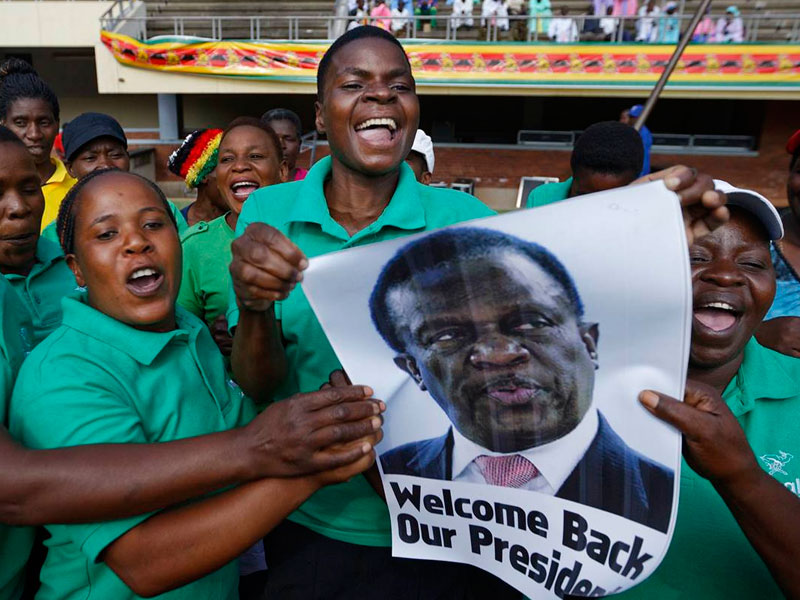
On Friday, the new President of Zimbabwe Emmerson Mnngagva took office. Shortly before this, following the results of the military coup d'etat, the previous President Robert Mugabe resigned. The Economist discusses which president will come from Mnngagva.
Many Zimbabwe citizens were very happy when their former President Robert Mugabe resigned. However, how much and how their life will now change, so far remains in question. The successor of Mugaba, still as vice president, earned himself a reputation of a non-resurrect man in the falsification of elections and persecution of opposition. Now he has returned from his short exile with promises to arrange “new democracy” in Zimbabwe, to ensure the growth of the economy, peace and jobs.
There are those who hope that Mnngagva will really fulfill their promises. Such hope is based on two arguments. Firstly, in Zimbabwe, everything is so bad with the economy and infrastructure that he, most likely, will somehow have to ask for economic assistance abroad. Secondly, if he resorts to external sources of funds, then he will have to obey the external rules. In particular, from him they will seek reports on expenses.
 Emmerson Mnngagva, President Zimbabwe
In addition, he will have to carry out some political reforms and, above all, improve the electoral process. There are skeptics that recall cases when there were talk about reforms and changes, but in the end nothing happened. True, if Mnngagva is now resorting to external assistance, then, most likely, the pressure on the fulfillment of obligations will also increase.
However, even if there is goodwill, the correction of the situation will be a difficult task. According to the author, Zimbabwe needs to attract investors as soon as possible. To do this, you need to make sure that they are confident in their rights. Under Mugaba, for example, the law was in force in the framework of the general dinogue strategy, according to which the owners of most enterprises in the country should be Zimbabvians. It is also necessary to agree with farmers, the vast majority of which are white. They still have formal rights to more than 4,000 farms that have been confiscated over the past 17 years.
With political reforms, it is even more complicated. Mnngagva will hardly strive for honest elections, because in this case the risk of losing is possible. According to the Constitution, its presidential term ends in the summer of next year. Now he has become the president in return for Mugaba, the five -year presidential term of which was supposed to be drawn to the end precisely then. Meanwhile, conversations have already begun to extend his stay in his post for two to three years.
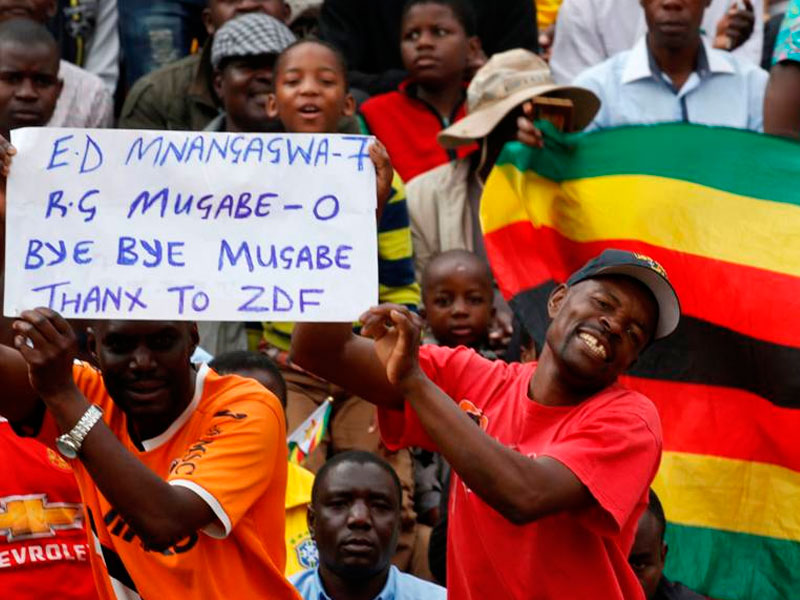 Supporters of the new President Zimbabwe / YouTube.com
But even if the fraud and falsification is excluded, the opposition in Zimbabwe is extremely weak. There is actually one leader who, firstly, has health problems, and secondly, popularity has declined. In other words, subject to the observance of electoral procedures, voters simply may not have a better choice than the current political leaders.
Western governments in connection with the current situation are confused, the author notes. On the one hand, they would be happy to contribute to the conduct of Mnangagova at least small economic and political reforms. On the other hand, remembering Mugaba, they are afraid that the new president will not fulfill any obligations, but will only take advantage of their compliance and complacency in order to strengthen his power in the country and accurately prevent “free elections”.