
Translated material
Blow from memory
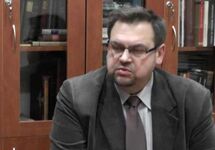
The Federal Security Service sent from Russia the Polish historian Henryk Glebotsky, who gave a lecture on political repressions in the USSR. This was reported at the Institute of National Memory of Poland (IPN).
Glebotsky, a researcher at the University of Yagello and the Krakow branch of the Institute of National Memory, came to Russia on November 14. He conducted research in the archives, studying Russian-Polish relations of the XIX-XX centuries. On November 22 and 23, at the invitation of the Polish Institute in St. Petersburg, he gave two open lectures on the "Polish operation" of the NKVD and the fate of Polish citizens during the political repressions of the 1930s.
The day after the second performance, Glebotsky was detained by the FSB officers. The scientist was acquainted with the document according to which he is obliged to leave the territory of Russia within 24 hours "under the threat of violent deportation."
This decision of the FSB is equivalent to the ban on the entry of Glebotsky to Russia in the future, IPN noted. Thus, he is deprived of access to Russian archives. The scientist needs to work in them for a study in the field of Russian-Polish relations, which he has been conducting for a quarter of a century.
The Polish Institute of National Memory was created in 1998. He is engaged in the study of political repression in the twentieth century. As noted on the institute’s website, among his tasks - “Investigation of the crimes of the Nazis and Communists, including crimes committed against Poles or Polish citizens of other nationalities, from November 8, 1917 to July 31, 1990.” IPN also performs expert functions in the implementation of the law on the demolition of monuments of the communist regime that has entered into force in October.
In July, after the publication of the Russian Ministry of Defense documents on the release of Poland in 1944, the institute accused the military department of falsification of history. It was noted that "specially selected documents were published to prove the prejudice of the thesis that the Red Army acted as a liberator." "This thesis was torn out of context and falsifies the story," the institute said.