
Translated material
Diary with bad marks
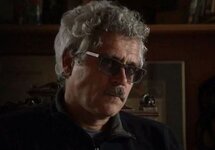
The former head of the Moscow Anti-Doping Laboratory Grigory Rodchenkov described the details of the use of doping by Russian athletes during the 2014 Olympics in Sochi a role in this then Minister of Sports Vitaly Mutko. Excetters from Rodchenkov’s diary was published by The New York Times.
In particular, on February 1, 2014, Rodchenkov wrote that, at the direction of the Deputy Minister of Sports, Yuri Nagorny, he examined the FSB building adjacent to his laboratory. Rodchenkov noted that the “pure” doping tests of Russian athletes arrived from Moscow to Sochi, and also expressed irritation due to the fact that they were not ordered in sports or alphabetical.
On February 3, four days before the opening of games in Sochi, Rodchenkov handed Mutko a list of athletes who used doping. From the diary records it follows that the "doping cocktail" consisted of a mixture of three anabolic steroids and vermouth. The head of the department of medical and research programs of the Russian Olympic Committee Irina Rodionova was responsible for its production. The assistant Rodionova Alexei Kiushkin also had an attitude towards cocktail, Rodchenkov wrote.
Rodchenkov also wrote that Mutko also advised to leave the Olympic laboratory open after the end of the games as a platform for future doping experiments.
Rodchenkov’s notes can push the International Olympic Committee to make a harsh decision on Russia, notes The New York Times. The meeting of the IOC, at which the issue of Russia's participation in the 2018 Olympics will be resolved in Pyeongchang will be held on December 5.
On November 12, it was reported that Rodchenkov intends to publish new testimonies given by the IOC commission under the leadership of the Swiss lawyer Samuel Schmid, if she does not take the information provided by him quite seriously. This commission is investigating the involvement of the Russian leadership in doping frauds during the Olympics in Sochi.
Rodchenkov collaborates with another IOC commission, headed by another Swiss lawyer - Denis Oswald. It investigates specific cases of doping at the Sochi Olympics.
As a result of the work of the Oswalda Commission, the IOC canceled the results of a number of Russian athletes shown in Sochi. Russia lost four gold, six silver and one bronze medals and sank from the first to sixth place the final place. Eight gold medals, four silver, nine bronze remains in the reserve of the national team. Before Russia in the standings - Norway, Canada, the USA, the Netherlands, Germany.
On Monday, the presidential spokesman Dmitry Peskov said that no one could "steal" the victory of Russian athletes in Sochi. “It is very difficult to steal the victory, especially such a victory that will forever remain with our national team and our athletes -heroes. As for the decisions that are made, they are subject to deep, calm and sober analysis,” Peskov said. “Most importantly, it will be very persistent, energetically to take measures, all possible measures provided for by the law to protect our legitimate and legitimate interests of our athletes ".