
Translated material
Frozen war
On November 30, 1939, the Soviet-Finnish war began, which does not like to recall official historiography. Why did Stalin need an armed conflict with Finland?
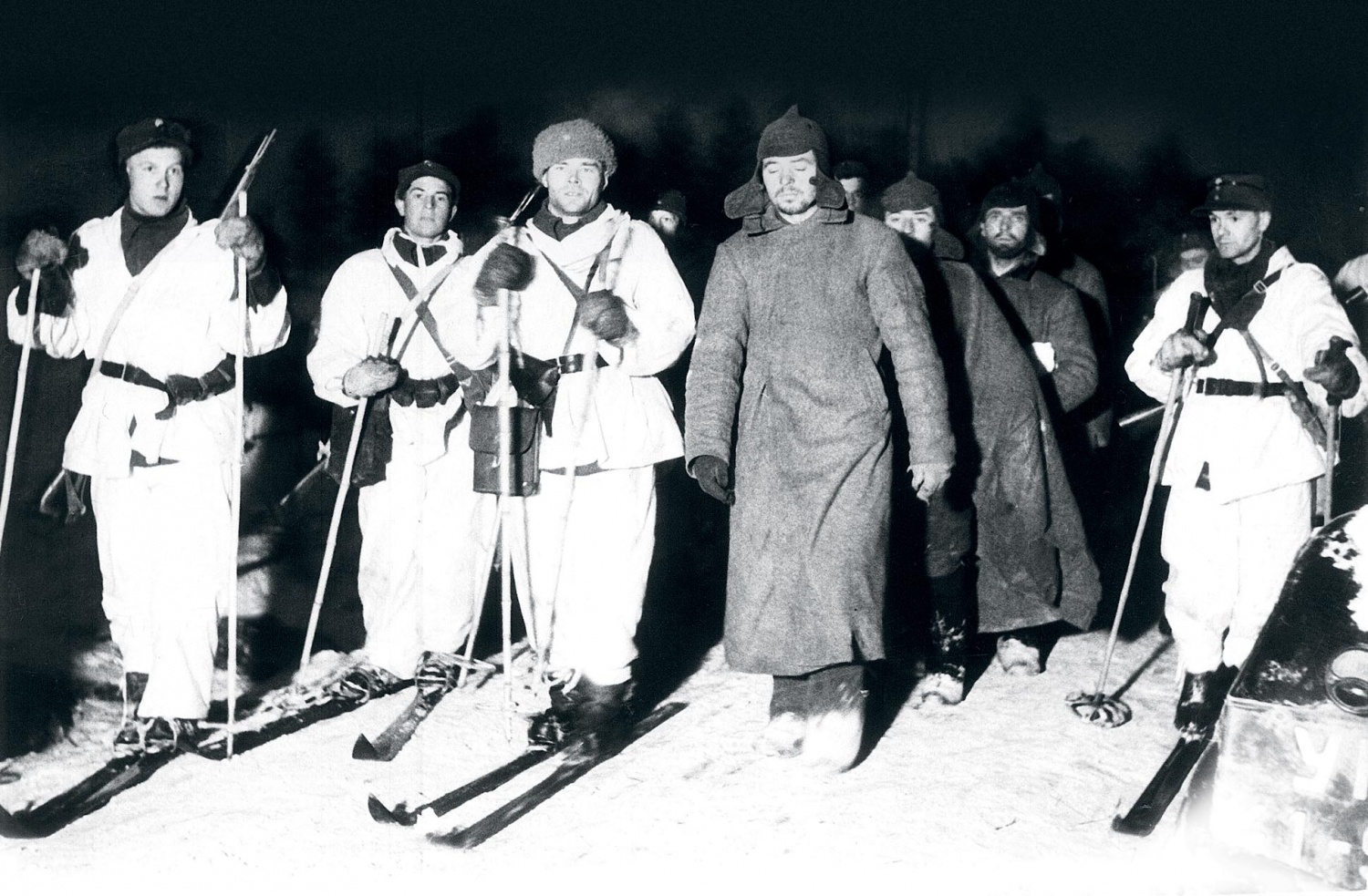
Photo: AP Photo
On November 26, 1939, a group of Red Army soldiers was fired by a group of the Karelian Isthmus with Finland of the village of Minil. The People's Commissar of Foreign Affairs of the USSR Vyacheslav Molotov accused the Finnish side of this. The incident caused a sharp exacerbation of relations between the two countries and served as a trigger for the “Winter War” of 1939-1940, which became a difficult test for the Red Army on the eve of a great war with Hitler.
Was there a shelling?
Historians still discuss what actually happened at the abandoned border village. Some believe that this was a Soviet provocation, for the organization of which the head of the NKVD for the Leningrad Region, the Commissioner of the State Security of the II rank Sergey Goglidze in April 1940 received the Order of the Red Banner. Others, referring to the documents of the Russian State Military Archive, categorically reject the very fact of the shelling and the presence of any losses in the troops of the district. Twenty years ago, in an interview with the author, one of the inhabitants of those places, who formed in 1939 by a teenager, also categorically rejected the version of the artillery storage: “Our troops were walking day and night, but we did not hear any artillery shots.” The secret of "shots at Minila" is still not disclosed ...
* In the first half of the 1930s, the Soviet Union concluded pacts about non-aggression with Finland, Estonia, Latvia, Poland and France.
Helsinki rejected the Kremlin’s accusations, inviting the Soviet side to investigate the incident on the basis of the current bilateral agreements. The Finns were ready for negotiations on the mutual withdrawal of troops from the border line. In response, Molotov was accused by the government of the Social Democrat Aimo Cajandera of mockery of the “victims of the shelling” and emphasized that the Soviet Union no longer considers itself connected by the 1932 pact*. On November 29, Moscow announced the breakdown of diplomatic relations with Finland. The Finns, discouraged by such aggressive rhetoric, hastened to declare their readiness to withdraw their troops from the border unilaterally and fulfill other demands of the USSR.
However, on November 30, the Soviet Union began military operations.
Sphere of special influence
In accordance with the secret protocol to the Molotov -Ribbentrop Pact, Finland was included in the "sphere of influence" of the Soviet Union. After the September section of Poland, Stalin sharply increased pressure on the Baltic states, which, with the outbreak of World War II, took a neutral position. Finland on September 2, 1939 also announced its neutrality. In foreign policy, the northern neighbor was oriented mainly to Sweden and the UK, and also maintained close economic ties with the United States.
Contrary to the Soviet propaganda of that time and the accusations of the Finnish authorities of fascism, the party in the country of Suomi who sympathized with Nazi Germany enjoyed a modest influence. In the elections to the Sejm in the summer of 1939, the patriotic folk movement received only 7 seats out of 193, taking the last place. The leading political power of Finland remained right-wing social democrats. In the September reports of the Main Directorate of the Border Cranks of the NKVD of the USSR about the mood of the population of the adjacent strip, it was emphasized that the Finnish peasants, after the German invasion of Poland, were afraid of the possible attack of the Soviet Union in Finland ...
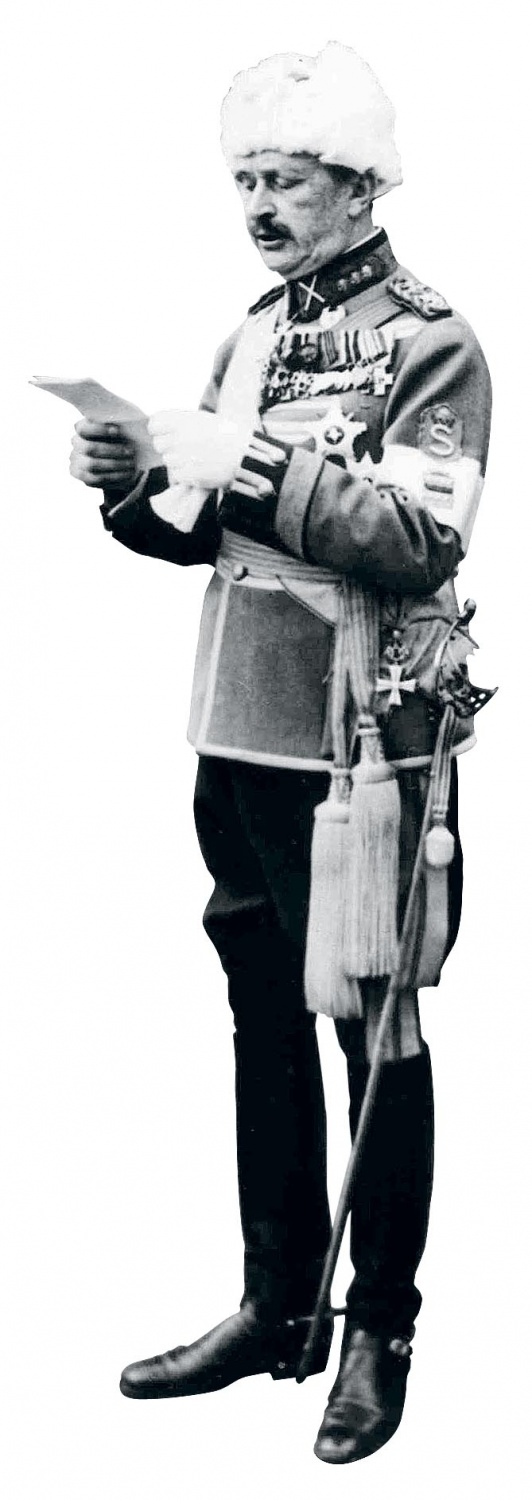
The Commander -in -Chief of the Finnish Army
Karl Gustav was appointed
Emil Mannerheim, whose name bore
The fortified line of defense
On the Karelian Isthmus
As it turned out, they were not afraid in vain. Back in June 1939, Stalin instructed the commander of the II rank Kirill Meretskov to develop a plan for an attack on Finland (“counterattack”) by the forces of the Leningrad Military District (Lenvo). Since August, the concentration of Soviet troops began on the border, which was used as a pressure tool on the Finnish government. The goal was to force the Finns to conclude the same “mutual assistance agreement” as with other Baltic states. The thesis about the threat of Leningrad, which was actively used in internal propaganda, served the same goal.
On the Karelian Isthmus, the border (the former internal border of the Vyborg province) took 32 km from the city. The Politburo of the Central Committee of the All -Union Communist Party of Bolsheviks indicated the “possibility of the artillery of Leningrad” and the probability of “using Finland to the third country”. But the Finns did not have a long -range artillery or the intention to shell Leningrad. Even in 1941-1944, when Finland fought on the side of Germany, participating in the blockade of the city, the Finnish military-political leadership refused to shelling, raids and offensive actions from the Karelian Isthper against Leningrad.
On October 12, Soviet-Finnish negotiations began on the Security of Leningrad. The Soviet side demanded that she lease Hanko’s peninsula (at the southwestern tip of Finland, “in the rear” of Helsinki), pushing the border on the Karelian Isthmus by 50–60 km, as a result of which the new line of the border would go right along the main defensive strip of Mannerheim Line, and transfer six islands in the Finnish to the USSR rental in the Finnish Bay to cover approaches to Kronstadt and Leningrad. In exchange, the Finns were offered large in area, but an economically undeveloped and unlit territory in Karelia, north of Lake Ladoga, in a more severe natural-climatic area. The Finns could not agree to the provision of Hanko Peninsula under the Soviet base - this violated the neutrality of Finland. They could not completely accept the demand of Stalin and Molotov to transfer the border, as this undermined the defense capability of the Mannerheim line and easily opened the way to the southern regions of the country and to the capital. Nevertheless, the Finns agreed to postpone the border partially in order to make Leningrad arthobics from the territory of Finland, even theoretically, and convey five islands from the required six. However, Stalin did not suit such a compromise.
On November 11, the People's Commissar of Defense Marshal Klim Voroshilov issued an order to create in Lenvo the 106th Infantry Division from Soviet Karelians. On November 21, the Military Council of the District Directive No. 4713 set operational tasks of the 7th, 8th, 9th and 14th armies, which completed concentration in the border lane. The troops were ready for the invasion of a neighboring country and were waiting for the order for the offensive. It was planned to occupy Finland by December 21-the 60th anniversary of Stalin.
Heavy losses
** During the war, about three thousand civilians were killed from Soviet bombing.
At 8.00 on November 30, a massive artillery shelling of the territory of Finland began. Helsinki, Turku, Tamper and other cities were subjected to attacks from the air. The 7th Army was to break through the isthmus, to seize the capital and the southern regions of Finland. The three armies north Ladoga were supposed to bypass the "Mannerheim" across Ladoga, cut the country and occupy the north of Suomi.
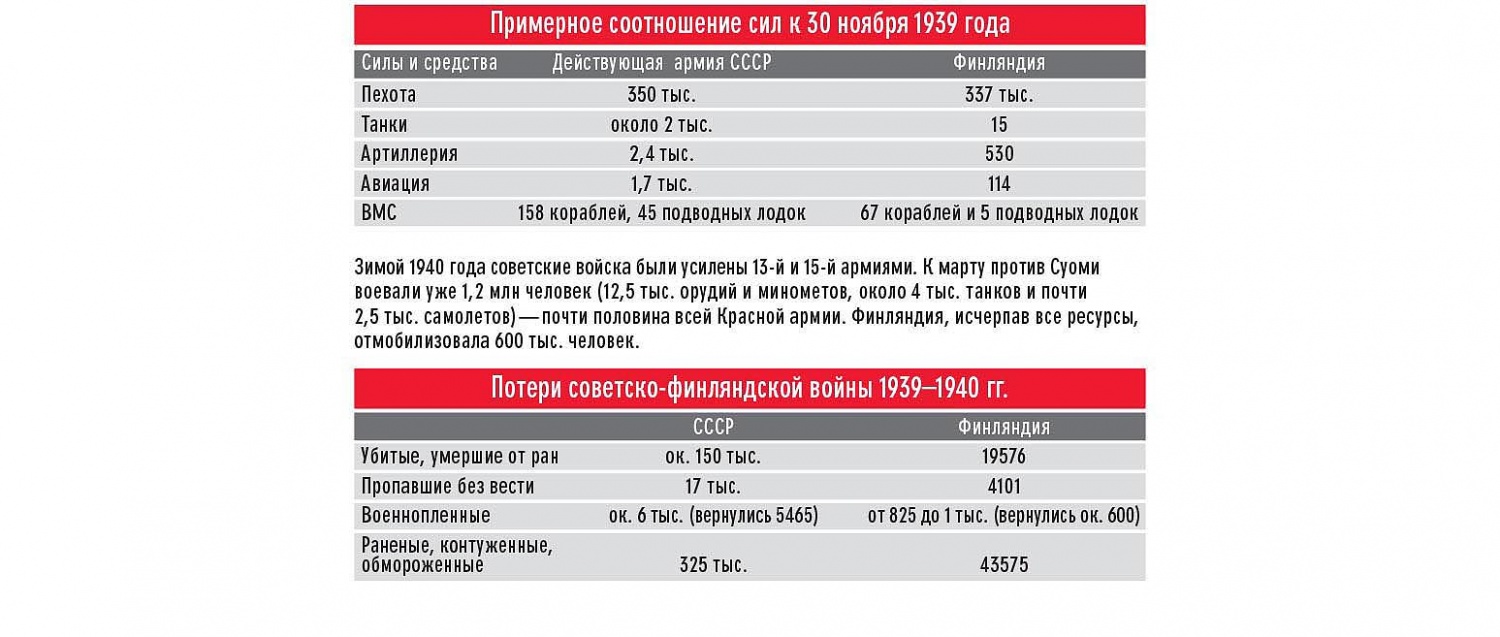
But the war dragged on. The superior forces of the Red Army could not break the stubborn resistance of a few, but much better prepared - both tactically, and from the point of view of the discipline - the Finnish army. Finnish fighters were much better equipped for warfare in the conditions of frosty and snowy winter, and among poorly dressed Red Army men there were thousands of frozen ones. But the most important thing, probably, was that the Finns in this war felt their own case, consciously defended their homeland - specific villages and farms. Therefore, the moral and psychological spirit of the Finnish army was very high. What could not be said of the Red Army, who poorly understood the meaning of what was happening. Yesterday's collective farmers, who formed the basis of infantry, walked badly and fought ineptly. The commanders acted temporarily and uninitiated, the interaction of military formations looked completely unsatisfactory. In Karelian snow, Soviet divisions resembled a huge and sedentary army of Asian despotism, capable of achieving success only due to incredible losses and overwhelming superiority. Bloody attacks on the Mannerheim line on the 6th, and then December 17–20 completely bloodied the 7th Army. Having suffered heavy losses, she could not break through the Finnish defense in any section and stopped barren attacks.
*** The 44th, 163rd, 168th and 18th Infantry Divisions, the 34th Follow Brigade were defeated.
To the north of Ladoga from the end of December 1939 to the end of February 1940, Finnish ski battalions managed to defeat ten Soviet divisions, four of them defeated completely ***.
Beat your own!
Failures caused Stalin's anger. The military tribunals raged. The Stalinist favorite, the army commissar of the 1st rank Lev Mehlis practiced demonstrative executions of the commanders. For example, on January 11, 1940, at the request of Mehlis, after the “demonstration court”, the command of the 44th Infantry Division was shot, defeated by the Finns in the Suomossalmi area on January 1–6: the commander of the division of the Kombrig Vinogradov, the head of the political department of the regimental commissar Pakhomenko, chief of staff, Colonel Volkov. The commander of the 662nd Infantry Regiment of the 163rd Infantry Division Major Sharov and the Commissioner of the Part, the battalion commissar Podkhomutov, accused of defeating his regiment **** were shot.
**** Read more see Alexandrov K.M. Doomed to defeat // in Sat: Soviet-Finnish war 1939–1940. SPb., 2003. T. I.
Special departments of the NKVD recorded numerous anti -Stalinist statements of fighters and commanders. 843 Red Army were repressed for "anti -Soviet agitation and propaganda." Most of the Soviet prisoners of war returned to their homeland were imprisoned in concentration camps, and many were shot by the NKVD bodies.
The threat from the West
Extremely annoyed by military failures, Stalin appointed Meretskov’s 7th Army commander and demanded that he break through the Mannerheim line. To prepare a concentrated strike on the main direction on January 7, 1940, the North-Western Front of the Commander I Rank Semyon Tymoshenko was formed, who concentrated huge forces on the isthmus. The defenders of the Mannerheim lines of the 7th and 13th armies exceeded 4.5 times in number, in artillery-9.5 times, in aviation-7 times, in tanks-more than 100 times (!).
***** In the past, Lieutenant General of the Russian Service, Hero of the First World War, St. George Cavalier.
****** Semiryaga M.I. Secrets of Stalin's diplomacy. M., 1992; Meltyukhov M.I. Stalin's missed chance. The Soviet Union and the struggle for Europe 1939-1941. M., 2002.
On February 11, the assault began. Tymoshenko and Meretskov were not considered losses. A three -kilometer gap arose in the Finnish defense, and, without reserves, on February 17, the Finns began the withdrawal of their troops. The Commander -in -Chief of the Finnish Army Karl Gustav Mannerheim ***** demanded from Helsinki the end of the war, in the unequal struggle of the country's exhausted power.
But the USSR could no longer continue the war. Before the Soviet state, on December 14, 1939, excluded for aggression from the League of Nations, there was a prospect of breaking relations with the United States and the conflict with European countries. In the north of Finland, the landing of the Anglo-French expeditionary corps was expected to land 57 thousand people. British and French experts studied options for applying air strikes on oil industry in Baku and Operations in Transcaucasia. ****** Such a development of events broke Stalin’s calculations, since already in February 1940 the main opponent of the USSR began to be called Germany, not the UK and France. Both Helsinki and Moscow were inclined to the world.
The demands of the USSR looked difficult, but Finland retained independence and avoided Sovietization. On March 8, against the backdrop of bloody and unsuccessful battles for Vyborg, peace negotiations began in Moscow. On the evening of March 12, the peace treaty was signed. At noon on March 13, a cruel fire at the front verse.
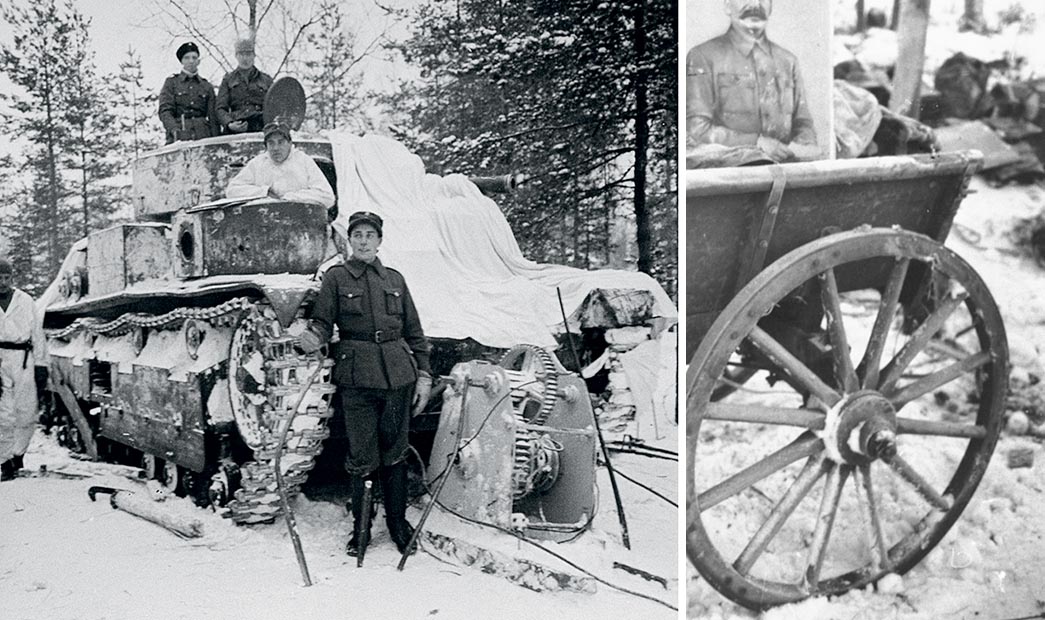
The Red Army suffered heavy losses in manpower and equipment. In the pictures-the T-28 tank and army convoy of the photo: * * fotobank.com/gettyimages.
The "unknown" war
******* In total, the Finns lost 34 thousand km2 of their territory and 11% of arable land.
The Soviet Union received the Karelian Isthmus with Viipuri (Vyborg), the border shifted from Leningrad to a distance of 130 to 150 km. The Soviet naval base arose on Khanko. Part of Lake Ladoga, Sortavala, two peninsulas - Rybachy and Medium, the territory near Kuo’layarvi *******, departed to the USSR.
But this was the only and unobvious win. The war, the subsequent attempts of Moscow to intervene in the internal affairs of Finland and the rudeness of Stalinist diplomacy, which caused the indignation of Finnish society, ultimately led Finland to the rejection of neutrality. Her army in 1941 became the most combat -ready ally of the Wehrmacht: in 1941-1944, the Finnish troops along the old border participated in the blockade of Leningrad.
In the post -war decades, power was embarrassed by this tragic war, which showed the unpreparedness of the Red Army to serious battles and with the light hand of the poet Alexander Twardowski called "unknown." The names of all the dead Soviet military personnel have not yet been established, since many of them (20–25 thousand) were not taken into account in the books of losses stored in the funds of the Russian State Military Archive in Moscow. In Leningrad there were neither military memorials, nor monuments to the dead and surviving participants in the Soviet-Finnish war, although they claimed that it was conducted "for the safety of Leningrad." But in reality, thousands of lives of the Red Army and commanders were sacrificed by the Stalinist foreign policy ambitions.
First published in NT No. 42 of November 23, 2009 .