
Translated material
Bone to bone
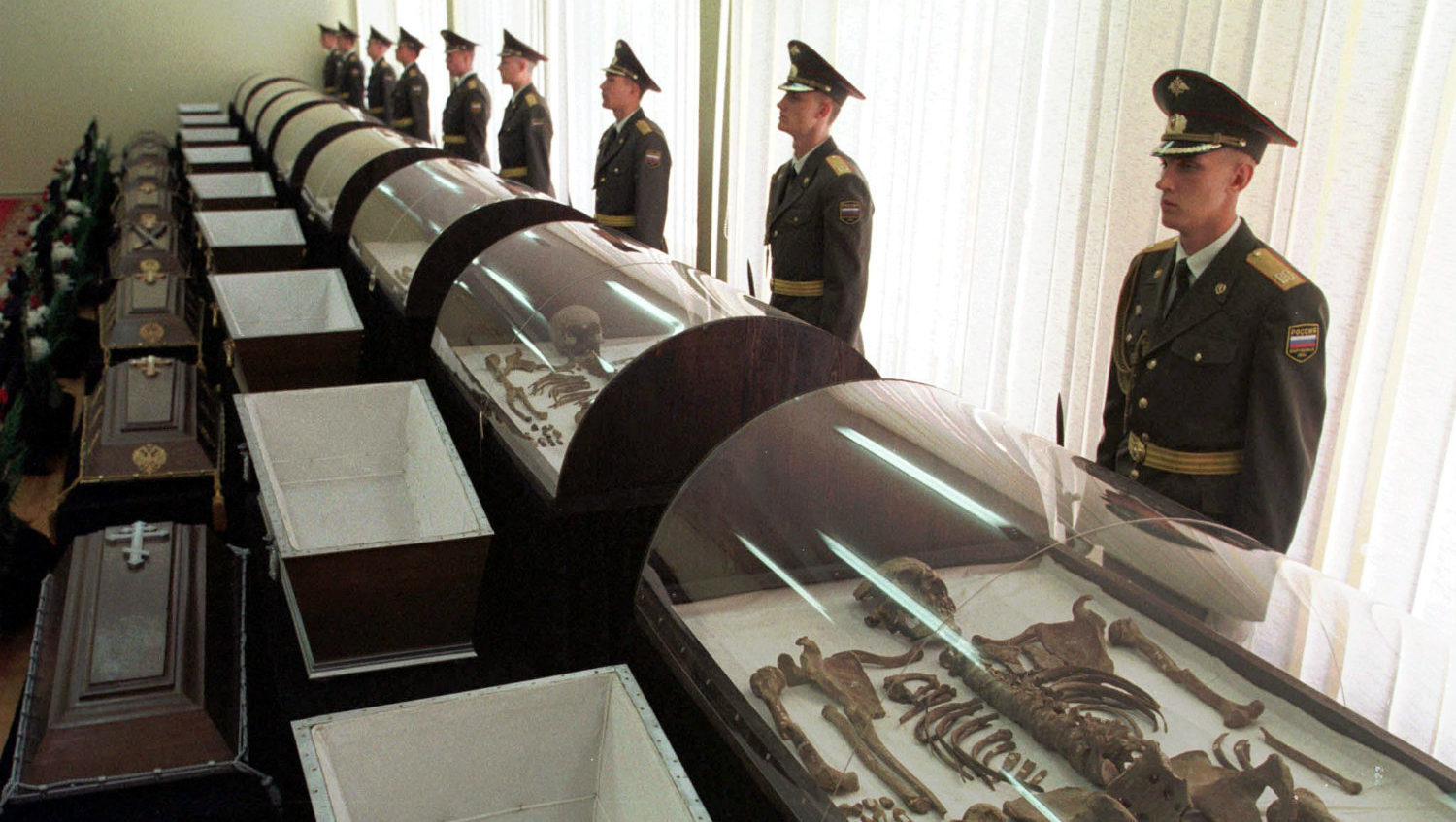
The Russian Orthodox Church for seventeen years refuses to recognize the authenticity of the remains of the royal family. Why dozens of examinations still have not convinced anyone
In the piglet logs, a little at a distance from the place of the main burial, 44 large bone remains and many small, six teeth, three bullets, shards from vessels with sulfuric acids and metal corners from the boxes in which these vessels were located were found. This is all that remained of the Grand Duchess of Maria and Tsarevich Alexei, whom Yurovsky tried to burn to the ground. In 2007, the task finally finally converged with the answer: the number of bodies found coincided with the number of executed members of the royal family.
Pit, safe, Petropavlovka
In the forest, half an hour drive from Yekaterinburg, there is a pit similar to trenches, which remained in the forests of the European part of Russia after the Second World War: the slopes, overgrown with moss and grass. But this is not a trench, this is a mine of an abandoned mine. Around the pit are covered wooden galleries. Between the trees, gilded domes and crosses are visible from all sides - they crown the temples and corps of the monastery of the holy royal chapterers. The pit is the sacred center of the monastery, the reason for its appearance here, the point of attraction of hundreds of thousands of pilgrims from all over Russia.
In this mine, in the Ganin Yama tract, on the night of July 16 to 17, 1918, eleven bodies were dropped - former Tsar Nikolai Alexandrovich Romanov, his wife Alexandra Fedorovna, their four daughters, son of Alexei, a doctor of the royal family of Evgeny Botkin, lackey Aloisia troupe, cook Ivan Kharitonov and the maids of Anna Demidova. Here, in different investigative groups, in different years were discovered: bonfires, charred fragments of clothing, heels, jewelry, bullets, and in the ice on the bottom of the mine there are a corpse of Dzhemma, dogs of the Grand Duchess of Anastasia.
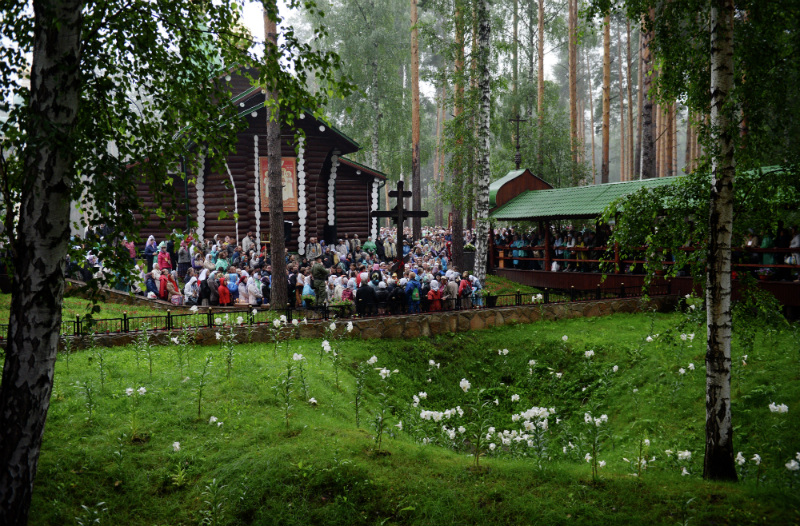 Believers on the “royal procession” from the temple-on-blood to the monastery of the Holy Royal Martyrs on Ganina Yama in Yekaterinburg Photo: Pavel Lisitsyn/RIA Novosti
Unlike Ganina, the pit, which is included in all tourist routes, the toponym of the “Porosenkov Log” is unknown even to Google cards. If you ask the ministers in the monastery, how to go to the Porosenkov Log, you will get an answer as in a fabulous way: “You’ll go to the right - you will lose a horse, you will go left ...” They will say that you can’t go to this place - it is gyu, the devilish. And everyone who believed that the holy royal martyrs were buried there did not finish badly (followed by a long list) - who died in an accident, who lost his mind, whom the paralysis broke. And there are no remains - this is all forgery, and the king and his family were completely burned here in the pit.
But if you ask the navigator the coordinates at the point, twist, ask rare local residents, in the end you will reach the place where 700 bones and bone fragments were extracted in 1991, from which nine skeletons were formed. They were identified as the remains of the royal family and its servants and were buried in 1998 in the Peter and Paul Cathedral of St. Petersburg. Two more almost completely burned bodies belonging to Tsarevich Alexei and Grand Duchess Mary were found a little at a distance from the main burial in 2007. Since then, they were first in the Investigative Committee, and after the end of the examinations - in the safe of the State Archive of the Russian Federation.
"They looked like alive"
There is absolute silence in the piglet logs. The flooring from the sleepers, under which the bodies were discovered, was decorated as a modest grave - there is a large metal cross above it. There is also a stone on which it is written: “The remains of the royal family and the faithful persons who were killed on July 17, 1918 in Yekaterinburg were hiding from people here.” Around the same birch trees as on Ganina Pit, but neither bell ringing, nor prayer singing - only a bird's chirus.
Both the shooting itself, and the concealment of the bodies of the Ural Bolsheviks from the Yakov Yurovsky team took place in a gloom: there were no orders from the center (Lenin’s telegram with an order to kill the royal family was not found by anyone), the White Army is about to capture Yekaterinburg, one cannot leave a living tsar, no murder evidence, no appropriate for veneration, no witnesses. Having immersed the bodies onto the truck, they were first taken to an abandoned four -collapse mine (which is now better known as “Ganina Yama”) and threw it into the mine, where they fell on the ice, which did not melt at the bottom even in the summer.
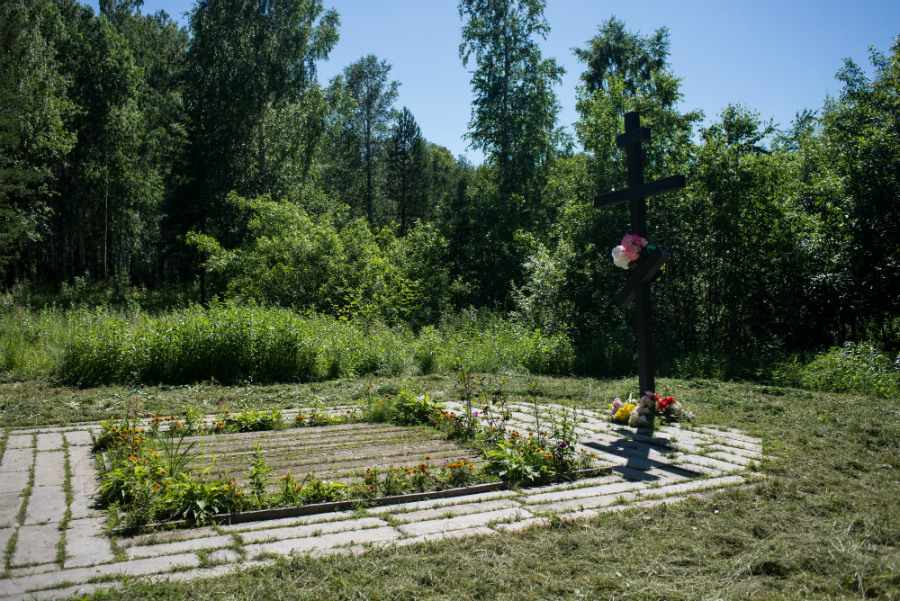 Yekaterinburg. Memorial of the royal family of the Romanovs on the old Koptyakovsky road in the piglet logs Photo: Anna Mayorova/Ura.ru/TASS
Realizing that, despite the grenades thrown into the mine, the bodies in it will not be able to destroy it, they were pulled out. According to the memoirs of the participants in the execution, the Chekists of Isaa Rodzinsky and Mikhail Medvedev, “ when all the shot were pulled out by the ropes by the legs from the water to the surface and laid in a row on the grass, it became clear, how frivolous the first burial was. Before us lay ready -made “miraculous relics”: the icy water of the mine not only completely washed away the blood, but also froze the bodies so much that they looked like alive - a blush even appeared on the faces of the king, girls and women. Undoubtedly, the Romanovs could have been preserved in such an excellent condition in the mine refrigerator for more than one month, and before the fall of Yekaterinburg there were only a few days ” (N. Rozanov Royal Martyrs: posthumous fate, - M.: Vagrius, 2008, p. 150) .
Participants in the shooting team did not sleep for a long time and did not eat and, in addition, panicked. They did not have a pre -prepared plan. According to one of the main historical sources - the “note” of Yakov Yurovsky, who led the execution of Yakov, recorded from his words in 1920 and certified by his signature - you can trace how they were nervous: the Chekists fell from the horses, they fell apart, they suddenly encountered local peasants, began to dig pits and threw it. As a result, on the third day after the murder, it was possible to take the remains along the Koptyakov road, but the truck was stuck. As a result , “the corpses were put in a hole, dousing the faces and generally all bodies with sulfuric acid, both for unrecognizability and in order to prevent stench from decomposition. The pit was shallow. Throwing the ground and brushwood, put the sleepers on top and drove several times - there were no traces of the pit and there were no left here ”(from the“ Notes ”of Yakov Yurovsky) . This was Porosenkov Log.
Skeleton No. 4
Here, the bodies lay until 1979, when the film scorer Geliy Ryabov, who was carried away by the history of the Romanovs, and the Yekaterinburg geologist and local historian Alexander Avdonin, taking advantage of the patronage of the Minister of Internal Affairs of the USSR Shchelokov, after a long search established the burial place. But they were able to talk about this only after the start of perestroika-in 1989. And they dug up the bodies two years later.
Over the next seven years, dozens of examinations have been conducted: microosteological, forensic, trasological, ballistic, anthropological studies, not to mention the work of historians and archivists. Molecular genetic examinations were carried out at the British Ministry of Internal Affairs of the UK in the Oldermaston and the Military Medical Institute of the US Ministry of Defense in Washington. Oldermaston at that time was a unique laboratory where geneticist Alek Jeffris first opened DNA-Dactyloscopy-a method for detecting unique DNA prints, which is now routinely used in forensics (and the series “The Code of the killer” has been shot even about Jeffris). All these studies confirmed the belonging of the remains to Emperor Nicholas II, Alexander Fedorovna, three of their daughters and servants.
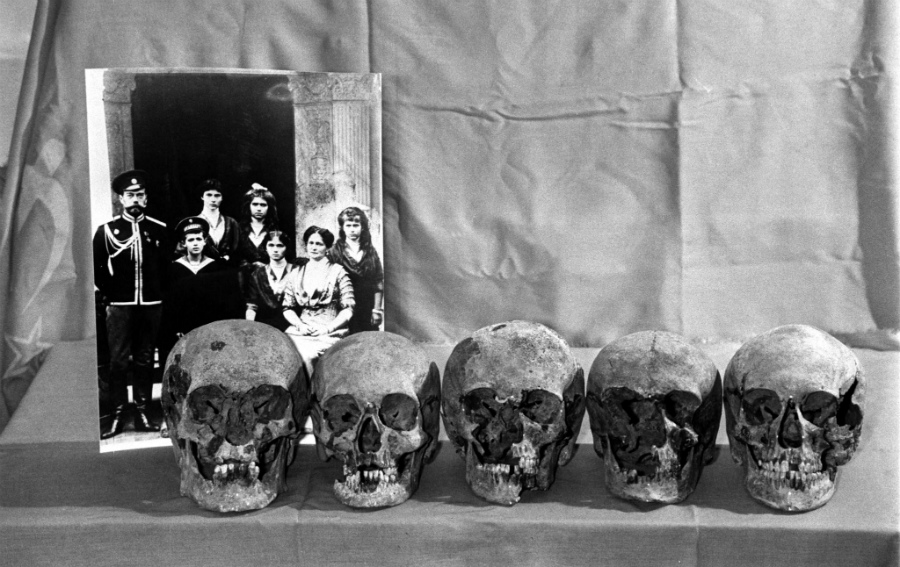 1993. According to Yekaterinburg experts, this is the skulls of members of the royal family photo: Anatoly Semeyhin/TASS
The Russian geneticist Evgeny Rogaev, regardless of this examination, studied the blood samples of his nephew Nicholas II, his son's sister Olga Alexandrovna-Tikhon Nikolayevich Kulikovsky-Romanov. And a comparative analysis showed a complete coincidence of the sequences of mitochondrial DNA with the bone tissue of skeleton No. 4 from the burial in the piglet logs. Skeleton No. 4 supposedly belonged to Nicholas II. The remains of the brother of Emperor Nicholas II, Grand Duke Georgy Alexandrovich, and DNA, also coincided, including a rare mutation.
Panichid for an unknown soldier
In January 1998, the State Commission for the Study of Issues related to the research and reburial of the remains of Russian Emperor Nicholas II and his family members, under the chairmanship of Boris Nemtsov, by a majority vote, decided to bury the remains in the Peter and Paul Cathedral in St. Petersburg. But there was a minority: Metropolitan Juvenal, who refused to recognize the results, entered the Commission from the Russian Orthodox Church. President Yeltsin buried the emperor in the absence of the patriarch. The full -time priest of the Peter and Paul Cathedral served as a memorial service with the words: “You are their names, Lord, Versi”, as according to an unknown soldier.
For Yeltsin, this was a very personal story: it was he, as the chairman of the Sverdlovsk regional committee, by decision of the Politburo of the Central Committee of the CPSU, he ordered to demolish the house of Ipatiev, where he spent the last days of his life and the royal family was shot. In the 1970s, near Ipatiev’s house, flowers and candles began to appear mysteriously on the anniversary of the execution-the Yekaterinburgers suddenly began to restore memory, which seemed to be nowhere to come from. Therefore, they fought radically with this memory: no at home - there is no problem. After 20 years, Yeltsin did everything that he could in order to partially correct the deed and bury the Romanovs with all the appropriate honors in the family tomb.
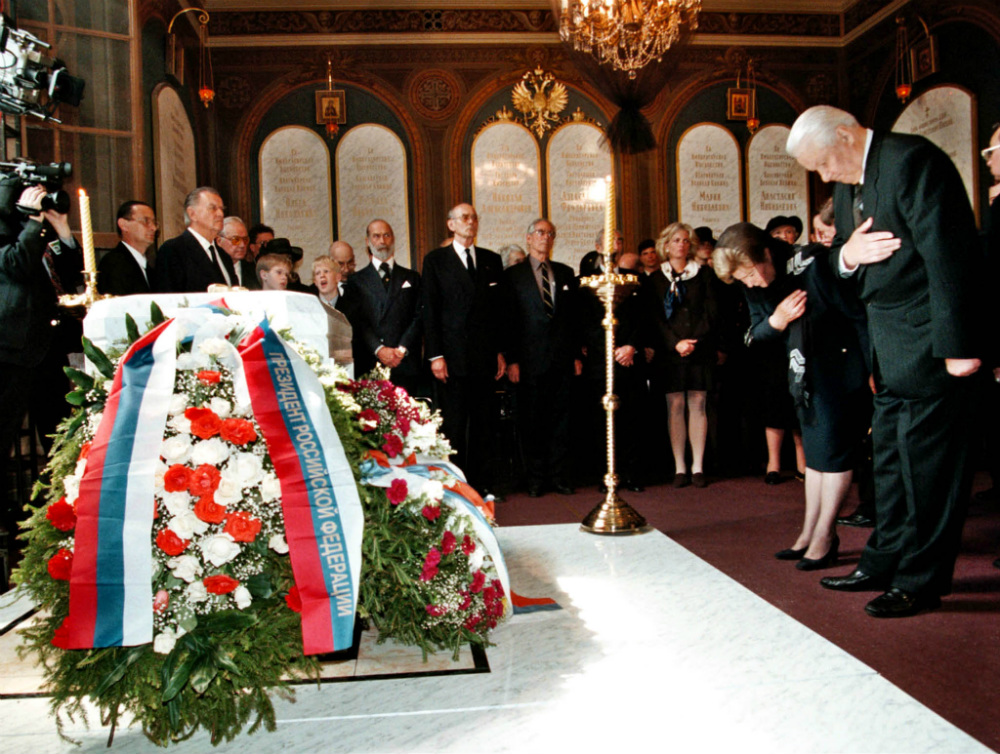 1998. Boris Yeltsin on the solemn burial of the royal family in the Peter and Paul Cathedral, St. Petersburg Photo: Pool/Reuters/Pixstream
No one will know
The fact that actually happened in the summer of the 98th and why the church, despite the fact that members of the state commission answered all its questions, except for one-where the remains of Alexei and Mary, refused to recognize the authenticity of the bones found, is unlikely to find out anyone. There are no alive either Boris Nemtsov, nor Boris Yeltsin, nor Patriarch Alexy. Of the participants in those events, only Metropolitan Juvenal still remains silent, not allowing journalists. But it is unlikely that they all assumed what kind of problem they were tied.
Two years later, in the summer of 2000, the Bishop Cathedral decided to canonize Nicholas II, the Empress of Alexandra and their children as mentors-for their humble death. This decision was not unanimous, many openly spoke out against. But, firstly, it was a question of rapprochement with the Russian Orthodox Church abroad, and it was a step towards the emigrant church, which ranked the last tsar to the face of saints back in 1981. And secondly, the spontaneous folk veneration of the murdered royal family grew (for example, in 1996, a monument to Nicholas II of the sculptor Klykov was erected in the village of Tyninsky near Moscow and began to conduct the so-called “rank of popular repentance in the sin of regicide”) and the logic “if the process cannot be stopped, it must be headed”.
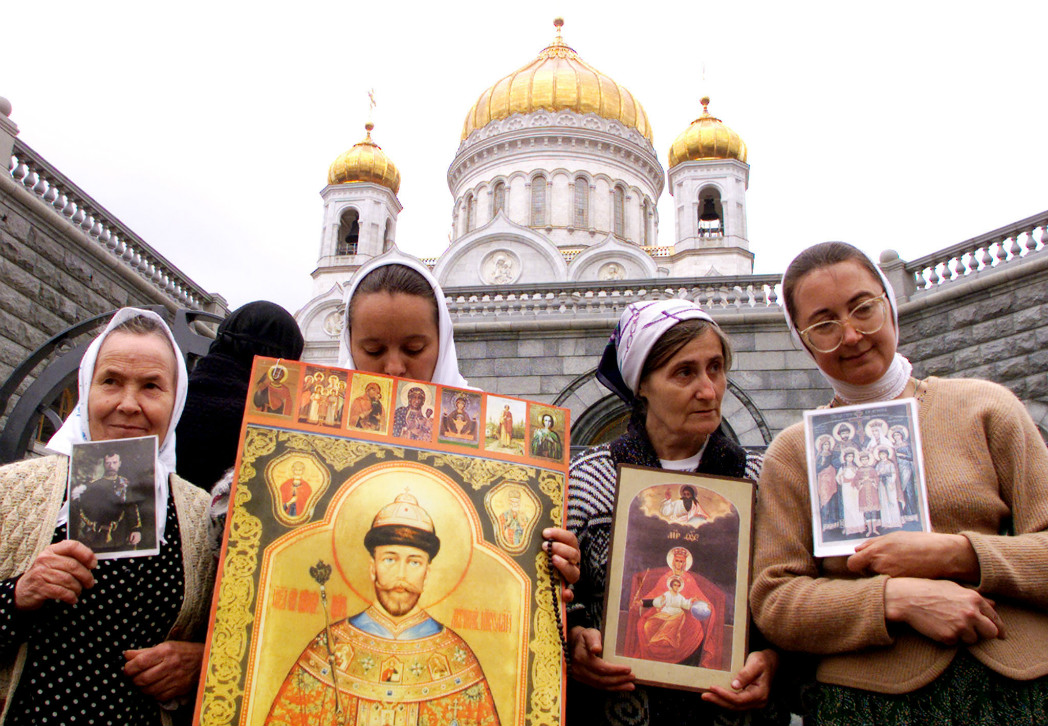 August 14, 2000. Believers with portraits of the last Russian Emperor Nicholas II near the Cathedral of Christ the Savior, Moscow photo: Alexander Natruskin/Reuters/Pixstream
In the fall of 2000, immediately after the canonization, a monastery was laid on Ganina Yama. The initiator of the construction and the first governor of the new monastery was the abbot Sergius, in irony bearing the surname Romanov. Now he became known as the confessor of Natalia Poklonskaya, to whom she flew to get married. Before becoming a monk, Sergius Romanov served 13 years in the Nizhny Tagil IK-13 for the murder. They say that when he was the governor of Ganina, a hole among monks and workers were many former prisoners.
"Do not look for my graves"
Ural religiosity is very specific. Orthodoxy, although it came here simultaneously with the Russian colonization of Siberia, has become neighboring for centuries with a very strong and branched Old Believers: the Old Believers fled to a more free Urals away from the authorities. Despite the fact that almost all the Old Believers dissolved in Soviet society, the habit of contrasting their (present) - the official (false) remained. Like informal spiritual practices, and a tendency to archaic mysticism, and the ability to establish horizontal connections. The radical tsareboxes, although it was brought from the outside, spread here as a virus.
Network of secret monastery, alternative priests, mythologization in the style of terrible Ural tales - all this grew in breadth and deep in parallel with how the official Yekaterinburg diocese of the Russian Orthodox Church built a new cult around the "Cross Royal Passion". An important part of this ritual is “royal days”: in July, on the day of memory of Nicholas II and his family, pilgrims from all over the country of “royal martyrs” come from all over the country. The culmination is the procession, which on the night of July 16 to 17 is 21 kilometers from the temple-on-blood, built on the site of the house of Ipatiev, to Ganina's pit. In the summer of 2017, 60 thousand people participated in it, including Natalia Poklonskaya. In the piglets, the Log of the procession, of course, does not come in. Although there are sometimes priests that recognize the authenticity of the remains, and enthusiasts of the public fund “Fetting” are laid for prayers.
The tsarboyers believe that Nicholas II brought an atoning sacrifice for the entire Russian people, just as Jesus Christ redeemed the sins of mankind. For the official church, this is, of course, heresy. But the veneration of the royal family is not limited to the kingdoms: the image of a sinless family - a strong, handsome father, a large mother, angelic innocent daughters in white dresses and a noble lad - is superimposed on the sympathy of the monarchy and finds a living response among most Orthodox ones. In addition, these saints lived quite recently, so that there were photographs, personal things, the details of their life, allowing them to emotionally experience their fate, to learn all new details about their loved ones, but also for a long time to belong to a certain irrevocably departed “golden eyelid”. They love the royal family, they honor the memory of it, their icons are in almost every temple.
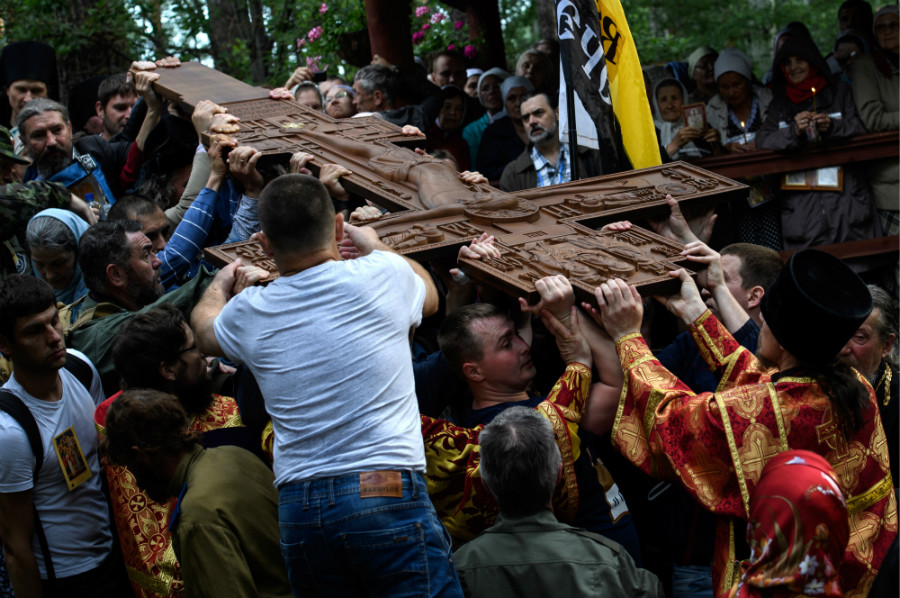 Believers during the procession in memory of the last Russian emperor Nicholas II and his family from the temple-on-blood in Yekaterinburg to the monastery of the Holy Royal Martyrs in the tract of Ganin Yama in the Sverdlovsk region. The procession took place as part of the International Festival of Orthodox Culture "Tsarist Days" Photo: Donat Sorokin/TASS
The denial of the authenticity of the remains was firmly connected with the cult of the royal family far beyond the boundaries of tsarbo -penalty communities. A common opinion, including among priests and bishops: “The church has not recognized the remains and cannot recognize. Dot". In a strange way, the desire to find the relics of the saints for worship prefer the illusion of incorporeality, the complete material absence of mentors on Earth. Perhaps these are associations with the absence of the relics of Christ, ascending to heaven in the risen body, and the Virgin.
Many refer to the prophecies of some elders who allegedly said: "Do not look for the remains, they are not, they are destroyed on Ganina Yama." On the "royal days" in 2017, Natalya Poklonskaya repeated these words again. There is a version that Nicholas II was in a subtle dream to one of the "elders" and said about the same thing, but from the first person: "Do not look for my grave." There are branched conspiracy theories associated with general distrust of the officials (especially Yeltsin and Nemtsov), which are partly based on the electoral interpretation of historical sources. One of the main distributors of conspiracyology is the historian Peter Multatuli, he also promotes the version of the ritual murder of the royal family by Jews, citing the Kabbalistic signs allegedly found by the White Guard investigator on the walls of the basement of Ipatiev’s house as evidence.
There was a silent consensus for nine years: the state and secular society believe that the last Russian tsar and his family are buried in the Peter and Paul Cathedral, and the Church and believers do not recognize this and revere Ganin Yama as the last earthly refuge of mentors.
Time to close the topic
In the 90s, genetics worked only with mitochondrial DNA, and in the zero they already learned to allocate a Y chromosome-it became possible to trace kinship both along the female and male lines. The laboratories stored samples from the first burial, therefore, when in the summer of 2007 they found Alexei and Mary, the examinations on new technologies were re-conducted. In parallel, Yevgeny Rogaev and Nikolai Yankovsky from the Institute of General Genetics of the Russian Academy of Sciences, Michael Kobble, worked as the head of the U.S. Armed Forces of the Armed Forces and the Walter Parson laboratory from the Innsbruck Medical University. All data were confirmed, belonging to the remains by the last Romanov did not doubt either geneticists or forensics.
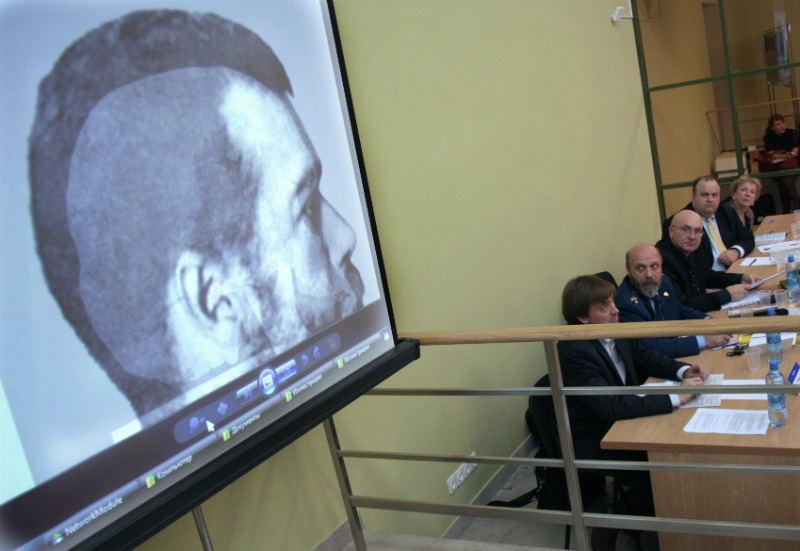 Yekaterinburg, 2008 During the Scientific and Practical Conference based on the results of the study of the Romanov family remains, which was held in the Sverdlovsk Regional Museum of Local Lore Photo: Pavel Lisitsyn/RIA Novosti
But the church was still against it, so the decision on how to buried Alexei and Mary was postponed for several years. Unlike Yeltsin, Vladimir Putin did not feel any personal interest in Nicholas II. Это герой не его романа, а о своем отношении к подвигу страстотерпчества российский президент ясно сказал, комментируя в 2009 году первых русских страстотерпцев Бориса и Глеба: «Они все отдали без борьбы. This cannot be an example for us. They lay down and waited until they were killed. ” С политической точки зрения последняя царская семья Владимиру Путину тоже ни к чему: в его личный пантеон правителей входят Владимир Красно Солнышко, Александр Невский, Александр III, но никак не тихий семьянин Ники, к тому же убитый чекистами. Но и никакого смысла откладывать захоронение не было — пора было закрыть эту тему.
Межведомственная рабочая группа «по вопросам, связанным с исследованием и перезахоронением останков цесаревича Алексея и великой княжны Марии Романовых», созданная по приказу премьер-министра и возглавленная руководителем аппарата кабинета министров Сергеем Приходько, решила назначить захоронение на 18 октября 2015 года. Но потом объявили, что следствие переносится на неопределенный срок, а останки подвергаются новой комплексной экспертизе.
В Церкви была создана комиссия «для изучения результатов исследования останков, найденных под Екатеринбургом», которую возглавил Санкт-Петербургский митрополит Варсонофий, а секретарем, то есть реально работающим руководителем, стал епископ Егорьевский Тихон (Шевкунов). Видимо, епископ Тихон был выбран как наиболее компетентный «переговорщик» с Кремлем, имеющий к тому же внутрицерковную репутацию жесткого консерватора, ни разу не запятнавшего себя «либерализмом». Следственный комитет возобновил дело. В присутствии духовенства провели эксгумацию останков Николая II и Александры Федоровны, потом вскрыли могилу Александра III и взяли образцы для сравнения.
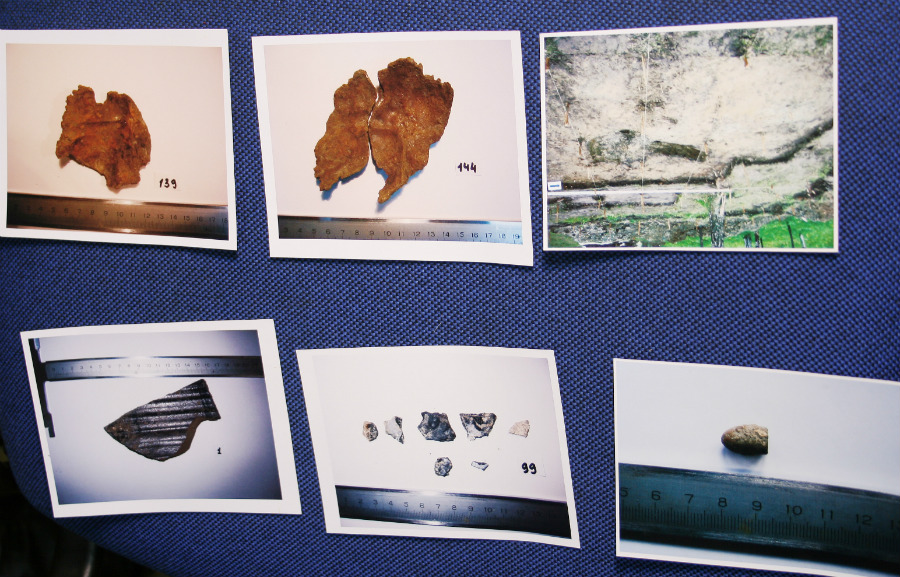 2007. Фрагменты костей, которые, предположительно, принадлежат царевичу Алексею и княжне Марии. Находку археологов передали в лабораторию для анализа ДНК Фото: Антон Буценко/ТАСС
«А мы не верим»
С тех пор разыгрывается спектакль по признанию Церковью царских останков. Игнорировать результаты научных экспертиз, подтвержденных Следственным комитетом и правительственной комиссией, патриарху Кириллу все более неловко. Список и без того малоубедительных ответов на вопрос: «Почему вы не признаете?» уже и так сократился до простого: «А мы не верим».
Но признать останки означает вызвать совершенно непредсказуемую реакцию значительной части консервативно настроенной паствы, которая заявит патриарху: «Вы нас даже не представляете». А у него и так реноме «экумениста», подтвержденное встречей с Папой Римским. Признать останки означает — начать служить молебны у могил в Петропавловском соборе, которые много лет были в небрежении, или обрести эти мощи и выставить их для поклонения. Признать останки означает — пересмотреть сакральную карту Екатеринбурга, вызвав протесты упрямых уральских верующих. Глухое ползучее недовольство и слухи об «отступничестве» патриарха — наименьшее из возможных последствий признания.
Поэтому главный тезис, который продвигает комиссия: все прошлые расследования и экспертизы проводились без участия Церкви и с игнорированием ее вопросов, а теперь все будет заново и по-другому, но очень медленно. За это время нужно постепенно заронить пастве мысль, что непризнанные останки могут превратиться в мощи.
Первые публичные комментарии о работе комиссии были даны на пресс-конференции в ТАСС осенью 2015 года, где епископ Тихон (Шевкунов) высказал сомнения в неповрежденности могилы Александра III, продемонстрировав, как тщательно Церковь сомневается на каждом шагу. А приглашенный эксперт — директор Института истории и археологии Уральского отделения РАН Вениамин Алексеев — состоял еще в немцовской комиссии и поддержал митрополита Ювеналия в отказе признавать подлинность.
Теперь Алексеев выдвинул «новые» версии: возможно, великих княжон вовсе не убивали и они закончили свою жизнь в Европе в глубокой старости, а также не исключено, что останки не сожгли, а «бывший царь Николай II растворен в соляной кислоте, и все это из ванны вылито в реку Исеть». То есть все засвидетельствовали, что Церковь очень недоверчиво относится к исследованиям и готова проверять даже самые абсурдные точки зрения.
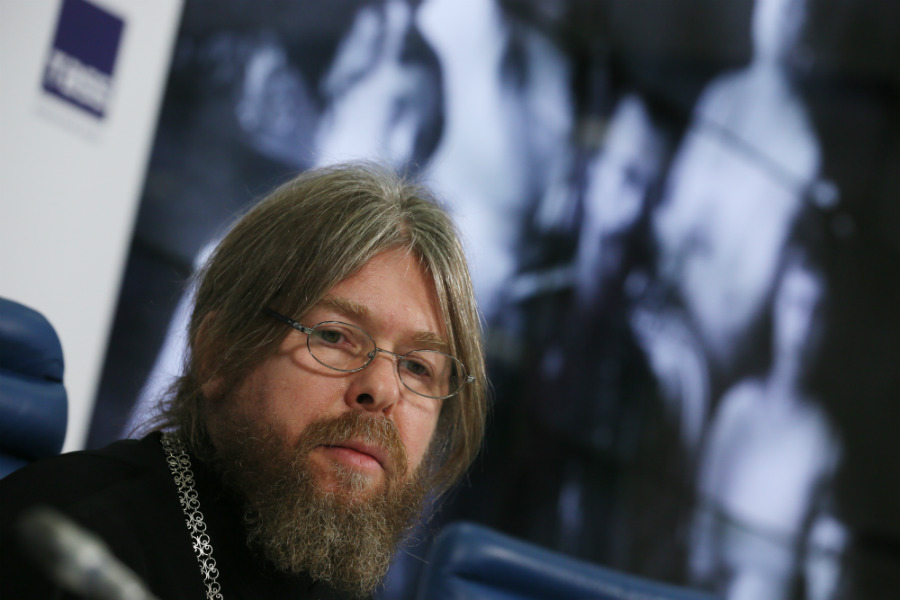 Ответственный секретарь Патриаршего совета по культуре епископ Егорьевский Тихон (Шевкунов) на пресс-конференции, посвященной продолжению изучения подлинности останков царственных страстотерпцев Фото: Александр Щербак/ТАСС
Потом о работе комиссии долгое время было ничего не слышно. Настал 2017 год, год столетия революции. И тема Романовых прозвучала очень громко и совершенно неожиданно: разразился скандал с фильмом «Матильда». Это была демоверсия того, на что потенциально способны царебожники. С одной стороны — 42 запроса в прокуратуру и чуть было не сорванный прокат фильма. Но с другой — карикатурные «террористы», явно жаждущие быть замеченными и никак не объединенные между собой, «молитвенные стояния», собирающие меньше ста человек.
The last word
В июле епископ Тихон сообщил, что открываются все новые факты, так что срок окончания следствия не близок. Параллельно на его сайте «Православие.ру» начали публиковать материалы, относящиеся к делу: интервью с учеными, работающими над экспертизами, перемежаются с публикациями церковных конспирологов в пропорции примерно 1:1. Всем дали слово, всех услышали, погладили и приняли во внимание.
Но приближается год столетия убийства, когда «Царские дни» будут отмечаться особенно широко. Вопрос с останками, по идее, должен быть решен окончательно. И вот объявлено, что, хотя экспертизы еще не закончены и комиссия не готова делать выводы, Архиерейский собор Русской Православной Церкви, который открывается 29 ноября, «рассмотрит вопрос так называемых „екатеринбургских останков“».
Накануне собора созвали конференцию: в роскошном зале в Сретенском монастыре под председательством патриарха Кирилла архиереи, уже приехавшие на собор, заинтересованные миряне и священники целый день слушали доклады судмедэкспертов, антропологов, криминалистов, историков. Все это время шла прямая трансляция из зала на двух православных телеканалах. Все эксперты, включая старшего следователя СК Марину Молодцову, долго и терпеливо отвечали на вопросы, ответы на большинство из которых опубликованы десять, а то и пятнадцать лет назад.
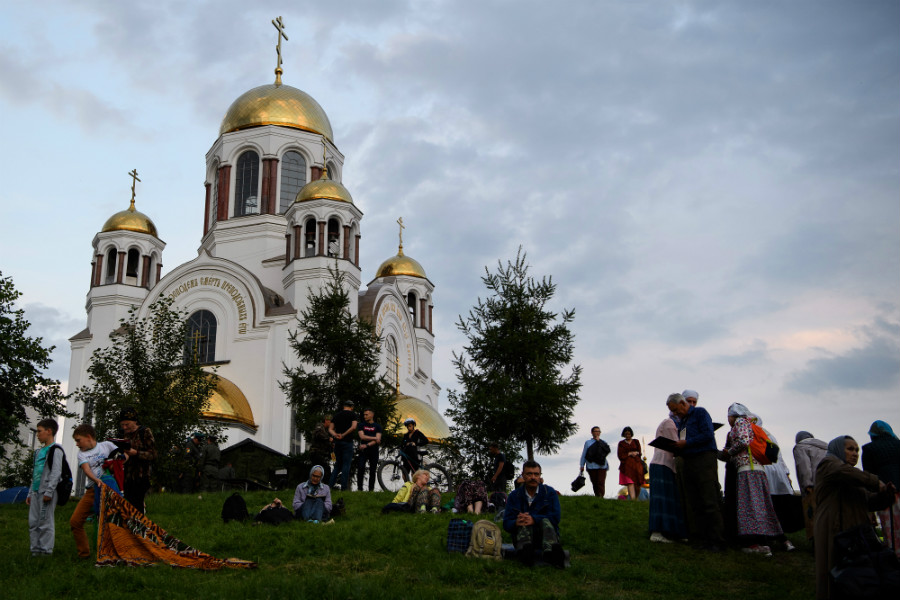 Возможное признание Церковью подлинности царских останков откроет новую страницу российской истории Фото: Донат Сорокин/ТАСС
Епископы, историк Мультатули, православные публицисты и представители общественности спрашивали о привезенных Ленину отрубленных головах, расчлененных телах, нелеченных зубах, заболачивании почвы и выживших княжнах. Было похоже на заседание суда, где представители СК и эксперты — ответчики, православные — истцы, патриарх — судья, а епископ Тихон — попеременно то прокурор, то адвокат ответчиков.
В роли прокурора, представляющего интересы православной общественности, он и сообщил о необходимости дать ответ про ритуальное убийство, раз такой вопрос существует и беспокоит его подзащитных — единственное, что попало в СМИ из этой конференции. Зато не попало, как патриарх в ответ на очередное объяснение, что человеческие тела не могут полностью сгореть при той температуре и условиях, которые были на Ганиной яме в июле 1918 года, посоветовал сомневающимся посетить индийский Варанаси и посмотреть, как там по 10 часов сжигают покойников на сухих дровах — и то потом приходится отрубать недогоревшие руки и ноги и бросать в Ганг.
Судя по тому, что генетические экспертизы оставлены «на сладкое», потому что якобы «еще не готовы», Архиерейский собор вряд ли вынесет окончательное решение, и впереди еще одна трансляция конференции. А следующим этапом, видимо, будет корректировка культа с включением в него мощей. И в Екатеринбурге останутся два симметрично опустевших места — Ганина яма, где над телами измывались в попытке спрятать, и Поросенков лог, где они пролежали под спудом 70 лет.
Do you want us to send the best texts of “such cases” to you by e -mail? Subscribe to our weekly newsletter!
историческая память история религия репрессии