
Translated material
Operation "Breakthrough"
The cause of the accident on the heating main in the east of Moscow could be worn pipes - they are put as new
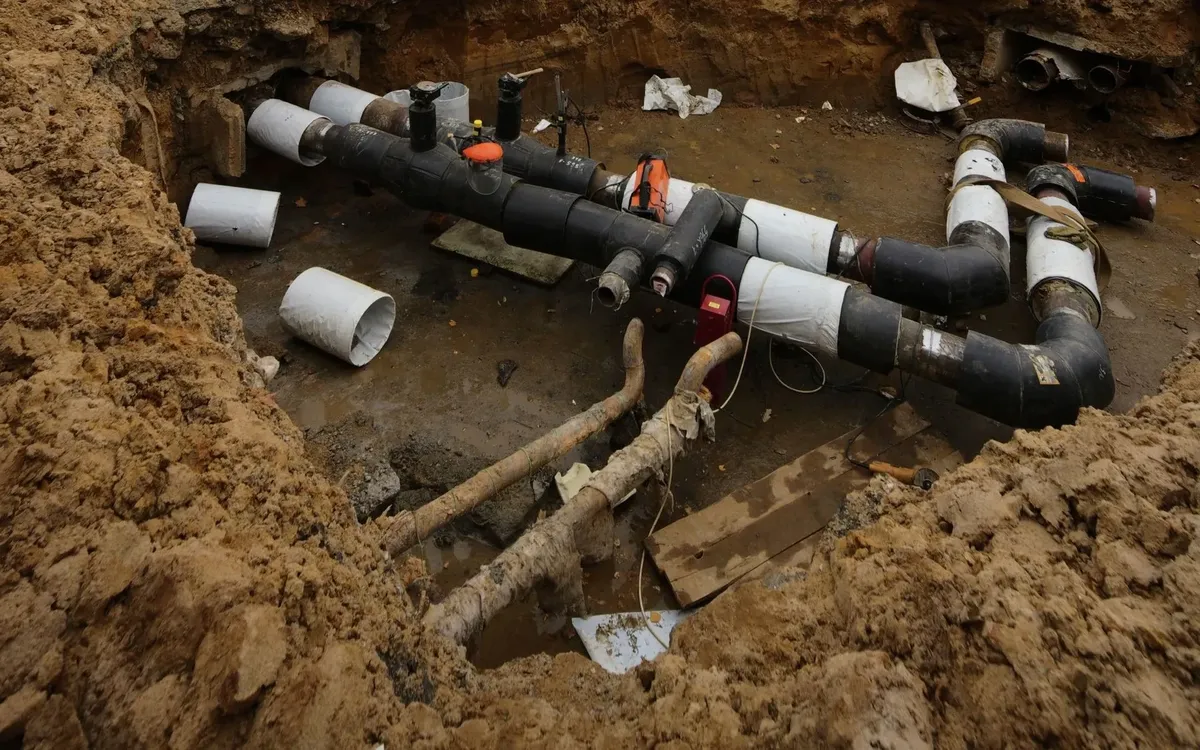
On the evening of November 29, an accident occurred in the Moscow district of Golyanovo: on the trunk pipeline of the heating system coming from the TPP-23, a breakthrough of hot water occurred. At once, 900 apartment buildings in VAO lost hot water and heating. The Moscow Biryukov, responsible for the housing and communal services of Moscow, said that eight people were injured due to the spill of boiling water on the street. According to him, some were injured "by their own negligence, running around the streets."
By the morning of the capital, the capital’s authorities announced that the supply of heat to the houses had resumed, but the inhabitants of Golyanovo continued to complain that there were not hot water in all houses. Emergency and renewal work was completely completed only by December 1: now the asphalt is already at the site of the breakthrough. But the Investigative Committee conducts a pre -investigation check and intends to establish those responsible for the technical condition and maintenance of this section of the heating main, in order to then decide on the initiation of the case.
“The cause of the accident on the heating main in the east of Moscow can be used pipes,” Igor Malyshev, director of the Tube Industry Development Fund commented for “New”.
Igor Malyshev
Director of the Pipe Industry Development Fund
- The situation with accidents in the housing and communal services networks unfolds against the background of catastrophic growth of the worn -out pipeline systems. Today, about 80% of the pipelines of heating networks in the Russian Federation exceeded the period of the trouble -free service, of which more than 30% (about 100 thousand km) are in disrepair.
The length of the water supply and sewage networks in need of replacement exceeds 43% of the total length (more than 246 thousand km). The specific damage to the networks in the regions is 6-7 times higher than the permissible, while the actual volume of transferred worried heating networks on average in Russia does not exceed 1.3% of their total length (with a normative need of 4% per year).
For the period since 2013, according to the media, 2289 facts were recorded related to the accidents of worn pipelines in the systems of heat and water supply, which had various consequences: 29 people and 119 people were injured from various severity from boiling water. This sad statistics can also be added 8 people who suffered as a result of a breakthrough on the night of November 30 heating mains in the east of Moscow.
The cause of the accident has yet to be understood by the competent authorities, but often heating networks are torn due to the illegal use of former pipes, that is, pipes that previously worked out their resource in main and commercial oil and gas pipelines. It looks like such a pipe that enters the secondary market after restoration and reasons may not even differ from the new one, but of course it cannot correspond to its quality and resource.
At the same time, due to imperfection of the regulatory framework, tender purchases are aimed at reducing the cost of supplied equipment. As a result of this, the health and life of citizens of the Russian Federation are at risk, technological, environmental, infrastructure and social risks are increased, state funds are illegally spent on the purchase of falsified products used at infrastructure facilities, and conscientious manufacturers lose in the competition to organizations that use fraudulent schemes.
The used market was formed back in the 2000s due to a significant difference (up to 50%) between the cost of a new pipe and a pipe that was in use and is a powerful source of corruption, according to FRTP. According to our fund,
Every year, in Russia, more than 500 km of former pipes are unlawfully used for construction and repair at housing and communal services facilities.
The total damage caused to budgets of all levels as a result of accidents and the elimination of their consequences over the past four years is estimated by experts at more than 7 billion rubles.
In 2016-2017 For the market of the former steel pipes on the initiative of the FRTP, changes were introduced into the regulatory and technical framework, which prohibit the use of used pipes for water supply, sewage systems and most of the heating networks. However, this does not stop businessmen who are ready to earn money on other people's lives.