
Translated material
Without leaving the anathema
How the Russian Orthodox Church called the Ukrainian church to put into Moscow, but it turned out a big scandal
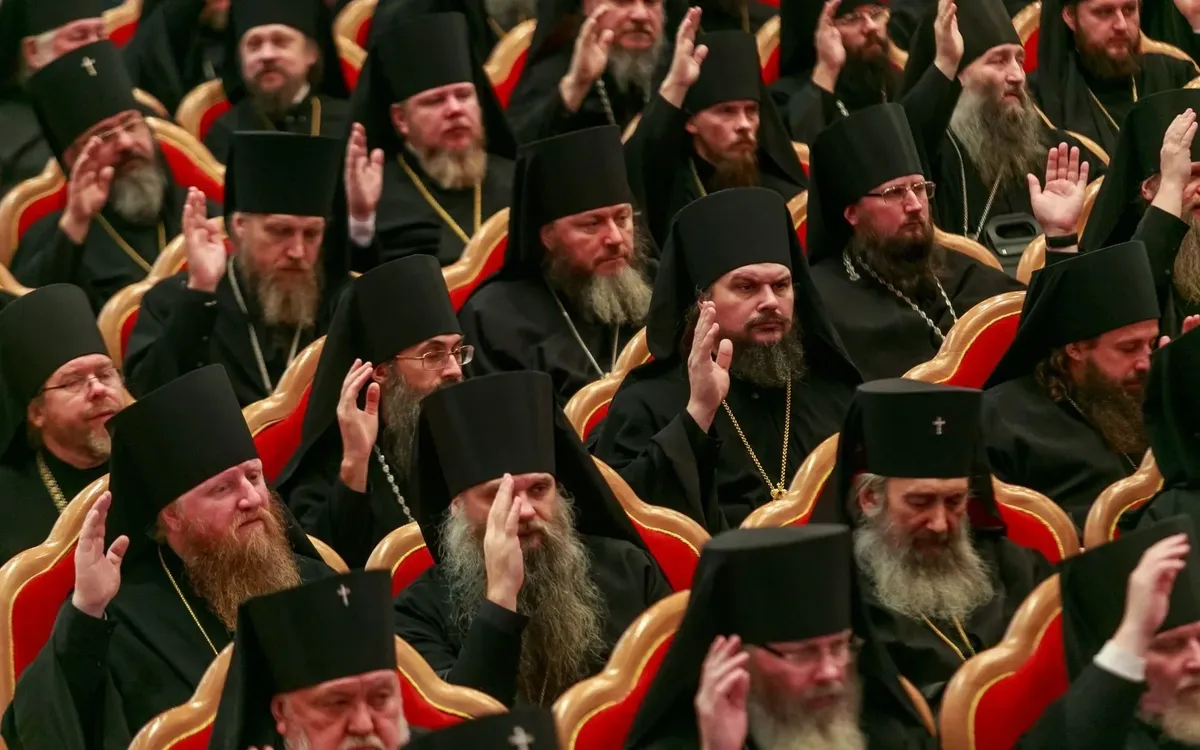
The Bishop Cathedral of the Russian Orthodox Church, which ended on December 2 in the Cathedral of Christ the Savior, will go down in the history of a sensation. But not the one that they were waiting. The message of the 88-year-old Kyiv Patriarch Filaret (Denisenko), 20 years ago, devoted to the Moscow Patriarchate anathema, squeezed the performance (for the first time in history!) At the Cathedral of President Putin
The Patriarchate presented the cathedral as a protocol, statutory event. According to the charter of the Russian Orthodox Church, the Bishop Cathedral, which since 2009 has been the highest governing body of this church, should be held once every four years. The last "regular" cathedral was in 2013. The dates of the current are linked with the 100th anniversary of the events of 1917. (First of all, the election of Patriarch Tikhon, the first after the liquidation of the Patriarchate Peter I.)
Some intrigue on the eve of the cathedral arose. Two days before he began in the Moscow Sretensky Monastery in Lubyanka, who is headed by his proximity to the president, Bishop Tikhon (Shevkunov), a conference with the participation of the patriarch was held. The issue of the “ritual murder” of the royal family was discussed. 2018 will be held in the Russian Orthodox Church under the auspices of the 100th anniversary of the event, and the “ritual” issue has every chance of becoming central for the church agenda.
Already at the cathedral, Tikhon tried to say that by “rituality” he understood atheistic mockery of faith. But the church audience perceived the signal correctly - as anti -Semitic.
As the majority of the Orthodox monarchists believe, a certain Talmudic ritual was committed over the royal family, and the killer allegedly drawn mysterious letters in Hebrew on the walls of the Ipatievsky house. The Sretensky conference caused such an outrage of the Jewish community that the Kremlin intervened in the discussion, and the question was no longer raised at the cathedral. They did not even return to the question of the authenticity of the "Yekaterinburg remains."
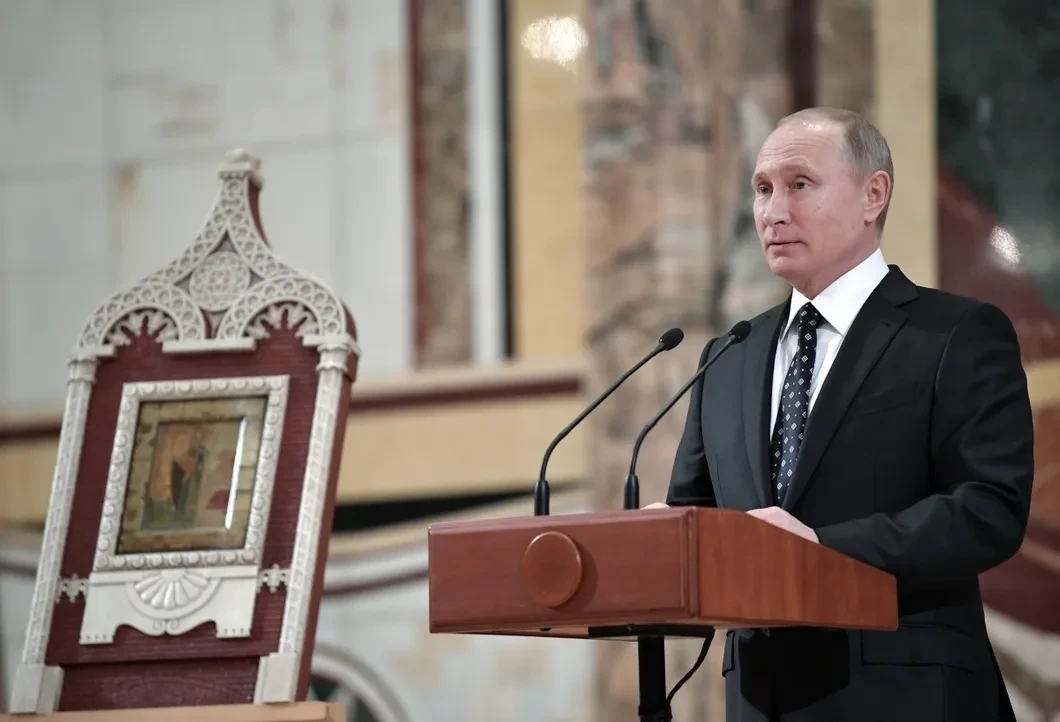
They were looking forward to Vladimir Putin. The president read out a brief speech. Without sensations. Having paid tribute to Patriarch Tikhon, Putin focused on foreign policy plots. And he called on the church to participate in the restoration of the cultural and spiritual centers of Syria and to assist its inhabitants.
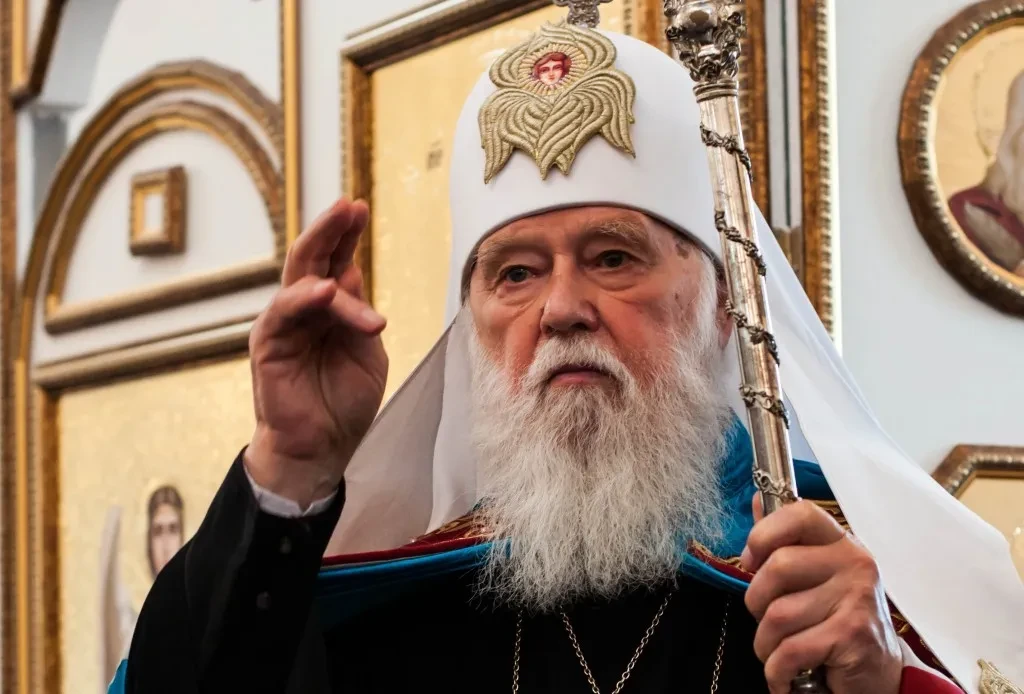
When Putin spoke at the cathedral in Moscow, Patriarch Filaret (Denisenko) held a press conference in Kiev in Kiev in Kiev in Kiev in Kyiv. He turned out to be the main character of the Cathedral of the Russian Orthodox Church, although for more than 25 years it has been considered in Moscow "a schismatic anathematized."
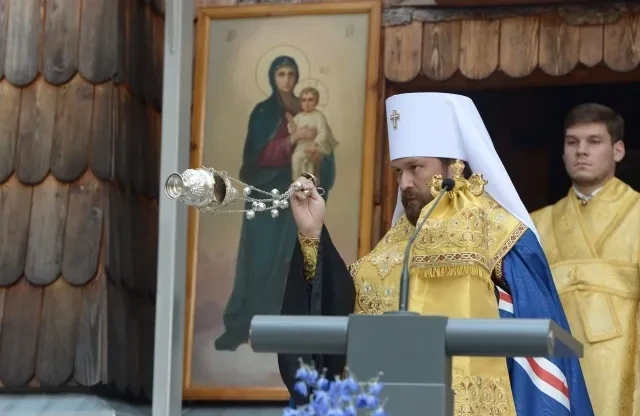
On November 30, the cathedral adopted a definition on the beginning of official negotiations with the “unrecognized” Kyiv patriarchate and formed for this a commission led by the “Minister of Foreign Affairs” of the Russian Orthodox Church, Metropolitan Ilarion (Alpheev). Sensation? Yes, if you recall how the image of Filaret of the Moscow church, and political propaganda is demonized. He was declared one of the perpetrators of the war in the east of Ukraine, the “confessor of punishers”, the leader of the “terrorist organization”.
Filaret became the bishop 56 years ago (he is the first bishop to have been at the Kyiv department for more than 50 years). In the Brezhnev and Gorbachev times, he was an exarch of the Russian Orthodox Church in Ukraine, and after the death of Patriarch Pimen in 1990, he even headed the Russian Orthodox Church in the rank of patriarchal locumlia in 1990. In Soviet (and then in Putin) times, locomotives automatically became patriarchs. But in the perestroika 90s there was a free secret vote of the Local Council. Filaret lost to Alexy (Reidiger). Trying to maintain his Ukrainian flock in the context of the rapid growth of Ukrainian national identity, Alexy II then provided the Ukrainian church, led by Philaret, independence and independence in management. But in 1991, Ukraine proclaimed independence. Filaret gathered the first local cathedral of the Ukrainian Orthodox Church of the Moscow Patriarchate (UOC -MP), which demanded full autocephaly from Moscow, that is, departments.
Filaret's logic: "In an independent state, there must be an independent church." Moscow Phantom imperial pains do not allow to come to terms with this.
In 1992, the cathedral in Moscow actually refuses Filaret and its supporters. Thanks to the publications of compromising evidence on Filaret, it is possible to convince most of the Ukrainian bishops to abandon the idea of autocephaly and agree to the autonomous status as part of the Moscow Patriarchate. In June 1992, Filaret rupture with Moscow: he unites the remnants of the UOC-MP with the RESSISSIONAL COMPORTANCES with the Ukrainian Autocephalous Church, whose hierarchy was preserved in emigration and was considered the Russian Orthodox Church of Raskolnichesky. There is a Kyiv Patriarchate. Filaret headed him in 1995 in the san of the Patriarch. All these years, none of the official Orthodox churches recognized the Kiev Patriarchate, but Filaret reminded that Moscow had been waiting in the XV-XVI centuries for recognition of its autocephaly for more than 140 years, being in a canonical gap with the Constantinople Church.
The history of the relationship between the two Ukrainian churches - the Moscow and Kyiv Patriarchates - has been dramatic over the past 25 years. Under Yushchenko and the "early" Poroshenko, the church tried to negotiate, but more often fought for temples. (It does not always reach the brawls, but each case is shown on Russian TV and present it to the West as evidence of the “persecution” on “canonical Orthodoxy” in Ukraine.) However, not all supporters of the UOC -MP love Moscow so much. Many parishes of this church stopped the commemoration of Patriarch Kirill (Gundyaev), and in her episcopate there was a movement of supporters of the “canonical autocephaly”. The informal leader is the young Metropolitan Alexander (Drabinko). Neither he himself, nor his like-minded episods came to the cathedral in Moscow.
But back to the story with Filaret. It has two versions - Moscow and Kyiv. The latter is known a little better, thanks to the democratic features of Ukrainian church life. According to Filaret, in the process of preparing for the cathedral in Moscow, he was addressed by the first hierarch of the Russian foreign church (RZC), which entered 10 years ago in the subordination of the Moscow Patriarchate, Metropolitan Ilarion (Corporal). He handed over to Filaret to the wish of Moscow to begin the process of rapprochement and the establishment of canonical communication with the Kyiv Patriarchate. (A similar process in relation to the RZC, which was also once considered a “split”, ended quite successfully for Moscow.)
On November 11, a delegation of the UOC -KP, headed by the Archbishop of Rivne Ilarion, arrived in Moscow for preliminary negotiations with the chairman of the department of external church relations of the Russian Orthodox Church (Alphev). Metropolitan Hilarion invited the Kyiv side to prepare a letter signed by Filaret as correctly as possible, which could be read out at the cathedral.
On November 12, the clergy of the Kiev Patriarchate served as a Liturgy in one of the churches of the Moscow Patriarchate near Moscow, which is also a sensation (after all, officially the Russian Orthodox Church does not recognize the Hierarchy of the UOC -KP).
On November 16, Patriarch Filaret signed a brief letter in the name of Patriarch Kirill and the Bishop of the Russian Orthodox Church, where he expresses the desire to restore prayer communication and asks for forgiveness for all his sins. Filaret does not speak about the desire to repent and return to the Russian Orthodox Church. The letter was signed simply “Your brother Filaret”, without indicating the titles and even without a cross before the name, which bishops usually put.
On November 20, this letter was brought to Moscow by a more representative delegation from Kiev - consisting of three bishops of the UOC -KP. As one of the members of the delegation told the “New”, the Moscow side provided them with reliable guarantees of immunity, that is, the visit “was agreed at the highest level”.
Both sides did not allow a single leak until November 30 , when the letter of Filaret was announced at the cathedral. By the efforts of Metropolitan Hilarion (Alfeev), the cathedral accepted the definition rather friendly in relation to the UOC -KP. But the request of Filaret for the forgiveness of his personal sins was perceived almost as repentance in the "sin of the split" and the willingness to return "to the bosom of canonical Orthodoxy." Some Russian media went even further and hastened to assure that Filaret was “returning” to the Russian Orthodox Church. Interpretations caused indignation on both sides, but Filaret was in a particularly difficult situation.
On December 1, he even officially stated that Moscow deceived him: they promised to start a dialogue on the recognition of the Kiev Patriarchate, and announced that Filaret "had come with repentance." Kiev Patriarch assured: he will not return to the Moscow Patriarchate, the anathema does not bother him, because those who uttered it are falling on the head, and negotiations with the Russian Orthodox Church, if they begin, will only concern the recognition of the autocephalous status of the Ukrainian Church.
In Moscow, they immediately spoke that nationalists and the administration of Poroshenko pressed on Filaret, but most likely the failure occurred in Moscow. Contacts of the Moscow Patriarchate with Filaret were clearly approved by the Kremlin as part of the search for a “new course” against Ukraine. However, a significant part of the Russian elite - secular and church - is not yet ready for such a shift.
They even say about the mismatch of positions on the “Filaret question” between Patriarch Kirill and Metropolitan Hilarion, who, relying on the support of the Kremlin, tried to start “his game”.
The background for the start of negotiations between the Moscow and Kyiv Patriarchates has to be recognized as unfavorable.
There was another Ukrainian plot at the cathedral. The Primate of the Ukrainian Church of the Moscow Patriarchate, Metropolitan Onufry (Berezovsky) made a report on the current position of his church, admitted that her relationship with the state is “difficult to develop”, and asked the cathedral about more independence. In the Verkhovna Rada, a bill has long been waiting for its turn to change the names of religious organizations whose leading centers are in the Russian Federation. The bill has not yet been considered, but can be considered at any time. In fact, he was directed only against the UOC MP, which they want to rename into the “Russian Church in Ukraine”, and in order to avoid danger, the cathedral entered the phrase in the charter of the Russian Orthodox Church that the leading center of its Ukrainian unit is in Kyiv. However, this is nothing more than a declaration that is unlikely to convince the Ukrainian side. Indeed, in addition to this phrase, the cathedral made changes to the charter, which significantly limit the independence of the UOC MP.
From now on, it is required to offer the name of the Patriarch of Moscow in all temples of Ukraine,
He also receives the powers to approve the Charter of the UOC MP, the decisions of Moscow cathedrals become mandatory for the UOC -MP, and its bishops are subject to the Moscow Cathedral to the court. All this was not in the previous edition of the charter. The innovations contradict both the current charter of the UOC -MP and Tomos about the independence of the Ukrainian Church, issued by Patriarch Alexy II in 1990.
Among the decisions of the cathedral - the document “On the canonical aspects of church marriage” and “Regulation on monasteries and monks”. The press was mainly interested in the prohibitions on marriages between persons of the same sex and transgender people and the free use of the Internet by monks. The equating in some cases of a civil marriage to the church, although for people already baptized and churching civil marriage, not crowned in the church, is equated with a document with a document. In some cases, it is allowed to crown people who have not registered their marriage in the registry office: this is somehow connected with the “mortal danger” (one of the marriage should either be on the deathbed or served in a “hot point”). An unexpected theological reasoning regarding marriages with heretics also penetrated the document: it turns out that all non -Orthodox Christians (also heretics) are now divided into hostile and friendly to the Orthodox Church. A marriage with the first category is not allowed, but with the second (even if we are talking about Protestants) is allowed, but subject to the capture of the non -Orthodox consent to raising children in the Orthodox faith.
The problems associated with ecumenism excited the atmosphere of the cathedral. It was expected that the cathedral would evaluate the All -Orthodox event, which took place in Crete last summer under the auspices of the Patriarchate of Constantinople, but without the participation of Moscow. A number of documents of the Cretan Cathedral contain the ecumenical ideas of recognizing the saving of non -Orthodox churches. It was expected that the cathedral would consider the Havana Declaration signed by Patriarch Cyril and Pope Francis and also having a pronounced ecumenical character. But these questions cause too painful reaction in the church. The cathedral did not consider them.
Although at closed meetings there were replicas of bishops (and Ukrainian), requiring the immediate exit of the Russian Orthodox Church from the World Council of Churches and the condemnation of ecumenism as a heresy.
Contrary to the forecasts of skeptics, this Bishop Cathedral of the Russian Orthodox Church will go down in history, especially if negotiations between Moscow and Kyiv Patriarchates are developed. Who knows, maybe this is the beginning of the chained reconciliation of the Russian and Ukrainian peoples.