
Translated material
How to talk about the dead
About the wonderful book of Maria Stepanova
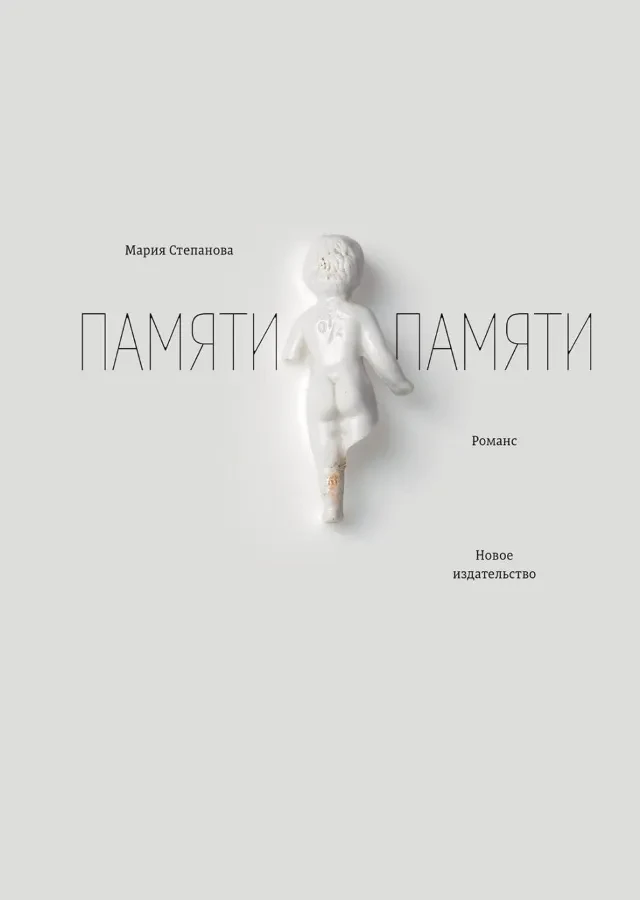
There is such an episode. While working on the book, the author comes for help to one historian specialist. He patiently answers her questions, and then asks what kind of thing she writes. “I began to explain. And, he said, this is one of these books when the author travels around the world in search of his own roots, there are now a lot of such. Yes, I said, there will be another. ”
There is no flirty self -abasement in this - only awareness. Stepanova does not allow herself to forget what, in fact, she does: how much “the same” was written before her, at what point of the landscape of world culture she is located, which of the great or just beautiful she may be like. This is not to say that she speaks of photography, “how” Susan Umbrella and Roland Bart, and about recalling “how” Zebald. She says with them, accepting us in this conversation as equivalent interlocutors. This, of course, is not about the Panibratic “we count the umbrella” - just in this book the desire to “be interested in interesting”, as Zinaida Hippius formulated, is felt as a universal human impetus. And, therefore, it’s just successful that those who were fruitfully interested in this interesting earlier give us balls through space and time.
About the "memory of memory" they say that "before in Russian there was no such thing." This is heard by something sprinkled, although in fact, first of all, it refers to the genre of the book, indeed, to Russian-speaking literature almost not characteristic. The genre, in which the adventures of the author’s thoughts are the plot. Already several times, Susan Untag named his essay about the writer and philosopher Elias Kanetti “Thought as a Passion”. This is an accurate description of this type of thought, when the movement of the mind of the writing coincides with the movement of his heart, and therefore the very course of thought, reasoning cause reader sympathy, empathy. There are many reasons why this did not bloom in Russia - not only the Soviet power not only of our cultural shortage, but also our distrust of combining non -prepared and smart, built into us, so that the “general” considerations are delivered to us with the heavy artillery of philosophical terms and references to Hegel.
“Memory of Memory” can be considered in the series of Essays Zontag and Zebald, whom Maria Stepanova loves so much, or next to Alberto Mangel's work about the mixing of life and “Divine comedy”. Stepanova, it seems, does about the same: inserts life into the context of culture, explains life with culture - smartly, qualified, and culturally. And even the real letters and diaries of her ancestors, woven into the narrative, at first seem to be vignettes, the addition of K.
But gradually - by the will of the author - life begins to break through culture. The contradiction (how did it write that the dead are a minority amazed in rights, because everyone can encroach on their personal stories, publishes the records of their dead relatives?) Explits the text from the inside, demonstrating its insolubleness.
After all, it is this disrespect that will save our dead from leaving for nothingness. What is worse: the transformation of those who really does not, into a “subject” for our ponders and declarations, or oblivion?
In Stepanova’s book there is no formulated answer to this question, this answer is the whole book. The voices of those whom the author wants to recall and understand - her quiet, almost not noted in the history of ancestors, eaten by a terrible century, but even more ruthlessly devoured by life ("stupid, vain life" is recorded by one of them in the diary) - with the course of the book become more distinct and independent. Not because at the end they are attached more, but because the author gradually equates himself to them. Spring Demiurge, inherent in any writer, dissolves and becomes more clearly more clearly that their voices, the words of these letters are our voices, our words. That all the so -called “documents of the era”: diaries, photographs - they are not about any about the era, but only about people, only about them, only about us.
At the very end, Maria Stepanova tells how, after the death of her grandmother, Dora, her grandfather moved to live with them, and immediately began to rapidly decrepit, lose his memory.
“I was returning from school and saw that my grandfather was sitting on a chair in the hall, already dressed as a road: in a cap and a cloak <...> he was going home to Dore. He had only two months to live. A note has been preserved, one of those that he wrote then in anticipation of my parents: “Thank you very much to the friendly owners of this cute apartment. I go home where they are waiting for me. Do not be angry. Meet me more than once. I hug you. Nikolai. What day of the month today is I do not know. Call, I will only be glad. "
Yes, they use the dead, they are manipulated for their own purposes, or they are simply indifferently forgotten. Maria Stepanova took the dead to her co -authors. As a result, a book was published, which, indeed, was not in Russian before. And in other languages not that there are many.