Translated material
"There is no more mass reader"
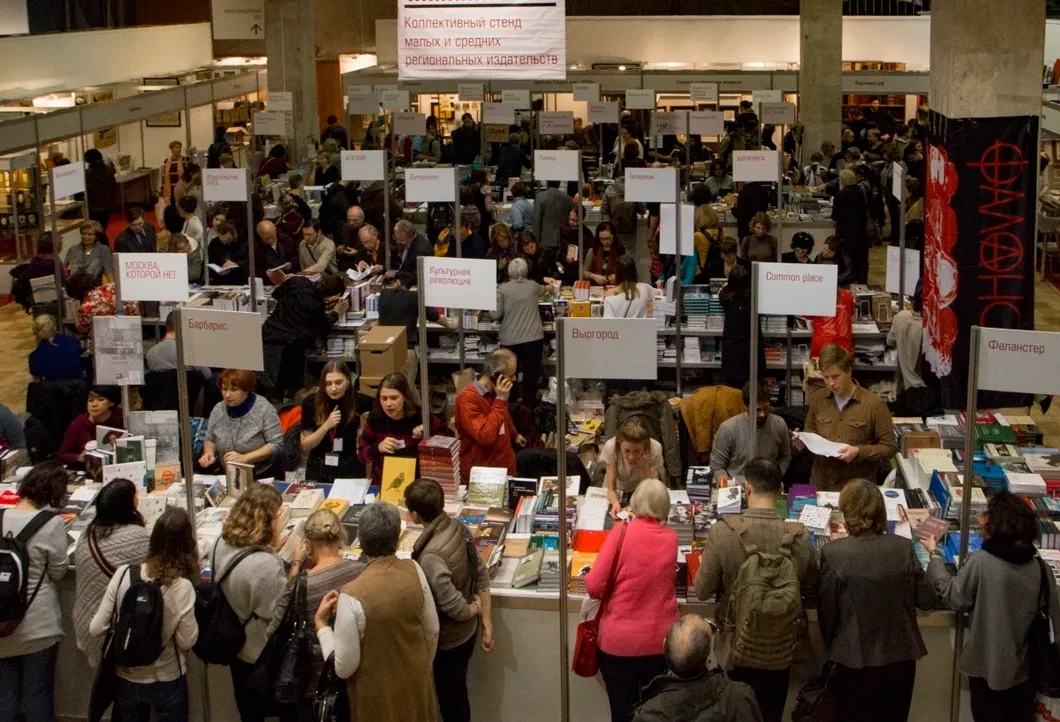
We summarize the results of the book year together with the participants of the Non/Fiction Fair in the Central Administration
Alexander Gavrilov
Software Director of the Institute of Book
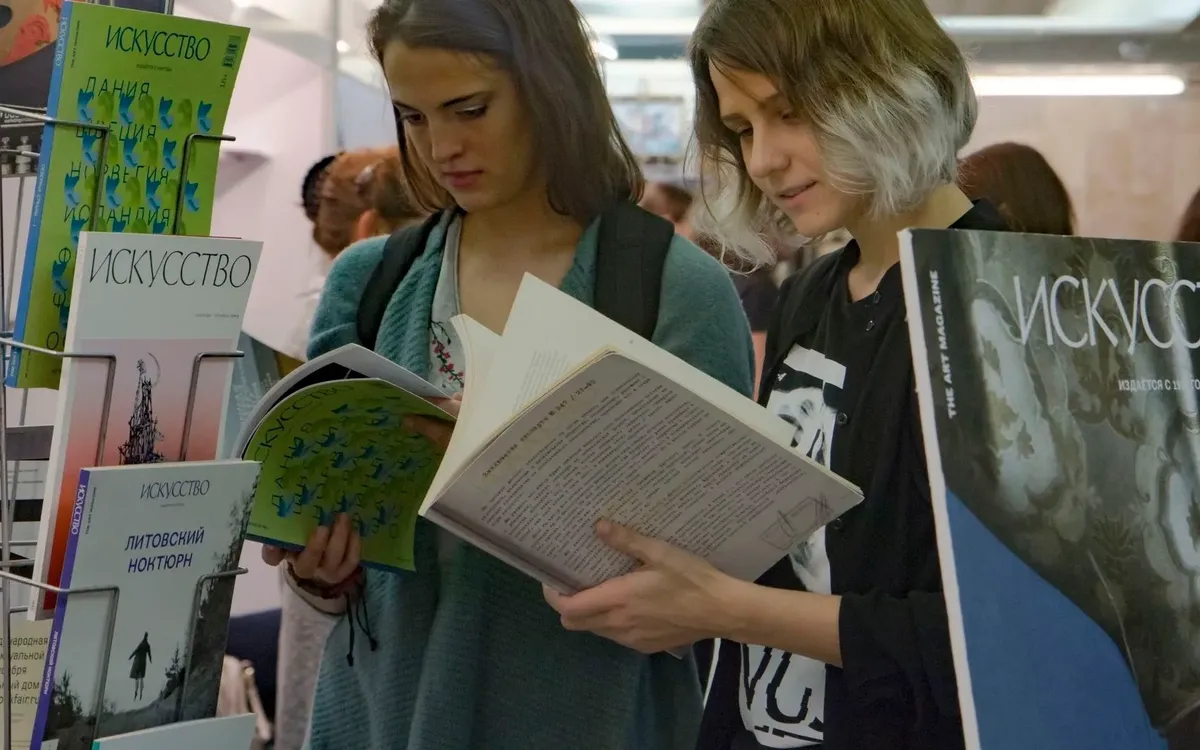
- The reader who visited the fair may have a false impression: so many smart, good books, so many stands, so many publishing projects. So everything is fine? In fact, not very. The book industry has been in a deep crisis for a year, the vast majority of publishers are not paying off. And people do not prefer the most serious books. You can see the statistics of the Ridero service: in the first place is still a love novel. Women make the cashier to publishers, it is women who buy and read books. But culinary recipes and books on health, according to my observations, come out of the top, there is no longer any previous interest. But children's literature returns there after a long decline. If you publish children's books easier and sell cheaper, she has chances.
Willingly take, for example, books on anarchism.
One of the few self -sufficient publishing houses now is the Common Place publishing house, created by the sellers of the Phanster store. They print books on the theory and practice of anarchism, which are sold out, from the wheels, from the wheels. There is such a buyer.
I see how they grab the book of Peter Aven about Berezovsky. For a thousand rubles, by the way. But this is still a book for a very specific audience, a normal person from Bugulma will not buy it. He knows that Berezovsky is to blame for everything that Chubais is not to blame, but this is where his interest in the topic ends. This is a book for those who are in the subject who followed the history of the development of Russian capitalism, and there are less and less such in the country: because of age, because of the shooting, and, finally, many people left. So after all, this is a niche reading.
In the last ten years, a single reader of reading has been lost at all, it does not exist. There are readership groups that are non -overshooting. Already Akunin is not a mainstream, not a star of a national scale, as it was before. And even Marinina is not a mainstream. They are the stars only inside their segment.
Do you know why large publishers began to pay attention to the intellectual prose of the Tolstaya -Ulitskaya class? Not at all because they suddenly liked serious and smart books.
It was just that the mass literature sector sagged: entertaining reading gave way to an entertainment view. The video on request was swollen that audience that entertained itself with cheap detectives. Download a movie and watch it on a smartphone is easier than buying even a cheap book.
There are no more mass readers of these books, there is a spectator to whom everyone gives free. And in the end, Ulitskaya, Ustinova and “50 shades of gray” became comparable from the point of view of the book -trade. So it’s strange to talk about the rise of intellectual literature. This is not the intellectual rose, it was massive.
Boris Kupriyanov
Member of the Expert Council of the Non/Fiction Fair, Director of the Phansister store
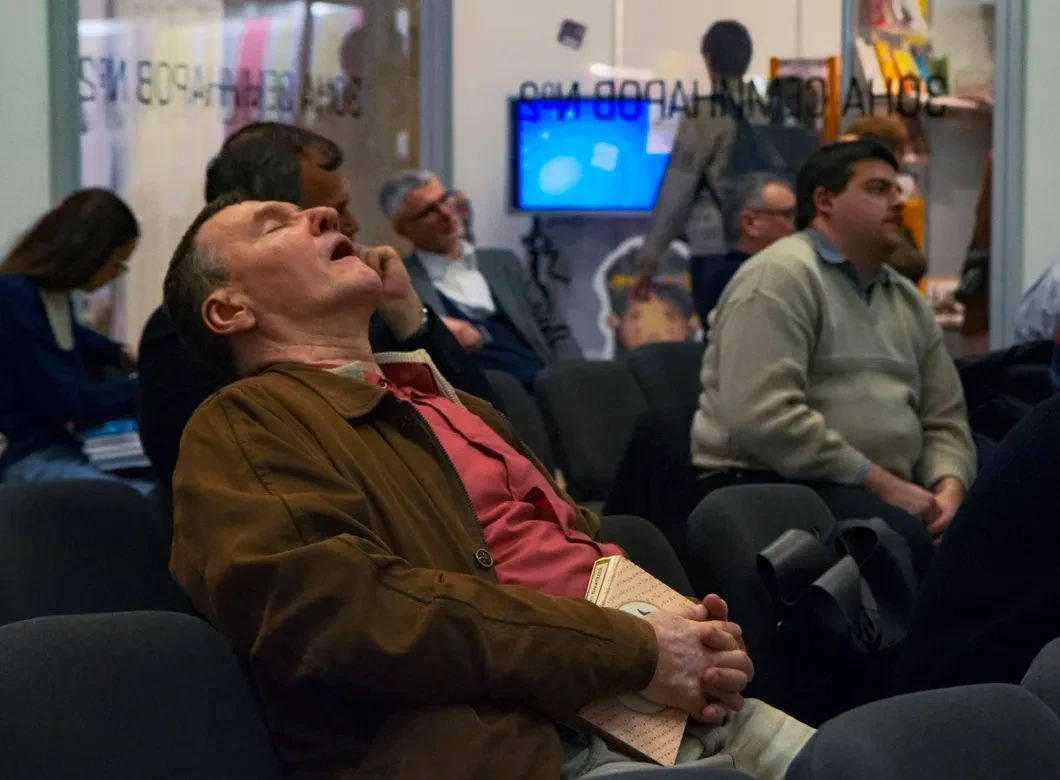
- Russia overslept the centenary of the revolution, one of the main events in its history. Only publishers reacted seriously at him. This is not screams, not serial speculation, but a serious conversation, understanding. Kuchkovo Field has released a unique series of diaries of that time. Rosspen is the volume of the British historian Dominic Liven “Towards the Fire. Empire, war and the end of tsarist Russia. ” Mikhail Zygar went out at Alpine - “The Empire must die,” which I like less, this is a more journalistic view of history, but such books are also needed. “UFOs” published Mikhail Ryklin “Doomed Icarus. Red October in the family perspective ”, causing a large controversy. And this is only a small part. Of these books, you can make a good large library.
If now there is some kind of trend, some kind of common topic, then this is a memory as an institution. The financial crisis is the right time to realize yourself, think about who you are, where, why. The run is interrupted, the race is over, we need to take a pause, stop and think about how we got to this. People have time, they go and read.
The publishing business also has serious changes. Having failed on the field of purely commercial literature, publishers become deeper and more thorough. In the 1990s, everyone sought to publish unrelated during the years of Soviet power, to saturate the market. Then they chased for bright news. Many worked on the principle of media, focusing on information farms. This is now, but this has become much less. There is no longer a desire to instantly respond to the conjuncture. One-day books are one day that they will disappear tomorrow, no one will remember them.
Ten years ago, the phrase “image of the future” made sense: a new car on credit in return old and all that. And now no one knows what will happen tomorrow. And this is not a purely Russian situation, so all over the world. A month later, in a week anything can happen. Racing for tomorrow's fashion became meaningless. The future will not ask financial analysts what they want to see him, it will simply come. Today and tomorrow - not such relevant topics for thought. It's time to take it wider.
This also applies to politics. Politics is not a TV response, not the story that they are trying to draw into you. This is not a question, our Crimea or not ours, but a personal attitude. My Crimea or not mine is what a policy is. There is such a Serbian joke. The girl from school returns and says: "We had politics today." What does it mean? So there were intrigues, some girls were friends against others. So this is not this policy. There are actually no patriots and liberals, contrary to what they are trying to inspire us. Patriots and liberals today speak the same words, they have the same answers to many questions. Soloviev in his programs sometimes admits absolutely liberal statements, and the statements of our note -based liberals can be completely patriotic.
This is all yesterday, outdated discourse, a play, which is out of habit, but there is no sense in it. Society wants to divide on this basis, but it does not share, it is more difficult to arrange. The binary model failed, there will be some other. Therefore, the “Life of Klim Samghin” is much more interesting today than any statements by political scientists. The book gives you millions of shades. She says that the world is complicated, and life is not a black and white process.
Evgeny Selivanov
Head of the publishing project "Liters: Samizdat"
- Disputes between paper supporters and supporters of electronic books have been going on for many years since the idea has appeared to read literature from the screen. Some said that the paper book is doomed, this is the last century. Others argued that this reading can only be from the sheet, and network users gradually stop reading. But then 2017 came, and today we can confidently say that there is no such problem. The paper and electronic media have one audience, not two. There are exceptions, but the trend is just that.
To make sure of this, just look at the tops of electronic sales. On the Litres.ru website in the "Popular" section: Akunin, Pelevin, Labkovsky, Zygar, Dontsov. Coincidence with the tops of bookstores - 90%, if not more. There is no separate electronic literature.
The habit of reading and genre preferences have not gone away. Only the carrier has changed, although the complete replacement to this day has not happened. For many, an electronic book is an addition to paper. They are quite compatible. Suppose a person reads from a sheet at home, and on the road from the smartphone screen. There are many advantages: the digital edition does not take a place, you do not have to go to the store, it costs noticeably cheaper. But the essence is the same. All the same, you read the book.
The electronic book, by and large, competes not with paper, but with video, with games and other entertainments.
And while this competition is withstanding. More than ten million per month comes to Liters. A huge audience, and it grows every year. This does not mean that suddenly everyone rushed to read books. Just people discover a new medium. They did not read from a smartphone before, but now they have become.
And one more feature: most actively downloading fiction. That is, they want to read, and not "use." Practical leaders of various kinds, reference books, recipes are also popular, but still, the priority of the reading process as such. He has not disappeared anywhere.
Elena Shubina
Head of Elena Shubina editorial office at AST Publishing House
- On the one hand, there is demand for any literature, on the other, now no one is buying everything in a row. Let's say Dmitry Glukhovsky, the author of the Metro 2033, the level of popularity for many years is about the same. He found his audience, or rather, they found each other. He writes for them, they buy it. There are fans of a family novel, a very powerful, established sector of readers of fantasy and science fiction. And there is a rather large slice of people who almost do not read fiction, but buy exclusively memoirs. Of course, all these audiences intersect, they rarely exist when they exist in their pure form.
But this is a theory, and practice refutes it a little. Or, let's say, adjusts. I can say that of our new products they were best taken at the fair. New Roman Bykov "June". Roman Yana Wagner "Who did not hide." Diaries of Dr. Lisa. The book of the famous screenwriter, the author of “Explanation in Love” by Pavel Finn “Who are we and where”. "Pictures from the exhibition" Alexander Genis. The new book of Pavel Basinsky “Look at me”. The biography of Olga Bergholz, written by Natalia Gromova. Niche is literature? I doubt. Interest in her goes beyond the scope of niches.
Experience shows that it is impossible to calculate everything. Yes, this is not necessary. It was assumed that the “laurel” of Yevgeny Vodolazkin and Zuleikha opens his eyes ”Guzel Yakhina - these are niche literature, the starting circulations were three thousand. But suddenly they turned out to be bestsellers - more than a hundred thousand copies! And not at all because they received bonuses later. The bonuses supported them, of course, but a successful circulation story began earlier.
In this sense, the border between the so -called mass literature and the high now is not very distinct. Serious books easily enter the mass segment, and “mass” may not be massive.