
Translated material
"I am a free person"
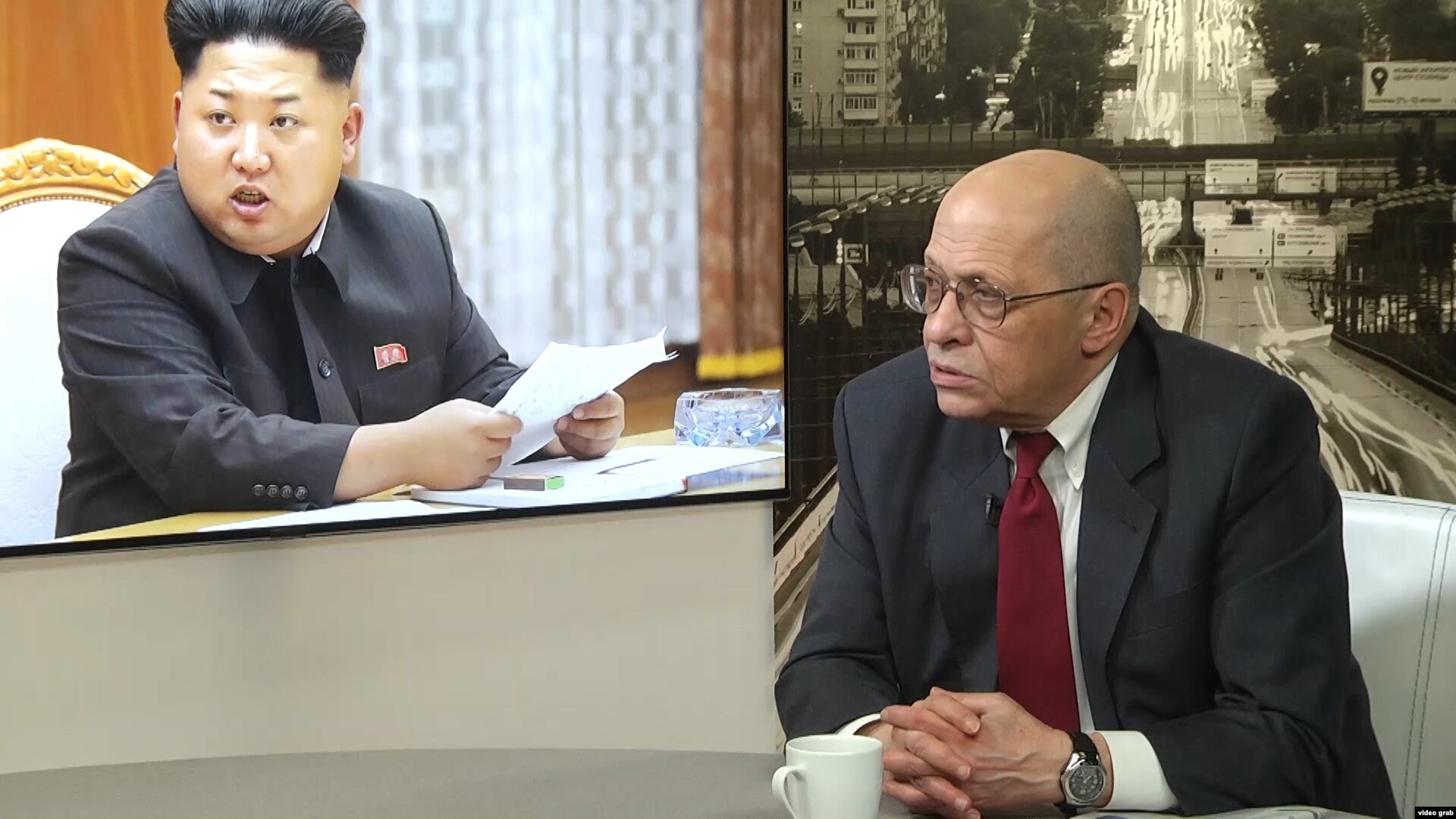
Diplomat, historian Georgy Kunadze in the program of Leonid Velekhov
Leonid Velekhov : Hello, on the air, freedom is a radio that is not only audible, but also visible. In the studio Leonid Velekhov, this is the new issue of the program "Cult of Personality", which you can watch on the TV channel "Present". This program, as I always stare, is not about tyrants, it is about real personalities, their fate, actions, their views on life.
A scientist, historian, diplomat, former Deputy Minister of Foreign Affairs of Russia George Kunadze today is a guest of our program.
( Video of George Kuzannaya. Sailing text:
George Kuzannes is an important example for our time, a person who made a choice between honor and a career in favor of honor. In the early 90s, he made his career rapidly, having once become from researchers of the Academic Institute as Deputy Minister of Foreign Affairs. But the further showed that he did not hold on a place and that the concept of a “career” does not fit with this person. He left the Foreign Ministry, not converging in his views on the foreign policy of Russia with the newly appointed Minister Primakov - and he himself left, without Primakov forced him to this. A few years later, he left the unspeakable position of the deputy of the All-Russian Commissioner for Human Rights, and also for purely fundamental reasons: because of the attitude to the conflict of Russia and Ukraine, which he evaluates as Russian aggression against the fraternal people. I personally do not remember another case, when one of the domestic officials filed for such reasons, although there is no doubt: at heart, many share such a position and consider the conflict with Ukraine a catastrophic mistake of the Russian government. And when the power changes-but someday it will inevitably change-these many will shout: "I thought in the same way, but ... family, children, mortgages, you understand!"
Alas, the choice between honor and career in favor of honor in modern Russia is made by units. It is no coincidence that many have already forgotten where this famous Russian aphorism from where: "It would be glad to serve, to serve as nauseous." And Georgy Friedrichovich Kunadze did not forget. Such is he, Chatsky of our time).
Studio
Leonid Velekhov : I have listed-a scientist, diplomat, historian, public figure, human rights activist ... And who are you still primarily in your own consciousness?
George Kuzannes : an expert in the field of international relations. No more.
Leonid Velekhov : capacious. Tell me then as an expert in the field of international relations, and in the past a diplomat, a high-ranking, deputy minister of foreign affairs in the early 90s, what did you experience when Putin called Kozyrev a head without a head? It was, in fact, it should have personally hurt you personally?
George Kuzannes : Yes, of course. Since then, on Facebook, trolls again recall that I worked with Kozyrev, well, and, of course, respond extremely disapprovingly. But, in general, I would say that it was not that it was insulting, rather surprising, and then, reflecting, I decided that there was nothing surprising in this either. In general, there was a staged question and a prepared answer. That, in fact, is all.
Most of all in this story was surprised by the person who asked the question - Rhine Müllerson. I remember him. In Soviet times, he worked at the Institute of State and Law. He was a very strong specialist in international law. We did joint projects with their institute and worked quite closely. Then he taught for a long time in London, then returned back. He worked in the Estonian Foreign Ministry, teaches now. It seems that there is no reason to helpfully bend for the current needs of the Russian higher authority ...
Leonid Velekhov : Especially Estonets. We still remember what, in those Yeltsinsko-Kozyrev years, Russia had a noble, generous policy in relation to these Baltic countries.
George Kuzannes : Of course.
Leonid Velekhov : But this was also formed such a new political language on the verge of rudeness, and sometimes behind this line. And even more surprising is that our current diplomats made a contribution to this language. Let us recall the pearls of Zakharova, then this strange representative of the Russian Federation at the UN ... And Sergey Viktorovich Lavrov, alas, began to allow some things that had not previously not knitted with his appearance. And, of course, the president sets the tone for this style. What is behind it - this is from power, self -confidence, or, on the contrary, from weakness?
George Kuzannes : I think that this, of course, is partly from self -doubt. We all remember in our youth, as we talked in the yards ...
Leonid Velekhov : Yes, yes, yes.
George Kuzannes : this style is transferred to a high political level. Sergei Lavrov was always an oster on his tongue, putting in, did not climb into his pocket for a word. But his verbal evolution of recent years after all, in my opinion, arose to some extent with an eye on the style of Mr. Putin.
Leonid Velekhov : Surely.
George Kuzannes : Putin sets the tone, and everyone to the best of his strength is drawn to him. We observe this style every evening in the program of Mr. Solovyov. So, this is, in general, the requirements of the time.
Leonid Velekhov : I still think that when diplomats resort to this style, this is an expression of some catastrophic awkwardness of their position. Because they should simply say by Orwell that war is a world, that black is white. Soviet diplomats also behaved extremely confident, but what power they had behind them! And here is some kind of discrepancy, and, it seems to me, the diplomats themselves understand this.
Georgy Kunadze : But I would say that nevertheless there was a certain school, the traditions of Russian diplomacy and, in general,, of course, good upbringing. Now all this, of course, in my opinion, has not gone anywhere. There will be a team to change the style, and everyone will instantly return to themselves the same.
Leonid Velekhov : But I do not think that such a team will be. In my opinion, the trend in the opposite direction.
George Kuzannes : This is another question. In this case, it’s just a pity not only to those who listen, but also those who translate.
Leonid Velekhov : Oh, yes!
George Kuznadze : Try to translate! Try to find adequate boorish expressions in another language! I think how it could be translated into Japanese, and I can not find adequate expressions in the Japanese language. Japanese language is a special language in this sense, probably, like most eastern ones. Yes, and in Western languages how to convey all these verbal fortels, I, frankly, can not imagine.
Leonid Velekhov : Now let's from the general to the particular, from the general picture of the world, to which we, of course, will return to your biography. Have you been Soviet or anti -Soviet person in Soviet times? Because now, who do not ask, everyone was some dissidents in the soul or outside, but you still have a biography-the Institute of Oriental Languages, it was a forge of reliable personnel, an embassy in Japan, where you were a attache. All this probably required Sovietness from the outside and inside.
Georgy Kuzannes : strictly speaking, I was not at the Embassy in Tokyo not a attache, but an attache in social sciences. This is somewhat different.
Leonid Velekhov : Yes, slightly different.
George Kuzannes : I honestly did not even think about it. Probably, like the whole country, like most people, I changed gradually.
Leonid Velekhov : I read that from the CPSU you left not in August 1991, as the vast majority of the twenty-million army of the Communists, but in January of the 91st.
George Kuzannaya : January 21, 1991.
Leonid Velekhov : It was an act, it was a step, not in the crowd, as they say, you left there.
George Kuzannesze : I decided to leave the party on January 13, when there were events in Vilnius. The next day I came to my director (and I was then the head of the department and a member of the party committee) and said that I was going to leave the party. He expressed his readiness to leave the post of head of the department, as he suggested that this could be somehow not very convenient for the institute. A wonderful person, Vladlen Arkadyevich Martynov, our then director, with whom we had a very good relationship) asked me to stay. But a week later events happened in Riga. And when I came to him again, he said: "I understand everything. I ask you not to leave the head of the department." That, in fact, is all. I put my party card, and that was all over.
Leonid Velekhov : Act, Act. And you have always been such a person - with your opinion and with such rigid principles?
George Kuzanza : Yes, God knows him, I somehow did not think about myself in such categories, to be honest. I think that, in general, a person does not think so about himself - I, they say, is fundamental. Then someone should definitely think: "I am unprincipled."
Leonid Velekhov : I think that there is a lot of cynical people for whom these categories simply do not exist-some principles and the like.
George Kuzunadze : Probably. But they, if you ask them: “Do you have any principles?”, I think that not every of them willingly agree with this and say that “yes, I have no principles”. Therefore, to be honest, I did not think about it, but somehow it happened in life.
Leonid Velekhov : But when it was harder to be a man with his opinion and principles - in Soviet times or in the current one?
George Kuzanza : I think - in the present.
Leonid Velekhov : I was waiting for such an answer, although it is paradoxical.
George Kuzannes : No, he is not paradoxical. By virtue of age, I found Soviet power somewhere closer to its death, and I remember that in those days the old square, the Central Committee of the CPSU, the International Department of the CPSU Central Committee, other departments were full of people with very progressive views, people with whom you could find a common language. Of course, there were such, as they say, solid stalinists, several caricature communists, but there were quite progressive people with a very serious approach to the problems of the country and the world. And with them it was always possible to exchange opinions.
I met Alexander Nikolayevich Yakovlev when I worked in Japan. And he came there even before the transfer to the CPSU Central Committee, as the director of IMEMO. But I, of course, knew his life path, knew that he had left the CPSU Central Committee to Canada as an ambassador to a punishment for a deviation from the general line, then returned during Gorbachev. So, I’ll tell you, I was amazed at how this person was not like a communist, such a condo. In this sense, I am inclined to believe that the last years of Soviet power were much more creative and liberal than the present time. Yes, of course, they could punish. Yes, of course, the dissidents existed, and they were, of course, not very sweet and fun to live. But the regime that exists now was not even close.
Leonid Velekhov : Then this is a disaster, George Friedrichovich!
George Kuzunadze : Yes, of course! When you sometimes hear that, they say, the current Russia has returned to Soviet times, I agree with this, but still I always clarify that it returned in a somewhat ocific in the Soviet 50s, not at all in the 80s. Of course, it is clear that in the Soviet Union, one way or another, there was a certain ideological basis. And there were many people who sincerely believed in it. Now we have a cold war, confrontation and an increasingly tough authoritarian regime, which is not based on anything, there are no ideas under it. I remember when Mr. Putin was asked about ideology, he said that "ideology in Russia is patriotism." Well, this, from my point of view, is absolute absurd. The lack of ideology makes present Russia, the Russian regime is much more flexible and, of course, unprincipled.
Here, unfortunately, we have to state that we, I would say so, the second time in the history of the XX and now the 21st century lost Russia. We lost it in 1917 and we lost it now.
Leonid Velekhov : Let's still return in times more optimistic, the times when you returned to the diplomatic service. Also an unprecedented leap, given that in Japan in Soviet times you were attache, and then bam! - And became the deputy minister of foreign affairs, however, the RSFSR ...
George Kuzunadze : Yes! This is an interesting story for me, of course, is still amazing. After those events of January 1991, I called Kozyrev. He invited me to the building on Mira Avenue, such a small mansion. I came there, talked to him. I liked him, I, in my opinion, liked him. In general, then I wrote a lot of the so -called perestroika articles, and he read them, probably, I don’t know otherwise why he suddenly decided to offer me work there.
Leonid Velekhov : He himself wrote perestroika articles, so he probably read.
George Kuzanza : Well, probably. In the spring of 1991, I went to work there.
Leonid Velekhov : But there was already a feeling that it was to this Ministry of the RSFSR that the Great things will be called?
George Kuzannaya : No.
Leonid Velekhov : Was there anything like that?
George Kuzannes : No, no, of course. With all the fact that there was a certain trend in the development of the state, centrifugal processes were very noticeable, but I did not even imagine that the USSR could fall apart.
Leonid Velekhov : No one imagined.
George Kuzunadze : Probably. And then, I don’t know how Kozyrev, but personally I saw my role in using the authority of the Russian authorities, using the authority of President Yeltsin, influence the formation of foreign policy of the USSR. And in this paradigm we worked for several months. Well, then there was a bummer ...
Leonid Velekhov : I know that a historical role, however, similar to the role of the sailor of Zheleznyak, has fallen to you, to personally come to Shevardnadze on Smolensk Square and declare that his power has ended.
George Kuzannesze : This story with the “capture” of the USSR Foreign Ministry ... Kozyrev left Yeltsin to Belovezhskaya Pushch, and before leaving Yeltsin signed a decree on the transfer of the Union Foreign Ministry to the control of the Russian authorities. I was entrusted, because I stayed on the farm, take this decree and go to Shevardnadze, to give him a decree solemnly.
Leonid Velekhov : How did you feel? Still, not very clever?
George Kuzanza : Bad, very bad I felt.
Leonid Velekhov : Shevardnadze in addition, indeed, this impressed the good ...
George Kuzanza : Yes, I respected him very much. He, too, was just one of those Communists who changed my idea of the Communists as evil illiterate dogma.
I will return for a while in 1986. A party delegation led by Comrade Kunaev came to us ...
Leonid Velekhov : Recall - the first secretary of the Central Committee of the Communist Party of Kazakhstan.
George Kuzunadze : Yes! Comrade Kunaev spoke to the personnel of the embassy. He did not listen to anyone. He read some standard instructions on a piece of paper, and then said: "Let's be for work, comrades. Follow the instructions of the Central Committee." And that was all over. A few months later, Shevardnadze arrived. And you know, this person entered the ambassador’s office, he was given a word, and he said: "What will I teach you? You are experts. You better tell me how things are here." And it was a shock. This was especially a shock for the then ambassador of the USSR Peter Abrasimov, who was a real party apparatchian ... One way or another, I respected Eduard Ambrosievich, but there is an order. I called Shevardnadze and said that I was asking me to immediately accept in a very important matter. He said: "I'm busy." I said: "Good. What is the time when I can drive up to you." He said: "And if I am busy before the evening?"
Leonid Velekhov : But he understood what was the essence or not?
George Kuzannes : I think not. Because the results of negotiations in the Belovezhskaya Pushcha were not yet widely known. But, one way or another, probably, some foreboding was: he is an experienced man, who has seen a lot. So, he said: "And if I am busy before the evening?" I say: "I will come to you at night." He says: "And if I am busy at night?" I said: "Okay, then I will just come and will sit in your reception." He said: "Well, well, if so, come now." And we went there in two cars. I still joked: "Here is a group of capture." We arrived there, climbed to the ministerial seventh floor, and I said: "Eduard Ambrosievich, this mission is very unpleasant for me, but understand me. I can’t help but fulfill the assignment. Please read with the decree." He read it, was silent for a long time, and then said: "Why is he doing this with me?" "He" - referring to Yeltsin. I, out of a bad habit, answered questions: "Sorry, I can’t answer this question." He looked at me and said: "And I do not ask you about anything." ( Laughter in the studio. ) Well, well, I say: "Eduard Ambrosievich, please decide when you free the office." He said: "What is there to decide? I'm leaving immediately." He collected a portfolio and went to the exit. Then he stopped and said: "There are journalists below. So that you advise me to tell them?" I say: "I can’t advise you. But if you ask, I would probably advise you to tell them that you are disappointed with this decision, but the Russian authorities are ready to provide all possible assistance in the formation of its state apparatus, in particular, foreign policy." He thought, shook his head and said: "I can't say that." And left.
Leonid Velekhov : Now back from personal to general. In general, it was a realistic course or utopian course of Kozyrev to converge with the West, not just rapprochement, but to reunite, the transformation of Russia into part of the civilized Western world?
George Kuzanza : I do not think that it was a utopia. I did not think so then and I do not think today. For example, it is still not clear to me what shared the then Russia with the West? На мой взгляд – ничего! На мой взгляд, никаких предпосылок к продолжению соперничества, конфронтации напряженности уже не было. И задача России состояла только и единственно в том, чтобы побыстрее пройти этот переходный период и стать нормальным, цивилизованным, демократическим государством, которое имело бы свои национальные интересы, но в главном – во взгляде на мир, на взгляде на политическое устройство мира и собственного государства – ничем бы не отличалась от любой другой европейской страны. С моей точки зрения, этот путь не имел альтернативы.
Леонид Велехов : Вам не кажется, что Запад тоже ведь какие-то сделал ошибки в отношении с Россией?
Георгий Кунадзе : Да, конечно!
Леонид Велехов : Можно было пошире распахнуть объятия. Ведь вспомним, что и в НАТО стучались, и Ельцин такие позволял себе заявления, и Руцкой даже, а потом уже и Путин.
Георгий Кунадзе : Да! Вы знаете, когда я уже работал в Сеуле, туда приехал высокий представитель Евросоюза. И всех послов собрали на его выступление. И вот он начал свое выступление со слов о том, что, мол, теперь, когда мы победили в холодной войне, у нас открываются новые перспективы... И так продолжал свою речь. Когда он закончил, я попросил слово, вышел к трибуне и сказал: "Очень интересное выступление, спасибо, но я хочу внести поправку. Не вы победили в холодной войне, а мы все, включая демократическую Россию, победили в холодной войне. И вот теперь нам всем вместе надо подумать, как распорядиться плодами этой победы". Потом вечером был прием в итальянском посольстве в честь его приезда, потому что он итальянец был. На этом приеме он ко мне подошел, извинился за нетактичное замечание и поблагодарил за поправку. Но мысль о том, что именно Запад победил, а Россия проиграла, на Западе повторялась не одним этим господином, о котором я говорил. Так считали многие. И это ощущалось в политике.
Леонид Велехов : Почему вы ушли с дипломатической службы? Вернее даже, не вдаваясь в подробности, вы ушли в силу каких-то идейных расхождений, или это был обычный жизненный переход из одного качества в другой?
Георгий Кунадзе : Я вернулся в Москву в 1997 году. Я отбыл послом в Сеуле свои без малого четыре года. Министром уже был Евгений Максимович Примаков. Это человек, которого я считал своим учителем и считаю, правда, с которым у меня в бытность его директором СВР не всегда совпадали взгляды, бывали и разногласия. Тем не менее, я приехал в Москву в ожидании нового назначения. При первой встрече Евгений Максимович сказал, что он планирует назначить меня послом по особым поручениям с ответственностью за страны СНГ. И попросил меня изложить ему свои соображения относительно нашей политики в СНГ. Я написал записку, передал ее через курирующего СНГ зама, Бориса Николаевича Пастухова. В этой записке я написал, что самое опасное, что может сделать Россия и самое контрпродуктивное, это попытаться снова наладить систему, при которой Москва является центром, дающим согласие или выражающим несогласие с политикой бывших союзных республик. Россия для этого не имеет ни реальных сил, ни нравственных оснований. И главная задача России могла бы состоять в том, чтобы, не пытаясь дополнительно привязать эти молодые государства к себе (и так они, в общем, конечно, по жизни были привязаны очень тесно и сильно) политически, помочь им стать демократическими, помочь им преодолеть те трудности, с которыми столкнулись уже мы. А у них эти трудности были значительно сильнее просто потому, что у них не было ни традиции, ни кадров, ничего. Вот, собственно, такие были мои предложения. После этого до меня довели через некоторое время, что министр с моими предложениями не согласен. И где-то месяца два я ходил на работу, не имея этой работы – никаких поручений, ничего. Я получал зарплату, сидел в кабинете, советовался с товарищами. Мне говорили: "Да, чего ты расстраиваешься, посиди года два, а потом опять уедешь куда-нибудь". В общем, короче говоря, я так просидел, наверное, все-таки два месяца, а потом пришел и подал заявление об уходе. Зам по кадрам сказал: "Что, прямо так и уволитесь?" Я сказал: "Прямо так и уволюсь". Меня проводили до выхода. На выходе изъяли удостоверение.
Леонид Велехов : На этом ваша дипслужба закончилась.
Георгий Кунадзе : Да. Ну, потом я преподавал восемь лет в МГИМО на полставки. Мне нравилось преподавать. Мне нравились мои студенты. Я до сих пор тепло вспоминаю студентов, которые слушали мои лекции, ходили на мои семинары. Это первая половина первого десятилетия 2000-х годов. Очень хорошие и толковые ребята, открытые для новых идей, очень хорошо во всем разбиравшиеся, гораздо лучше, чем мое поколение, в их годы! Но потом случилась сначала эта антигрузинская кампания, которая нас коснулась, мой курс. Я читал спецкурс "История мировых конфликтов". Война с Грузией 2008 года. И, в общем, я понял, что надо уходить, я и ушел. Я работал с 2004 года в аппарате уполномоченного по правам человека, был одним из двух заместителей Владимира Петровича Лукина. Работа мне нравилась, нравилось работать с Лукиным. Он умный, прогрессивный человек.
Leonid Velekhov : Of course.
Георгий Кунадзе : Но потом он ушел. Пришла Элла Александровна Памфилова, имевшая, а может быть имеющая до сих пор, формально безупречную демократическую репутацию, но, в общем, несколько другого склада человек. И тут – это уже было после крымских событий, после аннексии Крыма, после начала антитеррористической операции украинской на востоке Украины – однажды она меня вызвала и сказала: "Как вы можете писать об украинских карателях "силы АТО"?" Я сказал: "Собственно говоря, какие же они каратели? Украинские правительственные войска наводят порядок на суверенной территории Украины".
Леонид Велехов : Так прямо и сказали?
Георгий Кунадзе : Да! Через некоторое время она сказала: "Знаете, мы с вами на разной волне существуем. У нас с вами несовместимость. Я вас прошу уйти". And I left.
Леонид Велехов : Вот я понимаю, что вы человек принципиальный, решительный и все прочее, но вместе с тем всю предыдущую жизнь вы были на государственной службе высокого уровня, высокого положения. Наверное, все-таки как-то внутренне трудно было с этим рвать и уходить из официоза в полную к нему противоположность?
Георгий Кунадзе : Нет. Я бы сказал – и трудно, и нетрудно.
Леонид Велехов : Нетрудно, потому что говорить правду легко и приятно…
Георгий Кунадзе : Это само собой. Нет, в том смысле, что я живу в той же квартире, в которой жил с 1988 года. Я тогда купил кооперативную квартиру в своем Крылатском. Я в ней живу до сих пор. Она меня вполне устраивает. Там проблема с парковкой, но она, худо-бедно, решается. А все остальное – нормальный дом, нормальная квартира. Мне больше не надо. У меня нет приватизированной казенной дачи, у меня вообще нет дачи. Когда я приехал из Кореи, у меня был участок, но, когда мне принесли калькуляцию строительства дома – очень скромного, по нынешним временам вообще хибара, – я понял, что мне это не потянуть. Продал участок, и на эти деньги мы еще потом жили какое-то время. Меня не очень тяготит отсутствие тех материальных благ, к которым привыкли люди, находящиеся на госслужбе сейчас. Что больше угнетает, так это отсутствие постоянной работы. На работу меня вряд ли возьмут в России. И тут ничего не поделаешь.
Леонид Велехов : Слушая то, что вы говорите, в голову мне приходит только второй и последний пример такого рода человека – это Юрий Алексеевич Рыжов.
Георгий Кунадзе : Наверное.
Леонид Велехов : Вот двое вас таких, высокопоставленных дипломатов в ранге чрезвычайного и полномочного посла, которые, не дорожа никакими привилегиями и перспективами, сочли, что гораздо более важно быть самими собой и говорить то, что думаешь, а не придуриваться, как делают сейчас многие. У Андрея Владимировича Козырева аналогичная судьба, но он уже не с нами и вряд ли скоро вернется, так что это все-таки немного другая категория. Как вы думаете, в МИДе нынешнем у вас тайные единомышленники есть?
Георгий Кунадзе : ( Смех в студии. ) Ну что вы?! Зачем же мне закладывать…
Леонид Велехов : Без имен! In no case!
Георгий Кунадзе : Больше того, я вам скажу, меня по старой памяти приглашают на приемы в разные посольства, иногда подходят люди, жмут руку и говорят, что они, дескать, во всем согласны и прочее; иногда просто подходят поприветствовать; кто-то проходит мимо, естественно. Но единственное, чего я не позволяю себе делать, – звонить людям по мидовским телефонам. Зачем мне подводить людей? Они выбрали свой путь. И я ни к кому из них никаких претензий не имею. Я замечаю, что большинство сотрудников министерства стараются – может быть, мне это только кажется – держаться подальше от всех этих международных дрязг, в которые с удовольствием втянулась Россия. Я думаю, что это правильная позиция.
Леонид Велехов : А можно быть дипломатом без политических взглядов, без мировоззрения?
Георгий Кунадзе : Был такой семинар, который я вел, "Практическая работа дипломата". Я всегда говорил своим студентам, что если вы не согласны с какими-то текущими директивами руководства в чем-то конкретном, не столь принципиальном, то вы обязаны исполнять указания и принимать их не только головой, но и сердцем. Но если вы не согласны с политикой страны в целом, если вы считаете эту политику ошибочной, ваш человеческий долг и служебная обязанность уволиться, потому что невозможно раздваиваться. Одна из больших проблем внешней политики Советского Союза состояла в том, что очень многие люди именно раздваивались таким образом. Вряд ли они составляли большинство сотрудников: все-таки и время было другое, информации было гораздо меньше. Сейчас есть гораздо больше возможностей разобраться во всем, что происходит. И не понимать, что происходит, – для этого нужно быть либо полным глупцом, либо лицемером. В этом смысле у каждого свои обстоятельства. Я свободный человек в том смысле, что у меня нет никаких личных обстоятельств, которые требовали бы от меня, скрепя сердце, исполнять то, во что я не верю. У большинства, наверное, людей есть такие обстоятельства. Я их понимаю. Но тем не менее, конечно, это серьезная, на мой взгляд, проблема. И я думаю, что когда вектор политики переменится, а он переменится, я не сомневаюсь в том, что найдется очень много людей, которые расскажут всем нам о том, как мучения они испытывали, отстаивая нынешнюю политику.
Леонид Велехов : И что, мы им посочувствуем? Мы их поймем?
Георгий Кунадзе : На первых порах в МИДе России, когда мы объединились с союзным МИДом, я курировал Департамент кадров. Ко мне приходили дипломаты, в основном послы и дипконсулы, которые возвращались из долгосрочной командировки в ожидании новых назначений. И были люди, которых мне просто приходилось уговаривать уйти. Были те, кого мне было искренне жалко, кому-то я старался помочь. И в целом, в общем, безотносительно даже к моему личному отношению ко всем этим делам, все-таки существовал общий такой настрой в российской власти – этих людей не шпынять. Они, в общем, хорошие работники. Да, они делали то, что могли в то время. Вот давайте мы их как-то не забудем. А были люди, которые приходили и излагали прогрессивные демократические взгляды. Если назвать фамилии людей, которые приходили ко мне с этими предложениями демократического толка, будет солидный список тех, кто сегодня на слуху как твердые сторонники возрождения величия России. Тот же самый Пушков, Мигранян какой-нибудь, о Соловьеве я уже и не говорю. Вот они стали не просто сторонниками нового старого курса, они стали первыми учениками, ударниками. Но, я думаю, что когда вектор переменится, тот же Соловьев нам расскажет о том, как он, как партизан, боролся с реакцией, отстаивал прогрессивные убеждения! И вот это меня заставляет думать, что, когда с божьей помощью, или с нашей вектор политики изменится, а изменится он по моим представлениям самым кардинальным образом, вот тогда, наверное, России не обойтись, извините за выражение, без люстрации. Просто потому что другого пути восстановить то, что еще можно восстановить, и начать все сначала, начать строить в России демократическое, цивилизованное, нормальное государство, – другого пути нет.
Леонид Велехов : Я вас понял, Георгий Фридрихович! Вам большое спасибо и за этот конкретный, такой искренний, прямой разговор, а главное – за тот пример жизненной позиции, жизненной принципиальности, который вы собой являете. Мне кажется, это чрезвычайно важно в наше время!
Георгий Кунадзе : Очень хорошо! Спасибо на добром слове!
Leonid Velekhov : Thank you!
Георгий Кунадзе : Спасибо, что пригласили!