
Translated material
Crimea: The arrested human rights activist Masharipov announced torture
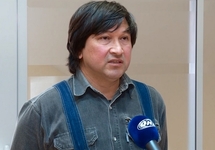
The Yalta human rights activist Yunus Masharipov, who was arrested in the fabricated case of the manufacture of the bomb, sent an application for torture by which the FSB operatives subjected him to President Petro Poroshenko. This was reported on Friday by Radio Liberty. This publication was the first message about the Masharipov case, which has been in imprisonment since the end of September.
Politsyk asks Poroshenko to protect him and make all possible efforts to release him.
Masaripov sent a similar statement to the head of the FSB for the annexed Crimea and Sevastopol Viktor Palagin.
On September 27, the security forces attacked the human rights activist and beat him, after which they brought to the Goroddel of the FSB. There, the detainee began to ask him about frequent trips to the continental Ukraine. Masharipov said that since 2014 he has been engaged in human rights, "informing organizations about violations of children, disabled, pensioners."
After this detainee, they again began to beat, as well as torture with electric shock. Under torture, the human rights activist stipulated himself, saying that he was an agent of the SBU and carried out the tasks of the Ukrainian special services. Masharipov’s testimony was recorded on the video; Several takes was made.
As follows from the publication, the human rights activist is charged with part 1 of Article 223.1 of the Russian Criminal Code (illegal production of explosives), which provides from three to six years of colony. According to the plot of the case, the bomb was found during a search 50 meters from the church of the Archangel Michael on the Sevastopol highway.
On the same day, reports Radio Liberty, and Masharipov arrested Masharipov controlled by Russia for two months. At the hearing, the human rights activist announced torture, but the judge ignored this information.
Subsequently, the Politzek abandoned his testimony, but did not give new ones, referring to Article 51 of the Russian Constitution. Now, the letter says, the FSB operatives are threatening him with reprisals, as well as a lifelong sending to a mental hospital.
When the hearings were held on the extension of the arrest, which, according to the September court order, expired a week ago, the publication is not reported.
The wife of Masharipova is a disabled person. With the legitimate Ukrainian authorities, the QHA human rights activist said in December 2015, her pension was equivalent to 130 dollars, and his own as a wife’s guardian - $ 140. Meanwhile, after the annexation of Crimea, the wife was replaced by the first group of disability of the third. Due to this, the pension of the Yalta wife was reduced to a 60-dollar equivalent, and he himself was deprived of the status of a guardian, since disabled people of the third group are considered able-bodied.
Then the human rights activist said that for more than 10 years he had not got along with Russian -speaking neighbors, but "after the capture of Crimea Russia last year, this conflict acquires the features of fascism, racism." The neighbors Alexander and Natalya Gavina, continued Masharipov, locked him in the garage and poisoned with exhaust gases, and then beaten. Another neighbor, Valery Klimenko, during the holiday, Id al-Adha (Kurban-Bayram) beat both human rights activist and his wife. “He beat with his fists, and then the pot, from which the enamel bounced on both sides,” Masharipov said.
As a result of beatings, Yalta, several times received injuries of the head and fractures of the ribs.
Nevertheless, there were no criminal cases on his statements. “In Yalta, a Muslim is impossible to achieve any legitimate justice,” said Masharipov. “The police have all Russians, all Russians, in the prosecutor’s office, all Russians, in the judicial authorities, are also Russians. Therefore, the rights of people of other nationalities are constantly violated.”
In connection with crimes on the basis of xenophobia, the human rights activist repeatedly turned to the Russian leadership, including Vladimir Putin, as well as the leaders of the Duma parties Gennady Zyuganov, Vladimir Zhirinovsky and Sergey Mironov. These appeals, however, did not give any result.