
Translated material
"Sechin simply used the FSB in his interests"
The case of the former Minister of Economy Ulyukaev, from the point of view of the historian of the special services of Nikita Petrov
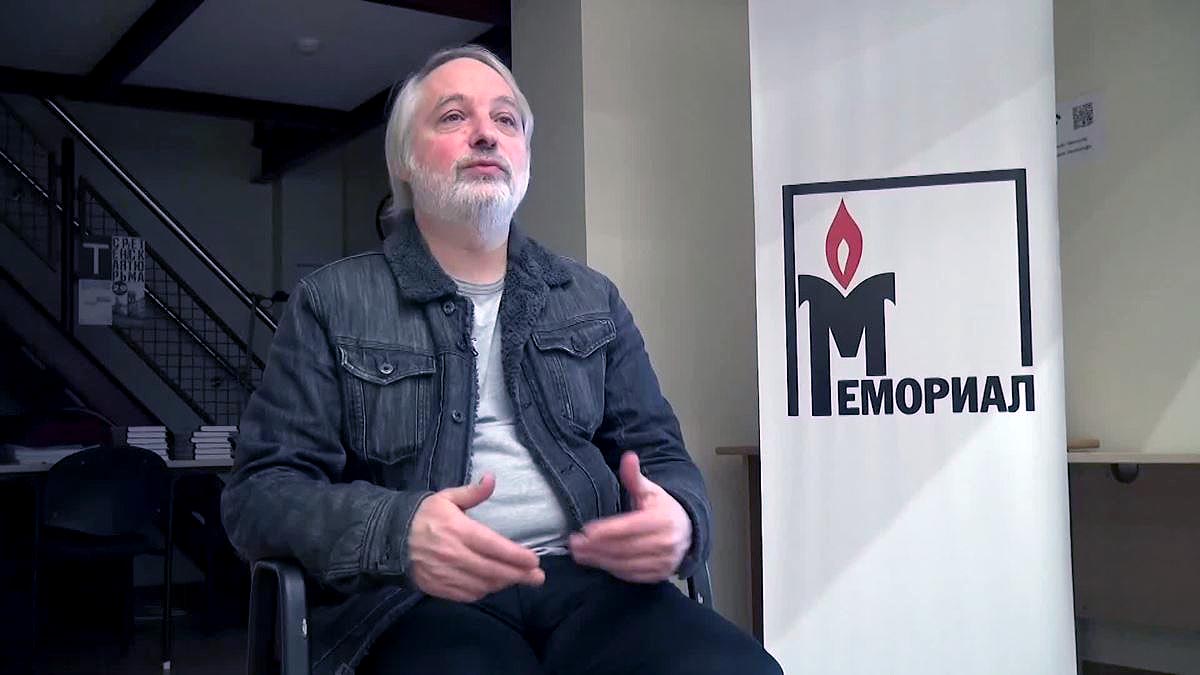
Photo: kavkazr.com
NT: *The Ulyukaev case made a lot of noise thanks to the role that the 6th management of the FSB played in this matter. In fact, it turns out that the head of Rosneft Igor Sechin “privatized” the whole management of the FSB in his interests in order to carry out such operations. Have there been such cases in the history of the Soviet special services when the conditional Beria had some kind of management with him that fulfilled only his wishes and worked in his interests? *
Petrov: During the time of Stalin, the state security authorities, of course, served the interests of the state in the person of Stalin. Stalin was a state. According to his sanctions, they could arrest a person of any level. But if we talk about their own initiative - starting from a certain level, they were untouchable for them. Let's say, a member of the Central Committee, the heads of the regional committees, the leaders of very large economic facilities, even members of the Writers' Union. To arrest people of this level, Stalin’s sanction was needed. And in the sense of agent-operational development, they could also engage in them, of course, only with the sanction of Stalin. But this does not mean at all that Stalin “privatized” the special services - it was such a system.
If we talk about Beria, he himself was at the head of the NKVD and stactly complied with Stalin’s orders, even if they and his subordinates seemed criminal to him. There was a very famous story when it was stolen, and then without any trial and even a formal decision was shot, actually killed, the wife of Marshal Kulik Kira Simonich. Merkulova later, when the investigation in the case of Beria was going on, they asked: and, in fact, why did you do this? He said: yes, I did not see any operational necessity in this, but it was the instructions of Comrade Stalin, and I performed any instruction unconditionally.
So this system of using a punitive-consuming mechanism for the information of political accounts or reprisals against objectionable ones-in Soviet times it was quite obvious. But today, it seems to me, it is impossible to say that someone “privatized” the 6th Service of the FSB. No, she simply serves the interests of an influential person, if necessary. And the whole combination that was done with Ulyukaev from everyday point of view looks not just anecdotal, but even absurd.
It turns out that at this level people can get scores using the FSB service. In this case, both the court and the entire state machine work in the interests of a senior official. This is not a person of state power, it is still a business-Rosneft. It already looks like the use of an official position and attracting state bodies to serve their interests. Flasping of large business with the state is now a completely ordinary phenomenon.
It is also interesting that in Soviet times there was no concept of “corruption”. Well, it was not recognized that the Soviet state may contain such a socio-economic vice. We have never heard about bribes at the Politburo level. But at the base of the pyramid, and especially in the trade, bribes were ordinary. The state security system was also taken for such matters. Examples of this are the case of the “ocean” of the Ministry of Fisheries and the case of Gastronomer No. 1 in Moscow ( known as Eliseevsky Gastrona. - NT), to which the KGB hand was attached.
“It turns out that at this level people can get scores with the help of the FSB. Both the court and the entire state machine work in the interests of a senior official. It already looks like the use of an official position and attracting state bodies to serve their interests "
NT: *What encouraged the KGB, which was about state security, to engage in economic affairs? *
Since the late 1970s, a certain element of distrust for the Ministry of Internal Affairs system has appeared in the political system. The confrontation (chairman of the KGB Yuri) Andropov and (Minister of the Ministry of Internal Affairs of the USSR) Shchelokov rather had a certain deep hostility of one to the other, but the rivalry of the departments was obvious.
NT: *Is this rivalry and now? *
You know, now everyone is competing with everyone. Here, not only the Ministry of Internal Affairs and the FSB, now there are a lot of other special services that are endowed with the right to conduct agent-operational work. In Soviet times, only the KGB was engaged in this in a political sense, and the Ministry of Internal Affairs, even conducting agent-operational work in the criminal environment, was not able to use special equipment. For example, listening to phones, premises was exclusively the prerogative and privilege of the KGB ( the 12th management of the KGB of the USSR. -NT), the Ministry of Internal Affairs did not have all this.
"The bet on the Chekists was made by Yeltsin"
NT: *How widely the KGB used provocations in operational-search activities? *
The KGB, firstly, did not investigate the usual cases of bribery, I do not remember that the KGB participated in the like (as in history with Ulyukaev).
In the practice of the Soviet special services, the provocations, of course, have always been. The story (1930s) is known, when the so-called Japanese border outpost with the Chekists, dressed in the form of the White Guards, was equipped in the Far East. They delivered a man there and announced that he was already abroad. If a person began to weave something anti-Soviet and say: thank God, finally I am with you,-here he revealed himself as a potential traitor to his homeland, and further dealt with him. There were also shooting sentences in such cases. Subsequently, under Khrushchev, such methods were condemned and even punished some of the Chekists: they say how state security authorities can act as temptants of ordinary Soviet citizens. But these methods have not gone anywhere. This has remained in the arsenal of state security since then.
NT: *Can we talk about the massive penetration of immigrants from special services to power? How true is it to say that the Chekists rule the country? *
Without a doubt: the bet on the Chekists was made by Yeltsin since the mid-1990s-with the understanding that the authorities have been less and less enjoying the support of the people due to economic and political difficulties, including the war in Chechnya. This bet on power blocks, in fact, gave the green light to the power to immigrants from state security. And they began to penetrate into business much earlier.
All kinds of retired Chekists, starting, for example, from the former first deputy chairman of the KGB, Philip Bobkov, who got a job in the Most group, is this not the penetration of the Chekists into business? In 1992, a significant outflow of people from the reformable KGB began. It was necessary for them to do something. And they are active people aimed at political activity. Since political activity does not work, let it be a business.
I assure you, if even then the law on lustration took place, as the Democrats wanted (and I also think that such a law is necessary), they would still flow into the business, receiving financial starting positions. And then, in the end, they would still be in power, because our country is so arranged.
“The bet on the Chekists has been made by Yeltsin since the mid-1990s-with the understanding that the authorities have been using the support of the people less and less because of economic and political difficulties, including the war in Chechnya”
NT: *In state -owned companies, “seconded employees of the FSB” work in state -owned companies. Did this institution exist in the USSR? *
The topic with the so -called seconded employees is a typical Soviet belching. In the 1970s, in the 1980s, the mass of KGB officers worked as representatives of this department, starting with the GOSTELEARIO and ending with the Academy of Sciences, and were listed in the current reserve. That is, they were in the KGB personnel, but they received a salary in those organizations where they were seconded. They were engaged in their work: led agents, started a dossier, the so -called affairs of the operational verification. And they received an additional payment in their main department for an officer position. Before the employees of this department, such a person should not open as an officer of the KGB.
It would seem that it all ended in 1991-1992. But then it began to appear again. We can laugh at how, it turns out, there are a lot of areas where it is necessary to observe the interests of state security (with the help of seconded employees). This line on the growth and inflating of the special services apparatus is completely inconceivable in a democratic society.
This is not to say that the current officer or general always serves only his interests or only the interests of the FSB, or only the interests of the department to which he is seconded. This, I would say, is such a complex of human relations, which is individual in each case. In Soviet times, more precisely, in the posttalin era, the department of administrative bodies of the CPSU Central Committee (and the relevant departments in the regional committees of the party) and the Politburo of the CPSU Central Committee served as some limiter for the KGB. To adopt some law or not adopt, expand or not expand the personnel of the KGB-all this was decided at the level of the Politburo. How many times (chairman of the KGB of the USSR) Andropov went with a note to Brezhnev that he needed to create so many new district departments of the KGB! And Brezhnev was not so often and not so quickly given permission to do so. Sometimes he wrote to Andropov notes, for example, Kunaev asks Kunaev to create an additional KGB unit somewhere in Kazakhstan, it would be necessary to help. Andropov, of course, immediately responded and said that if we help Kunaev, and other controls are also asking, let's immediately make so many new departments and increase the staff by another four thousand.
But each time, in order to inflate the state of the KGB throughout the Soviet Union by four, five thousand, it was required, firstly, more than one month, several approvals, the decision of the Politburo, and only then all this happened. All this also applies to the regulation of the KGB. The most important orders that were accepted regulated the operation of the operational sphere, they were also considered by the Central Committee of the CPSU.
All cases of violation of the rule of law (KGB officers) were also considered by the CPSU Central Committee. It is enough to recall how already during the years of perestroika, in 1987, a newspaper correspondent was arrested in the Voroshilovgrad region, in my opinion, the Soviet Shakhtar. Because of this, the head of the KGB Dyachenko department was removed. The general broke up with his post only because they just arrested a man, suspecting him of something, but in fact it was the reduction of accounts from the regional committee. The Central Committee of the CPSU intervened, the party control committee intervened, the KGB had to make excuses. I don’t see anything like this these days.
“In Soviet times, more precisely, in the posttalin era, the department of administrative bodies of the CPSU Central Committee (and the relevant departments in the regional committees of the party) and the Politburo of the CPSU Central Committee” served as some limiter for the KGB.
"There is no social order and cannot be"
NT: *It turns out that now there is no state control over the activities of special services in Russia now in principle? *
There is control on paper, anyone will tell you that we should have parliamentary control over the activities of the FSB in the Duma. But I once asked the chairman of this committee: do you get reports, how many cases were started in the FSB, all the statistics of agent and operational work? It was news for him. Previously, the Central Committee of the CPSU and the department of administrative bodies delved into this work. I do not want to say that it was good under the Communists. The Communists are totalitarian power, so their task was to control everything, including their own state security. But now it all depends on the political weight of a particular boss. If he enters somewhere in the upper circle or to the Security Council, which today can be considered an analogue of the Politburo ... But still, the Politburo was power, I would say, collective. Despite the fact that there was an authority represented by the Secretary General-either Khrushchev, or Brezhnev, or Andropov-but still it was a discussion of the team. And now the structure of the authorities is different, many decisions are single -handedly made by the first person, and that’s all.
NT: *What do you think about the transformation of the image of the state security officer in the mass culture of the last 10-15 years - just recall “Once in Rostov” or the recent series “Sleepers”? *
“Sleepers” are already such a custom -made conspiracyology that have revived agents from the time of the Soviet era about the besieged fortress, such as the films “End of the resident” and “Return of the resident”. To consider that there are some "sleeping" agents who have been sitting and waiting for the command for decades-this is paranoia. It turns out that they just get money and do not work? Do you eat bread for nothing? And if they don’t get, then they are ideological opponents of the authorities? Then why are the ideological opponents do not perform right away, but are waiting for someone? This nonsense does not need to be taken seriously.
And, say, the series “Once in Rostov” is already about Soviet times, and this is, as they say, fantasy-flower. The point here is not in the positive image of an employee of the KGB - of course, in Stekhrushchev’s time, there could be normal and honest people there. There are examples of as KGB officers, for example, the captain of the Moscow KGB department, Viktor Orekhov, simply helped dissident, warning them about searches. Everywhere there could be honest, conscientious people. The question is different - they do not make the weather in the department.
I would venture to assume that there is no social order and cannot be, because it is unrealistic. If a social order for the rehabilitation of an employee (KGB) is carried out, it will be ridiculous, stilted and anti -artistic. There are films about the Great Patriotic War, from which we can conclude that actually the war of counterintelligence Smersh won the war. There, the repressive role of this organization is simply hushed up, and the struggle with the agency of Abwehr and other German intelligence agencies, which they really led, protrudes. But it is ridiculous.
NT: *Let's get back to the history of Sechin and Ulyukaev: it turns out that although the economic system in the country is radically different, the same people from the Andropovsky 1980s, with the then understanding of the interests of the state, set the tone in it. It’s just that their hands are untied, and they can, in addition, have their own yachts and planes? *
You know, this is not surprising. As a matter of fact, the Soviet government ingloriously ended because people annoyed economic lack of freedom. And in the 1990s, many, remaining Soviet people, received the economic scope and the opportunity to act. But to act in the rules and in those attitudes that are used to - for example, to account for opponents with the help of government institutions. By the way, Sechin's reluctance to appear in court as a witness is quite understandable. Already the vowel analysis of this business is unpleasant, he draws it in the not -best light. After all, a lot of uncomfortable questions will be asked, which must be answered. I'm not talking about the fact that it is quite difficult for a person to look in the eye, after everything done.
The weakness of our legal system is amazing, of course. Sechin is not a special -subject, he is not a state -owned employee or judicial, prosecutor. Why the court cannot insist on his call to the court, I do not understand. A drive is possible, in the end. The rights of the accused are obviously not observed. And therefore, I do not see any other way for the court, except to justify (defendant) for lack of evidence.