
Translated material
Buryatia: 2.5 billion was allocated to the radiogeliographer
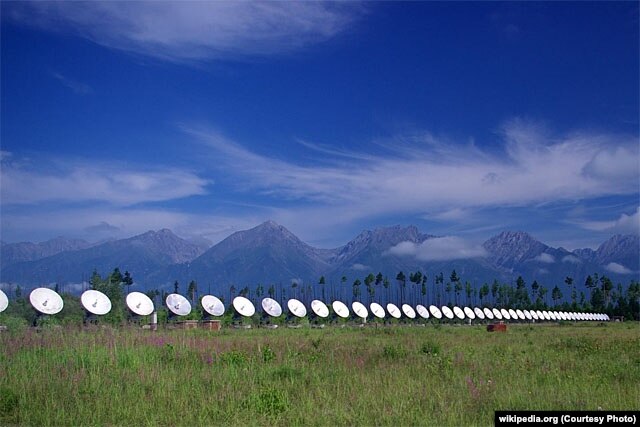
The scientists of the Baikalia received about 2.5 billion rubles from the federal budget for the construction in Buryatia of an optical radio industry. It will become the first object of the project in the framework of the creation of a complex for the study of near space and near -Earth space in Eastern Siberia (National Helioheophysical Complex of the Russian Academy of Sciences). Previously, the full cost of the radiogeliographer was estimated at 17 billion rubles.
The Scientific Director of the Institute of Sunny Earth Physics, Academician of the Russian Academy of Sciences Geliy Zherebtsov, said that the radiogeographer will be built on the lands of the observatory of the institute in the tract of Badars in the Tunkinsky district of Buryatia. According to the two more offices of the heliogeophysical complex, technical documentation is already ready, according to the fourth, they finish design work, stalls said .
The complex will allow you to track the processes occurring in the near space and near -Earth space, study the effect of solar wind on the magnetosphere and ionosphere, and study the structure and physics of the upper atmosphere of the Earth. It will include a solar telescope-coronograph, multi-wave radiogeliographer, radar system, mesostrophy-sphere Lidar (optical range farmer) and the control center.
In 2013, the competition for the creation of the National Helioheophysical Complex of the Russian Academy of Sciences won the Schwabe Holding (Rostec State Corporation). It was planned to finish the project in 2020, but after the deadline was transferred more than once: at the beginning of 2017, Academician Stallion reported that the first facilities of the complex would begin to build in 2018.
Subscribe to us "VKontakte"