
Translated material
In Yemen, the Husites continue to hold more than 40 journalists hostage, including Sputnik
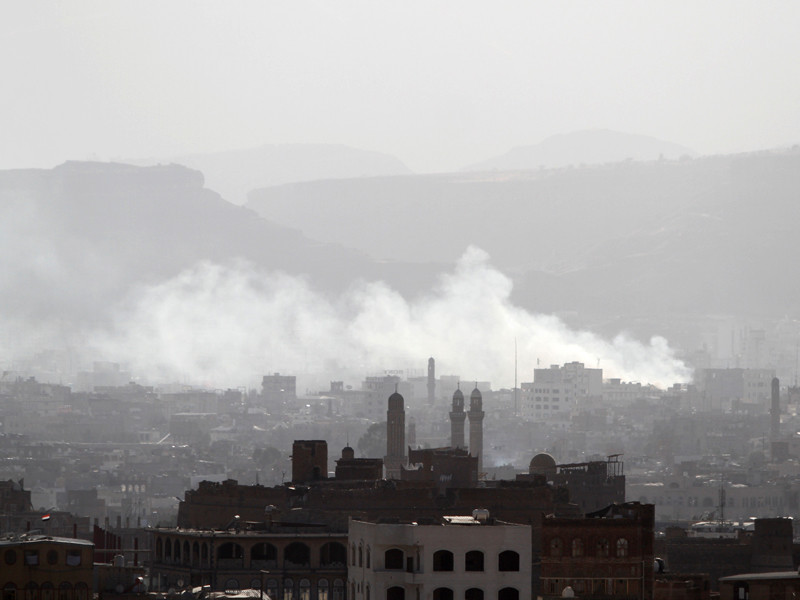
The Yemeni rebers-Husites hold 41 journalists hostage in the captured building of the Yemen Today in the dignity for more than a day. Among them is a freelance correspondent of the Russian agency Sputnik in Yemen, RIA Novosti reports with reference to two independent sources associated with the Hussites.
The agency received from sources a list in Arabic with the names of 41 journalists who were in the television center at the time of capture. Who was compiled by the list, the Husites were not specified. RIA Novosti does not publish a list and does not call the name of its own freeist. The last time a journalist, who is a citizen of one of the Arab countries, got in touch on Sunday. It is known that a search was in his house.
Yemen Today is connected with the Party "Universal People's Congress" by the ex-president of Yemen Ali Abdalla Salekh. On Saturday, the party called on the inhabitants of the country to defend Yemen from their recent allies - Husitov from the Ansar Alla movement. Yemen Today broadcast Salekh’s speech, in which he called for an armed uprising and forbade the military authority to submit to the orders of the Khusitov.
A day later, the Shiite rebel television channel published a video with a message about the death of Salekh. His supporters first refuted information about the murder, but then recognized the fact of the death of a politician. According to media reports, the Husites shot the ex-president in the village of Sanhan near Sana, from where he tried to get to the province of Maarib. The bullet hit him when the motorcade was fired. Earlier on Monday, Salekh’s house was blown up.
Organization of Committii to Protest Journalists, citing Reuters correspondent in Yemen Mohammed Gobari, reports that Yemen Today's building was stormed on December 2, shortly after broadcasting Saleh's performance. The Husites killed at least three guards of the building and currently continue to hold at least 40 journalists hostage.
"Ansar Allah" attack on Yemen Today demonstrates a deep contempt for freedom of speech. CPJ calls on the group to immediately free all the journalists of the television channel. Journalists who cover the conflict in Yemen, like humanitarian organizations, fulfill a critical role. All aspects of the conflict should provide the opportunity to work freely and safely. ", The coordinator said, - the coordinator said, - said the coordinator. Programs of the "Committee for Protection of Journalists" in the Middle East and North Africa Sheriff Mansur.
As the organization recalls, at least two journalists were killed this year during the Civil War in Yemen, two more were detained and subjected to violence by the Husites and the Saudi coalition.
Information Minister of Yemena Muammar al-Eryani in an exclusive performance for The Medialine drew attention to a state of freedom of speech in the country. He recalled that after the creation of the Republic of Yemen in 1990, the country's authorities made great efforts to ensure the independence of the press and freedom of expression. By 2013, 17 daily newspapers, 155 weekly, were published in the country, four state and 15 private television channels, two national and five private radio stations worked. However, the situation has changed dramatically after the coup in 2014, initiated by the Husites. Currently, in Yemen there are two state television channels controlled by the Hussites, two more are in private ownership. Only 12 local radio stations are broadcasting, all of them are used by Husites for propaganda.
“This is not only the problem of media institutes, state or private. The worst thing is that the culture of intimidation and oppression of journalists is more and more distributed in the regions controlled by Hussites. Yemenic journalists are arrested for no reason, they are kidnapped, torture and even kill. Phones are listened, movements are monitored, and each publication is evaluated in accordance with the requirements of the Khusitov,” the Minister says.
According to him, the Hussites keep at least 18 journalists in prisons. At the same time, media employees are contained in inhuman conditions, undergoing physical and psychological torture. Court processes with their participation are carried out in closed mode, so it is impossible to find out about the fate of journalists.
The Party of Ali Abdalla Saleh on Saturday, December 2, called on Yemensev to protect the country from the Hussites, and Salekh in addressing the people of Yemen and supporting him by the military confirmed the gap with recent allies and stated that the Husites "froze the people" for the sake of their personal ambitions and a limited vision, which, according to him, formed Iran for them.
The leader of the Khusitov movement "Ansar Allah" Abdel Malek al-Husi called "the reckless and suspicious" actions of the Loyal Salekh forces, calling him the "traitor." The Arab coalition, led by Saudi Arabia, who is fighting on the side of the Yemen authorities in a civil conflict, greeted the initiative to start the struggle with the rebels.
Salekh supporters tried to conquer the sanctuary at the Husites. In street battles, covering many areas, supporters of the ex-president at first significantly squeezed the Khusitov, expeling them from a number of strategic objects and state institutions and taking control of most of the dignity.
Later, the Husites from the Ansar Allah movement said that they restored control over the Yemeni capital, and reported "suppressing the treacherous conspiracy aimed at inciting internodic trees in the dignity."
An unstable situation is preserved in Yemen after the resignation of President Salekh in 2011. At the beginning of that year, mass anti -government speeches with the requirements of reforms broke out in the country. During the year, more than two thousand Yemenis were killed. As a result, Salekh abandoned the authorities in exchange for judicial immunity. In February 2012, according to the results of early elections, the authorities officially transferred from him to Abdu Rabbo Mansuru Hadi.
Protes of Husitov began in Yemen in mid -August 2014. A month later, they grew into clashes with security forces. In January 2015, the Hussites captured the capital of Yemen San. They dismissed the parliament and forced the government and President Abda Rabbo Mansur Hadi to resign. However, the head of state changed his mind to leave by moving to the city of Aden. When the rebels began to storm the city, he fled from the country. The conflict turned into the most active phase with the beginning of the invasion at the request of Hadi in March 2015, the Arabian coalition.