
Translated material
Read the genome of pumpkin-horcasses
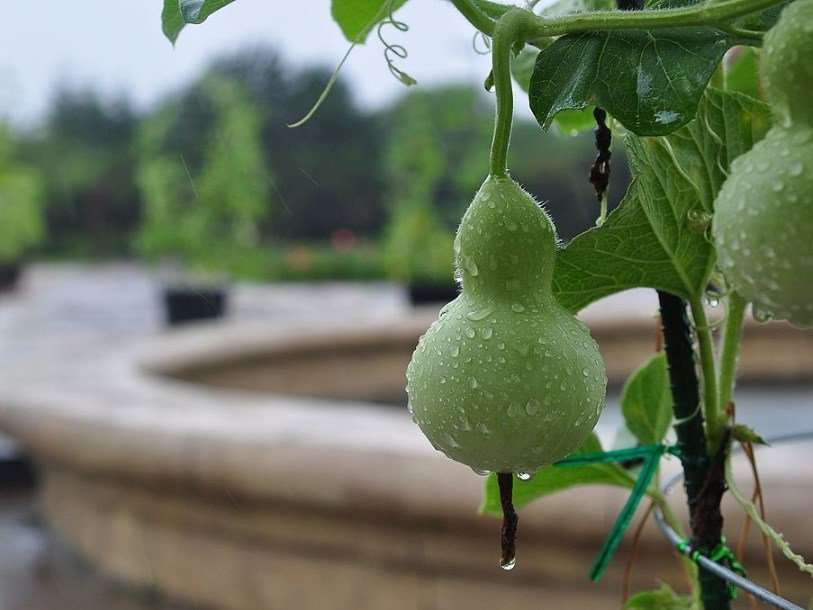
The international team of researchers read the genome of pumpkin-gorlian, also known as Lagenaria Siceraria , and also reconstructed the genome of the common ancestor of all representatives of the pumpkin family ( Cucurbitaceae ).
The birthplace of this plant is South Africa. From there, it spread widely not only through the African continent, but throughout Asia and Polynesia. They grow it in South America. It is used for food, and also serves for the manufacture of blood vessels and even musical instruments.
The high -quality sequenication of the Lagenaria genome was performed by a team of scientists under the leadership of Zhangjun Fei from the Boyce Thompson Institute at Cornell University. Scientists compared the resulting genomic sequence with other representatives of pumpkin, which made it possible to clarify the evolutionary history of these plants. “Using this genome and other affordable pumpkin genomes, including watermelon, melon, cucumbers and pumpkin [large -fruited], we restored the genome of the last common ancestor Cucurbitaceae,” says Zhanjun Fei. Also, the study of genomes makes it possible to improve many properties of cultural species of pumpkin, including their resistance to diseases and low temperatures.
To confirm the practical benefits of their study, the authors have established a gene that provides plants with resistance to a dangerous disease - ring spotting. The causative agent of this disease is a virus transmitted by various types of aphids. The virus is known as the “Ring spotting virus of the papaya” ( Papaya Ringspot Virus, PRSV). One of its two varieties (PRSV-P) really affects papaya, but it also occurs in some pumpkin. The second variety (PRSV-W) is common exclusively in pumpkin plants. It is sometimes called the "Watermelon Mosaic virus." In infected plants, ring -shaped spots appear on the leaves, then the leaves are deformed, yellow and die. Characteristic rings also occur on the peel of fruits.
The results of the study are published in The Plant Journal.