
Translated material
"Perhaps the era of modern music is over"
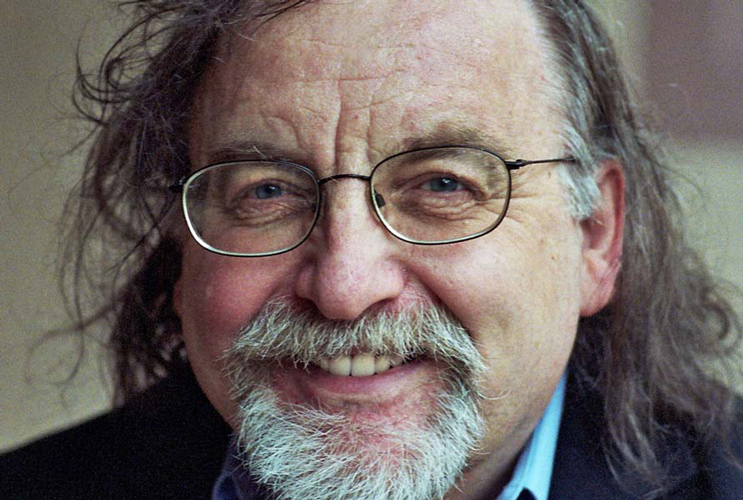
The festival of modern music in Haddersfield, the most influential rally of experimental and avant -garde music in Britain, ended. This year he celebrated the 40th anniversary, in the program-more than 50 concerts, performances by London Sinfonietta, Arditti Quartet, Ensemble Modern, a special-chicken-shaker dedicated to the music of Polina Oliveros, Kraftwerk, Lou Read and Robert Frippa. Among the honored guests was the 74-year-old composer Brian Fernihou, who introduced his new UmbRATIONS cycle. The 55-minute essay demonstrated all the signs of the so-called new complexity that made Fernikhom the famous-the puzzling and often replaced meter (in a four-minute passage it changes 43 times), a scatter of excessive notation, special tasks for musicians, etc. The premiere with the composer was talked to Alexei Munipov.
- Your music is forever connected with the definition of “new complexity”, but you don’t seem to love him very much?
- Rather, I am surprised that people still use this term, but he has been invented, scary to say, forty years ago. But it is still not considered shameful to start a conversation with him. The term is a small box, they put you there, cover you with a key and forgot forever. This is all from the laziness of the mind. It is clear why this is needed - so easier for listeners, critics, and especially radio stations and magazines. But as a result, people do not listen to music, but the word “complexity”. Moreover, this term is used to describe very different works. And very different authors with whom I have more differences than similarities.
It is like the term "tonality". Behind him is a whole universe! What does this mean now? If you write a thing in Ru Majore, then the only thing that can be said about it is not a matter in Majore. This is the last thing that interests us, we don’t think about music in this aspect, this look has long been outdated. The pop music, in turn, went on a different path-if in the sixties there were at least some modulations, simple, but still, now everything is built there on the same chord. In general, the term “new complexity” is used as a meaningless indicator of the musical style - and harmful, since it interferes with the author, composer communication with the world. And yes, it irritates me wildly. For 40 years, as they say, I smiled, bowed and did not say anything back, but I'm tired of. I am an elderly person, how much can you.
- Do you remember your reaction when you first heard this term in connection with your own music?
- No. I don't remember. Then I thought about the plurality of virtual polyphony, and thought so much that I did not need a special term for this. There was a great article by Jonathan Harvey for my 50th anniversary-he did not use the word “complexity” at all, but in general he described my music more precisely than anyone else. Perhaps because he himself is a composer. He wrote: “It is worth talking not about complex polyphony, but about expanded polyphony. Where various aspects of music can “polyphonize” themselves, responding in one way or another to the prevailing stream of material. ” And my use of complex notation notes those places in the score, where a simple interpretation develops, so to speak, in a metropolitan.
I did this to everyone when musicians appeared, ready to experiment with me. Because before that, the musicians were 30 years older than me. And then suddenly the guys of my age were found, selfless and serious. And it cheated me very much. In the early 1970s, I already had a series of compositions, which worked with these ideas; One of them is “ Cassandra ' S Dream ” For the Flate Solo, which I was still able to play on my own. In them, I expanded the potential number of interactions of sounds, strange accents, distortions ... sound balls hitting the wall and flying away in different directions. And he composed, constantly referring to the new performers and the fact that the former executive norms are no longer relevant.
Even when you play Bach, you do not play what is written in notes. In your game, twenty generations of music teachers are automatically manifested, you play them, not Bach. At the same time, Bach’s notation is very speaking! If you look into the Bakho manuscripts, you will see that he has everything in crooked lines there, these are such bundles of energy as waves or like breathing. And this is also the information that the Contractor must take into account. Or take the Weburn. In my memory, his variations for piano, absolutely all performers played in such a post -stnchausen style - dry, without a pedal. Until the end of the 70s, it was the only possible approach. And so it is written in notes! But those who heard the Weberne himself performed them say that he played them completely differently.
And I thought: I want my ideas to be - at least partially - recorded in notes. What allowed me, in particular, to quickly move from one technique to another. I did not have a special task to make music as difficult as possible. My task was to constantly remind that the performing norms are not something frozen. And the experience of each generation changes them. Look: now the musicians who can play my things are much more than before, and they cope with them faster. Because where they studied, new techniques are already treated at least respectfully, no one will celebrate them anymore from the threshold. After all, how was it? "Well, you are impossible to play on a flute, and it will not sound!"
In general, live performance is very important. I have a complex and rapidly changing meter, and they often ask me why I do not write electronic music - you can also program anything there. Because I am interested in working with living people! The unique reading of each musician carries not only a historical context - when a thing was written, in what conditions - but also the progress in understanding what meanings my music contains. And everything is painted in notes in such detail, first of all, because in the 70s and 80s it was very difficult to find performers who, in principle, could understand and play my music. "How to play something?" - Such a reaction. Therefore, I had to indicate a lot directly in the score. Not because I demanded the absolute accuracy of execution - in this sense I am not a fetishist. But I value loyalty to the written. We must be the right intentions of music. If you constantly keep in my head, how visual becomes audible how the physical forces that drive the music in motion work - everything turns out.
I don’t remember who said this, some ancient Greek: give me a point of support, and I will turn the world upside down. You only need a fairly long lever. So it is in music.
- Do you allow different interpretations of your own works?
“Well, I can't forbid them.”
- That is, you are rather in solidarity with the famous phrase of Stravinsky - “You need to perform music, not interpret”?
- But what is it to “perform”? Here, let's say, I work a lot with Arditti Quartet , and we know each other so well that I just sniff my nose - and the violinist understands what I mean. And still there is a lot of work (according to the recognition of the founder of Arditti Quartet , it took them 60 hours of rehearsals to learn a 10-minute second string quartet Fernihu. - A.M. ). First you need to deal with the rhythm, it always takes time. Then I say, let's say, a violinist: look, you have less and less notes, and your colleague has more and more, but the party itself slows down, becomes thinner - where are you crossing? Where will this most important moment happen for composing? I don’t remember who said this, some ancient Greek: give me a point of support, and I will turn the world upside down. You only need a fairly long lever. So it is in music. How long is the stick you operate? Where is this point of support in the composition, how close is it to the internal meaning of your music? Can you achieve the imaginary peak of your composition? I have an essay “Sisyphus r Edux” for an altova flute, in which I ask precisely these questions. Sisyphus, as you know, endlessly rolled a heavy stone to the mountain. There are twenty parts in my essay, and these are just twenty different ways to achieve this critical point in which the music, having gathered all its internal forces, rolls down. And this is not a climax, it is rather a assembly point.
As for the interpretations - keep in mind that I have heard the completely unbearable, terrible performance of my works. Some in Italy, some here in Britain. Such that I wanted to fall through the ground right in the hall. Usually this is the result of incompetence - either a conductor or an organizer who entrusts the performance of a weak orchestra. And if the conductor cannot collect the orchestra together so that they at least play the right notes, then why is he needed at all? This is the type of improper interpretation that it makes no sense to discuss.
But further there are many subtleties - on the path of transforming the visual, that is, the score, in the audible there are many obstacles, twisters, interpolations. I do not demand a game on the metronome and super -precise hit in all sizes. It is enough to sit down, to calculate and listen to everything that the rest of the musicians play at this time. Say, in my essay it may be that one in the party has a 30-second explosion of sounds, and the other has one note half a seconds earlier, and the musicians ask me: why can not be moved a little so that she also gets into these 30 seconds? Yes, because your parties came from different places and move in different directions! And for one, the key figure is 7, its inner meter is seven, and for the other, the other, and therefore they intersect at this point of the score.
I will give you an example. You know, Stravinsky has a wonderful pipe party in the “Soldier History”-Ta-Ta-Ta-Ra-Ri-Ra-Ra-Ra? He notes her with quintals, this is his instruction to the musician. And then he must choose-to remain loyal to the prickly and problematic notation of Stravinsky or to fulfill this party in a rude spirit of military orchestras and play not with quintels, but 3+2: accents are built a little differently, and it seems to be more logical-so the military orchestra plays, this is the march of the soldier, and the whole "history of the soldier" has grown out of these rhythms. Here you have the difference between the context and the fact that the notation can say about the context. The musician every time makes a choice, even how to play some short trill, and the result is a fundamentally different semantics-it does not matter what kind of music it is: my, Stravinsky or Liszt.
- In the case of your music, I am afraid that listeners can not always distinguish the correct interpretation from the wrong one.
- To begin with, let the musicians simply play what is written in the score. Just the right notes. Please. And then, when they overcome all the required microtons, you can already start to understand, say, with that type of adagissimo , which is found in my short things. For example, violins play prickly, but each time the same set of strokes, it does not change throughout the essay, and the main challenge for the musician is precisely in this. Or they can pull the same note, almost like in the Indian rag, but each violinist plays it differently: one deviates by a quarter of the tone closer to the end of the passage, the other is half a ton in the middle, and each in his rhythm. And the tension is generated by how the voices are harmoniously superimposed on each other. In one ensemble that performed my music, there was a violinist of Indian origin; So he perfectly understood this game with microtons on the move, in many ways I focused on him. And these microtons must be felt, and not to engage in mathematics, dividing the tone into three or four parts in the mind. We are talking about stress and permission, confirmation or deception of expectations, about the pulsation of the material.
I remember that I was somehow invited with my wife to lunch, and the owners, apparently, to show that they are cultural people, put Beethoven’s quartets background-I almost lost my mind. Because ... well, you yourself understand.
- For musicians, your music is always a challenge, even in the sense of time that needs to be spent on rehearsals. Such a standard of ultimateness. I know a flutist who taught your thing for almost six months.
- But learned? But now he has a lot of time! And he will be able to learn the next one in a week.
No, I do not think to myself and my music in such categories. All the music is complicated! And Beethoven’s late string quartets, is it easy to play? What will you do with context, with their historicity and extra -historical subjectivity? What penetrated into them from the aristocratic tradition of other quartets that was known to him and what belongs to a new and very personal romantic sensuality? It seems that the score itself is relatively simple, play the notes - and everything will be in order ... Come on! What to stick out, and what to leave behind the scenes, how to solve the problem of interpretation, that you decide to add from yourself (more precisely, how much you add yourself) - yes there are a million questions! Yes, of course, Beethoven quarters have long and firmly belong to our culture, including the culture of hearing. I remember that I was somehow invited with my wife to lunch, and the owners, apparently, to show that they are cultural people, put these same quartets background-I almost went crazy. Because ... Well, you yourself understand what to explain here.
But we must also remember that we, as a society of this culture of hearing, did not possess just yesterday. Haydn's listeners yawned and looked at the clock, they simply did not develop a taste for that feverish stream of energy and wit, which is the essence of many Haydn writings. But it was an elite of that time. Music is in many ways the story of what and how listeners understand in music.
Personally, I do not want to inform the audience. Rather, I want to let them feel the speed with which the music is absorbed by us today - we learn it much faster than before. But, however, she disappears from memory faster. And this is a problem.
-Do I understand correctly that your music is still practically not performed in Britain-unless here, in Haddersfield?
- Oh yes. Not the same word.
- Why do you think?
- They are to blame for everything. You in Russia, I think, are perfectly feeling the whole set of meanings and connotations, which lies behind the word “they”. They don't play me, that's all. I left Britain in 1969 precisely because I could no longer endure all this. Everyone looked at my music from top to bottom. I remember I had a teacher-a large house, a fireplace, a servant gives different varieties of tea, everything is very English ... I show him the first pages of his string quartet, he studies them for a long time, and the only thing I hear from him is “this is very difficult, my boy.” And nothing more.
Well, what can I say? In Britain, the ideology of the good old common sense is still dominated by the ideology of. I look at this philosophically, I have nothing against it, it just blocks the way to people to what the rules by which the world exists can question. Okay, God is with them. Let them listen to their beloved Gilbert and Sullivan in the local church twice a year.
In general, I have nothing against Britain. A sweet place. Perhaps not as cute as before, it doesn’t matter. But nothing in the world will make me come back here.
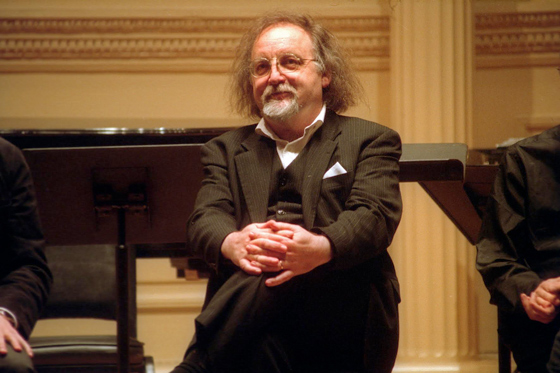 © Getty images Brian Fernihou with The Ensemble Sospeso in Carnie Hall, 2002
- At the same time, “new complexity” is considered, first of all, by a British phenomenon.
- Look: the article by Richard Tup’s musicologist (alas, deceased), which popularized this term, is dedicated to four British composers - James Dillon, Michael Finnissi, Richard Barrett and Chris Denchu. At the same time, two of them live (and long ago) outside Britain: Dench-in Australia, Barrett-a lot where, earlier in Berlin, now, in my opinion, in Croatia or Serbia. And I left a long time ago. Admit it! What is this British phenomenon? And in general, composers who, for one reason or another, cannot live in their own country! I myself hear all the time: "Oh, we did not know that you were from Britain." Okay, I was born in Britain, I have a British passport, which I updated six months ago, I will die a British-then what?
Personally, I'm not at all sure that nationality affects something. Although I understand that many have to keep this in mind. But this is all so shaky ... You were born in one country, then it ceased to exist, as often happens these days, and you become part of something else. And Barrett and Dencha, and for many years in Britain they called “very smart”-like, such wise men that it would be nice to reduce the mind. But, I believe, any person is free to dispose of the amount of mind that he got. So I do not complain that they don’t play me in Britain. God's sake. At times they play, by the way, and not bad. There are understanding musicians. But still, Europe has a tendency to take us seriously. And even ask to do what we do. And not to question us and not wait every minute that we will throw everything. Nobody finds fault with us and does not say, as in Britain, that we, you see, express our thoughts too prying.
- In general, the concept of “nationality” in modern music exists for you?
- No. Well, that is, yes, of course. Elena Ganchikova studied from me, she once brought a fugue, and I could not understand why it was a fugue. And she explained that Rimsky-Korsakov and Mussorgsky wrote fugs not like Bach. So, obviously, education changes us and our perception of musical tradition. The harmonic structures of Borodin, Mussorgsky, Tchaikovsky, their understanding of how harmony works is clearly different from the Western ones.
-Despite the fact that they were in Russia at that time, rather, Europeans ...
— Ну да, я понимаю. Что ж, очень жаль. Думаю, останься Стравинский в России, он тоже бы стал приличным русским композитором. Я недавно исполнял его оркестровую студенческую вещь — ну, это уже Стравинский, просто не слишком хороший, и при этом слышно, где он учился. Но он уехал, потому что было принято думать, что Франция — это средоточие современной культуры, место, где происходит все самое важное. Не Санкт-Петербург же. Ну и потом Америка… Он, правда, не хотел ехать в Америку, но это был мудрый шаг, иначе он едва ли выжил бы. И отличные вещи в серийной технике там написал! Я больше всего люблю «Потоп», наименее интеллектуальную из всех. Какая чудесная музыка! Но я люблю и его оркестровые «Вариации» [памяти Олдоса Хаксли], и «Памяти Дилана Томаса» — во многом потому, что эти вещи очень здорово разбирать со студентами, объяснять на их примере работу с сериями. Однако, если вы спросите, что все-таки делает русского композитора русским, я едва ли смогу ответить.
Был ли Майкл Типпетт английским композитором? Думаю, был. Образы, с которыми он работал, я бы назвал пасторальным модернизмом. Не просто пыхтящие машины а-ля «Метрополис», но и типично британские пейзажи — морские или там пейзажи мысли, дающие жизнь текучей и волнистой музыкальной реальности. Я не был частью этого, а, допустим, Джонатан Харви был — он в детстве пел в церковном хоре и там познакомился с традицией британской музыки. И, мне кажется, это сильно на него повлияло, несмотря на то что большую часть жизни он провел в Париже. Он работал потом с буддийскими гармониями, но все равно остался британским композитором.
Фальшивая половинка утки — вот это абсолютный Бриттен. Как бы напоминает тебе о единении с природой, но это просто муляж.
— А Бриттен? Он для вас достаточно британский?
— Бриттен? Ну, в школе меня учили, что да. Знаете, я всегда его ненавидел. Я был на премьере «Военного реквиема» в Ковентри — ну, такое… Нет, никогда его не любил. Он был plaster - duck - on - the - wall - composer — знаете это английское выражение? В Англии у среднего класса есть традиция вешать на стену муляжи уток, пластиковые или гипсовые. Фальшивая половинка утки — вот это абсолютный Бриттен. Как бы напоминает тебе о единении с природой, но это просто муляж. Неплохой музыкант, но мне он не кажется таким важным для британской традиции, как принято считать.
— То есть британская музыкальная традиция все-таки существует…
— Какая-никакая. Да нет, она есть. Томас Адес, например. Несмотря на все свои связи с Европой, он абсолютно британский композитор. Witty. Bright. Работающий с деликатными темами вроде порнографии. Или Джордж Бенджамин — достаточно ли он британский, он ведь учился в Париже? Ну, по крайней мере, его удостоили рыцарского звания, так что он теперь сэр Джордж. Его музыку сравнительно легко исполнять, и, главное, она не оскорбляет ничьи чувства — это очень важно для британцев.
— То есть для вас главные британские качества — это остроумие, легкость и некоторая беззубость?
— Не знаю, я же ничего общего с Британией не имею. Мой отец был пастухом, работал на ферме. Пас овец, гонял собак. Он читать-то толком не умел. Я сын пастуха, понимаете? Я даже не к рабочему классу принадлежу, с точки зрения социальной иерархии это было не просто дно, а днище. Подразумевалось, что я должен получить образование, но очень ограниченного свойства — чтобы потом работать учителем в сельской школе, клерком в провинциальном банке или в лучшем случае мелким чиновником. Вот и все, что могло мне предложить государство, а все остальные варианты не поощрялись. Я в результате пробился, но это потребовало известного упрямства.
И чем я только не занимался! Я преподавал в начальных классах, пяти-восьмилетним детям. Я работал на заводе — не в цехах, правда, а в конторе, проверял доставку определенных компонентов. 12 недель так проработал. Потом собрал все бумаги, смыл их в унитаз и сбежал, пока это не обнаружили. Потом долго подготавливал к печати чужие партитуры, но, по крайней мере, уже имел дело с музыкой.
И подрабатывал как дирижер, в том числе дирижировал некоторыми своими ранними сочинениями. Но мы были бедны как церковные мыши. Получали, может, пять фунтов за вечер. Мы буквально с кружкой слушателей обходили, собирая по 10, по 20 пенсов с человека. Ансамбли были на самоокупаемости, от государства мы ничего не получали. Все деньги уходили престарелым и мудрым преподавателям из академий. Так что лет в 25 я внезапно понял, что сыт этим по горло. Что мне надоело пробивать головой стену. И еще слышать все эти издевательские речи про то, что мне не обязательно жить в Лондоне, чтобы быть композитором. Что мне стоит вернуться туда, откуда я родом, и стать прекрасным региональным композитором. Областным типа! Екатеринбургским! Не всем же быть москвичами, правда? Короче, свалить и заткнуться — вот что мне они советовали. Но я их не послушался.
— А теперь вы еще и преподаете. Что это значит — учить композиторскому делу? How do you do this?
— Ну, я уже бросил преподавать. Мне 75, в этом возрасте сидеть на постоянной преподавательской ставке не обязательно. Можно, если хочешь… Но мне что-то не хочется. Потому что к этой работе прилагается тонна бумажной волокиты. Мне нравится работать с учениками, и я продолжаю это делать на международных композиторских курсах, но быть частью академических институций мне разонравилось. Потому что между творческой частью и академией всегда есть некий конфликт. Чтобы защитить докторскую по клинической психологии, нужно потратить пять лет, и у этого процесса понятные условия и критерии, а получилось ли что-то путное у моего ученика, знаем только я и он. И по ходу дела мы можем поменять все правила или придумать новые. Конечно, с жесткими условиями академической практики все это плохо соотносится.
У меня училась Елена Ганчикова, она однажды принесла фугу, а я не мог понять, почему это фуга.
— Как в композиторском мире устроена эта связка «учитель—ученик»? Вы учились у голландского композитора Тона де Леува и рассказывали потом, что он вас практически игнорировал, потому что интересовался совсем другой музыкой.
— Азиатской, прежде всего. Мне, в общем, не на что особо жаловаться, он был симпатичным человеком, у нас было несколько приятных бесед, но в смысле обучения он мне мало что дал. Индонезия была голландской колонией, эта связь по-прежнему очень сильна — видимо, так он увлекся индонезийской музыкой и, как следствие, микротональностью. А то, что делал я, его мало интересовало. К тому моменту у меня уже сформировался свой стиль, он мало что мог к нему прибавить, да не очень-то и пытался. Впрочем, думаю, со мной преподавателям тоже было непросто.
— А вашим ученикам — с вами? Что, если студенту вы симпатизируете, но музыка, которую он пишет, вам вообще не нравится?
— А это неважно. Мне так даже больше подходит. Я как раз не люблю, когда ко мне приходят те, кто любит мою музыку и хочет научиться моим трюкам. Было три или четыре таких ученика, не буду называть фамилий. Моя задача — познакомить композитора с самим собой технически и эстетически. Хотите писать музыку в соль миноре — ради бога, просто вы должны четко понимать, зачем он вам понадобился и чем он отличается от фа-диез мажора. Вам нужна тональность как краска? Можете передать то же самое при помощи шенкеровского анализа? Why so, and not otherwise? А как еще можно? Well and so on. Но мне интересно смотреть на вещи шире. Да, среди моих учеников много композиторов, музыку которых, скажем так, я бы сам писать не хотел. Но они нашли себя в мире, и у них есть работа, а сейчас это куда сложнее, чем раньше.
— Возраст вам хоть в чем-то помогает? Сочинять не стало проще?
— Быть старым не помогает ни в чем, поверьте мне. Быстрее устаешь. Шаришь в мозгу, пытаешься найти что-то оригинальное. В молодости просто открыл краник — и полилось. А сейчас все уже так забито… Силишься найти щелочку, чтобы воткнуть хоть что-то новое. Стравинский всю жизнь сочинял беспрерывно, а в конце жизни признался, что больше двух часов в день уже не получается. На короткую вещь хватит, но держать дыхание все сложнее.
И потом, не забывайте, что я нарколептик, то есть раньше я засыпал каждые полчаса, пока не подобрал себе правильные лекарства. Для композитора это создает, скажем так, некоторые неудобства. А кроме того, я страдаю катаплексией, то есть могу внезапно упасть и потерять сознание. Сейчас это случается нечасто, потому что опять-таки удалось найти подходящие лекарства. Но раньше… Поверить не могу, что отваживался дирижировать, не принимая никаких таблеток. Седьмая симфония Сибелиуса меня чуть не убила однажды. Там есть мое любимое место, где вступает тромбон. И вот я дирижирую симфонией, предвкушаю этот момент — и падаю как подкошенный. А предсказать приступ невозможно, это случается совершенно внезапно. Знаете, собаки тоже иногда страдают нарколепсией; у нас были такие далматинцы. Они могут прыгнуть за мячом, словить его, в полете внезапно уснуть и грохнуться на пол. Вот я себя чувствовал такой собакой. На самом деле, смешного мало, я чуть не убился насмерть. Но человек ко всему привыкает. Раньше я студентам говорил: если моя голова упадет на стол, не пугайтесь, не обращайте внимания, продолжайте обсуждать, через 15 секунд я приду в себя.
— Чужая музыка на вас влияет?
— У меня был период в жизни, когда я старался слушать чужой музыки поменьше. Всякой музыки, не только современной академической. Потому что не чувствовал себя достаточно окрепшим, чтобы ей противостоять. А потом, ближе к шестидесяти, я внезапно почувствовал новое желание — все услышать и узнать. Я покупал все CD , до которых мог дотянуться, и слушал в плеере. У меня их тысячи, всех времен и жанров. Так что мое знание, например, старинной музыки стало гораздо более основательным. Вообще о музыке я могу говорить бесконечно — зато не могу о футболе, про турнирные таблицы — это не ко мне. Музыка меня интересует с самых разных точек зрения. Я люблю порассуждать про вечный конфликт между условностями восприятия и музыкальным словарем. Или о том, как соотносятся слова и музыка. Монтеверди использовал довольно глупые тексты, согласитесь. И всем было все равно: «ария гнева» — и ладно, композитору этого было достаточно. И как потом менялись представления о том, что отражает опера, как умирали эти представления, как рождалось что-то новое... В общем, меня хлебом не корми — дай что-нибудь послушать и об этом подумать. Это очень полезно для моих сочинительских занятий. Но, конечно, я, прежде всего, получаю удовольствие. Анализирую, да, это не отключить. Но, слушая старинную музыку, современный композитор получает невероятный объем, прежде всего, интуитивной информации.
— А как меняется ваша собственная музыка с течением времени? Как бы вы хотели, чтобы она менялась?
— Я не могу это контролировать. Я не такой рациональный человек.
Я — сын пастуха, понимаете? Я даже не к рабочему классу принадлежу, с точки зрения социальной иерархии это было не просто дно, а днище.
- Is it true? У вас репутация композитора, который все продумывает и просчитывает.
— Мне, в первую очередь, важно, чтобы музыка мне нравилась. Конечно, я могу быть более или менее рациональным, но это со всем так. Вообще у меня нет никаких целей, я не верю в постановку задач в музыке. Ну, разве что задача найти финансирование, чтобы твои вещи играли, не меняется со временем. А так — ничего нельзя просчитать заранее. Корнелиус Кардью начал с сочинения очень авангардных вещей, а закончил дурной поп-музыкой.
— Вы уже второй раз упоминаете поп-музыку; это для вас какой-то важный вопрос?
— Знаете, сейчас многие композиторы пишут музыку, делая отсылки к попсе. А я не понимаю, как и почему это вообще стало предметом для композиторской работы. Лично я чихать на это хотел. Я вырос в 50-е и 60-е, в окружении приторных баллад и идиотских песенок этих инфантилов из The Beatles . Нет уж, спасибо большое. Сейчас композиторы почему-то пытаются найти мостик между своими сочинениями и поп-музыкой, какую-то странную комбинацию. Но зачем?! Я прямо чувствую, как она пытается пробиться в мой мир. У нее ничего не получится, мне неинтересно, она просто тупая! Ну о'кей, не тупая, но просто не дающая доступа к подлинно глубоким ощущениям. Так что я на нее не ориентируюсь.
Как не ориентировался и на предыдущее поколение английских композиторов, которое искало вдохновение в нашей старинной музыке, пытаясь реконцептуализировать британскую музыкальную традицию. Меня традиция и мое место в ней просто не интересовали.
— В учебниках сейчас нередко пишут, что «новая сложность» возникла в ответ на «новую простоту» раннего минимализма.
- Well, no. Как минимум потому, что мы, строго говоря, немного раньше начали, на минималистов мы не реагировали. Мне вообще кажется, что последней интересной минималистской вещью был глассовский «Эйнштейн на пляже», это какой-нибудь 1973-й, да (премьера состоялась в 1976-м. — А.М. )? Кое-какие интересные перестановки, аккорды там все же были. Но все, что после этого, — о нет, нет. Это все мне малоинтересно, тут не на что реагировать.
— Зависит ли музыка от времени?
— Очень зависит. Музыка преодолевает время, дарует нам время более или менее эффективно. Удачная музыка даже не столько работает со временем, сколько напоминает нам, что время — главный компонент музыкального уравнения. Но вы же спрашиваете про время в другом смысле — и тут я мало что могу сказать. Я пожилой человек, я не очень-то живу в нашем времени. Я живу в музыке, которая звучит в моей голове.
Если смотреть шире, то важнейшая характеристика нашего времени — бесконечная торговля образами. Хотя это в каком-то смысле всегда было, возьмите эпоху кастратов… Не знаю, не хочу быть циничным. Но, возможно, эпоха современной музыки закончилась. Откройте газеты. Даже в самой приличной британской газете рецензий на современную музыку вы не найдете. На поп-музыку — пожалуйста. При этом не могу сказать, что современную музыку раньше слушали больше, но она точно была объектом внимания общества. И уж, конечно, про поп-музыку The Times не писала, на этом месте были репортажи с классических концертов.
— А со стороны кажется, что интерес к современной музыке только растет.
— В России — может быть. У вашей культуры просто другая частота дыхания. Не хочу быть бестактным, и поймите меня правильно. Может, это и хорошо.
Нет, какая-то связь музыки и времени есть. Эпоха после Первой мировой была, скажем так, «неудавшимся временем», и это определенно много на что повлияло. Этому частично посвящена моя опера « Shadowtime » . Но мне, правда, интереснее думать про время в другом смысле. Ведь даже звучание зависит от времени, от того, резонирует ли естественное время в музыке или борется с ней. Возьмите низкую ноту на контрабасе: она может прозвучать как короткий рык или как утробный рев — все зависит от того, в какой момент вы поймаете смычком вибрацию струны. И это тоже вопрос времени. Наше восприятие времени сконструировано искусственно, оно много от чего зависит, у него есть и исторический, и персональный аспекты. И, сочиняя, я хочу напомнить об этом слушателям. Манипуляции со временем — не единственное, что меня интересует, но они есть всегда.
В чем заключается моя работа со временем? Я просто хочу поймать струну в правильный момент.
Канал Алексея Мунипова в Telegram про академическую музыку
Редакция благодарит Британский совет за помощь в организации интервью.