
Translated material
The brilliance and death of Karola Ner
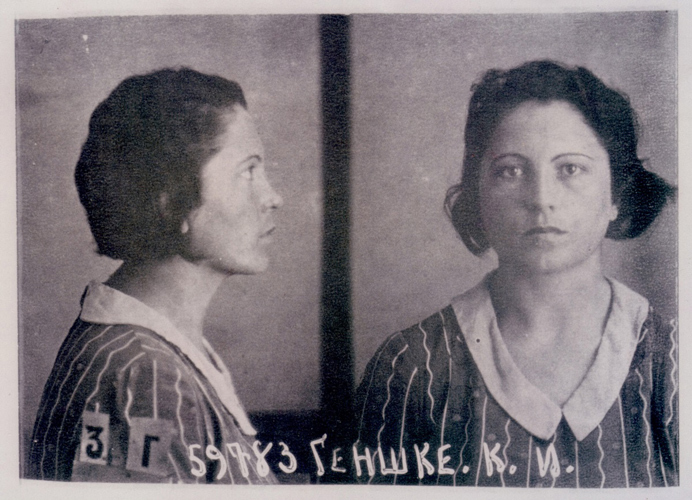
Karola Ner, the star of the German scene of the 1920s, a friend and one of the beloved actresses Brecht, went from early glory in Germany to a typhoid Soviet prison in the Urals, the last point in her life. The exhibition “The Theater of Life of Karola Ner” is devoted to her fate, which opens on December 12 at the “Memorial” with the support of the Goethe-Institute in Moscow. Before this event, Colta.ru talked with the curator of the exhibition, historian Irina Shcherbakova, and the director of Goethe-Institute in Moscow by Ruchediger Bolts.
-You open an exhibition about the fate of the German actress of the 1920s of Karola Ner. Not all readers know this name. Tell us what kind of fate is and why it deserves such attention.
Irina Shcherbakova: Karola Never is one of the leading actresses Brecht, it was she who played the main female role in his “Trekhgroshova opera” - Polly Pich. Neer was a syncretic actress, she had a well -owned music and dance, one of the first to perform the famous Brekhtovskiy zongs. Although her repertoire was both a realistic theater and expressionists' plays, she was a fantastically multifaceted actress. Of course, she was not a communist, but her creative fate led to her left ideas and sympathies to the USSR: in the 1920s, Soviet theaters were touring in Berlin, Eisenstein’s films enjoyed incredible success ...
Rüdiger Bolz: She was born in a prosperous bourgeois family. Neer has reached a lot of young women in his career, earned truly big money. For those years, Neer had an incredible talent - she could work with the public, which was very modern. To attract attention, she arranged all kinds of promotions: she was worn on sports cars, climbed onto the radio tower, took pictures in short trousers. She was, of course, very beautiful, men idolized her, and she had a talent to build relationships with people. But, of course, the most important scene in her life was. Therefore, she collaborated with Brecht, and it is known that “St. John of the Scotoboen” was written specifically for her. After her first husband died (the poet and playwright Alfred Genshke, who wrote under the pseudonym Klabund. - Ed. ), She lived with the avant -garde composer German Sherhen, who persuaded her to study Marxism and the Russian language.
Shcherbakova: In the 1930s, she ended up in the USSR in a dictatorship, which became more and more tough and terrible. But there was no longer any way back: in 1934, together with a whole group of anti-fascists, Never was deprived of German citizenship (she, together with 27 artists and politicians, signed a protest against Anschlus by Germany Saar.-Ed. ). In 1936, she was accused of Trotskyist counter-revolutionary activity, for six years she sat in various prisons and in 1942 died of typhoid in prison in the Urals. It is bitter to realize that many actors who started with Ner played under the Nazis, that they continued then as if nothing had happened to work successfully in theaters in the 1950s-1960s, and she died.
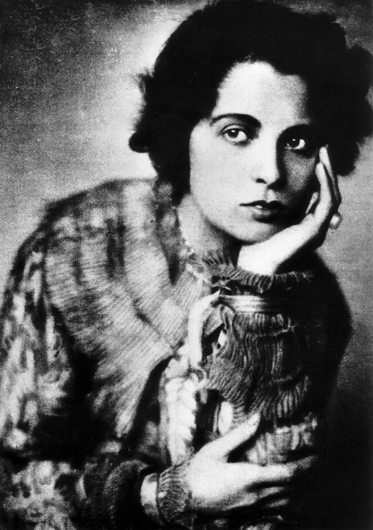 © Family collection of Bekker Karola Ner in the role of Haytan ("Cretaceous Circle" based on the play of Klabunda), 1927
- And what brought her in the USSR?
Shcherbakova: In 1932, Ner began to study Russian in one of the Marxist schools in Berlin. She knew that in the USSR there is a large German diaspora, an autonomous republic with its capital - the city of Engels, she had different ideas about filming a movie at Inter -Rabulumfilm, where paintings were made for a German viewer. At the same time, in the early 1930s in Germany, the situation was heated, both ultra-which and ultra-right were radicalized, street battles took place between the Communists and the Nazis, and the power looked rather weak. A great political instability was felt in the air. Artists feel this sometimes earlier than ordinary people. As in the film of Bergman about the Weimar Republic “Snake Egg”, where there are already an egg and dragons are about to hatch from it. Apparently, Ner also felt it too. All this was accompanied by a personal crisis. In the courses of the Russian language, she began an affair with a man younger than her and completely not from the theatrical and goddess-with a German-communist from Bessarabia, and she decided to throw everything and disappear from Berlin.
It was the fall of 1932, then events developed very quickly, and already in early February 1933, almost everyone with whom she worked in theaters emigrated. As a result, together with her new husband Anatole Becker, she was in 1934 in the USSR. In some interview, she said: "We, actresses, never stumble on stage, only in life." And as a result of this fateful solution, she immediately fell into conditions that she could not imagine.
- What were these conditions?
Shcherbakova: In Germany, she was a famous actress, drove in a car with a driver, led the life of a star, and in the USSR she did not even have a roof over her head - at first she and her husband slept on the floor with friends and acquaintances. The country had just survived a terrible hunger, the card system has not yet been canceled, in Moscow there was catastrophically lacking housing. In addition, in 1934, she gives birth to a child. From 1934 to 1936, she rushes about in search of work and tries to take on everything that is possible. He writes articles for the “light”, performs in the club of foreign workers, makes plans to participate in the shooting or creation of the German theater, but nothing of this is implemented. It rotates in the communist emigrant environment, where she is always accused of bourgeois, they say that she is alien, it directly sounds in the testimony given against her.
- What is known about her arrest?
Shcherbakova: In 1936, the situation around the emigrant environment became more tense, intensive detentions are underway among the so -called Trotskyists and Zinovievites. A whole group of Germans is arrested on charges in connection with the Trotskyist Center, which is allegedly located in Prague: in May 1936, her husband Anatoly Becker, who worked as an engineer at the Ordzhonikidze factory, and several more German emigrants connected by friendly relations. Two months later, Neer is arrested by Karolu. When she was arrested, investigators did not know about her former glory. In addition, she lived under the name of her first husband - “Genshka”. Two charges are made against her. Firstly, she is informed that she played the role of Trotskyist coherent, or, as absurdly written in the case, “signalmen”. She brought the letters of acquaintances and friends from Prague to Moscow, which was completely natural, but she was charged with that she brought them to organize underground counter -revolutionary activities. Secondly, she is charged with the fact that she deceived the organs, saying that she was a member of the German Communist Party, while she did not enter her. She does not plead guilty of anything except that she was present in anti -Soviet conversations in Prague and Moscow, does not testify against her husband. Anatoly Becker is accused of preparing a terrorist attack during the May demonstrations. A year later he is shot, and she is given 10 years in prison.
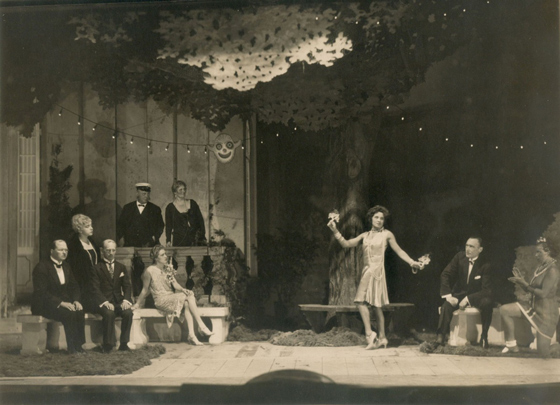 © Heyden Karola Nero in the play "Curules", 1927 Deutsches Theatermuseum
- It is known who conveyed to her?
Shcherbakova: The denunciation was, I think, not even one, but one is caught for sure. He was written by Gustav von Wangenheim, another emigrant who led the German theater here. He regularly reported about the "political person" of different people with whom he collaborated. We give a quote from the interrogation of Wangenheim at the exhibition, where he says that Neer is hostile to the USSR that she is an alien bourgeois element. But I think that after the arrest of her husband, she was doomed in any case, because all the women of this circle were arrested.
- Where did Ner sat, how did she endure the conclusion? Her neighbors in the cameras knew with whom are they together?
Shcherbakova: The Germans with whom she turned out, of course, knew and heard this name, and some saw her on stage. In the book of Evgenia Ginzburg “Cool Route”, a certificate of her meeting with Ner was preserved. Ginzburg drew attention to her in Butyrskaya prison, where they collided in the summer of 1937. Neer was brought there to make a sentence, like Ginzburg. There is a scene in the book where they meet again: in prison in Yaroslavl. This is the end of the summer of 1937. The “steep route” describes in detail the very strict Rules of the prison schedule: they feed almost just a lot, they are allowed to open the window for ten minutes a day, the prisoners are suffocated from the heat, they are regularly put in the punishment cell - not for misconduct, but to make their life weight. After the arrest of Yezhov in 1939, Ginzburg, like most prisoners, was sent to the camp, and Karola Never remains in prison. After the Molotov -Ribbentrop Pact, they wanted to return her to Germany, but since the Nazis deprived her of citizenship, she was not allowed into the Reich. Neer finds himself in the Vladimir prison, then in Oryol, then she is transported by a very terrible prison-Sol-Iletsk in the Urals. This prison has survived to this day - the Black Dolphin for lifelongs. Then in Sol-Ilelyk the cells contained a lot of people, the prisoners were massively sick with typhus. Ner also infected and died in the summer of 1942.
Bolz: prisoners were forbidden to talk, but Ner recited poetry for cellmates, was engaged in gymnastics. Of course, she tried to find out about the fate of her son, wrote letters, found out that her child was in an orphanage in Rybinsk. She wrote a letter to the director of the orphanage, she wanted to know the most banal things that the mother wants to know about her son: how he is talking, walking whether she learned to read.
Shcherbakova: In this only preserved letter, she still asks if he shows musical abilities. And this is not by chance, because everyone in the Never family was musically gifted. Her father was a conductor and leader of the choral chapel, sister and brother - musicians, she herself almost professionally owned the piano, she had a good voice. And this was really transmitted to his son. Although the orphanages did not dispose of their fate, after the army and college he graduated from the music school, then the conservatory. After a long struggle, when in 1974 he was released from the USSR to Germany, he worked as a teacher of music in Augsburg until the end of his life. In this sense, this story has a certain happy end. Although we in the Memorial know that the children often could not find documents about their parents, that even their photographs were not preserved, the son Never devoted his whole life to the search for evidence and documents related to his mother, and collected a huge archive.
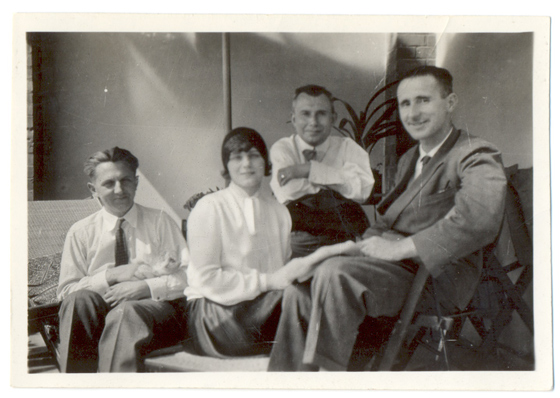 © Archive of the Academy of Arts, Berlin Erwin Piskator, Carola Ner, Herbert Jering, Bertolt Brecht. 1929
“Did you get to the exhibition?” How did you collect it at all?
Bolz: There are a number of documents directly from Germany, which reflect all the stages of its biography of the German period. In general, the entire phase of the theater avant -garde from the time of the Weimar Republic is very well documented.
Shcherbakova: In the Munich Theater Museum several years ago, an exhibition dedicated to Carole Ner, primarily, as a theater star of the Weimar Republic, took place. There were a huge number of photographs, reviews, theatrical costumes. There was also an exhibition at the Literature House in Berlin, with which the Memorial has partnerships, they provided us with a large initial package of materials. But for Russia, the exhibition had to be changed: for us, the last six years of Ner's life, spent in Soviet prisons, are very important for us. Among the exhibits there will be plates released in the late 1920s, pieces of the film “Tricky Opera”, things illustrating prison life, but not its personal, but anonymous, which all prisoners had.
Bolz: There are exhibits received from the son of Karola George Becker. Of course, in the Russian archives there are denunciations of it, interrogation protocols, on their basis we see on what “reasons” it was arrested. There is an interview with those who served the conclusion with her and then were able to tell about it in the 1960s-the 1980s. Although those who were able to endure the Gulag and return to the GDR were forbidden to tell what they experienced.
-The fate of Karola Ner was divided by many Germans who arrived in the 1930s in the USSR ...
Bolz: When the exhibition was being prepared, I once again studied documents, from which it follows that many Germans were taken, arrested and convicted in 1936-1938.
Shcherbakova: Yes, men were more often shot, women were sentenced to prisons and camps. It must be remembered that this happened against the backdrop of the “German operation” within a large terror, people of German origin became its victims. Not only emigrants, but also those who arrived in the 1920s, or remained captive after the First World War, or whose ancestors lived in Russia since the 18th century (Volga Germans). Several hundred people after the 1939 pact (Molotov -Ribbentrop. - Ed. ) Was transferred to the NKVD to the hands of the Gestapo. Many fell immediately into German concentration camps. Among them were German Jews who were, of course, destroyed ...
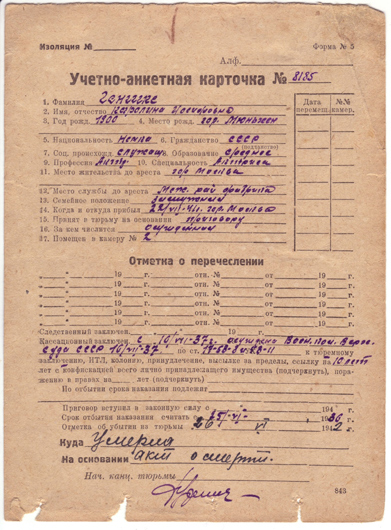 © from the Family collection of Becker Accounting and Anscap Card
-How did this in the repression of the Germans-communists affect their faith in the communist idea?
Bolz: This is a very difficult question. There were a number of emigrants who, already in the mid-1930s, with a huge degree of skepticism, belonged to what was happening in the USSR, and left back, if they could. But there were cultural and political figures, such as Wilhelm Peak, who remained faithful to the idea of communism, and then were able to build a career in the GDR.
Shcherbakova: Often from the Gulag, our people also came out of Leninians who believe in the idea, which, according to them, was perverted by Stalin. The rejection of beliefs for many meant the destruction of their identity, that is, self -destruction. And they understood, especially having survived the camp, that in this case they would have to review his whole life, and this is very difficult. This tragic story affected many. By the way, on Brecht itself. He rushed all the time: on the one hand, he justified Stalin, on the other - according to some of his poems, he could see: he understood what was happening here. He tried to ask for Karola Ner, wrote letters, although very cautious, addressed Georgy Dimitrov, who led the Comintern, asked Lyon Feikhtwanger when he came to write his famous book “Moscow 1937”, to find out from Stalin what is happening with Ner. Brecht did not believe that she could be an enemy, he knew her very well.
But the artists, members of the Comintern, the functionaries of the German Communist Party, who returned home from the USSR, who did not even become direct victims of a large terror, but experienced this fear, were a highly broken people. This can be well traced on their biographies.
Bolz: Most German emigrants did not return to their homeland at all. The cruelty with which the Nazis treated creative people had a powerful effect on them. They did not want to return to post -war Germany, to the federal republic, which could not be called a democratic state at first.
- And now in Germany they remember the name of Karola Ner?
Bolz: Those who understand the culture of Germany of the 20s-30s, her name is known. There is a film “Three -Ground Opera”, there is a film with her participation “Mystery of one hairdresser”, in Munich one of the streets is named in her honor.
- Why did you decide to make this exhibition right now? And why are you, Mr. Bolz, as the head of the Goethe-Institute in Moscow, decided to support it?
Bolz: If I had not supported her, we could say that I had the wrong thing to choose my profession. Even after 80 years, this is an important and relevant topic.
Shcherbakova: For us, to significantly show the tragedy of the artist who turned out to be between two dictatorships.