
Translated material
When the Soviet avant -garde met with the Sapatists
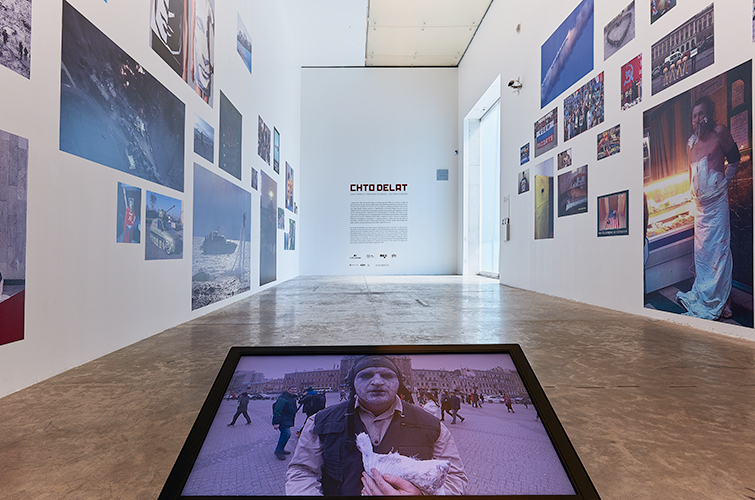
“Betrayal, pawns! Sharped from the board Emiliano Sapata and Pancho! ” - So he wrote in 1968 not a particularly beloved by the post -Soviet generation and at the same time very respected in Mexico Evgeny Yevtushenko. He wrote, referring to the two leaders of the Mexican revolution - Emiliano Sapata and Pancho Vili. He was not far from the truth, the supporters of which are sappatists; For them, the 1910-1920 revolution has not ended now. Sapata, by the number of his appearance in the visual culture of Mexico, could have competed only with the Holy Virgin Gvadalupskaya - the main icon of Mexican Catholics. The visual identity of the Sapatist army in the jungle of Zheapas is based on the figures of Sapata and Che, popular arts, muralism, socialist and protest symbolism.
The “What to do” team works with this visuality, presenting the project dedicated to the Sapatists at the exhibition at the University Museum of Modern Art in Mexico City , which opened in mid -November and will be held until April 28, 2018. The exhibition is aimed at reactioning the cultural layer of the sappathist revolution and the contextualization of this actually local social phenomenon as an international fact. And artists do this with a peculiar, almost cuboturistic irony. As a result, the topic from which the Mexicans themselves were already decently tired of, in the works of “what to do” acquires a second wind.
 © Oliver Santana / Courtesy of Muac
In a conversation, artists complain that the cultural ties between Mexico and Russia broke off, fastened before, at the beginning of the twentieth century, Mexican muralism, and, as a result, are looking for them in a modern protest culture, in which there is a pronounced ambition of the “export of revolution”. Undoubtedly, the Mexican audience will find in this project something else than the post -Soviet audience. “What to do” is going to present this project outside Mexico: they will show its different components in the future Biennale in Shanghai, in the Museums of Latin America; There are negotiations on exhibitions in Germany and Holland.
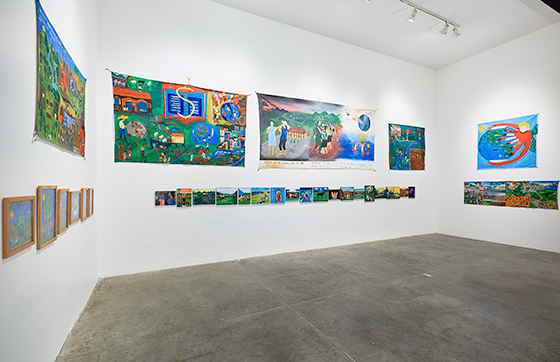
“Slow orientation in Sapatism” is the name of the film shot “What to do” in the spring of 2016 and presented at the exhibition. The revolution of the Sapatists is a slow revolution: more than 20 years have passed since the emergence of the movement in 1994, but nevertheless, the communities of the Indians participating in the Sapatist movement do not become more open. Sapatists were able to create an autonomous infrastructure that includes hospitals and schools, in the territory where the entrance to government forces was ordered. “What to do” as part of the project also took a unique interview from the leader of the Sapatists, the subcommint of Moizes.
 © Oliver Santana / Courtesy of Muac
The political situation in the south of the country differs from what is happening in Mexico City and at the same time is fueled by him. The left revolutionary sentiment of the country, which has never seen state socialism, is obviously explained to some extent by the utopian perception of socialist experience. Trotsky’s museum in Mexico City and signature in the emails “with red greetings” of some representatives of the older generation intelligentsia - these are perhaps the most realistic manifestations of nostalgia for the country unfulfilled in the capital. At the same time, the jungle of Mexico gives this nostalgia a place, and become it. The relationship between the utopian vision of the revolution and life in natural conditions is the apparent connection. The predecessor of Moizes, the subcommint Marcos, before his took office in 1994, taught philosophy at one of the universities of Mexico City.
 © Oliver Santana / Courtesy of Muac
Multilingvism is the basis of the identity of the Sapatists. In Mexico there are more than 150 indigenous languages, many of which die out. One of the figures respected by the Sapatists, the commandant of Ramon, came from the Mayan group Tsocil, which has more than 400 thousand native speakers. And every year the number of carriers is increasing - perhaps due to the fact that training in part of Zheapas schools is carried out on Tsocil. The semiotic system of the language is looking for support in radical political methods. Many Indians, nevertheless, do not know how to write or read. And this, along with commitment to traditionalism, can be one of the reasons for their amazing consolidation in the actual autonomy, which has existed for more than two decades. The time in the jungle, not affected by urbanization burdocks, slows down, because there is no need for them in a hasty revolution.
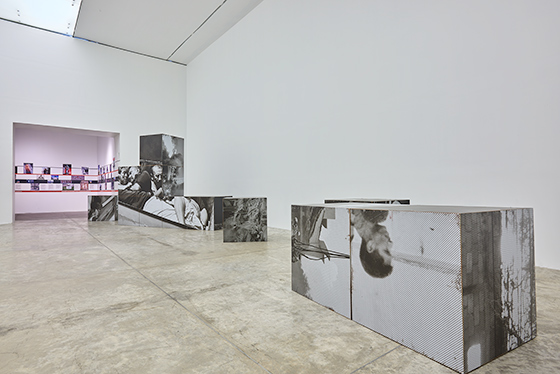
The project includes work, media and video documentation made by Sapatists made by artists from “what to do”. The exhibition itself includes a large number of past projects of the group, as if pronouncing that the place and time are not important for the artistic study of protest. The collective unconscious in the exhibition is manifested in small details. The performance, in which students participate, is an open form of interaction - choreography and actions are clearly debugged, but the text is left to choose from the performers themselves. And students say what is important to them - not so much about the Sapatists as about violence in Mexico.
 © Oliver Santana / Courtesy of Muac
The Soviet avant -garde here is everywhere, even if not visually, then it is conceptually the reference point. The utopian revolutionary thinking of the beginning of the 20th century, which allowed Tatlin to create a aircraft and the famous tower, transfers this an aesthetized desire for Mexico, which was impossible to the land, and this impulse was recorded by the “What to do” team.