
Translated material
The first steps and first errors
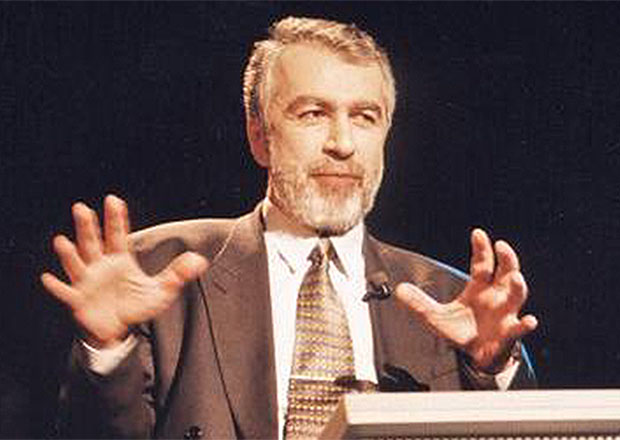
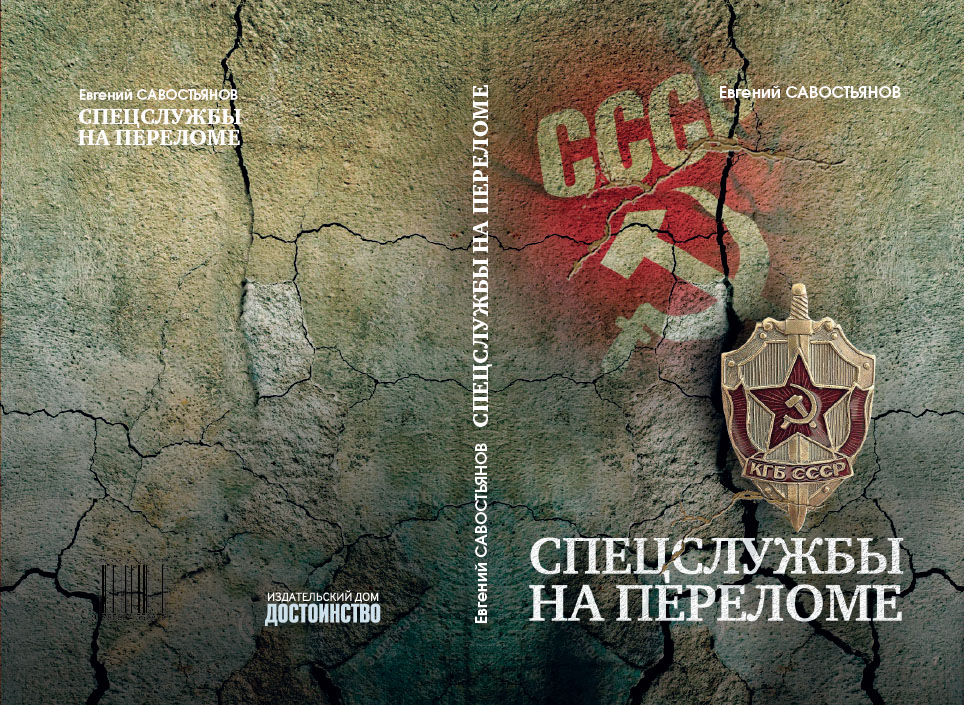
The head of the Moscow State Security Directorate (AFB, FSK, FSB) in 1991-1994 Evgeny Savostyanov published the book “Special Services at the Born” in the Publishing House about what was happening in the KGB after an unsuccessful coup and the end of the USSR. NT publishes an excerpt from the book
On the second day after my appointment, the head of the external surveillance, L. K-Tin put on the table, put a folder on the table, opening which I began to read the report of messages like: “D. Dviner said that the mayor’s decision approves ...”, “Citizen N told the line that there was an accident yesterday, and they didn’t talk about it ...” and so on.
When asked what it is, the answer followed:
- "Real."
- What is such a “reaction”?
- The opinion of citizens about certain events and actions of the authorities.
<...>
I had to explain that this kind of practice makes sense in a totalitarian state, with suppressed freedom of the press. And now I already know that people are worried and what they are talking about - from newspapers and television programs. I forbade spending time collecting such information, especially since there is always the question of whether anyone is trying to manipulate me, bringing purposefully selected gossip and rumors.
He ordered to stop working on organizations such as the People’s Labor Union (NTS) (sarcastically noting that I do not demand to work in the Communist Party), a number of religious organizations.
The decision on the “nabat” was much more serious - this is how a special operation was called in those years related to the capture of aircraft terrorists. The head of the Moscow department was supposed to command the operation in the event of an emergence or development of an emergency in the metropolitan region.
It so happened that it was by the beginning of my work in the management that the previous order regulates the implementation of the “nabat” that the expiration and the head of the corresponding line V. Zakharov brought the cosmetically updated text for approval.
Starting work in management, I understood that the newcomer would definitely check, and start checking with the fact that they would slip on a signature of some kind of stupidity. So it happened. When the head of the Secretariat E. Sh-V brought the project an obviously ridiculous order, affectionately explained to him that next time I would expel everyone who prepares and visits such material.
So in the case of the “alarm” I did not expect a deliberate catch, but the habit of reading the signed documents was tripled by interest in a completely new field of activity and understanding of the measure of responsibility in this case.
* I quote from memory - correctly in essence and, perhaps, not verbatim
After reading the first paragraph: “The purpose of the operation is to prevent the aircraft’s hijacking outside the USSR*”, greasily crossed it and wrote: “The purpose of the operation is to preserve the life and health of passengers and members of the aircraft crew.” He ordered to redo the order in the spirit of the first paragraph and henceforth be guided by this logic, both in the exercises and in combat situations. At the same time, he instructed to draw up a schedule of regular conduct of the Nabata exercises, which we later tried to adhere to in the future. The need to use civilian services in the operation simultaneously, various departments of the KGB and the Ministry of Internal Affairs demanded regular training that Zakharov and I later arranged at least once every six months.
Getting acquainted with the organizational structure and the staffing of the management, drew attention to two positions:
- commandant’s office in Butovo;
- The commandant’s office in Kommunarka.
** According to this indicator “Butovo” and “Kommunark” are close, for example, the infamous first Nazi concentration camp “Dachau” near Munich
He asked Alferov (he, as a deputy for personnel, reported this question), which was discussed and saw a strange embarrassment and the desire to get away from the answer, which only exacerbated my interest. And the terrible secret of two strictly secret objects began to be revealed - the shot training grounds and the Butovo and Kommunarka cemeteries, where in the late thirties the life of tens of thousands of ** victims of the Bolshevik terror and their executioners ended (about the latter, paraphrasing Pushkin, say: “They widened the horizons of Nemesis”).
It turned out that they are under the jurisdiction of the Moscow department, which for decades ensured the inaccessibility of these places.
The Memorial movement “Memorial” in the roundabout ways that arose in the late 90s, on the initiative of Leo Ponomarev, came to information about them, but could not break through the restrictions on the “Secretary” neck.
With the support of Gorbachev and, especially, his ally A.N. Yakovlev in the USSR, work was legalized to rehabilitate the victims of the repression of communist power, due to which the Memorial managed to establish interaction with the KGB of the USSR, both in the central apparatus and in the territorial bodies.
The Moscow Directorate has developed, I am not afraid to say, a group of enthusiasts of rehabilitation work from the archivists - V. Polishchuk, M. Kirillin, N. Grashoven and their colleagues - whose attention to this great importance of the humanitarian problem, responsiveness and dedication not only helped to return hundreds of families to worship the graves of their ancestors, but also created a very friendly atmosphere in relations with a public group by public group. Militating the memory of victims of political repression, led by Mindlin. This softened the public attitude to management, helped believe that not hidden and insidious enemies work in it.
Having traveled to the location of the training grounds, he was convinced that their only secret is the brutal cruelty of the communist leadership, which put on the stream the extermination of our people.
*** Sometimes I invite my guests from abroad to visit my country house. I always pay their attention to the monument to the residents of two small villages that died in the Great Patriotic War - 17 people! Foreigners fall into numbness. I am achieving them with a remark that if a monument to the victims of the communist regime (who died in a civil war who died from hunger, dispossessed, shot and died in a Gulag) will be much longer - the list will be much longer - the Cross Way of Russia in the twentieth century.
**** The largest of the camps of the Gulag (1.5 million people), created for the construction of the channel named after Moscow
Each of the objects had a special gloom. At the Butovo training ground (a significant part of the dead was composed by peasants and other residents of the Moscow region ***, clergy and prisoners of Dmitlag ****) struck high, 2.5 m horsetails, who, as you know, grow better where the soil is saturated with organic matter. They generously saturated ... And behind the fence there are village houses and cottages, which later belonged to the leaders of the NKVD. It was said that in executions, in addition to the trucks, pavephs were brought up so that the children would not spoil the mood. But the children knew well what was happening there: carts with corpses (“Grase”) were often carried in the afternoon, and so careless that the pouring bodies had to be selected.
The Kommunarka landfill, where the executioners were shot, but more were buried by the executioners shot by the sentences of the military collegium of the Supreme Court of the USSR, and, among others, the leaders of the party and the state (Bukharin, Ruzzatak, Krestinsky, Antonov-Ovseenko, etc.), military leaders, NKVD officers, struck the articular gloomy: the dark, overgrown with mudin surrounded by tall trees and a boulevard.
I immediately took off the secrecy vulture from both points, organized a trip to the members of the Moscow Memorial, led by Roginsky and established a clock of free visits to the training grounds. Subsequently, with the assistance of the Moscow and regional authorities (Bakirov played a significant role, who headed the constant interdepartmental commission of the Moscow Government to restore the rights of rehabilitated victims of political repression) memorial complexes appeared there, churches grew.
By agreement with [Moscow Mayor Gabriel] Popov and [the head of the Moscow region Anatoly], the heavyweight initiated the disclosure of the Moscow region to freely move foreigners. The fact is that in the USSR there were severe restrictions on the movements of foreigners, especially from the "capitalist" countries, which allowed not so much to protect secrets as to mask the squalor of the Russian hinterland. Many military-industrial centers, such as Gorky (Nizhny Novgorod), were completely closed to foreigners, and some for their citizens. Symmetric restrictions were imposed on Soviet citizens in these countries. In the conditions of "hunting" for investors, this became a large obstacle, and we were willingly supported.
The management of the Office had to intervene in several acute conflicts that erupted in those days.
One of them is connected with the question of who to lead the Moscow police. By the end of the summer of the 91st year, the situation was intolerable: the Moscow police had three chiefs: Shilov, who was appointed Gorbachev to manage the Main Directorate of the Ministry of Internal Affairs of the USSR in Moscow and the Moscow Region, but never started practical activities; Commissars appointed by the Moscow authorities, but never admitted by the department; Myrikov, who actually led the Central Internal Affairs Directorate, but did not definitely take the side of the legitimate power in the days of the State Emergency Committee.
After the coup, the capital's Central Internal Affairs Directorate went to the Russian authorities. Shilov, whose professionalism and authority were undeniable, became Deputy Minister of Internal Affairs of the RSFSR. Myrikov retired, more precisely, his "left." Komissarov became the head of the capital's police, but only for five days. The attitude of Popov and the [deputy mayor] Luzhkov has changed dramatically to him, and they began to look for another candidate. The deputies again began to protest and starve, demanding compliance with laws. Popov, with the help of Yeltsin, carried out the transformation of the Central Internal Affairs Directorate of the Moscow City Executive Committee into the Moscow Central Internal Affairs Directorate of Moscow. The deputies began to protest even more and starve even more. Popov appointed the head of the Central Internal Affairs Directorate [of one of the creators of Demrossia Arkady] Murashov, spreading my commissars (but not “commissar”!) Experience in the Moscow police.
The deputies stood with a wall right in the reception of the head of the Central Internal Affairs Directorate on the second floor of the building with a well -known address: Petrovka, 38.
At the request of Popov, he arrived at the place and found the picture of a marvelous one: the deputies are blocking the entrance to the office, and one of them, the former police investigator of Tsopov, threatened to start shooting at everyone who tries to enter the chief’s office. The cabinet was symbolically occupied, outsiders were removed, after which I drove Murashov on my car home. He rode, as usual, next to the driver. And suddenly, from the back seat where Arkady was, there was a heavy sigh:
- Here I am and the cop!
The second of the mentioned conflicts is associated with the “riot of Moscow taxi drivers”, who erupted after the murder of one of them, as expected, by a native of Azerbaijan.
By that time, the taxi drivers were already a highly criminalized community, which established unspoken control over the entire Moscow carrier. The appearance in Moscow “bombed” from other republics seriously threatened their monopoly. They tried to take advantage of the case to fix their priority: they blocked large highways, including Tverskaya street right in front of the mayor, staged pogroms in some metropolitan markets. In essence, it was about a clash of two taxi mafia: homegrown and alien Azerbaijani.
Protests quickly acquired a nationalist coloring and threatened to develop into pogroms.
From the diary:
“On October 28, 1991, a rally at the 42th Auto Complex (died? DEAR? CHOFER). He performed, promised analysis - applause.
October 29. ... about taxi drivers: the conflict becomes threatening.
October 30. Murashov’s meeting on a taxi ... The situation must be held.
***** National-patriotic front "Memory". The organization of Russian nationalists quite popular in those years. Monarchist, frankly anti-Semitic and moderately aggressive, although prone to external shocking. By the way, it was “Memory” that held in 1987 the first unofficial rally in Moscow, ahead of the Democrats, Cadets and all the others. Leader - D. Vasiliev
October 31. Meeting with taxi drivers in the recreation center "Motorists": Cracked guys are asking even more. At the exit - “memory” ***** .
November 2. The taxi drivers, according to operational data, wanted to arrange a riot during the day - did not dare, after they worked with them and threatened to take away the cars.
November 11. Meeting at the Azerbaijani Embassy with the leaders of the community. We will protect you, but behave more modest. Respect Moscow. "
The meeting held at the initiative of Luzhkov, in which, in addition to representatives of the authorities, also participated representatives of taxi drivers and the Azerbaijani diaspora, turned out to be very hot, nervous and with a stream of threats addressed to each other.
I had to take an extremely harsh position: no one is allowed to educate genocide in Moscow, the perpetrators will be held accountable for the corresponding “grave” articles. Cars used for blockade will be withdrawn. From the Azerbaijani embassy and leaders of the diaspora, they demanded to curb the dispersed fellow countrymen. In general, the intervention turned out to be productive. But, as in other major cities of the world, after 25 years, the Moscow taxi is a mixture of languages and nations from all over the former USSR. Significant criminalization of this industry has been preserved for a long time.
In the very first days, I made a number of gross mistakes, which I sincerely regret.
The first day of my work coincided with the first anniversary of the murder of Alexander me, the famous Orthodox priest, who was in good relations with the democratic movement. More than once he has been at events in the house of scientists, where we met.
He was found at the house on the outskirts of Sergiev Posada, dying from a chopped wound, inflicted by an ax. Due to his conflict relations with some figures in the leadership of the Russian Orthodox Church, rumors about the political motivation of the murder were launched and, as always happened in such cases, they started talking about the KGB’s hand.
Naturally, I asked how the investigation was going on in this case. They explained to me that the investigation was conducted by the Moscow Regional Prosecutor's Office, and we only carry out individual instructions of the investigator. He asked the prosecutor's office whether there were complaints about our work in the investigative group - they said: there are no complaints. I asked to activate the work. After that, the prosecutor’s office stopped fingering, fearing that too obsessive desire to “participate” could be perceived as the desire to confuse traces. Of course, it was wrong.
Some time passed, and the head of the Service Service and Corruption, Sharapov reported that a certain “supra-Extrase” came to him, who offered his services: he would talk with the main suspect in the case and say if he was to blame, and how everything happened.
****** Working in Ipon organized a speech at the Institute of Fashion Ufologist Zaitsev, which ended with a scandal. Slowing himself through the naked belly, the “master” carried the traditional Galicia about aliens, but when the agreed time of questions and answers came, with his offenses he retired, for which they arranged for me to catch up. He took revenge, having come to his speech at the Institute of History of Natural Sciences and Technology and provoking the scandal there. Bright detail. In the stream of cries and scolding there was a pause. A quiet smiling man got up and asked the hall: "Have you been to Trubchevsk?" No one was, but in vain: the most beautiful places there. The stranger continued: "And I am in Trubchevsk every year!" - ??? “The fact is that the aliens have regularly arrived there for the past two million years and have been subjected to a city (!) Atomic bombing. The latter was five thousand years ago. I propose to organize an expedition there, while the last eyewitnesses (!) ”Talking with such monsters are alive, he suggested changing the terminology: instead of UFO/UFO (unidentified Flying Objects/Unidentified Flying Objects), immediately imposing the idea of“ green men ”, use the concept of UOo/Noo (unidantife Optical Objects/Unidentified optical objects)
With all my skepticism regarding psychics, aliens and other paranormal phenomena ******, I asked me to show me the “magician”.
A ragi peasant appeared, with a salary brown beard, shining blue eyes and a joyful smile, it is immediately evident - a crook. I was afraid that at first sight it would force the case (Bushnev) to lay out the whole truth-uterus.
In general, I agreed to promote the organization of the meeting, but asked to equip the camera where the meeting would take place, with technical means (“plus camera”).
After some time, Sharapov, barely restraining laughter, brought me a transcript of “opening karma”.
Entering the camera, the “psychic” turned to the under investigation:
- Well, bitch, if now you can’t tell everything, I open my eyes and the mouth of the break!
And a man he was the growth and complexion of the heroic.
The defendant began to yell with good obscenities. On that, communication was immediately discontinued.
The murder itself has not yet been disclosed.
For the same reasons, I washed myself from the investigation of the mentioned explosion of the Office of Democratic Russia in Mint. My faith was too great in the investigative potential of the prosecutor's office (in this case, the Moscow city). And in this case, I limited myself to the fact that I only asked if there were complaints about the work of my employees, and I was satisfied with the answer: no. And in this case, the crime remains unsolved. Этот случай я вспоминал позднее: в Пригородном районе Владикавказа, где в ходе массовых побоищ ингушей и осетин обе стороны использовали один и тот же приём: открывали газовую конфорку и бросали в дом, наполненный газом, факел. Не знаю, так ли было в Монетном.
И ещё один мой грех. Вскоре после моего назначения позвонил давний знакомый, Миша Рудяк. С ним мы познакомились в 1986 году. Он работал тогда в институте «Гидропроект» и, будучи человеком чрезвычайно предприимчивым, вовремя оценил коммерческие возможности, открываемые «перестройкой». Нашёл выгодный заказ на работы с использованием геофизической аппаратуры «Гроза-4» и через общих друзей вышел на меня (в нашей лаборатории этот прибор временно не использовался). С этого началось становление будущего миллиардера, создателя фирмы «Ингеоком».
Рудяк попросил меня о встрече. В назначенный день я «зашивался» в потоке текучки, и Миша просидел в приёмной довольно долго, ожидая встречи. Когда я уже собирался пригласить его, меня вызвали к руководству. Пришлось всё бросить и идти. В приёмной сидел, скромно сжавшись, Рудяк.
— Миша, вызывают к руководству. Если ничего сверхсрочного, давай — завтра.
Да ничего, ничего. Я потом позвоню.
Через несколько лет я узнал, что накануне у Миши рэкетиры похитили сына и он пришёл ко мне за помощью, но так её и не получил. Проблему он решил сам.
******* Интервью И. Косареву «Я гражданский и по сути, и по званию». Московская правда, № 38 (200-21718) от 19 октября 1991 г.
А ведь в те дни в одном из интервью я говорил*******: «…мы будем защищать предпринимателей от любых незаконных действий, однако это не означает, что мы будем закрывать глаза на их собственные противоправные шаги».
Вот и защитил…
В остальном первые два с половиной месяца пребывания в составе спецслужб РСФСР были периодом организационной суеты, связанной с переименованиями и переназначениями. <...>
Постепенная нормализация психологической обстановки в коллективе позволила без особых обострений пройти самый драматический эпизод современной мировой истории — прекращение существования СССР. В этот день 25 декабря 1991 года я был в поездке по двум районам Московской области, оценивая готовность к операции «Набат» и знакомясь с организацией работ Управления в Домодедовском и Ленинском районах. Поэтому возвращались из поездки втроём: я, Н. П-тин и водитель Пряхин, последовавший за мной из мэрии, но по внезапно пробудившейся извечной русской пагубе в Управлении не задержавшийся надолго.
Возвращаясь, мы проезжали мимо Кремля как раз в тот момент, когда там спускали флаг СССР и поднимали российское знамя. Это было знаменательное зрелище — на наших глазах начиналась новая страница истории!
Это, между прочим, показывает, насколько спокойной была обстановка в эти дни. В день окончательного исчезновения с карты мира СССР начальник Управления спокойно мог позволить себе весь день провести в области, не опасаясь каких-либо кризисных ситуаций. Неизбежность произошедшего в Беловежской пуще была всем нам очевидна: СССР уже не функционировал (большинство союзных министерств было ликвидировано, остальные сокращены до уровня неработоспособности, и всё это на фоне формирования полновесных собственных структур в союзных республиках) и, как показала безразличная реакция огромного большинства, почти никому не был нужен, не считая тех, кто в мгновение оказался не на Родине — на чужбине.
В Управлении, конечно, произошедшее обсуждали, с горечью, но довольно отстранённо. Так что можно было со спокойной душой поехать в область…
About the author
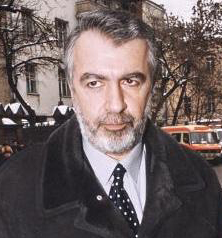
Евгений Вадимович Савостьянов (род. в 1952 году) — по образованию горный инженер, кандидат технических наук (1985). В 1989 году от Клуба избирателей Академии наук руководил предвыборной кампанией академика Андрея Сахарова. Один из создателей движения Демократическая Россия и Движения демократических реформ.
В 1990–1991 годах — помощник председателя Московского городского Совета народных депутатов Гавриила Попова, с июля 1991 года генеральный директор департамента мэра города Москвы. С сентября 1991 года по декабрь 1994 года — начальник управления КГБ (АФБ, МБР, ФСК) по городу Москве и Московской области. 2 декабря 1994 года освобожден от занимаемой должности президентом Борисом Ельциным, после того как направленное им подразделение УФСБ по Москве и области попыталось помешать проведению незаконных оперативных действий Службы безопасности президента РФ в отношении главы Мост-банка Владимира Гусинского.
Впоследствии занимался политической и предпринимательской деятельностью.