
Translated material
Rational DPRK
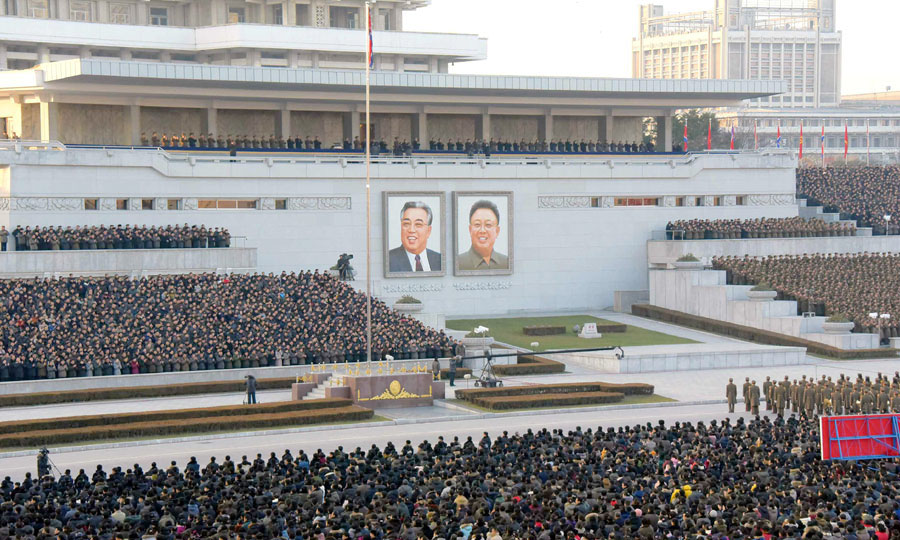
On November 29, North Koreaconducted the next test of the rocket - at the moment the most powerful in its arsenal. This gave the media a new reason for speculations about the growing risk of nuclear war based on the results of the growth of tension between the DPRK and the USA. Many quoted the American Presidential National Security Advisor Herbert McMaster, who stated that the risk of war is increasing day by day, although even now the military conflict is not the only possible script.
Wall Street Journal , meanwhile, writes that the current American strategy in relation to the DPRK is fundamentally focused on non -military methods of interaction. American special services consider the North Korean leader Kim Jong -un of a rational player. On this premise, Washington’s policy against North Korea is now being built, despite the fact that he stubbornly continues to develop nuclear weapons. Rationality is understood that Kim Jong -un is aware of the oncoming threat (the attack on the United States will inevitably cause a counter blow to his country). Based on this, the American National Security Committee believes that it can be interacted with it at the diplomatic level and thus reduce the risk of hostilities.
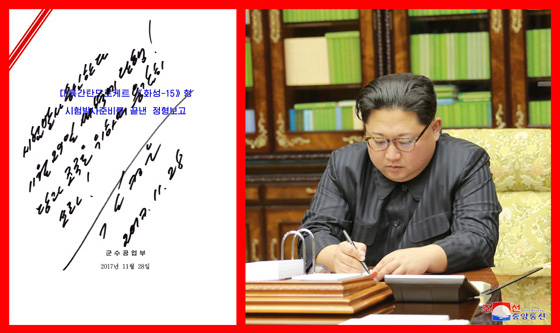 Kim Jong-un signs an order to test the Swason-15 rocket on November 29, 2017 Rodong Sinmun
Closing such an approach in interviews and other public statements, representatives of the American intelligence services emphasize that they do not consider the rationality of a panacea and are of the opinion that Kim Jong -un is an impulsive and non -vertical provocateur. Nevertheless, in these public statements, he seems to be in the form of an ambitious figure, striving for world recognition, preserving the dynasty and the economic development of his country. In other words, he has distinct goals, and the methods of achieving them are formulated on the basis of actual circumstances. At least, nothing of his actions contradicts this thesis.
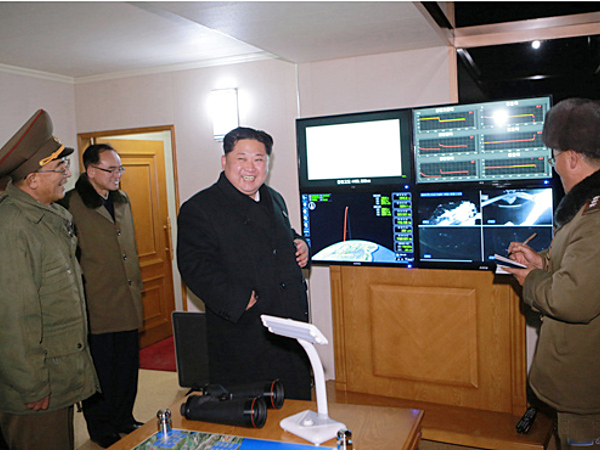 Kim Jong-un is present on the tests of the Shzason-15 rocket on November 29, 2017 Rodong Sinmun
If the United States dealt with an irrational opponent, then they might not have limited themselves to threats of hostilities, and the first thing they would have placed their military systems around the Korean peninsula in order to instantly respond to the DPRK unexpected actions. But the current DPRK with Kim Jong -un is the wrong case. Now the main methods are considered economic and diplomatic measures, including pressure on China.
The main basis for this approach, the author explains, is that North Korea is very accurately and consistently evades any truly risky actions. She had many opportunities for risky behavior taking into account the frequent missile and nuclear tests. But not one of these cases of the North Korean leadership was considered a standing reason. This restraint is eloquently contrasting with an aggressive verbal skirmish between Kim Jong -un and American President Donald Trump, which, again, testifies in favor of the presence of rational priorities.
Kim Jong -un strives for the DPRK to become a nuclear power, more persistently and consistently than his predecessors. He does this to the detriment of the direct economic well -being of his citizens, and this may seem irrational, the author notes, referring to representatives of American intelligence. However, if the country's leadership proceeds from the fact that the presence of a nuclear arsenal is a prerequisite for the survival of the nation, then neglect of momentary benefits for the sake of creating such conditions seems by no means meaningless.