
Translated material
Omul is prohibited: fishermen do not complain
The prosecutor's office of the Irkutsk region held an open media forum "The ban on catching omul: balance of public and private interests." The participants in the event discussed the situation on three sides: measures taken to protect the oxulus, solving the problem of employment of the Priozerian regions of the Irkutsk region, the development of fish farming and fishing.
Network for poachers
The forum participants were welcomed by the acting The Baikal Interregional Environmental Prosecutor Sergei Zenkov: “You know that our unit was created only on December 1, we start work and are happy with the beginning cooperation.” Anna Mineeva, the head of the department for supervision of the implementation of legislation in the social sphere of the prosecutor's office of the Irkutsk region, recalled that in the 1960s, the decision to ban Omul was already made, unemployed fishermen were arranged on three new collective farms.
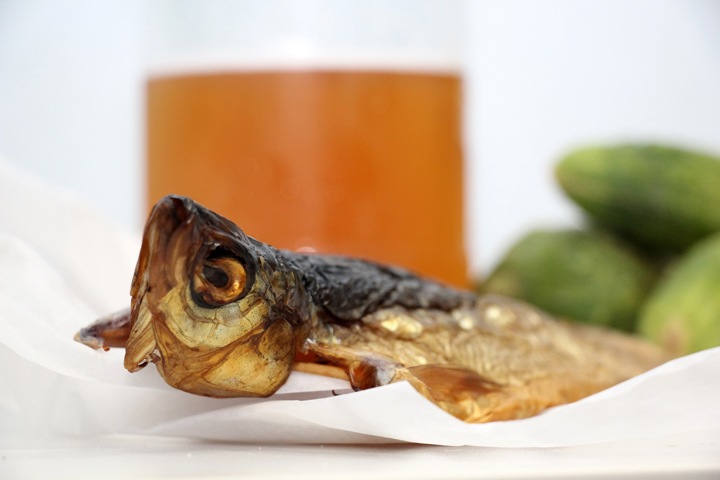
“This measure has allowed to preserve the population and now we are facing the task of finding a balance of interests, decisions that will arrange everyone. We must develop a set of measures that will lead to an increase in the endemic population. The third and most importantly: the economic activity and employment of citizens, including those who were not officially employed - no one counted them, only the police came across them, ”said Mineeva. - While there is no social surge, there are many free places in the employment centers, and this is despite the work that local authorities do. Markets and fairs are littered with an omul, which is sold under the guise of pelaads. If you do not take measures urgently, the peak of sales will have to be on March - by this time there is the shelf life of the ice cream of omul, obtained during the period when the fishing was allowed. The regional government must take measures and ensure the employment of the population. ”
Markets and fairs are littered with omul, which is sold under the guise
According to Anna Mineeva, three enterprises are seriously engaged in waterculture in the region, and one thing: “The absence of legal areas for aquaculture prevented the development of the industry - now this issue has been resolved. But we expect from entrepreneurs to comply with laws and the ban on Omul. Protection of entrepreneurs' rights is the fourth component of our work. It is necessary to ensure that the omul in Baikal is preserved. ”
Vitaly Molokov, head of the Angaro-Baikal Territorial Directorate of Rosrybolov, reported on measures to protect the omul, adopted by his departments and on interaction with law enforcement agencies. He recalled the order of the President of the Russian Federation to preserve the omul - it was in response to this requirement that Rosrybolovism issued the necessary documents and made a proposal to prohibit the catch of the omul, which was done from November 1, 2017.
“In the framework of preparation for spawning in August 2017, a meeting on the protection of Omul was held in the Republic of Buryatia. Why in the Republic of Belarus? All spawning water bodies of the omul are located on its territory. The operation “Rubezh” is carried out at the place of transportation and implementation of the omul - it brings its results, a batch of 400 kg was seized a week ago. We attracted almost the entire personnel to this operation. More than 130 boats, dozens of engines, more than 420 networks, more than 2 tons of illegally mined fish were seized. In private courtyards, we found refrigerators, the owners were engaged in the buying up of the omul, and for the first time in our practice a criminal case was instituted under an article on the buying of property obtained by a obviously illegal way. The turning point is working in the media about the inadmissibility of poaching. In the largest networks of supermarkets, leaflets were distributed, journalists were attracted to raids, stands on the ban on fishing were installed in the places of fishing. In several popular fishing points, video cameras that operate online are installed. There are three fishing plants in the Republic of Belarus, the largest of them was transferred to Rosrybovanism. As a result of the measures taken to spawn, two times more fish producers went to the Buryatia rivers than in 2016, ”Vitaly Molokov emphasized.
As a result of the measures taken to spawn, two times more fish producers went to the Buryatia rivers than in 2016
Deputy Minister of Labor and Employment Sergey Gavrin analyzed the problem of employment of residents of the Olkhonsky and Slyudyansky district. The regional government learned about the prohibition of fishing Omul already in 2016, and work began immediately to solve the employment problem: representatives of the ministry were sent to both areas who made contact with local authorities and entrepreneurs. The next meeting in the government took place in October 2017 and the situation on the labor market was recognized as calm. There is all information about the availability and demand for jobs in the Ministry of Labor, despite the ban on fishing or liquidation of fishing enterprises is not planned.
“Citizens who caught Omul switched to other forms of self -employment, primarily in the sphere of tourism. Many are engaged in personal farms. The Ministry is planning several job search measures, including a seasonal, rotary method. We are ready to organize training and provide subsidies at the beginning of entrepreneurial activity. There is a data bank on jobs in the regions of the Far East, where they are engaged in fishing and processing. To everyone who comes to our units will be an individual approach, ”said Gavrin.
Brotherly omul is better
Deputy Minister of Agriculture, Alexander Kirilenko, spoke about the prospects for the industrial restoration of the Omul population. The deputy minister recalled that in 2017, the region was allowed to extract 4.7 thousand tons of fish - but only in the Angara reservoirs, and not a single fishing site was given in the region. After long disputes and negotiations with scientists, 27 sites in the Olkhonsky district and 16 in Slyudyansky were identified, but only 28 were distributed between farms and enterprises. Pikes, siga, kharius and other types of fish were allowed in these sites. The Ministry of Agriculture is working on the problem of burdens in the omul of other reservoirs of the region. This is logical, because in the fraternal reservoir the omul gains weight and reaches puberty twice as fast as in Baikal.
In the fraternal reservoir, the omul gains weight and reaches puberty twice as fast as in Baikal
“For 2018, we prepared 18 million pelodes at the Belsky factory of caviar, omul - 2 million pieces. The ministry came out with the initiative to build a fish farm at the mouth of the Sarma River. This will allow 2 million fry to Baikal. The governor in October met with the Deputy Minister of Agriculture of the Russian Federation, and the agreement was reached. So far, it makes no sense to build a full -fledged plant at the mouth of Sarma, only the caviar collection point is planned. Then we will make sites for the construction of a teenage and a full -fledged plant. This will create jobs for residents of the Olkhonsky district, the administration is ready to allocate 5 hectares of land. Scientists warn that the construction of powerful factories in Lake Baikal is inappropriate: the conditions of the lake are too harsh. Nevertheless, we determined 34 fishing sites, in 2017 we conducted auction and determined 19 winners. Over the third quarter of 2017, we produced 67 tons of commodity fish, in just a year we get 1 kg for each resident of the region - you know the norm, it is much higher. For 2018, 28 million rubles were forced to develop commodity aquaculture in the regional budget, ”said Alexander Kirilenko.
The ministry is engaged not only in solving the problems of fishing, but also to clean rivers, streams and other reservoirs from abandoned networks and other garbage. Locals are involved in this work, the results are evaluated as quite worthy.
One ban is not a solution
The deputy prosecutor of the region Andrei Nekrasov listened to all the performances and asked to clarify if he and his family could buy a legal omul? Vitaly Molokov strictly warned that from January 1, 2018, even the deputy prosecutor of the region, buying omul from private sellers is prohibited because this fish is illegally mined. According to Molokov, no one was seriously injured from the ban: entrepreneurs have the right to legally extract other types of fish, fish farms can sell their products on municipal orders.
The senior researcher at the Limnology Institute of the SB RAS Igor Khanaev said that, according to his assessment, the situation is much worse: in the Olkhonsky district, the youth left for other settlements, the older generation frankly drunk at home. “No one knows when the population of the omul is restored. Yes, there are other species, but their population is orders of magnitude lower and soon we will talk about the catastrophic disappearance of Harius and the Sig, ”Khanaev said.
For every sweet aunt, who offers an omul on the highway, costs at least two fishermen
Andrei Nekrasov recalled that the production of Omul was usually poaching and criminal, but the state should think about those who were even without criminal fishing. Sergei Gavrin appreciated the number of fishermen in the Olkhonsky district of 150 people, in Slyudyansky - 300 people.
“If someone is drunk, this is his personal choice. We conducted survey, people write that they were engaged in fishing, but after the ban they have no need for work, because there are other sources of income, ”said Sergey Gavrin.
“This suggests that they simply do not intend to follow the law and continue fishing. Each cute aunt, who offers an omul on the highway, costs at least two fishermen, ”said Andrei Nekrasov.
Further discussion was reduced to the work of fish plants. The forum participants estimated their capacities at 5% of what was during the time of the USSR, and the fall of the population began precisely from the moment the factories were closed. Restoring production will not only restore the fish population, but also create jobs. It is very important that the work will be legal (with an official salary, social package and other bonuses), and jobs are many times more than with illegal production. Specialists who participated in the discussion admitted that small business would not be able to build a full -fledged fish factory, but if there are sufficient funds of factories on spawning rivers, you can build several pieces a year. The question is whether there are quite rich investors and whether the state will be able to develop support measures.
Konstantin Zverev, Irkutsk