
Translated material
Three best translated novels December
“Exceptional” teenagers, the story of the most famous picture in the USA and Chinese science fiction writer Li Tsysin
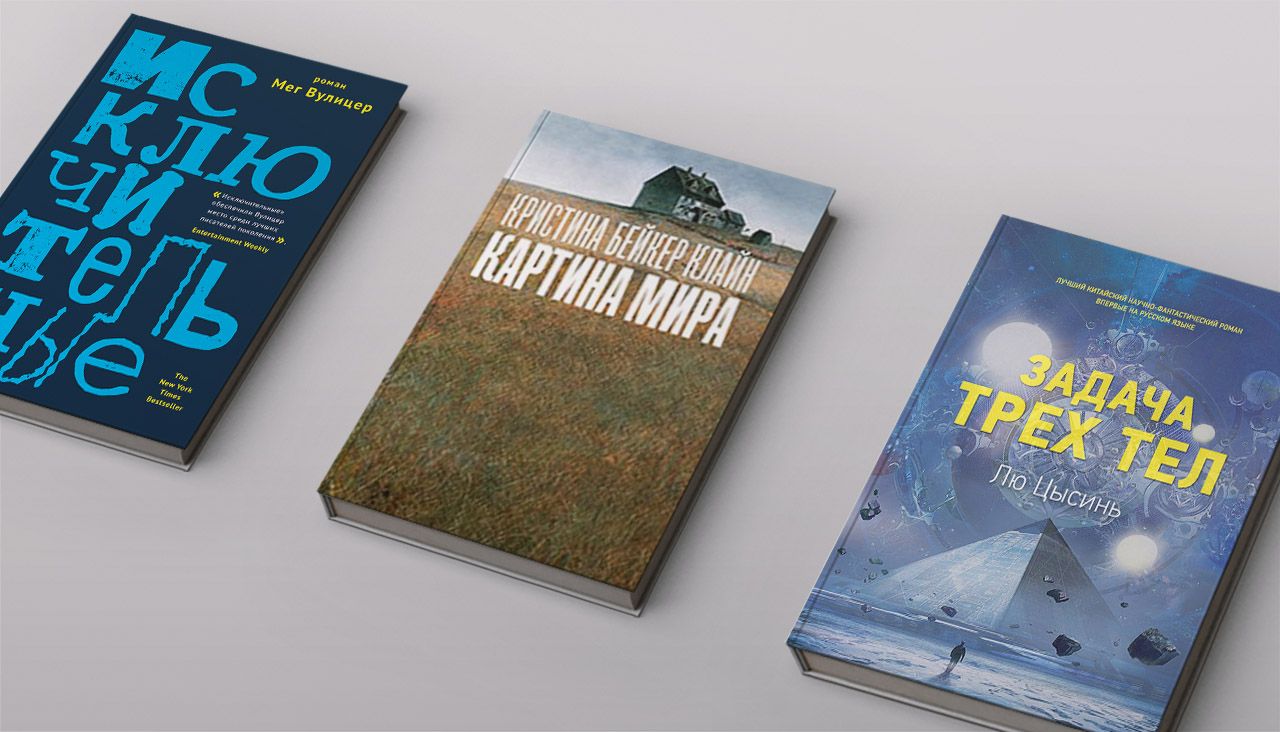
The Literary critic of Medusa Galina Yuzefovich tells about one excellent and two good translated novels of December: “Picture of the World” by Christina Baker Klein, “exceptional” American Meg Wulitser and the “task of the three bodies” of the Chinese science fiction writer Li Tsysin.
Meg Wuliser. Exceptional. M.: Livebook, 2018. Translation by O. Belyakova, V. Boyko, A. Krechetova, I. Nechaeva, M. Tchaikovskaya
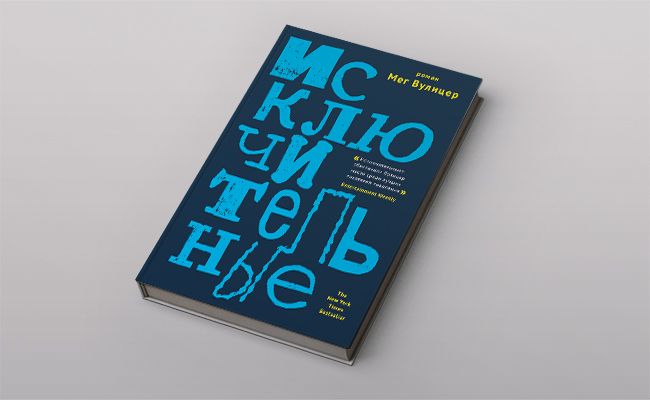
In America, the writer Meg Wooliser is customary to compare with Jeffrey Evgenidis and Jonathan Franzen, and, perhaps, this comparison is not devoid of formal grounds. The stories that Wuliser tells are also also related to the same type that these two, and are also best described by the famous Pushkin phrase about the boom of angels: a small private human life on the one hand and the cast -iron tread of great American history - on the other.
The heroes of the “exceptional” get acquainted in the summer camp for gifted children “forest spirit” in the mid -seventies. They - three guys and three girls - together reduces the general teenage restlessness in half with an acute desire to stand out from the surrounding world, prove him his own “interestingness” and uniqueness. Time goes on, the heroes are growing up, a friendly circle breaks up, but some connections remain, in general, unchanged - with the slight exception that envy begins to clearly mix with mutual affection. The main character Jules (let's leave this exotic transliteration of the name "Jules" on the conscience of translators) soon understands that in their brilliant company she is just quite ordinary, ordinary, deprived of any special talents.
The most talented boy from the fraternity of the “exceptional”, Ethan Figman happily marries the most beautiful girl Ash Wolfe, and both achieve dizzying successes: he becomes a cult animator, and his series in the spirit of “Simpsons” brings millions to its creator; She is an outstanding actress and theater director. And while Ash and Itan step by step are breaking through the top, heroically overcoming difficulties that have fallen to them, Jules first puts the cross in his stage career, then retrays in an inexpensive psychotherapist, marries the most ordinary guy named Dennis (even his name is a long-range)-a specialist in ultrasound diagnostics, gives rise to a daughter ... In a word, while friends brilliantly justify the assigned title of “exceptional” with an advance, Jules lives a quiet little life - not that completely meaningless or unhappy, but local, private, not at all “exceptional”. And in order to realize the value of such a life and deceitfulness of someone else's success, the heroine will need to return to where it all started - to the summer camp of the “forest spirit”, only to do this in a completely different capacity.
In principle, Meg Wulitser tells an honest story that the swamp lights of youth in combination with the obsessive cult of “interestingness” can lead a person to a bad place and that a modest life is no worse than the life of “exceptional” - happiness and misfortune in them are approximately equal, and nothing else, by and large, matters. This thought is necessary and important, and Wuliser tells the story itself with rare writer's generosity, without stinting either on the characters or on the plot lines. However, the trouble with “exceptional” as a novel (okay, it doesn’t matter, but a flaw) consists precisely in this excessive conceptual simplicity, in some functionality and redundancy to one simple idea. As soon as you understand what the author wants to say (and you understand it quite quickly - the pages, say, after a hundred and fifty out of six hundred and more than more than six hundred), the magic dissipates, and all the experiences of the heroes turn into a flat illustration of the trunk line. In a word, everything seems to be good, but still not Franzen with its galactic scale and a multidimensional novel space.
Kristina Baker Clein. Picture of the world. M.: Fantom Press, 2017. Translation by Sh. Martynova
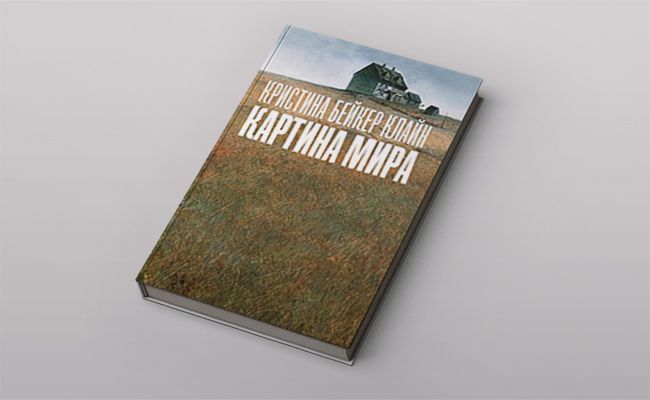
In relation to Kristina Baker Klyin’s novel, the American reader has an important advantage over the Russians. Any American knows the painting “The World of Christina”, which has passed over the past seventy years without exaggeration without exaggeration by the overseas analogue of the “stranger” of Kramsky, which means that it easily recognizes it on the cover and is able to easily put forward a good hypothesis regarding the content of the novel. The Russian reader needs some explanations: before taking up the “picture of the world” Baker Klein, he should find out that, firstly, this picture belongs to the brush of Andrew Wayet, almost the main American artist-realist of the twentieth century. Secondly, that the picture depicts a very specific place-the Farm of the Olson family in the state of Maine, not far from the town of Cushing. That a woman, on her depicted, is not a random model, but a close friend of the artist - the owner of this farm, Christina Olson. Well, and finally, that Christina is not just sitting picturesquely in the grass - she can not stand with her, because after the illness she had been transferred in childhood, she practically lost the ability to walk.
Actually, Christina Baker Klein’s romance is formed from these introductory - he talks about the life of Christina Olson before meeting with Andrew Wayet, about their strange, mainly silent friendship and how the famous picture was painted (and at the same time other important paintings that the artist created in his workshop on the Alson farm). Despite the fact that the appearance of the book is due to the figure of Wayet and without it, the novel would simply make no sense, the heroine remains the focus of “Pictures of the world”, whose fate is her namesake Christina Baker Klein reconstructs convincingly and at the same time extremely carefully and delicate.
Childhood on a secluded farm near the Atlantic coast, where from a landscape - only an endless sky and tilled hills overgrown with hard grass. Early disability, progressing over the years. Grandma's stories about her husband-captain and distant wanderings. Loving and authoritarian parents, who took a capable girl from school at twelve years and thereby deprived her of hopes for the future, at least somewhat different from lifelong vegetation on their native farm. Love for the poems Emily Dikinson. An unsuccessful romance with the city whip, which boils to the simple formula "Killed and abandoned." Long loneliness in the empty house: the brothers Christina, one by one, leave him, going to look for happiness in the big world, as long as the last one remains with her - the most faithful and the most unhappy ...
The whole life of Christina Olson, before meeting with the young Andrew Wayet, who came to her house almost by accident, passes as if in the twilight. The people around see in Christine not so much a living person as a function or at best a set of functions: an unfortunate disabled person who needs pity; A devoted daughter, who cares for the last breath, cares for elderly parents; abandoned bride; Lonely and harsh old virgin. Not a single person tries (or simply not capable) to look behind this jerking facade and see Christina as she sees herself - a thin -handed girl with disheveled hair in a pink dress, romantic, impudent and at the same time confused. Locked in a double prison of his clumsy body and why the house, which has become for her with the whole world, Christina lives, invisible to people, as if not existing. And the first person who can discern in the heroine her true, deep essence, but not only to see, but also capture on the canvas, becomes a Whayette. His gaze, loving, attentive, directed into the very soul, does not just fill the life of the heroine with meaning - he actually creates her out of oblivion and gives her eternal life.
Having begun with a local plot about the famous picture and her much less famous heroine, Roman Baker Klein is rapidly soaring to sky -high altitudes, turning into thought about creativity as such, about art and his significance, about the world that arises and gains flesh under the view of the artist. The story of Christina Olson and Andrew Wayet thus turns into a kind of parable about the Creator and Creation - universal, large -scale and exciting.
Liu Tsysin. The task of the three bodies. M.: Publishing house "E", 2017. Translation by O. Glushkova
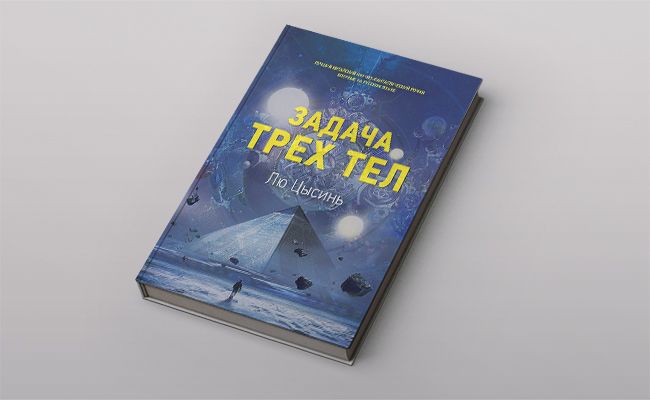
Humanity often behaves irrationally, a person as a biological species causes irreparable damage to the environment, and his past (up to the very recent) contains a lot of examples of truly incredible cruelty - you can’t argue with all this. However, is this an occasion to take the side of the power that wants to destroy humanity and take its place on Earth? It is this issue that is devoted to the novel “The task of the three bodies” Liu Tsysin-the most famous fantast writer in China and one of the most successful authors working in the science fiction genre in the world.
Both the East and the West are equally alarmed by the epidemic of the mysterious suicides of scientists who were disappointed in the possibilities of science. In parallel with this avalanche -like, the number of technological disasters is growing, and the protests of environmental activists against new research are becoming more fierce. It seems that science is rapidly losing its attractiveness in the eyes of mankind, and technological progress is about to stand, proving its complete failure. In parallel in the world, the strange computer game called “Three Body” is gaining popularity: the players in it tell the interactive story of a dying and reviving civilization living in a dangerous and unpredictable world of three suns.
Gradually, someone’s intent begins to loosen behind all these strange events-most likely, unkind. And at the very moment when the Russian reader almost believed that before him the next variation on the story of the Strugatsky brothers “a billion years before the end of the world”, the frightening truth is revealed: the fleet of aliens from the Alpha Centaurus system flies to the ground. A suffering from permanent cataclysms in their three -solar world, the Trisolarians (the sole of the aliens of earthlings) expect to easily capture our world - much more stable and suitable for habitat, and for this they recruit a “fifth column” on the ground - people who are ready to stand under alien banners for different reasons. And the main task of these “national traitors” is to slow down technological progress, thereby not allowing earthlings to prepare for the upcoming invasion.
Honestly, Li Tsysin's book wins greatly in retelling. A beautiful and complex novel composition is visible only in some perspective, and when looking from a small distance, a primitive and rough language crawls to the fore (perhaps the fact that the “task of three bodies” for some reason was translated not from Chinese, but from English), the marginal schematics of the characters and their actions in any convincing psychological motivation. In a word, if you try to express the essence of the novel by Li Tsysin with a metaphor, then it is most accurate to describe it as an openwork thread with a jigsaw on drywall.
However, if you renounce your own expectations and look at the “task of three bodies” not as fiction in the usual sense of the word, but as a curious mental experiment-a kind of modeling situation that allows you to understand something about human nature and its manifestations in extreme conditions, the shortcomings of the book will probably seem not so significant. And the advantages are the already mentioned intricate and unexpected structure, a powerful philosophical subtext, interesting technological hypotheses and a delightful plot multifaceted - on the contrary, will seem much more significant.
Galina Yuzefovich