
Translated material
One hundred years of freedom
On December 6, 1917, Finland gained independence. Contrary to the common performance, the Bolsheviks did not give her the Finns: the country's path to sovereignty was difficult and cost many thousands of human lives
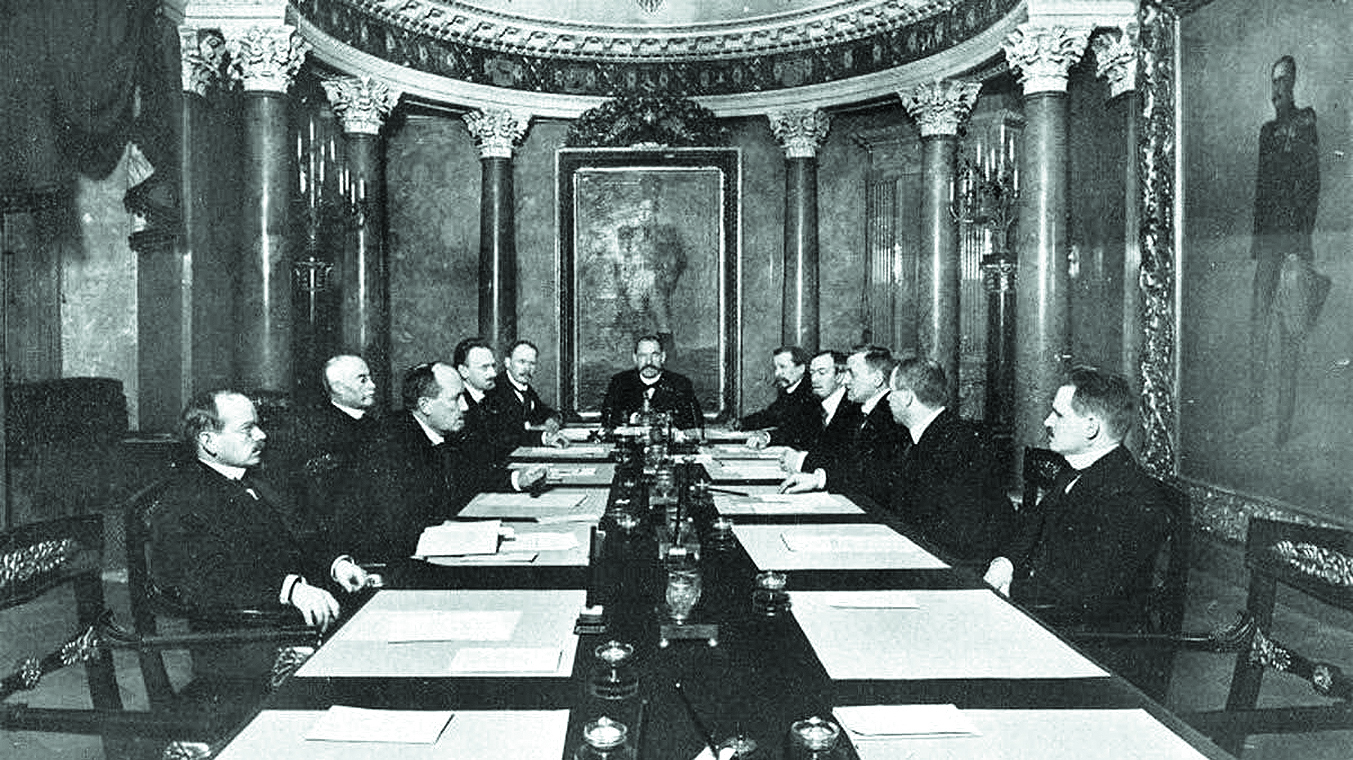
Senate Finland, who in December 1917 adopted the Declaration of Independence Photo: Historian.rf
One hundred years ago, the Senate (Government) of the Grand Duchy of Finland, which was part of the Russian Empire, adopted a historical document - the appeal “To the people of Finland”. The country's independence in it was proclaimed as a goal for which a new constitution should be adopted. The Finnish parliament immediately approved the appeal in which, among other things, the hope was expressed that the Constituent Assembly of Russia recognizes the freedom and independence of Finland.
Finns and the Constitution
Among the titles of the Russian emperor was the "Grand Duke of Finland." That is, the Grand Duchy of Finland was in the personal union of the emperor, but at the same time enjoyed a wide autonomy and had its own constitution. The Grand Duchy became part of the empire in 1809. This was the first state education of the Finnish people, previously part of Sweden. The national movement in Finland, which arose in the middle of the 19th century (the first significant event here was the publication of the Karelo-Finnish epic “Kalevala” in 1835), was originally aimed at achieving the equality of the Finnish language with the Swedish-the language of the elite and state office of the Grand Duchy. In this struggle, it relied on the support of Russian Governor General Finland, since Petersburg sought to weaken the influence of the Swedish nobility.
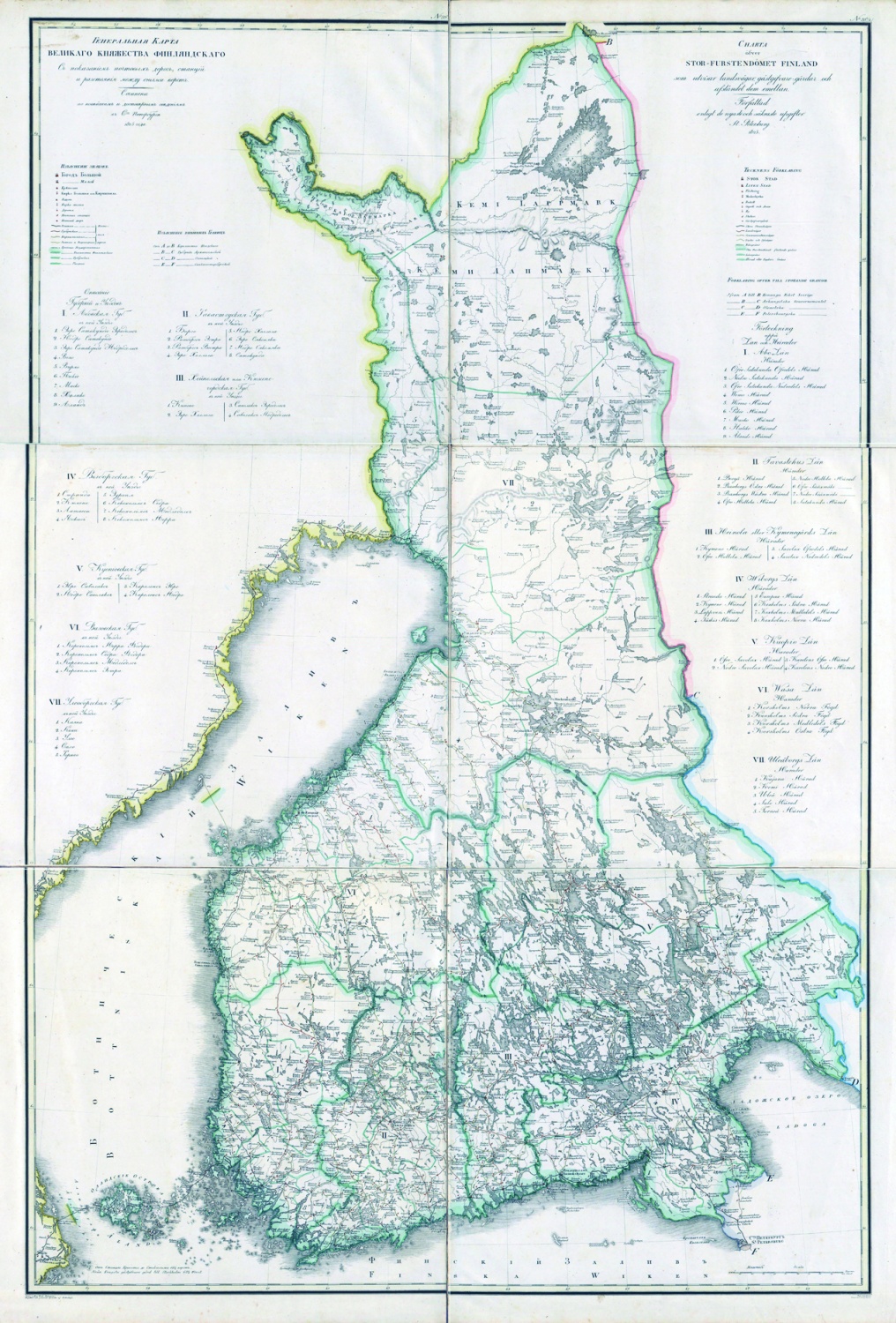
Petersburg, 1825. Photo: Historian.rf increase
In 1863, the Finnish language finally received equality with the Swedish. However, at the end of the 19th century, the Finnish national movement, in which the Swedish elite participated, was already directed against Russia. This was due to the process of Russification of Finland that began in the reign of Nicholas II. In 1899, the Finnish Constitution was canceled. In response in the Grand Duchy of Principality, a passive resistance campaign began, a letter signed by 500 thousand Finnish children was sent to the king. As a result, the Russian language was canceled as official, but autonomy was not restored. Events acquired a dramatic turnover when, in 1904, Governor General Nikolai Bobrikov, the main conductor of the Russification policy, was killed in the Senate building by the son of Senator Eigen Shauman, who immediately shot himself. In 1905, during the revolution, after the universal strike and mass demonstrations of the population, the autonomy of the Grand Duchy was restored, and in 1906 a democratic elected law was adopted in Finland, which for the first time in Europe gave the right to vote to women.
However, the policy of Russification continued, and the emperor imposed a veto on the decisions of the Finnish Sejm (Parliament). With the outbreak of World War I, many Finns emigrated to Germany, where they created the Finnish legion, officially called the 27th Royal Prussian Jaeger Battalion. The Legion totaled 1897 people. He had to fight against the Russian troops in the event of a German landing in Finland, but never took part in the battles.
In July 1917, the Finnish parliament proclaimed the independence of the Grand Duchy of Russia in internal affairs and limited the competence of the Russian authorities to defense and foreign policy. However, the law on the restoration of the autonomous rights of Finland was rejected by the Provisional Government, the Sejm was dissolved, and its building is occupied by Russian troops
People and freedom
After the February Revolution and the abdication of Nicholas II from the throne, the Provisional Government of Russia issued the "Act on the approval of the Constitution of the Grand Duchy of Finland." Already in July 1917, the Finnish parliament proclaimed the independence of the Grand Duchy of Russia in internal affairs and limited the competence of the Russian authorities to defense and foreign policy. However, the law on the restoration of the autonomous rights of Finland was rejected by the Provisional Government, the Sejm was dissolved, and its building was occupied by Russian troops. In August, the government of Emil Nestor Cetjal, a prominent philologist and member of the Mladofinn party began to work.
After the October Revolution, the Finnish parliament, which was now called Eduscount, on November 2 (15) proclaimed itself the supreme power in Finland. On this day, the Bolshevik government issued a declaration of recognition of the right to self -determination for all peoples of the former Russian Empire. 12 days later, Educunt formed a new Senate, led by Pen Evin Swinhuwood - recently returned from the Siberian exile, the first chairman of the Finnish parliament. He fell into exile in 1914, when, being the chairman of the district court, he refused to recognize the powers of the prosecutor’s official sent from Russia. The Swinhuvud government did not include the social-democratic party influential in Finland.
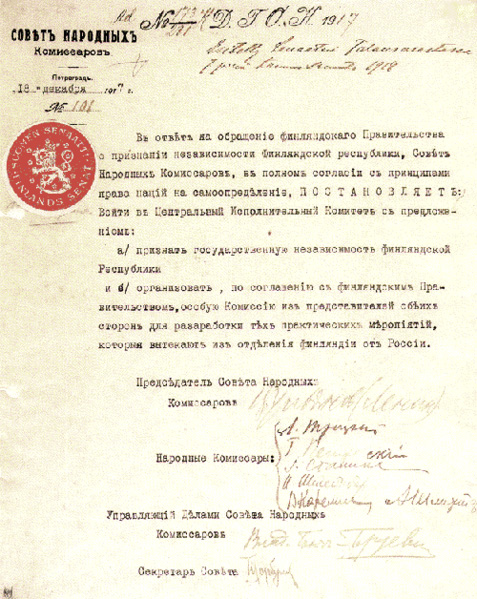
On November 23 (December 6), the parliament 100 votes against 88 adopted the Declaration of Independence, which said: “... The people of Finland accepts their fate in their own hands, which is not only justified, but also necessary in the existing situation. The people of Finland are deeply aware that they cannot fulfill their national and worldwide mission without complete sovereignty. The centuries -old dream of freedom now becomes a reality; The Finnish people protrudes forward as a free nation among other nations of the world ... The government presents the Sejm project of the Finland Constitution. The leading principle of the project is that Finland would be a sovereign republic ... The people of Russia after the overthrow of tsarism have repeatedly made it clear that they granted the people of Finland the right to determine their future on the basis of their centuries -old cultural development. The firm will of the Finnish people is carried through the horrors of war and is based on the principle, according to which no nation should be dependent on another without its desire. The people of Finland firmly believe that the free people of Russia and their constituent assembly will not interfere with the desire of the people of Finland to join other free and sovereign nations. ” Already on December 18 (31), 1917, the Council of People's Commissars, led by Lenin, recognized the independence of Finland. After 4 days, the corresponding decree was ratified by the All -Russian Central Executive Committee.
In fact, the Bolsheviks were not going to recognize Finnish independence and considered the decree of December 31, 1917 as a purely formal act
White and red
In fact, the Bolsheviks were not going to recognize Finnish independence and considered the decree of December 31, 1917 as a purely formal act. They took into account that in Finland there was actually dual power. The Government of Svinhuwood controlled only the northern and central regions of the country, where the detachments of the security corps - Shututskor were formed. I must say that many Swedish nobles who made a successful career in the imperial army and in the civil service, after the October Revolution, returned to Finland to support its independence and fight the Bolsheviks that threatened it. Among them was an experienced cavalry chief and well-known researcher of Central Asia and China, Lieutenant General Baron Karl Gustav Mannerheim. He became the commander of the Finnish army - Schutskor. The most densely populated south of Finland with the capital of Helsinki (Helsingfors) was under the control of the detachments of the Finnish Red Guard, formed by the left wing of the Social Democrats and the support of local workers. There were also numerous parts of the Russian army and navy, which fully supported the Bolsheviks and the Finnish Red Guard. In total, up to 80 thousand Russian military personnel remained in Finland.
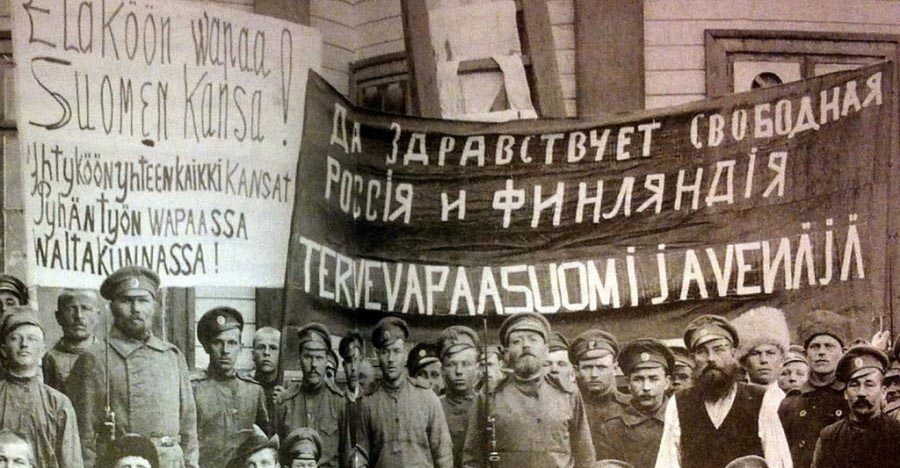
Photo: artemijv.livejournal.com
On January 12, 1918, in order to restore order of Svinhuvud, Extraordinary powers were granted parliament, and the shyutskor was declared the Finnish army and taken to state maintenance. But the army was just forming and was not able to establish control of the capital. Meanwhile, on January 13, Lenin promised the Finnish Red Guard the help of Russian troops in an uprising against the Government of Svinhwood. On January 23, Russian weapons were transferred to the Red Guards. On January 27, the Executive Council of Finnish workers, supported by the Red Guard, raised an uprising in Helsinki and the next day proclaimed the creation of the Council of People's Commissioners-the Communist Government of Finland, led by the chairman of the Social Democratic Party, Kulervo Manner. On the eve of the Swinhuvud and Shutskor government left the capital and began to create defensive positions in the Vaas area, on the shore of the Baying Bay. With the assistance of the former tsarist officers, Shututskor managed to disarm the Russian garrisons in the central and northern Finland. In February, active hostilities began between red and white, and 50–70 thousand people fought on each side. The Finnish 27th Jaeger battalion of the German army was transferred to the aid of Schyutskor and the volunteer brigade from Sweden arrived.
Soviet Russia recognized the Council of People's Commissioners and on March 1, 1918 concluded a mutual assistance agreement with him, in which the Finnish side was called the Finnish Socialist Workers' Republic. In the south of the country, Russian troops supported the Finnish Red Guard, but Russian soldiers did not want to fight, their combat effectiveness was extremely low. In addition, the Austro-German troops after the failure of negotiations in Brest-Litovsk resumed an offensive throughout the front, and the Council of People's Commissars, which had just begun to form a Red Army, did not have the strength to help the Finnish Red Guards. The latter was catastrophically lacked by officers, no more than 10 thousand Russian soldiers actually fought on their side. In addition, the began red terror undermined confidence in the supporters of the FSRR of a significant part of the population of the territory controlled by them.
On April 26, the Red Government of Finland fled by the sea from Vyborg to Petrograd. Manner in 1939 died in a Gulag. In total, about 10 thousand Finnish Red Guards went to Russia. The civil war is over
Victims
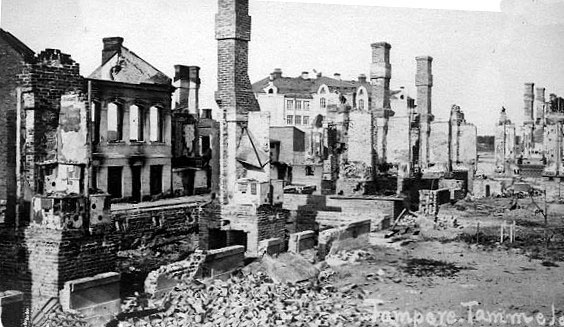
After the signing on March 3, 1918 by Soviet Russia of the Brest world with Germany and its allies the fate of Red Finland was decided. By the end of March, at the request of Germany, all Russian troops were withdrawn from Finnish territory. During the battle of Tamper (Tammerfors), the troops of Mannerheim on April 6, the city took possession of the city. On April 3, in the Helsinki area, 15 thousand German soldiers under the command of General Rediger von der Golts began. On April 13, they easily captured the capital of Finland and handed it over to the Government of Svinuhud. On April 26, the Red Government of Finland fled by the sea from Vyborg to Petrograd. Manner in 1939 died in a Gulag. In total, about 10 thousand Finnish Red Guards went to Russia. The civil war is over. On May 16, 1918, the Victory Parade took place in Helsinki. About 1650 people became victims of red terror, from 7 to 10 thousand people victims of white terror. The losses of the Red Guard amounted to about 7 thousand dead and missing, and whites - more than 4 thousand dead and missing, including 450 Germans and 55 Swedes. About 900 Russian troops who fought on the side of the Reds were also killed. Three police officers Shutskor, guilty of the hopeless executions of hundreds of people, were convicted and sentenced to life imprisonment in 1921, but later amnestied. 76 thousand Red Guards were captured, of whom they died in the camps, without waiting for a court, 13.5 thousand people.
Despite the fact that German troops landed in Finland, Germany recognized the independence of Finland. In August 1918, the creation of the Kingdom of Finland, led by one of the German princes, was proclaimed, but because of the revolution in Germany, the monarchical project turned out to be stillborn. The final recognition of Finland's independence by Soviet Russia occurred under a Tartus peace treaty concluded in October 1920.

Finland today is:
-3rd place in the world ranking of the most healthy countries (ecology and demographic conditions) compiled by Forbes. Water water in Helsinki, according to the same rating, is the cleanest in the world;
-8th place in the list of countries most convenient for living, according to the UN report Human Development;
- one of the highest in the world of education indexes (education index), according to the UN and Pisa research;
-One of the most non-corrupted countries of the world: 3rd place in the rating of the perception of corruption TRANSPARENCY International for 2016 (Russia-in 131th place);
- One of the lowest levels of social stratification in the world. Revenues of 20% of the richest citizens exceed the income of 20% of the poorest by only 3.6 times. People living behind the poverty line make up 3.8% of the population (20–25% in Russia).