
Translated material
Names, turnouts, passwords
Who actually draws up lists of US government, who are threatening with secondary sanctions and who may find themselves in secret lists, recognized The New Times
Photo: psychologies.ru
The media are full of reports that Russian oligarchs shutters are wiping into Washington, hiring expensive lobbyists, peeling down from proximity to the Kremlin, calling Putin “toxic assets” , they call the names of those who - well, they will definitely enter the lists, say that they know by which principle (state support for more than $ 300 million) will be selected. In fact, the formation of lists (public and secret) specific structures and persons who are likely to fall under sanctions, the US executive is engaged in the management of terrorist and financial intelligence (Office of Terrorism and Financial Intelligence - TFI) and the Bureau for Foreign Activation (OFAC) - both are part of the ministry US Finance (US Treasury) ( NT wrote in detail about this back in 2014). Another thing is a congress that attracts a variety of expert groups to compile their lists. Their proposals will become part of the US Congress report. But the final word remains with the executive branch, with the White House, which should give its list in early February. As expected, it will be much shorter than what Congress will offer.
One of the groups that formulated the criteria for determining those who should enter the sanctions lists and have already presented their considerations to Congress was formed in the Washington Research Center The Atlantic Couuncil. This group was led by economist Anders Ausland, who for many years advised the Government of the Russian Federation, and former US Secretary of State Daniel Fried; Andrei Illarionov, presidential adviser to President Putin in economics in 2000-2005, was also involved in the work, now the senior researcher at CATO Institute, and a publicist, a political scientist who is in Washington at the invitation of the Hudson Institute research center, Andrei Piontkovsky.
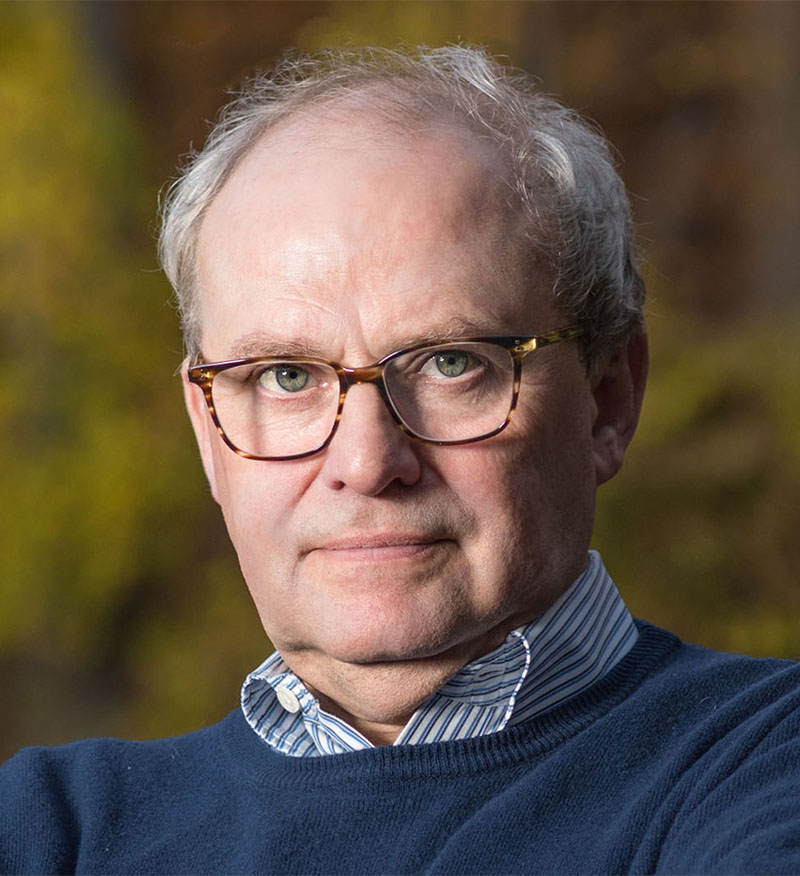
The New Times asked Anders Oslund about how the process of developing sanctions lists function.
Criteria and quantity
NT: *What is the specificity of your group compared to other family, which also prepare their proposals to the US Congress? *
Anders Oslund : We work independently of each other, so I cannot know what other groups are doing. The fact is that in the Law - HR 3364, Countering America's Adversaries Through Sances Act (Caatsa) , - which President Trump signed on August 2, 2017, is section 241, who prescribes the Minister of Finance together with the director of national intelligence and the State Protector to submit a detailed report on the Mere influence/support of certain politicians and oligarchs of the current regime existing in Russia, which is accused of interfering in the electoral process in the USA during the latest presidential elections. According to this section 241, 8 areas are determined, and accordingly, 8 different reports are preparing different people-people from the Ministry of Finance are supervised, something-the State Department, something-special services, for example, National Intelligence Council), CIA and others.
I am dealing with the State Department, the Ministry of Finance and the National Security Council. Previously, all this process was led by one person - the director of sanctions in the US State Department, which was then Dan Fried. But when he resigned ( in February 2017. - NT), the State Department stopped acting as a coordinator of the efforts to develop sanctions - the initiative passed to the US Congress.
“In my opinion, you need to concentrate in people close to the Kremlin, to Putin who earn on corruption schemes along with Putin, and not just on the rich people of Russia simply because they are rich. This is the starting point with which my colleagues agree "
This means that the administration ( executive branch. - NT) does not really know what to do, our task is to give reasonable recommendations. In my opinion, you need to concentrate in people close to the Kremlin, to Putin, earning on corruption schemes along with Putin, and not just on rich people in Russia simply because they are rich. This is the starting point with which my colleagues agree, and we, based on this, help the administration think in this direction.
NT: *You understand who will most likely enter the new sanctions list? *
We cannot predict the result. When it comes to the announcement of specific names, they usually become a surprise - who got to the list and who is not. There are different opinions on how many names should be on this list: I would say about 40-50, but they prepare 200-300 - official statements have already been made on this topic, so I do not disclose any secrets, calling these numbers. Congress exerts strong pressure and requires a long list.
In addition, it is not clear which part will be open and which is secret. Just as at one time it was with the “Magnitsky list”: there will be one list for the general public and one secret. Formally, the mention of Namerek in a closed part of the list does not imply any sanctions against these people. In practice, not a single US financial organization will cooperate with someone whose name fell on this list.
“There are different opinions regarding how many names should be on this list: I would say about 40-50, but they are preparing 200-300 - official statements have already been made on this topic, so I do not reveal any secrets, calling these numbers. Congress exerts strong pressure and requires a long list. "
NT: Judging by the memorandum that is published on the website * The Atlantic Council , it is not only about people who directly support the regime, but also about companies that received or receive any financial assistance from the Kremlin? ***
Yes, but we are talking about certain people, we generally do not call anyone by names here, but just for a better understanding - such as, for example, Leonid Michelson (gas company Novatek), Alisher Usmanov (Metalloinvest), Vladimir Bogdanov (Surgutneftegaz), Iskander Makhmudov (concern “Kalashniki”), etc. People associated with the Kremlin in the most direct way. And I must say that it is correctly difficult to draw this border, another group is such people as Evgeny Prigozhin (it is often called the “Putin’s cook” and claim that he stands behind the famous “Olgin Trolls Factory”), Konstantin Malofeev (founder of the Tsargrad TV channel, rumored - one of the financiers of the “Russian Spring” in the east of Ukraine), etc.
In addition to these two groups, there are managers of state -owned enterprises who receive direct benefits, and their children are Rotenbergs, Shamalovs, Kovalchuki, etc., people who earned at least half a billion. Then there is a category of people who retain money for Putin and have not yet come under sanctions: for example, (a cellist appearing in the Panama Archive) Oleg Roldugin , (Putin’s childhood) Petr Kol Bin , (rector of the St. Petersburg Mining Institute and Co -owner of Fosagro) Vladimir Litvinenko . Then there is another large group of people arrested in Spain and Monaco. There is another, which was indicated as a result of the publication of the Panama archive - the Panama documents were not taken into account in now existing sanctions.
“There are managers of state -owned enterprises who receive direct benefits, and their children are the Rotenbergs, Shamalovs, Kovalchuki, etc., people who have earned at least half a billion. Then there is a category of people who retain money for Putin and have not yet come under sanctions: for example, cellist Oleg Roldugin and childhood friend of Putin Petr Kolbin ”
NT: *If a person finds himself on a secret list, does he fall under sanctions or what? *
This is possible, but later, after a separate procedure.
Step by step
NT: *Your group has prepared a report. What is the further procedure? *
In theory, all reports should be submitted within 180 days after August 2: as far as I know, three reports are now presented, all late. Most likely, if the administration is just as leisurely, Senators Cardin and McCain send a request with a request to speed up the work. After that, some people in the presidential administration will switch to a round-the-clock mode of work and provide a final report in two or three days-as usual.
NT: *So when is the day x? *
Approximately 1 February. Both the open and closed parts of the report will be sent to Congress. I assume that at first we will have many names open to all, then a secret list, and it is possible that information about families and conditions will not be published, but this is all in the hands of the White House.
NT: *How does it work? Suppose sanctions are imposed on family members close to Putin, on their property and other assets, but if the information is not released, how do people find out that they were under the influence of sanctions? *
We are not talking about sanctions, as such, but about information for a congress, which in itself does not have direct legal consequences. In reality, however, not a single financial company will want to deal with a person whose name is openly mentioned on the list. Names from the secret list will not be known, Congress keeps them secret. We remember according to the “Magnitsky list” that basically such things are not publicized, for example, (head of the Investigative Committee of the Russian Federation Alexander) Bastrykin was originally on the secret list, and only after some time his name appeared on the open list.
NT: *and Daniel Frida shortly after his departure from the State Department, and General Flynn in his recent testimony said that Donald Trump was ready to cancel sanctions against Russia with almost his first decree. Although in the State Department, as far as NT is known from our sources, no indications were received on this score. Nevertheless, do you expect the Trump administration will try to minimize the sanctions list? *
He will try, but not the fact that he will succeed. Trump can be accused of what, acting in this way, he only confirms the assumptions about his special relationship with the Kremlin.
I think that middle -level officials who have remained since the time of President Obama will present an extended list, and the White House, that is, Trump’s closest environment, removing some names from there, but not too much, will pass it on to Congress. But at the same time, we know that Trump has been lying on the table for quite a long time - the initiative of his team, an agreement on the supply of lethal weapons to Ukraine for $ 57 million, and he may not sign it. But in relation to Section 241 of the Sanctions Law, this cannot be done - there is a deadline, and it is in early February.
“Trump will try to minimize the list, but not the fact that he will succeed. Trump may be accused of what, acting in this way, he only confirms the assumptions about his special relationship with the Kremlin. "
I think that today there is no report even in its infancy. Of course, maybe I just don’t know about it, but the special services have it, but I doubt it. Usually such things are done at the last moment.
Do not forget that every day all the new information from the commission (special prosecutor Robert) Müller appears: a few days ago we learned that the Deutsche Bank agenda was awarded. Everything is done very quietly, without any noise, Müller has not made a single statement since May, from the moment of appointment. It seems to me that Müller understands everything and he is strong enough, competent and will go to the end and, collecting a piece, which, I think, we will see a lot, get to Trump. There is a suspicion that Deutsche Bank could be an intermediary between the Kremlin and Trump.
NT: At one time, the United States imposed different * sanctions against specific persons and Iranian companies in connection with its atomic program . The result was zero until the sanctions affected the main banks, including the Central Bank, disconnecting from the SWIFT banking transaction system and the ban on the purchase of Iranian oil. By 2012, up to $ 100 billion Iranian money were blocked in Western banks, oil exports fell by 75%, the currency reserves of the Iranian Central Bank decreased by $ 110 billion, the inflation reached 44%, the Iranian Rial depreciated by 70%in two years (2011–2012), which led to hungry rebels. ****
You know, if you evaluate sanctions on a scale from zero to ten, then sanctions against Iran are 10, against Russia - 3. The United States cannot afford those steps that were taken against Iran. The debt of Russian corporations - and state - part of about $ 200 billion, and private - approximately $ 300 billion is a serious story. At one time, Lehman Brothers had frozen $ 400 billion, and this detonated the global financial crisis, and here $ 500 billion - the West is not ready to take such a risk. As for oil, then, along with Saudi Arabia and the USA, Russia is the largest oil producer in the world, about 11% of global oil production, and this cannot be considered. If even 3% of oil is deprived of the market, the strongest crisis will break out, prices will fly to heaven - it will be a global crisis. There are three things that the West will not attempted for reasons of exclusively selfish and economic: gas-and therefore there is no need to wait for sanctions against Northern Stream-2, against Novatek-yes, most likely, sanctions will be imposed, but not against the pipes that gass undergoing. The second is oil, the third is the Russian Central Bank.
NT: *And if Trump refuses any new sanctions lists? *
Firstly, the administration has different fractions: even inside the White House there are people who say “they” about the people of Trump. Secondly, the Congress, despite the split in party lines, on the issue of sanctions against Russia, is a united front. If Trump does not sign the list, the Congress will introduce it to the law, which is much worse.