
Translated material
Why not Corsica Catalonia
What does the "historical" victory of Corsican separatists in the elections mean
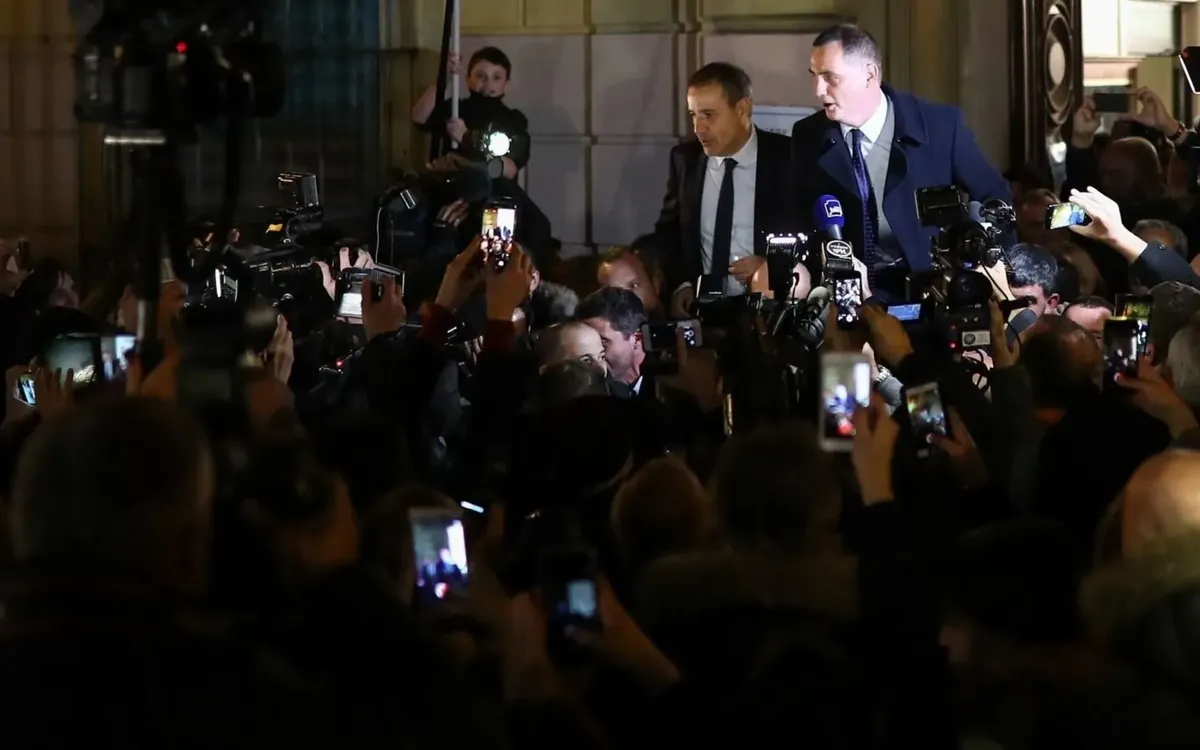
The nationalist coalition “For Corsica” won a “historical victory” in the elections to the local parliament, gaining 56.5%. The “people of Corsica” spoke out, now the time has come to receive proposals from the French authorities, says the leader of the separatists Gilles Simeoni. About what the Corsican winners want, and what is the difference between the “Corsican Casus” and the “Catalonia’s incident” in the thesis of the “new”.
What are these elections
These elections are extraordinary, their implementation is associated with territorial reform: the merger of two departments (southern Corsica and Upper Corsica), which the island has been divided since 1976 - to the region with single management.
Now the Corsicans first chose deputies of the Unified territorial self -government body (CTU), which will begin work on January 1, 2018.
The elections took place in two rounds, December 3 and 10. Seven political formations nominated their lists. But the status of indisputable favorites confirmed - in excess of forecasts - the separatist coalition "For Corsica" (pè a corsica). In the new parliament, its representatives will receive 41 out of 63 places.
The coalition unites the batch of supporters of the “wide autonomy” “Create Corsica” and the Party of Supporters of Independence - “Free Corsica”. At the same time, it is the Corsica Party that dominates this union, and its leader 50-year-old lawyer Gilles Simeoni, the current chairman of the Corsican Executive Council (i.e. Government), headed the election list.
The speaker of the new parliament should be the leader of Free Corsica, 57-year-old lawyer Jean-Gi Talamon, who is the chairman and the current convocation of the Assembly of Corsica. Simeoni will remain the head of the regional government.
Where does this result come from
The same parties were united into the coalition in previous elections, in December 2015, but then they scored almost 20% less.
The first reason for the current result, which are indicated by specialists in Corsican politics, is a manifestation of general French desire to expel the entire old elite. And since on Corsica the main task of the old elite was enrichment in exchange for the preservation of the political status of the region, then supporters of the struggle for national self -determination took advantage of popular discontent.
“This is a struggle against clanity, against the fact that a policy of Corsica from the end of the 19th century was determined by several surnames,” said political scientist Jerome Furke, the author of the report (for the Jean Zhores Foundation) about the gradual conquest of power nationalists on the island.
The confident victory of the separatists 12/10/2017 is the result of two circumstances. Firstly,
In recent years, residents of the island have seen that nationalists can engage in not only an armed “struggle for independence”, but also “peaceful construction”. And with the election of nationalists, life does not get worse.
In recent years, the separatists peacefully won three important victories: in 2014, the Nationalist Gilles Simeoni became the mayor of one of the two main Korsican cities-the Bastia, in 2015, the coalition “For Corsica” won regional elections, and in the summer of 2017, in the elections to the National Council of France, intended for Corsica, three were occupied by nationalists.
Secondly, the nationalists expanded the “electoral base” due to the fact that they “vowed” to completely abandon the idea of creating an independent state. At least “in the next 10 years,” says Jean-Gi Talamoni, but his more influential partner in the coalition of Gilles Simeoni assures: the question of independence should not rise at all.
The task is to obtain a “full autonomy” for Corsica for 10 years. And the negotiation process with Paris about the conditions of this autonomy should end over the next 3 years. Just three and a half years later, the powers of the parliament chosen today should end.
42 years of struggle: how the approach of Corsican nationalists has changed
It is believed that the founder of the modern stage of the struggle for the rights of Corsica is the brothers Edmond, Max and Rolan Simeoni.
Edmond is the father of the current Corsican leader.
On August 21, 1975, in the town of Aleria near the Bastia, Twelve Corsicans, led by Dr. Edmon Simeoni, armed with hunting rifles, seized the wineries of the repatriate (one of the many thousands of migrants to whom the French government in priority distributed the Corsican lands after the massive departure of the French from Algeria). According to the rebels, the repatriate was involved in “typical” financial fraud, which caused major damage to the Corsican winemakers. The Corsicans wanted to attract the country's attention to the “painful” problem with their action. Hundreds of local residents joined the rebels.
In response, the head of the Ministry of Internal Affairs of France began an operation against the invaders with the use of BMP and the participation of 1,200 gendarmes and police officers. Two law enforcement officers died in a shootout. Edmond Simeoni was in prison.
In 1976, in response to the repression of the French authorities, the “front of the national liberation of Corsica” was created, which then committed dozens of “small” terrorist attacks. 9 people became their victims. The peak of the “activity” of the group came in the late 70s-the beginning of the 80s, and in 2014 the “ latter from the Corsican ” announced (see photo) about the “termination of the armed struggle”, which was not really conducted for a long time. They announced that they were stopping fighting, as the time has come for a “new historical stage”: “Creation of a political force that will control the Corsicic and lead it to independence.”
By the way, the father and son of Simeoni always advocated the autonomy of the region, and not for his independence. Which, however, did not prevent Simeoni’s housing to be a lawyer of the Corsican shepherd Ivan Collon, who was found guilty of the murder of the prefect (head of the police) Corsica Claude Erignac in 1998.
In an interview that Simeoni gave the Le Monde newspaper immediately after the victory in the current election, he said: “Independence is not the decision that will lead to the satisfaction of the needs of Corsica and most of its inhabitants. A full -fledged autonomy, supplemented by the legal recognition of the Corsican people and political measures, among which, in particular, the solution of the issue of political prisoners is a framework for an acceptable decision for us. ”
In her pre -election program, the Corsica Coalition also indicated that it would fight for the recognition of the Corsican language by the second state -owned language along with French, creating the status of a resident of Corsica with the provision of priority rights when placing real estate (“capture” of Corsican real estate with rich “strangers” and caused by this circumstance, the price of prices - this problem as was one of the main Half a century ago, it remained now).
What separatists can get from macron
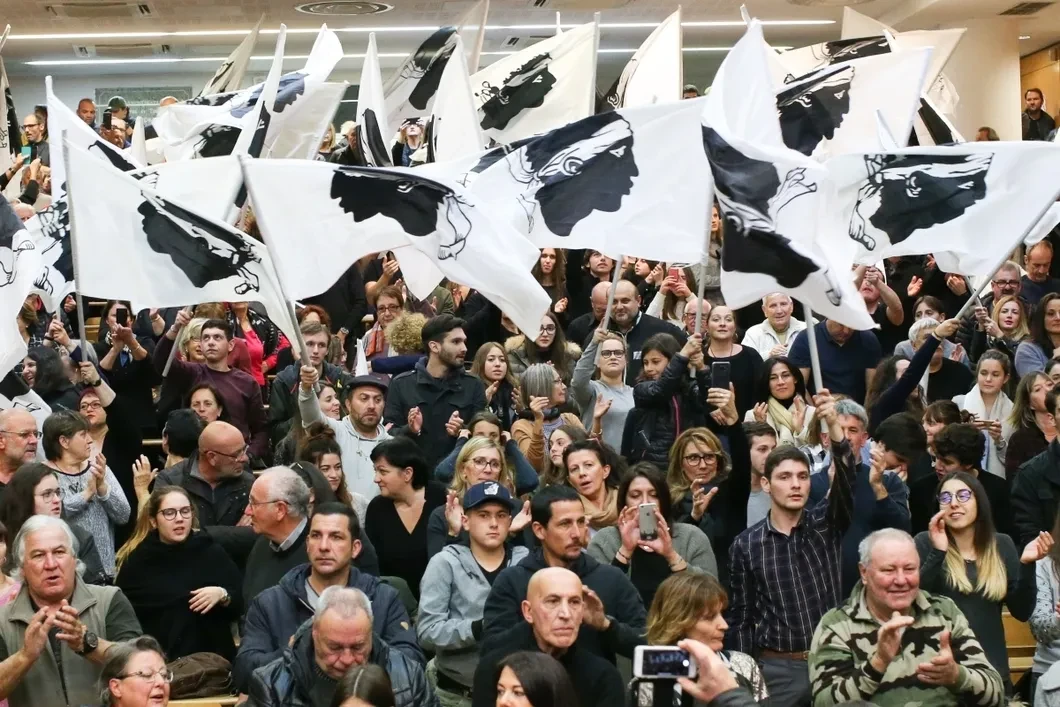
Since 1982, the French authorities have already expanded the authorities of Korsiki three times, and in 1991 even decided to recognize the Corsicans as a separate people as part of French, but the Constitutional Court expectedly abolished this decision.
On the evening of December 10, after the announcement of the results, French Prime Minister Eduar Philip called Zhil Simeoni and stated that he was ready to negotiate at any time, but after the start of the new local government body, that is, since January.
And, of course, Paris will make any concessions. On April 7, during a visit to Corsica, a presidential candidate Macron stated that he was ready to revise the status of Corsica. On October 31, the head of the Ministry of Internal Affairs of Gerard Collon, one of the closest associates of Macron, in response to the question of the Corsican deputy-nationalist stated in the National Assembly: “We are for the provision of Corsica of autonomy, but autonomy as part of the French Republic.” What does the phrase “within the framework of the French Republic” mean on April 7, Macron himself explained: “Let us stop the debate about the equal status of languages. In the French Republic - one official language: French. And this is not subject to change. ” The France Constitution also speaks of the unity of the nation.
To revise the constitution, a nationwide referendum is required.
So despite a loud victory, Corsican separatists have few reasons for talking with the central authority “on equal terms”. And in this - the main difference between Corsica and Catalonia.
The loss of rich Catalonia with a population of 7.5 million people is a serious blow to the economic and political status of Spain. The loss of Corsica for most Frenchmen will not become a problem: polls show that about two -thirds of the residents of the “mainland” are not against the provision of independence to the subsidized island with a population of 324,000 people.
Moreover, most Corsicans are against independence. They want to eat.
Add here the fact that Corsican winners need to take money somewhere to fulfill ambitious obligations to voters. The update of the monstrously obsolete island infrastructure plus the fight against poverty as a “main priority” (in a region where about 60 thousand people are officially recognized as poor) - very expensive tasks. And alone, Corsica, even having received “complete autonomy”, is unlikely to cope with them.
So negotiations on changing the status of Corsica will be interesting. And it is still unknown who risks more in this game for raising bets - Paris or Ayaccio.
PS
A day after the elections, it became known that negotiations with the Corsican authorities on behalf of the French government will lead Jacqueline Guro, the Minister under the Ministry of Internal Affairs of France (second person of the Ministry of Internal Affairs).