
Translated material
Dog life. All 39 years old
Charles Jenkins died, an American who escaped to North Korea in 1965, and got out of there in 2004
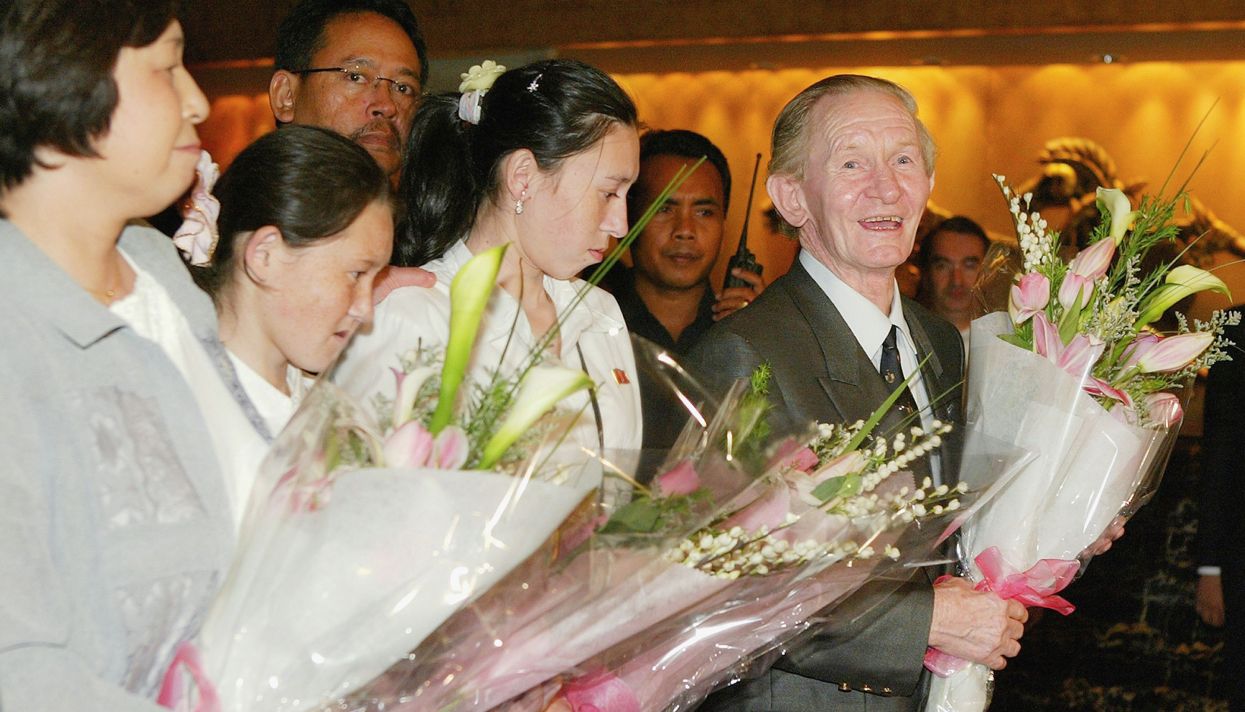
In Japan at the age of 77, Charles Jenkins, an American, who escaped to North Korea in 1965, died. He lived there for 39 years in the position of a privileged prisoner and only in 2004 was able to move to Japan. Jenkins played American villains in North Korean films and taught the English language the leader of the DPRK Kim Ir Sen, but he regretted his act all his life.
The 24-year-old native of North Carolina Charles Jenkins in 1964 was in the United States Army unit, which guarded the demilitarized zone from the South Korean side. Jenkins was afraid that he would either be killed when he would patrol the border or sent to Vietnam , so he decided to escape to North Korea. He hoped to receive asylum at the USSR Embassy and ultimately return to the United States as part of the exchange of prisoners.
In January 1965, Jenkins drank 10 cans of beer (he explained this by the need to calm his nerves), crossed one of the most protected borders in the world and surrendered to the North Korean border guards. Contrary to the plan of the American, the USSR did not provide him with refuge. Instead, he stuck in the DPRK for 39 years.
Jenkins were settled in Pyongyang along with three more Americans-derterer. The next eight years, the authorities forced them to learn the Korean language and the ideas of Chuchhe . In 1972, the Americans received citizenship, separate houses and unusual work - they played villains in North Korean propaganda films. In addition, they taught English at the Military Academy in Pyongyang. According to Jenkins, Kim Il Saint himself was among his students.
In 1980, the North Korean authorities found Jenkins his wife. She became 21-year-old Japanese Hitomi Soga. She was one of thirteen people abducted to teach the North Korean spies to the Japanese language. Jenkins and Soga got married only a couple of weeks after the first meeting. On the basis of hatred to North Korea, they gradually became close and fell in love with each other. They had two daughters.
“I knew how much my wife missed Japan, so every evening kissed her three times and said“ oyasumi ” -“ good night ”in Japanese. She answered me in English. We did this so as not to forget who we are and where, ”the American recalled in the memoirs.
Charles Jenkins and Hitomi Soga were actually captives in the DPRK, but at the same time they had privileges compared to ordinary residents of the country. When hunger erupted in the country in the 1990s, the government gave them rice, soap, clothes and cigarettes every month. “Ordinary people did not receive anything,” said Jenkins.
According to the American, he no longer hoped to leave North Korea, but in 2002 the DPRK released five Japanese, once stolen by special services. Among them was the wife of Jenkins Hitomy Soga. Two years later, Pyongyang allowed her husband and daughters to follow her.
In Japan, the American appeared before the military tribunal at the headquarters of the US Army. For desertion of 39 years ago, he received 25 days of prison. Among the four American soldiers who escaped to North Korea in the sixties, Jenkins became the only one who was able to leave; The rest lived in the DPRK until the end of their life.
“I lived a dog life in North Korea. Everyone lived there badly. There is nothing to eat. There is no water supply. No electricity. In winter, you freeze: the walls in my bedroom were covered with hoarfrost, ” recalled Jenkins. Having left North Korea in the age of 64, he actually learned to live again: he did not speak Japanese, did not know how to drive a car, never touched the computer and did not know what the Internet was.
The rest of his life, Jenkins with his family lived on the island of Sado, where his wife was born. He became a local celebrity, and in 2008 he published a book of memoirs, which dispersed 300 thousand copies in Japan. “Everyone in this country knows who I am. Even young girls come and ask for permission to kiss me, I swear, ” said Charles Jenkins.
He called the escape to the DPRK with his most terrible mistake and even years after leaving was afraid that the North Korean special services would kill himself or his family. “I cannot leave North Korea in the past. This country can do anything. She doesn’t care, ” said Charles Jenkins.
The cause of his death, Japanese television called the heart disease.
Olga Korelina