
Translated material
Old, strange, immortal
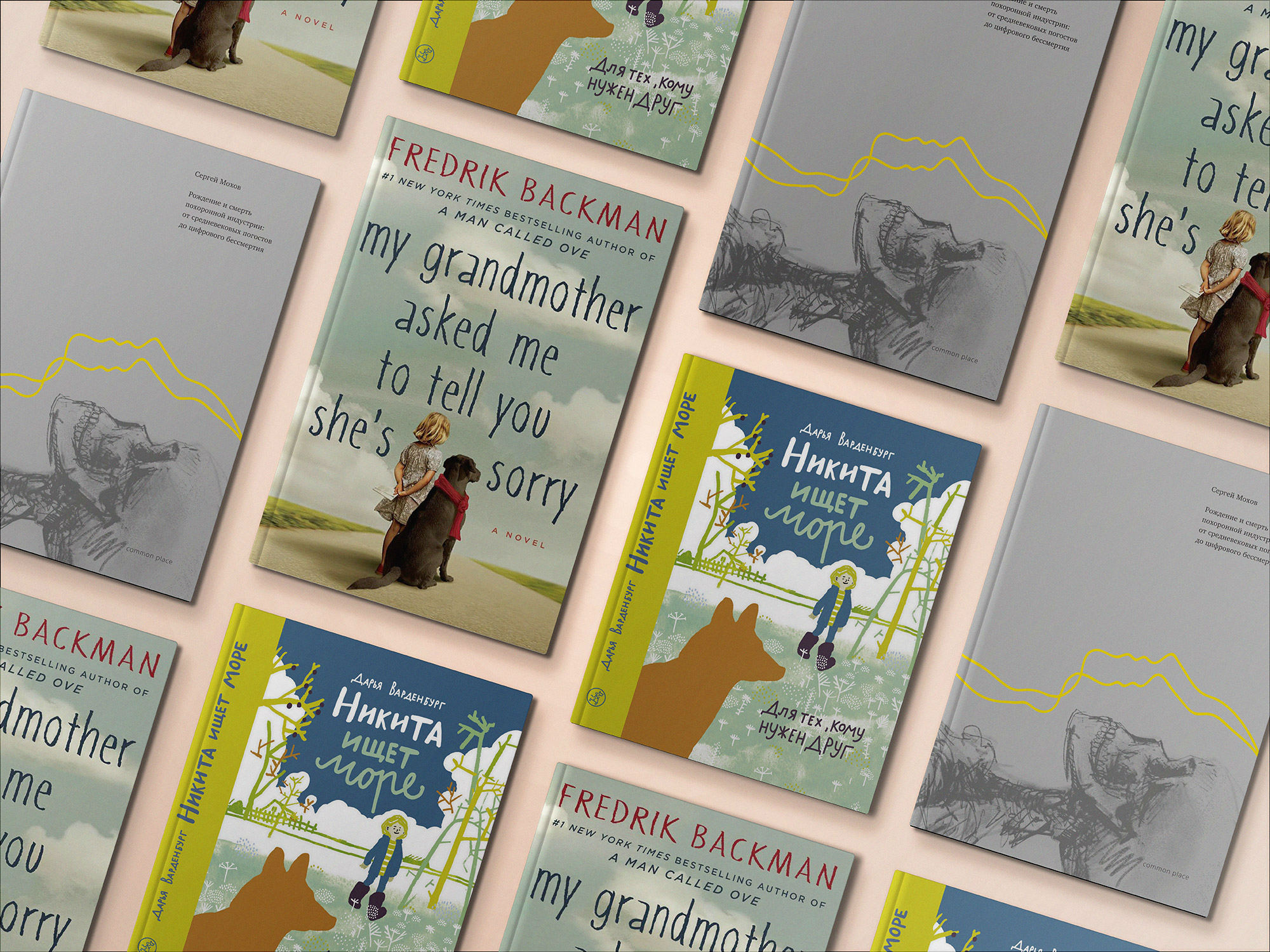
Grandmothers-Supergery, who are not always just loved, and cemeteries that will soon disappear-in the book review of "such cases"
Fredrick Bakman. "Grandmother ordered to bow and convey that she asks for forgiveness." "Sinbad"
All the neighbors of the Elsa are strange, “broken inside”, “almost eight years” to her, and my mother does not allow the girl to watch films about the Italian mafia and will be offended if an owl appears in the house. The most important gift in her life is a red marker to correct errors. The father-pedant, who at night rearranges the icons on the desktop of his mother’s laptop, gave him to Elsa, while he still lived with them. The daughter once told him: "There are words from you in me."
Grandmother older than her granddaughter is seventy years old, she can walk around the apartment in an open robe on her naked body, run away from the hospital, say everything that she wants to be ongoing and protect the plush bear, whom the guards are trying to take away at the airport. She invented the country of Prosonya - the world between sleep and reality, which is open to those who believe in a miracle and can doze. Grandma does not invent, she "challenges reality" every day.
At school, other children are pursuing Els, consider a strange and too smart child. In her cabinet, notes with threats of reprisals regularly appear, in the locker room Els is slapped with wet towels, and some boy says that the girl cannot be a spider-person.
The life of a seven -year -old schoolgirl resembles a fantastic detective. Her beloved, strange and warlike grandmother dies from cancer and asks her granddaughter to deliver letters to all the addressees of forgiveness. Meanwhile, Elsa’s mother is expecting a new child, one neighbor forever stands for order and discipline in the entrance and behaves like a “old pipe”, the other drinks, mourning her family, which died in a big war. After the grandmother of Elsa, a huge dog remained, and some in this house are ready to hand over her police. A monster lives in an apartment for an unemployed elevator, he is afraid of microbes and does not miss the opportunity to apply an antibacterial gel to his hands in a vain and painful attempt to wash off the blood that the monster saw every day in the war.
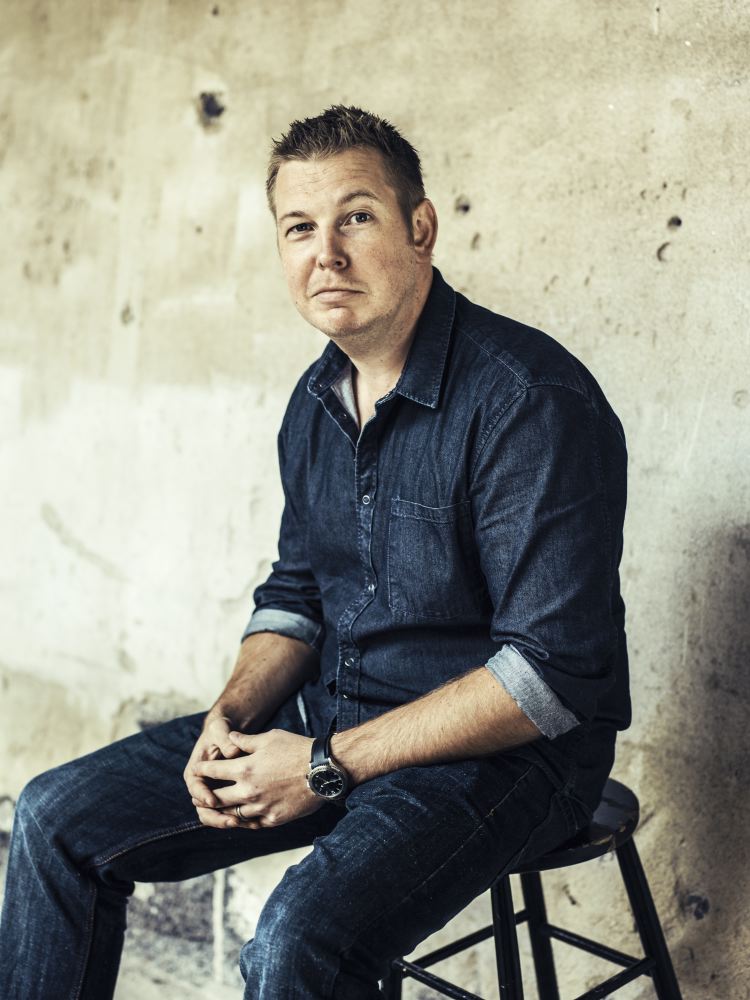 Fredrick Bakman photo: Henric Lindsten
Fredrick Bakman, blogger and journalist, author of the famous fairy tale “The Second Life of Uwe”, created an almost incredible hermetic world in one Swedish house. All Els's neighbors are connected by several tragic and touching stories - in fact, they are related to grandmother. The selfish and guessing Elsa, the fan of Harry Potter and Wikipedia, helps all these adults pronounce the fact that each of them hid for many years under masks of morning greetings, stretched smiles and grunts. Before her death, the grandmother taught her granddaughter not to be afraid, calmly accept the oddities of other people and abnormal in herself. Bakman wrote a book where each character is in some kind of superhero, but the main ones here are “grandmothers, mother-in-law and mothers ... who always fight on the side of good and cookies.”
The story of Fredrick Bakman resembles the book by Sobi Kristensen “Herman” - the story of the quick and traumatic growing up of a bald student. Like Elsa’s travels, German life takes place within the same northern city, both children find themselves in an almost wonderful world alone with their problems or mission, and few can help them. Both the story is perfectly translated - in Russian we read a quick magical prose, in which each hero and object speaks his own, organic language.
But the story of Elsa and letters of forgiveness is especially exciting. The main character lives not only her life, but also understands several "adult" problems. It is necessary to unravel the love relationships of the neighbors, understand the reasons for the divorce of her parents and why she hates a new boyfriend of her mother. And Elsa will have to get used to the fact that relatives also die, and figure out in her attitude to her grandmother, who worked as a doctor in especially dangerous areas and saved the lives of children in the war, and after returning home she came up with too many fairy tales, forgetting about the border between magic and life.
Read on BookMate
Daria Vardenburg. "Nikita is looking for the sea." "Scooter"
Summer, parents take their son out of the city. He was deceived, and instead of the promised rest by the sea, the schoolboy will be waiting for a grandmother, whom he had never seen before and does not even know her name. The pampered urban life of a seven -year -old boy breaks into the grandmother's porch. It turns out that Nikita in his seven years has never went to the store, does not know how to light a gas stove and does not understand why he should wash plates. After all, mom was in charge of this house.
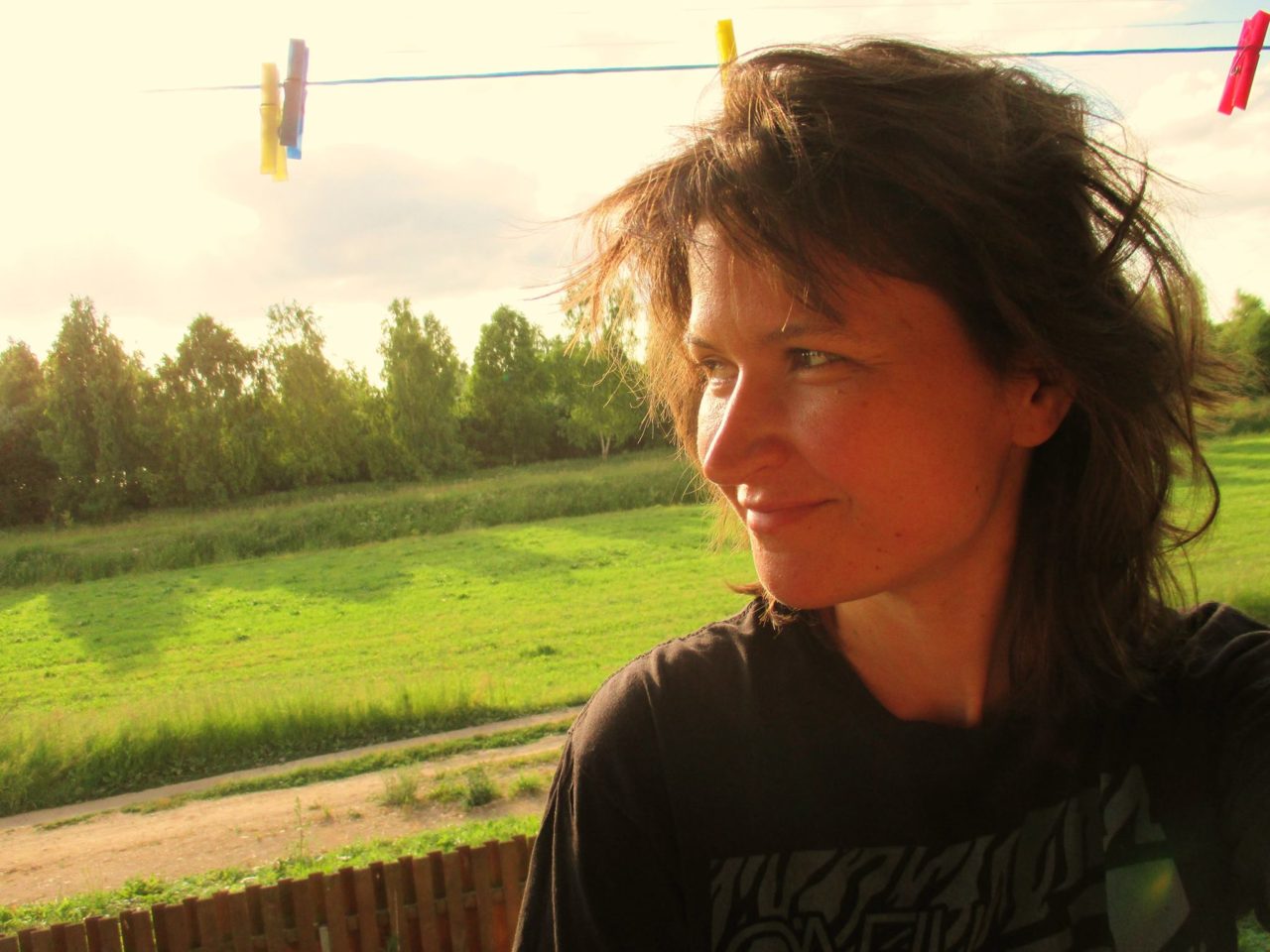 Daria Vardenburg Photo: From Personal Archive
In his new book, Daria Vardenburg, the author of the action -packed story “Rule 69 for Tolstoy Seagull”, encounters the world of the city and the village. Nikita's parents leave their son to her grandmother, and they themselves plunge into endless work. They come to visit him on weekends and are completely unable to life without Yandex.Cart and electric plates. The grandmother is guided by the ground from memory and stars, eats vegetables from the garden and tells that oatmeal consists of star dust, and a neighbor’s boy was named in honor of a new elementary particle. However, its main function is to be a magical assistant. Grandmother offers the grandson two trials - everyday life and expensive: to become independent and get to the local sea. Unlike parents, a grandmother in this fabulous story gives the child the right to error and experience.
Read on BookMate
Sergey Mokhov. “The birth and death of the funeral industry. From medieval graveyards to digital immortality. ” Common Place
Anthropologist Sergei Mokhov has collected a very important and rare book about how they related to the dead in European Christian culture and in Russia. Medieval graveyards in the church looked abandoned and unnecessary. It was only important that your body rests next to the holy place. Neglect of the material remnants of man after death is associated with the main issue of Christian teaching - an understanding of immortality. After the death, a terrible court was waiting for a medieval resident or, if the heavenly office doubted the assessment of his behavior, a purgatory. While the soul was in this zone, a person was not formally considered dead. Given the total resurrection as the final of the biblical history, the cemeteries were not particularly monitored and often buried in the grave several bodies. And after the next plague of the dead, they could completely bury hundreds into one hole in order to prevent the spread of infection.
Together with the secularization of society, the attitude to the funeral changes, first of all an alternative appears church burials - private funeral offices. The cemeteries are gradually taken outside the city, despite the resistance of the church, which lost income from the burial of parishioners on their territory. The development of medicine and attention to hygiene also influenced the attitude to the death of secular authorities: a place for the living was separated from space for the dead. The funerals themselves increasingly acquired a collective character: “The heralds walked the streets and read the message:“ Beloved brothers and sisters, I bring you the news that our late friend left this world by the mercy of the Almighty God. He was called Willy Woodcock, he was the third son of Jimmy Woodcock, the shoe master. I ask you to go to his funeral at two hours at two hours day "". They not only convened mourning events, but also sent invitations - in the 17th century they were used “as an entrance ticket, since the church was limited in the church, the number of seats and servings at a funeral dinner. Among the earliest printed mournful cards were those in which the phrase was listed: "... and bring this ticket with you." And the main factor in the influence on the funeral in European history is the conflict between the Protestants and the Catholics, who diverged in the views of the fate of the body after death.
In his study, Mokhov cites many entertaining examples from the daily life of tombsters and other participants in the funeral industry, especially in modern times. This detail primarily embeds the death industry into the context of other human daily activities, shows the funeral as the normal part of the life of all people.
After the Great French Revolution, during the reign of Napoleon there is a merging state and private initiatives in funeral work. Moreover, Bonaparte extends its mormal policy not only to France, but also in the territory that captures along the way to Moscow. The great commander has developed a strategy that is still operating in the funeral sphere. One of the first to calculate the tax grid, the ranks of burial, approved the right not only to freedom of religion, but also the right to worthy funeral. The concept of “dignity” later became an important argument of high prices in the funeral service of the 20th century. The gap between the minimum cost of the burial and the maximum offer of luxurious leaving life increased with each jump in the world economy.
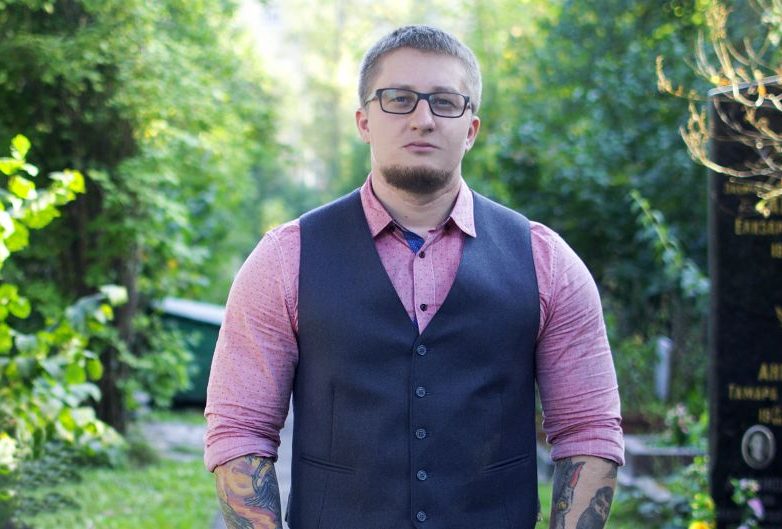 Sergey Mokhov Photo: From Personal Archive
In the 20th century, death became one of the most popular elements of popular culture: according to Mokhov, Disney cartoon with dancing skeletons involuntarily refers the viewer to the medieval dance of death. It seems that in the last century the signs of the other world have become more interesting than the body of the deceased. The fetishization of the funeral reached former European colonies: “In Ghana, hobby for expensive funeral accessories led to the emergence of special art of constructing coffins in the form of fish, cell phones, football balls.” The dead turned out to be the same product as living, it was only important to convince the consumer of its aesthetic potential.
“Robert Wiles took a picture of the 24-year-old Evelyn Mcheil, who rushed from the observation deck Empire-promot-Building. The magazine “Time” called the photo “The most beautiful photo of suicide”. ” Death made not only beautiful, but also safe, and Mokhov traces as the word “coffin” (Coffin) is replaced by a neat and even tender word “casket” (Casket). ” “Katafalki is not called Hearses (grave), but by Funeral Coaches, that is, the“ funeral crew ”. The word “corpse” is replaced by “deceased” or “departed”. ”
However, critics of the death industry in the capitalist world are also known. One of the most powerful blows was the publication of Jessica Mitford's book “American image of death”. In 1963, the writer showed a funeral business as a business that turns a memorial culture into an indifferent conveyor.
They wrote that the style of her book "turned out to be so gloomy that the first publisher decided to terminate the contract with her." The work of Mitford and the social policy of European states have influenced the change in the attitude to knowledge of death. The policy of openness came to the fore - do not hide from a person what is happening with the bodies of his dead relatives. An example of a comfortable memorial industry is the Scandinavian model: “The church is the operator of cemeteries, crematoriums, farewell halls, while there are no obligatory religious rituals and symbols”, the funeral passes through the lifetime tax, the state pays for the morgue. All this became possible thanks to northern socialism.
Mokhov collects the funeral everyday life of Europe as one of the main puzzles of our history, not only for educational purposes. At the end of the book, he overtures the reader into the pre -revolutionary, Soviet and post -Soviet Russia. The funeral business in our country is only starting to take shape by the end of the 19th century, and with the advent of the Bolsheviks, the death industry is abandoned and not important. The Soviet government often forgot about cemeteries in planning new cities: the first residents of Magnitogorsk, "arising in 1929, used local rural graveyards for the funeral of the city builders and deceased citizens. The first funeral bureau, the only one in the whole city, occurs only in 1931. The Magnitogorsk Worker newspaper announced this on February 23, placing the following announcement: "A funeral bureau was organized in Magnitogorsk, which accepts orders, has coffins on sale, digs graves." Grave plates from old burials were sent into processing and turned into shutters for sidewalks, residential areas (skyscraper “Tower 2000”) or parks were built on the site of the cemeteries.
From 1918 to 1930, crematoriums gained particular popularity in the USSR. “According to the protocols of the interrogation of Nesterenko in 1941, the director of the crematorium performed an important state function at night - he burned the bodies of the enemies of the people. For this he was paid 200 rubles a month. Thanks to the materials of this interrogation, we know that once the bodies of Zinoviev, Kamenev and Smirnov were brought to him. ”
The Soviet funeral industry looks sorry for the Western corporations and the social policy of the capitalist countries. Mokhov encounters two memorial crops to show the difference in relation to memory and private history in different states. Basically, we visit cemeteries on holidays: tint the fences, remove weeds, bring flowers - a significant part of the memorial culture today has become the repair of memory places. And the conclusions about the state of the funeral industry in Russian cities can easily be made during field research - to sit in the Pazik of the Ritual company and visit your dead.
Do you want us to send the best texts of “such cases” to you by e -mail? Subscribe to our weekly newsletter!
Books