
Translated material
How Ulyukaev can be released. And can
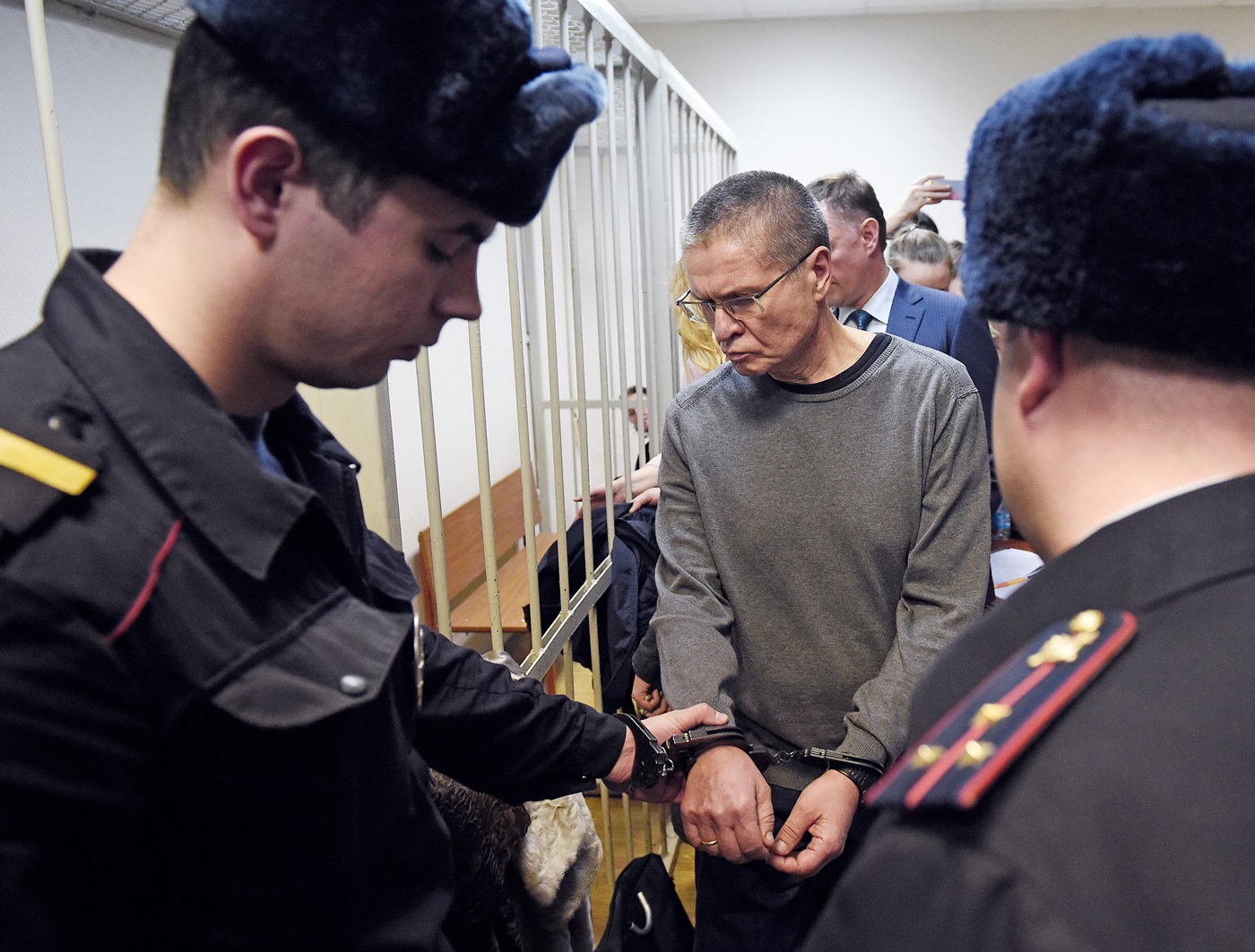
Alexey Ulyukaev in court on December 15, 2017. Photo: Dmitry Korotaev / Kommersant
An hour after the announcement of the sentence, the ex-minister of economic development Alexei Ulyukaev, the TASS agency, citing an unnamed source reported that he could be released due to health reasons. Mediazona weighed his chances taking into account the practice in Russia.
An hour after the announcement of the sentence to the former Minister of Economic Development Alexei Ulyukaev, the TASS agency, citing a source in the judicial system, reported that he could be released from punishment for health reasons.
“Ulyukaev can be exempted from serving sentences in the colony due to the presence of diseases in him, which prevent the detention or serving a sentence of imprisonment, in accordance with the current government decrees,” said TASS interlocutor.
According to the Decree of the Government No. 54 “On the medical examination of convicts submitted for the release of serving a sentence in connection with the disease,” the list includes 57 diseases that impede the serving of the sentence. They are divided into several groups: tuberculosis and HIV, neoplasms (malignant formations of stage IV, all forms of acute leukemia), diseases of the endocrine system (such as a severe form of diabetes with the need of insulin more than 60 units per day), chronic mental disorders (psychoses and dementia), diseases of the nervous system and organs (vascular diseases of the brain and spinal cord, brain and spinal cord. Diseases of the central nervous system are severe paralysis, deep paresis, disorders of the functions of the pelvic organs, meningitis, encephalitis and others), diseases of the eye (blindness, a pronounced decrease in visual acuity), diseases of the circulatory organs (for example, expenery atherosclerosis), respiratory diseases (bronchial asthma, cystic fibrosis), digestive diseases) (liver cirrhosis), diseases of the urinary system, diseases of the bone muscular system, congenital malformations, acute and chronic radiation disease of the IV degree.
When choosing a preventive measure in November 2016, Ulyukaev mentioned that he has a certificate of atherosclerosis, dystonia and diseases of the vascular system. During the debate for illness, ex-minister asked to pay attention to representatives of the prosecutor's office; Judge Larisa Semenova took into account this in the verdict. As the defender Larisa Kashtanova noted, according to the conclusion of an ophthalmologist of May 4, 2017, the ex-minister has a suspicion of retinal rupture, initial cataracts and an angiopathy of the retina. The cause of these diseases may be diabetes and other diseases, follows from a conclusion. However, during the process, Ulyukaev’s lawyers did not talk about the diseases of their principal, which would prevent his content in the colony.
Member of the Moscow Supervisory Commission Eva Merkacheva, in an interview with RIA Novosti, noted that the verdict of Ulyukaeva "will be canceled or replaced by a softer."
“Given his age and health, eight years of colony can become fatal for him,” Merkacheva said. “But nevertheless: ten years of strict regime for a person of 62 years old are not very different from the death sentence,” said Ulyukaev himself in his last word.
Practice
In practice, in recent years, according to the petitions of prisoners to release due to illness, the courts made positive decisions only in relation to every fifth: in 2013 the courts satisfied 26.85% of the petitions (1,589 petitions), in 2014-22.1% (1,407 petitions), and in 2015-21.8% (1,477 petitions).
In 2016, according to the Deputy Director of the Federal Penitentiary Service Valery Maksimenko, prison doctors sent materials to the courts about the release of 3,497 seriously ill prisoners - they satisfied 1,688, that is, 48.3%.
Last year, Prosecutor General Yuri Chaika pointed out high mortality in colonies and pre -trial detention centers: in 2015, 3,977 convicts died in the FSIN institutions. “Moreover, 87% of persons died from various diseases, including due to a weak medical base, slow updating of the equipment, the absence of some types of medical services,” Chaika said.
The head of the human rights organization “Zone of Law”, which provides legal assistance to seriously ill prisoners, Sergey Petryakov told Mediazone that in most cases the prosecutor's office opposed the release of a seriously ill prisoner. Judges are also rarely favorable to such convicts.
“There are regions where (courts - MZ) are allowed to survive the last days, weeks free. There are regions where they are not released, ”said Petryakov. “One convicted person filed six such petitions, each was considered, each resolution was appealed to them, only for the sixth time he was released, and after two weeks he died.”
As the human rights activist explained, in 2015 the Supreme Court published a resolution of the Plenum, which stated that the decisive criterion for the judge when considering applications for the asset should be the presence of a serious illness with the applicant. However, judges still make refusal decisions, referring to the fact that the convict, in their opinion, has failed. “There are judges who follow the representatives of the prosecutor’s office and make refusable decisions on the grounds that the serious condition did not prevent the convict from committing a crime,” says Petryakov.