
Translated material
"I thought I would die tomorrow"
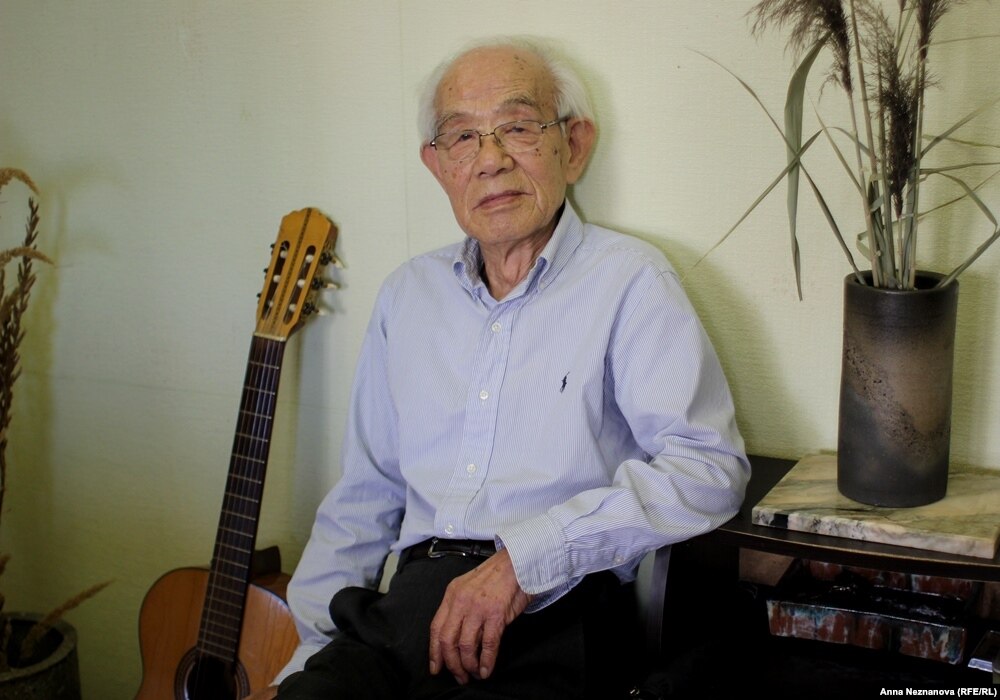
The former soldier of the Kwantun Army Takesi Tanaka was 68 years old, when he suddenly abandoned his small business in Tokyo, his usual life and moved to Khabarovsk to stay here forever and care for the graves of Japanese prisoners of war, who found their last shelter in the local cemetery. Takesi himself miraculously escaped this fate. In that war, he managed to fight for only three months and in 1945, like thousands of his comrades, he fell into Soviet captivity. In 1956, together with other surviving prisoners of war, Takees was able to return to Japan. And after several decades he decided to move forever to those places where he spent 11 years in captivity. This year Taesy Tanaka will turn 90 years old.
“Takesi-san, tell us how you were captured?”
- I remember we were all in a brand new pure form, with an cleaned and greased weapon. We were surrounded by overgrown rude men in burned with the sun and dirty tunic with worn machines at the ready. These ordinary guys were not like a strong army. It was not clear to us young Japanese why the Russians won. I thought that my life was ending on this. But at night I heard conversations and Russian songs that these military who guarded us sang. And I liked these songs. And gradually, despite all the horrors of captivity, I realized: "The war is over, and I will probably live!"
- You got to the front with a very young man. What do you remember about your pre -war childhood in Japan?
I always hated everything related to war
- I was born and raised in Nagasaki. My father was a diplomat, but during the war he was removed from his post for some reason and he simply worked in several companies in Shanghai and Singapore. And then, when I was 12 years old, my parents died. First mother, then father. They had serious problems with the lungs, and then we could not afford medicines. I had such a life start: we became orphans. The older sister of my mother took me to educate me then. We lived in a small village on the Simabar Peninsula. Her family treated me with great sympathy, but I did not like it. I was very proud, entered and did not allow me to be spared.
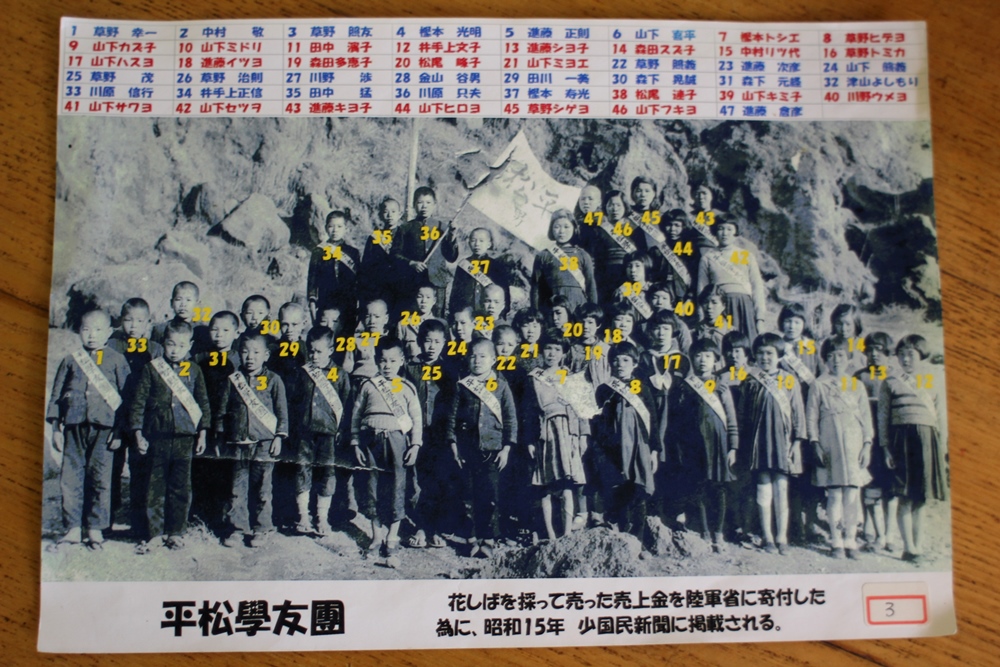
In Simbar, I went to school, where I was a round excellent student, part -time led the children's friendship society. We did something in the style of your Timur and his team, just had fun. After graduating from high school, I moved back to Nagasaki and lived there in a student dormitory.
- How did you find yourself at the front?
- I worked on the railway in Dalyan, from there in 1945 I was called up to the Kwantun Army as an ordinary. Nobody asked me, then during the war there was a universal mobilization, even untrained youths were recruited. A terrible time began. I always hated everything that was connected with the war, despite the general sentiments that then reigned in Japan, never dreamed of a military career. But no one asked me. And a few months after mobilization, I was captured.
- Nagasaki was erased from the face of the earth a year after your drafted into the army. Have you ever been to home after that?
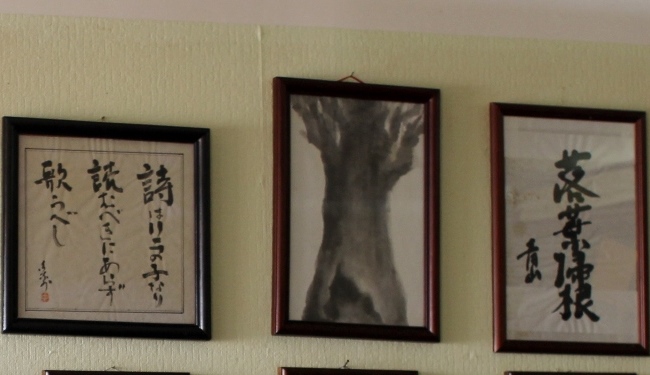
- Once I visited there. This was 70 years after I was taken to war. There was nothing left of the former Nagasaki, whom I remembered him. Everything is lost, absolutely everything. At home, streets, buildings-everything has disappeared somewhere, now everything is new there. I found only one tree that I remembered since childhood. Perhaps it is still alive.
-Tanaka-san, can you describe your life in captivity? What helped you survive?
Survived the most emotional ones who knew how to contemplate and possessed the power of the spirit
- The first and most vivid impression is a dog cold. The work was very hard - the forest was poured for 12 hours. We work hard from eight in the morning to eight in the evening, every day. They climbed at the sixth in the morning, ate a liquid soup and went to the forest. At first we were thrown on Haragun, this is under Chita in Transbaikalia. It was November, a terrible cold, darkness. The prisoners were planted in the middle of the field, around - only snow. To keep warm, we began to breed huge bonfires and dig dugouts, in which 20 people slept. In the first winter, almost everyone died, I had to bury friends.
In Haragun, I spent nine months, and then we were sent for another three months near Birobidzhan, mow grass. I spent the remaining three years in captivity in Khabarovsk and Komsomolsk - I built houses and worked on the railway, unloaded coal, and poured the forest. Many buildings we built are still standing. The most famous are the Academy of Civil Service and the Medical University in Khabarovsk.
- What did you think about, being a completely boy in distant Russia, in captivity? You hoped that you could return to your homeland?
- In those years, I did not think about anything at all, and I had no experience - only school and military. There were 500 soldiers in our battalion, of which almost 30% died. Many of my friends died in Haragun, but the survivors slowly got used to life in Russia: to hard work, to monotony, which brought to madness, to wild cold.
"Why is this dead, and this is not?" I asked myself. You finish the work, only snow and the red sun, going beyond the horizon. You look at him and cry - you are an emotional person, and the other does not think about anything. They survived the most emotional, who knew how to contemplate and possessed the power of the spirit. And strong in the body, but the unemotional ones became weaker and died - the body is strong, there is no soul.
“Was there still something else in that of your life, except for the horrors of captivity, hunger and cold?”
- In Komsomolsk, we got to the concert of the Russian military orchestra. Then I first heard the melody "on the hills of Manchuria." I did not understand the words of this song, I just listened. And for some reason she caused me tears. Then I realized that I was hungry not only with my body, but also with my soul.
In 2016, I again arrived in Komsomolsk-on-Amur, this time I myself gave a concert. And then, during the greeting, I told my listeners that I visited here for the first time at 19 years old and met with the song "On the Sovetness of Manchuria." I really wanted to find the conductor of that military orchestra. I even asked one grandmother if she knew him what was with him, is he alive. She did not know.
- You were able to return to Japan only in 1956? What did you feel when they were in their homeland?
- I was very happy when I returned. I began to live in Tokyo. He worked as a journalist and even began to release his journal "Creativity". It was a journal about instruments and their connection with a person. In Japan, I developed a special synthesizer, and a small factory of my friend released a series of these synthesizers, which was called “Tanaka”.
I looked at her from the porthole and realized that I was drawn to these lands
Even in Haragun, I began to make wood. But, of course, my health was undermined by years of captivity. Everyone then thought that I would not stretch for a long time. But to live, a person just needs to want to live. I understood this in captivity. And this captivity did not end for a long time. And after the liberation, I understood that I was still walking the road that began in Haragun with the thought of "tomorrow I will die." And you just need to go this path and live.
- Why did you decide to leave Tokyo and move to Russia again?
- I don't know myself. Everyone asked me a question: "Mr. Tanaka, why did you return here?" I was already retired then, went 1995. Maybe all due to the fact that in Nagasaki we had a cemetery of Russian sailors who died in the Russo-Japanese War. And I always felt something special, being there.
In 1971, my colleagues-journalists flew from Tokyo to Moscow. They flew over all of Russia, and while everyone was sleeping, I looked out the window at the endless Siberian taiga and recalled my dead comrades, who forever remained in this earth. Another reason why I did not sleep is Siberia itself. I looked at her from the porthole and realized that I was drawn to these lands, in these immense lands, where, it happened, my youth passed. And I decided to return to Siberia in order to devote the rest of my life to the care of the graves of my comrades, who were unlucky to survive in that captivity.
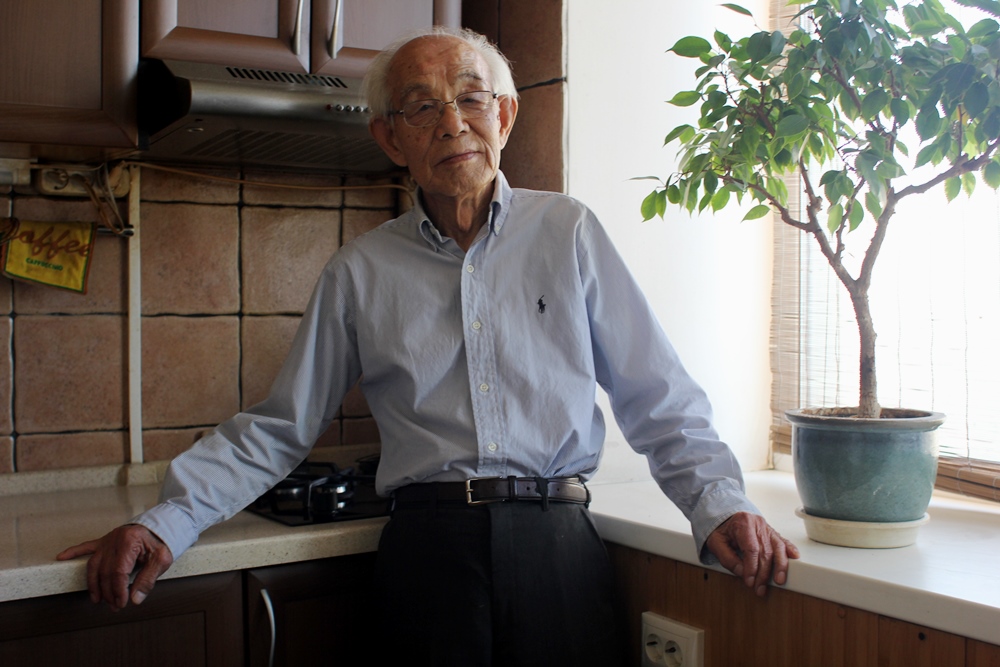
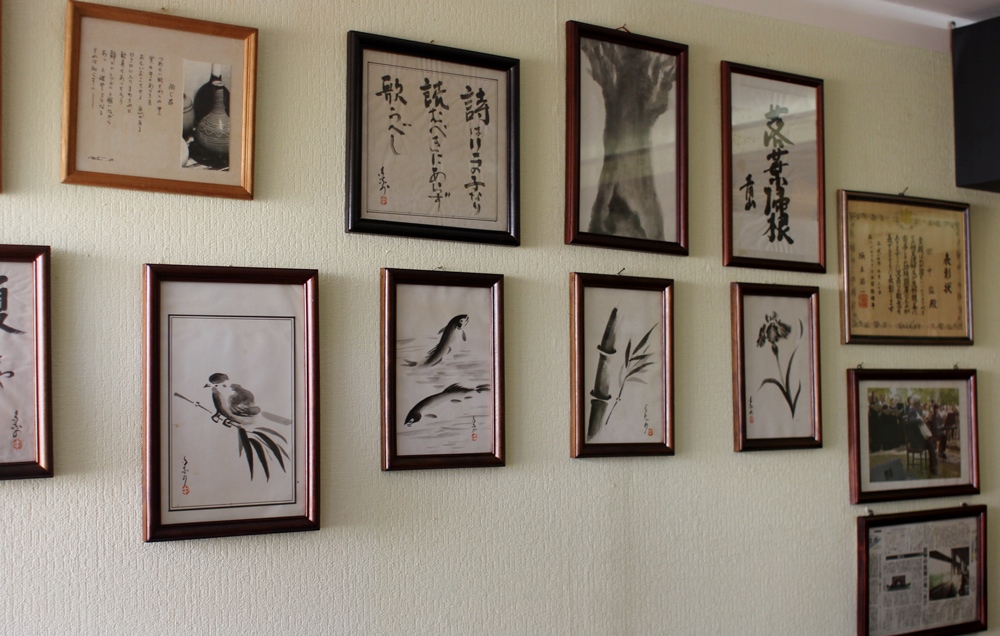
Having made this decision, Takesi Tanaka in 1995 bought an apartment in Khabarovsk and moved to live in this city. For more than 20 years, Taxesi has Russian citizenship. In Khabarovsk, he lives on a large Japanese pension by local standards, which, according to Takeesi, is enough for him to do anything that is necessary. Here he teaches Japanese, sings the songs, playing himself on the very synthesizer of Tanaka, draws, once a year for a week flies in Tokyo to children, grandchildren and to the grave of his wife. And he always returns back to those places where, so it turned out, his youth passed.