
Translated material
Out of the cracker
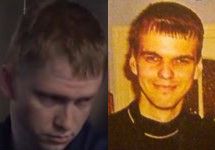
The former employee of the FSB Information Security Center Dmitry Dokuchaev, arrested in the Gosizmen case, denies his acquaintance with Hacker Konstantin Kozlovsky, RBC reports . Hacker accused Dokuchaev of initiating cyber attacks for the resources of the US Democratic Party.
“I deny my acquaintance and communication with Kozlovsky and, accordingly, any cooperation with him,” Dmitry Dokuchaev reported through his lawyer.
On Monday, The Bell, citing Kozlovsky acquaintances, reported that the hacker arrested in the Lurk fraud group admitted to hack the resources of the US Democratic Party on the instructions of the FSB . Kozlovsky said this on August 15 in the Moscow City Court at a hearing to extend the preventive measure.
As follows from the protocol of the court session published at the Kozlovsky FB page, at the hearing, the hacker said that, on behalf of the FSB, he hacked the e-mail of the National Committee of the Democratic and Electronic correspondence Hillary Clinton, as well as “very serious military enterprises of the United States”. Who posted this protocol and other documents did not specify the publication - the hacker itself is in the metropolitan pre -trial detention center -1 "sailor silence".
According to Kozlovsky, from the age of 16, Dokuchaev, who seemed to Hacker Ilya, and his company, led him from the age of 16. According to Kozlovsky, they began to pursue him at the initiative of the FSB and the "Kaspersky Laboratory", which are in this case.
In a letter from a pre -trial detention center of November 1, 2016, a hacker tells how in 2008 the FSB officers detained him for hacking e -mail and, under the threat of persecution, forced him to cooperate with a special service. Kozlovsky claims that on the instructions of the special services he hacked computer networks of Western industrial enterprises, state and military structures, banks and exchanges, sports organizations - the International Olympic Committee, the World Anti -Doping Agency and FIFA, power plants, and also gained access to the sites of the largest media and their accounts on social networks. The hacker said that he was asked to create a “red button” - a kind of “technical solution that allows you to create a massive destruction of infrastructure” in the US and the European Union. However, he refused to do this because he did not want to "be related to the beginning of the Third World War."
After the refusal, the letter says, the special services first warned the hacker that for him it would "do not end with anything good." Then, after a second refusal, Dokuchaev disappeared for a while, and the hacker was detained and transferred to Moscow after a while.
According to the US intelligence services reports, last year’s hacking the Democratic Party, there was a hacker group of Fancy Bear, related to Russian GRU, and in the summer of 2015, the Democrats were able to steal another group of crackers, Cozy Bear, controlled by the FSB.
The FSB announced the detention of 50 participants in the LURK group, including Kozlovsky, on June 1, 2016. According to investigators, with the help of the Lurk virus, the group since 2011 stole about 1.7 billion rubles from the Rosia financial institutions. According to the plot of the case, Kozlovsky was one of the leaders of scammers. Articles 159.6 (fraud in the field of computer information) and 210 (organization of the criminal community) of the Criminal Code are charged with other alleged participants in LURK.
In December last year, the senior operative of the FSB QIB Major Dokuchaev (former Forb hacker) was arrested in the case of Gosizmen (Article 275 of the Criminal Code; from 12 to 20 years), together with the deputy head of the center, Colonel Sergei Mikhailov. This became known only in January. The defendants of the case are accused oftransferring information about Russian hackers of transferring .