Translated material
Ring of Russian history
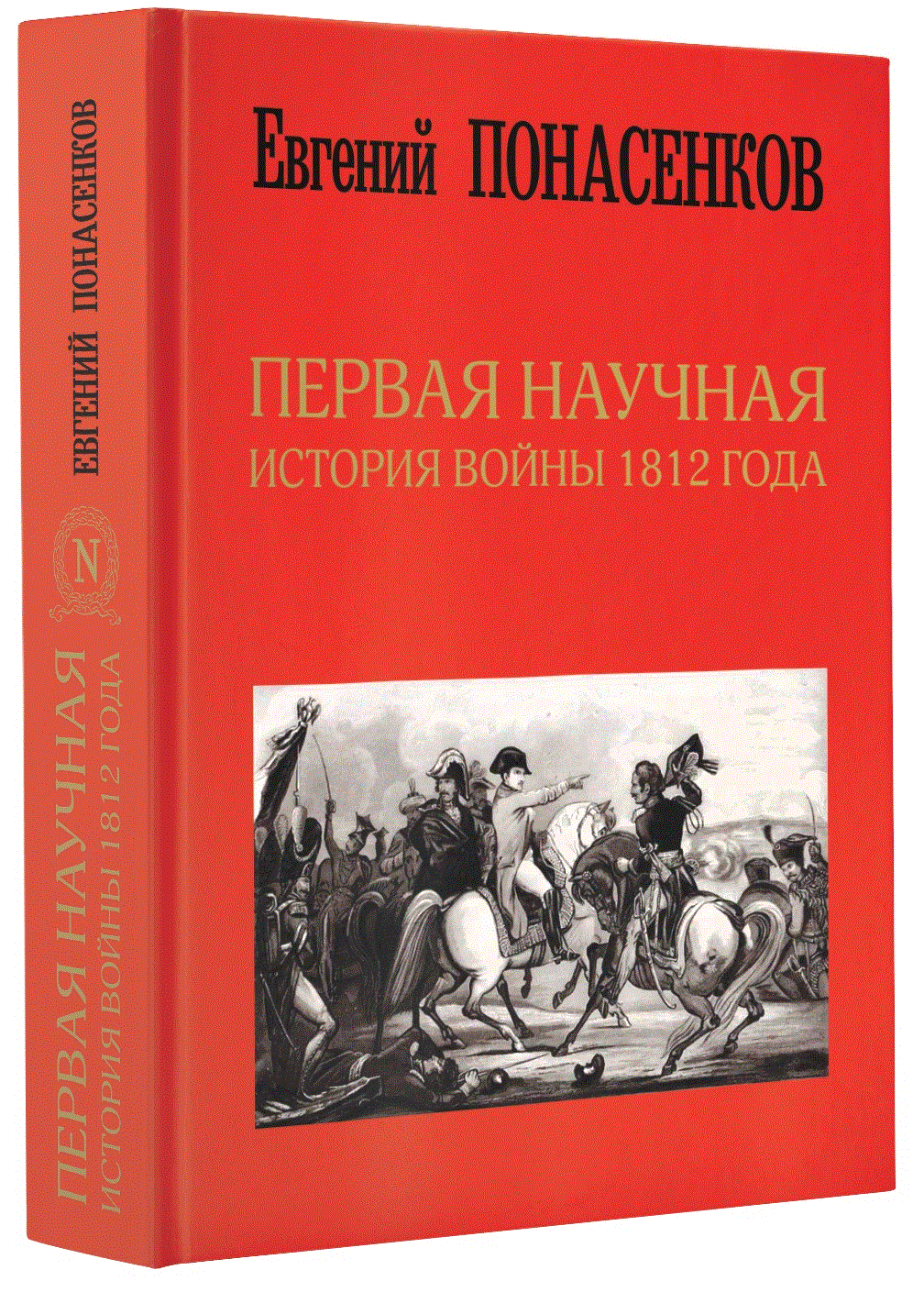
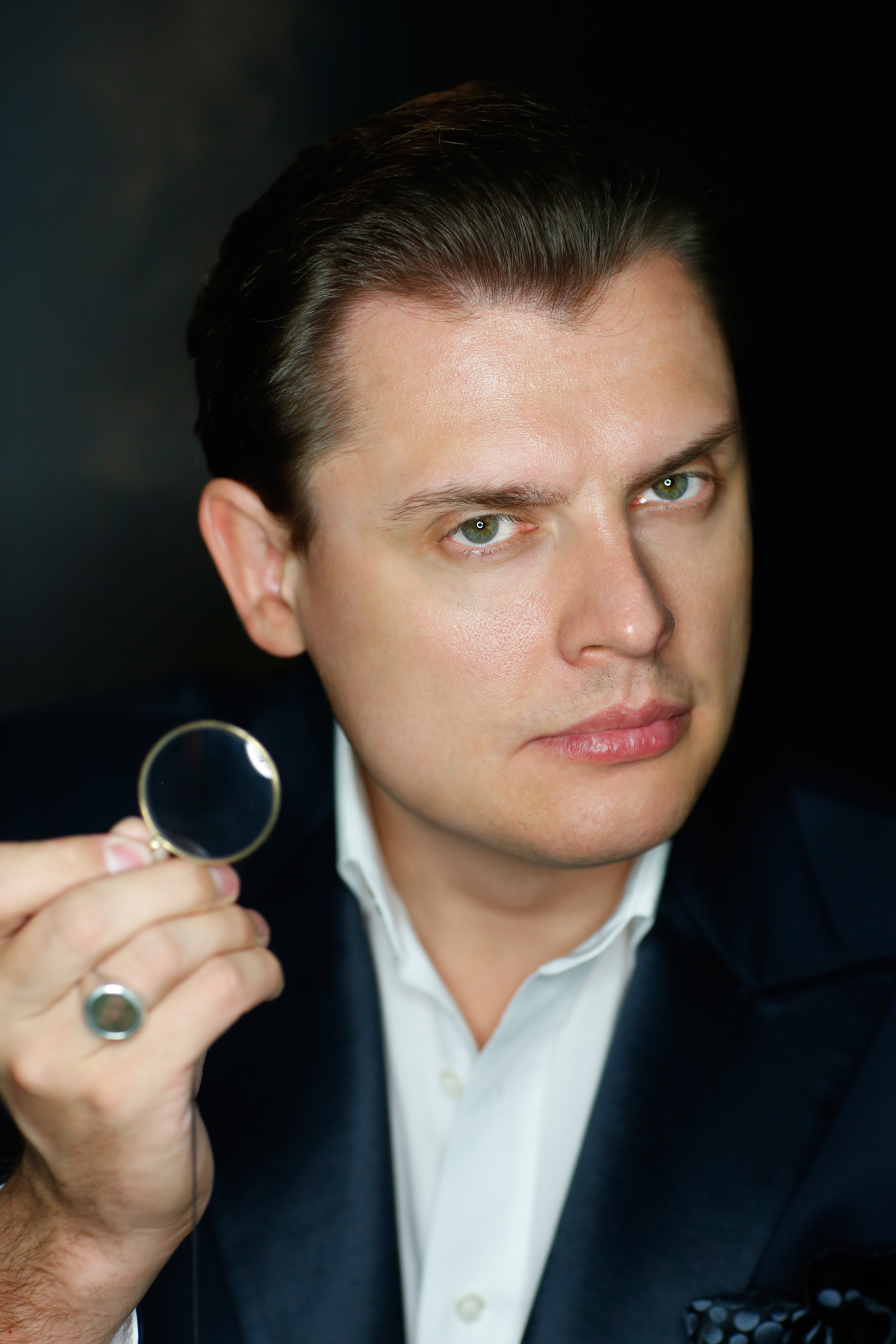
The publishing house of AST published a book by a historian, publicist and director Yevgeny Ponasenkov "The First Scientific History of the War of 1812."
“He who controls the past runs the future,” the author recalls the slogan of the totalitarian state described by George Orwell, and talks about how the history of the war with Napoleon was falsified - both in the 19th century and in Soviet times - to hide the defeat and failures of Russia.
The conversation with Evgeny Ponasenkov was recorded before the Moscow presentation of a book, the materials for which he collected 15 years, looking for thousands of documents unknown to historians in the archives.
- Eugene, your book about the distant past, about the events that took place two centuries ago in Tsarist Russia, during the time of Alexander I, but it is about today, isn't it?
You can do anything with this population, as Russian generals did, burning all cities in a row
- Undoubtedly. In addition, this is not such a distant past. I measure the story of Zeldin or Yuri Lyubimov: I lived one 101 years old, the other 97 years - these are only two Zeldin or two loves ago. There are the same people, there are few anthropological and sociocultural changes. Serfdom was not canceled in 1861, peasants in the USSR began to give passports in the late 70s. The essence of social life has not changed yet. Again, the absolute monarchy, limited only by murder (as Paul was killed and, possibly, killed Alexander). Until the moment, until they beat it, a person does anything with an unlimited resource, and absolutely without control by the population. With this population, you can do anything, as Russian generals did, burning in a row all cities during the retreat.
- Why did they do it?
- It is difficult to explain from the point of view of logic, why Russian generals burned their own cities, even before the Russian population left there. This is an absolute crime. This is not even the tactics of scorched land, there was no tactic, because they fled from the army of Napoleon by chance, no plan existed. All plans have been offensive, since 1809. In October 1811, Alexander I gave orders for a speech on a campaign to all Russian armies, which stood for more than a year on the border with the Duchy of Warsaw. The corps had already begun movement, but at the last moment a message came from the king of Prussia Friedrich Wilhelm III that he was afraid to go to the adventure again, because already in 1806 Prussia and Russia fought with Napoleon - and Prussia was broken, and Russia was broken. And Alexander I canceled his own decrees, withdrew the Russian corps that had already gone on a campaign. Napoleon, of course, found out about this, only after that he begins to seriously prepare for war with his official ally of Russia.
- That is, we can say that Russia unleashed the war with France?
- Absolutely. Personally, Alexander I. At the same time, what was monstrous, in the same 1811, in order not to somehow scurry even, but to come up with patriotic feelings of the population, especially the Western provinces, the Russian government begins terrorist activities in its own cities. Kyiv was burned out, in Kyiv there was a grand fire in 1811, which occurred exactly according to the same scenario as in Moscow a year later. I describe this in detail with archival documents, with the memoirs of contemporaries. Fired by the Russian government, so that there were talk about scouts, spies, about the Poles. Naturally, no one believed this, but there was such an attempt. The most tragicomic is that Alexander I, when he did, was counting on the fact that he would go on the offensive now. And since he did not go on the offensive due to the fact that he was afraid to help Frederick Wilhelm, he simply pointlessly settled several cities in the western part of the empire.
- The same thing in 1941: they blew up a baptism, blew up a dam on the Dnieper.
Kutuzov was a comic, an octing general who had never won anything
- That's right. But there they blown up when military events began. Here they blown up for a psychological moment. Moreover, Speransky fell when he was sent to exile in Siberia, we misunderstood us. This was invented solely to injure hysteria about spies. It was necessary to show society that terrible spies are everywhere, even at the very top. Now all this falls into place. If we open the first history of the 1812 war, published in 1819, Akhsharumov, it already states that Alexander I was planning an offensive in 1811, that he even planned an offensive in 1812, when Napoleon managed to collect the army. We ourselves broke the situation, we began the conflict ourselves, and then we were frightened at the last moment. Alexander I did not know what to do, because he did not have talented generals, all the Russian generals lost to Napoleon: Kutuzov in 1805, Bagration in 1807. There were no Russian generals. He proposed to command the Russian army, Wellington, sent proposals to General Moro, the French emigrant who lived in the USA, and Bernadot, the traitor Napoleon, all three refused.
-But we studied, Eugene, at the school at the myth of Kutuzov, the great military leader. I learned from your book that this myth was created in the 20th century, created by Stalin.
In 1941, it was urgent for the people to come up with an excuse. Said: this Kutuzov, old man, is suitable
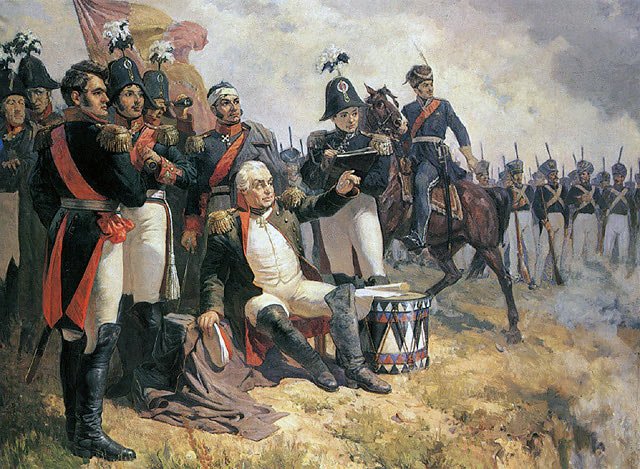
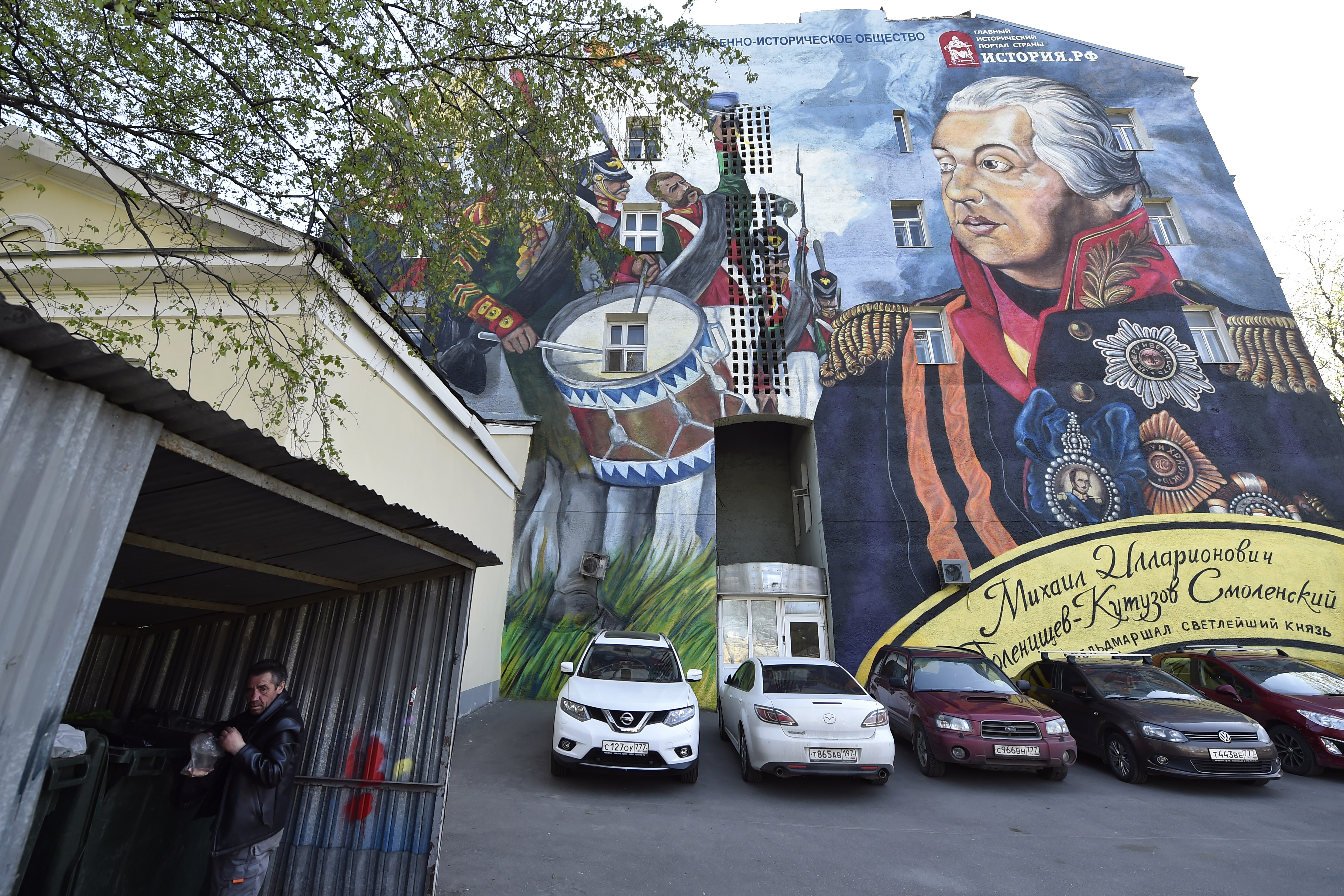
- Stalin is his architect and sculptor. Stalin, unlike some modern comic dictators, wrote his own speech, read a lot of things, although he was, of course, a monstrous pervert from life and politics. Stalin urgently needed when there was a shame on the retreat, a flight of borders in 1941, to invent some analogue in history that would justify this horror. Barclay de Tolli by last name and did not fit him, but Kutuzov approached, Kutuzov did not run away from the borders, he was generally appointed later. Kutuzov left Moscow and lost Borodino. But we can propagandaly say that no, we won Borodino. It is very good that they burned everything there, left - this is wonderful, but then the enemy left. Napoleon was not going to stay at all, he had no task not to stay in Moscow, even to cross the border initially, he just needed to force Russia to the world. He simply stepped on the escaping Russian army: where it runs away, he was going there. And here it was urgent for the people to come up with an excuse. They said: this is Kutuzov, this old man, he is suitable. Until the 1940s, not a single monograph, not a single scientific research was published about Kutuzov! Hundreds of thousands of Napoleon came out, a huge number of all the generals of the Napoleon era - Wellington, Blucher, Schwarzenberg, anyone, and not a single one about Kutuzov. Because it was a comic, an osoper general who never won anything.
- In 1952, someone Zhilin received the Stalin Prize for this myth of Kutuzov.
This ignorant evil creature, such a muzzle, was appointed director of the Institute of Military History after the Stalin Prize
- That's right. There was such a Pavel Andreevich Zhilin, who came from the village, who came to the first to react to a report by Comrade Stalin and wrote the brochure "Counterpoint of the Kutuzov Army in 1812." Although what could be a counterattack when Napoleon was 36 days in Moscow, no one touched him, he awarded the Order of the Legion of his soldiers on Red Square. Then it was simply pointless to stay, because he is still an emperor, he must rule from Paris, he leaves his own free will, goes where he wants, breaks Kutuzov near Maloyaroslavets. Kutuzov again runs from Maloyaroslavets to linen factories. Napoleon, of course, does not follow him, how much you can chase, he goes back, goes along the same road where he has communications, where his corps and garrisons stand. It just leaves Russia. Moreover, he takes two thousand Russian prisoners on Berezin, defeats Chichagov’s army, which Kutuzov does not come to the rescue: he avenged Chichagov for revealing Kutuzov’s corruption in a Turkish campaign. And now the village guy Zhilin writes a brochure, not knowing languages, not working with any French source. He writes "General Matthew Damas." This is Dumas he has Damas! Nevertheless, this ignorant evil creature, such a muzzle, was appointed director of the Institute of Military History after the Stalin Prize.
- I learned from your book that in 1962 a group of historians turned to Khrushchev with an appeal not to exalt Kutuzov.
They demanded not to erect a monument to him, not to call Kutuzovsky Avenue. But the Soviet government could not live without myths
- Yes, I publish these documents for the first time. In 1962, during the period of thaw, when it seemed to people that we could say something, a group of scientists, doctors of sciences and historians, participants in the Second World War personally addressed Khrushchev with a letter in which they actually brought my theses that Kutuzov lost Borodino, that he left Moscow without a fight that about 30 thousand Russian wounded were killed, burned out alive. They demanded not to erect a monument to him, not to call Kutuzovsky Avenue. But the Soviet government could not live without myths, including organized by Stalin. Because it was necessary to recognize the problems again in the Second World War, the whole system that lived on myths would break. After all, Russia as a whole is one large literary and propaganda myth. If literary myths to knock out from under Russia, then nothing will remain at all.
- You quote the Marquis de Custine, who wrote that history in Russia is part of state property. And a striking story talk about how the Russian government tried to bribe someone eminent in the West to write a response to the book of the Marquis de Custine, glorifying the Russian regime. They even wanted to bribe Balzac! It fantastically resembles today's Russia.
Russia Today began to act then, Alexander I tried to arrange a real propaganda organ in the West
- This is a lovely story. When the book was published, Uvarov wrote: "Urgently bribe anyone in France, eminent, not eminent, journalist." He wanted to refute his own tribesman from that side. But in the end they did not find there, it did not work out with Balzac, and made more cunning. Since the Russians already knew well French, one anonymous book about Kustin’s lies and the other under the pseudonym were printed for the money of the Russian government in the French province and began to spread in France. Few people paid attention to it, others laughed. But Russia Today began to act even then, Alexander I tried to arrange a real organ of propaganda of Russia in the West. Orders were given to look for ready -made collaborators. At the same time, the Napoleonic Paris newspaper Monitor printed almost all Kutuzov’s relations in two weeks. Kutuzov writes: "We brilliantly won the Battle of Borodino." As a result, a week later, the capital of Moscow takes place. It is clear that it is very profitable to print, because it looks incredibly ridiculous. This was all printed, and in Russia they tried for any word from the western press, planted. The famous case of Vereshchagin, the son of the merchant, who allegedly translated two paragraphs from some Frankfurt newspaper about how Napoleon successfully took Smolensk: he was reported, he was imprisoned in Moscow, to any court decision. When Moscow was left, the Governor-General of Moscow Rostopchin ran away from his mansion on Lubyanka along with the chest of bangs and spoons from the service of one French lady: in Moscow there were many French merchants, teachers and more, and the Governor-General of Moscow stole spoons from the service, deciding that it was possible. So he ran out, and there a crowd of drunk gathered, all the coats that were inspired by his own posters that he would defend Moscow. They began to pester him: Come on, lead us into the enemy. This did not inspire him at all, he needed to escape with money. Then he ordered to bring this merchant son, who was sitting on denunciation, said: here is the traitor, because of him we leave Moscow. Imagine! He ordered the police officer to chop him, he did not want to, he ordered a second time, and the crowd torn his shreds and dragged the remains of his body through the Kuznetsk post and further to the present Bryusov Lane, to the house where Meyerhold and his wife lived: she was killed there, and Meyerhold, as you know, also finished badly. Here is the history of the war of 1812, and the twentieth century, and the current one.
- You write that the truth is so shameful that none of the military leaders who lost the battles of Napoleon even wrote memoirs.
All the battles of the war of 1812, absolutely everyone was lost by the Russian army
-That's the whole thing! In addition to Ermolov, who in 1864 came out notes, and then not in Russia. Ermolov writes in open text: we lost Borodino's battle. And no one else wrote memoirs. A portrait gallery in the Winter Palace, hundreds of generals, but where is their research, where is their joy about their exploits? And there were no feats. All the battles of the war of 1812, absolutely everyone was lost by the Russian army. Napoleon did what he wanted, he came and left. There are no presses, the peasants do not know how to read, and we can declare anything with the victory, just declare, and that’s it. These three hundred people in the portrait gallery of the Winter Palace - no one wrote research or serious memoirs. There are a huge number of notes that are written in the table, there is correspondence, there are thousands of letters that I also publish, there is just an unpleasant truth. Raevsky’s wonderful letters, where he writes how they fled from the borders, how everyone lost each other, how Bagration stopped obeying. Bagration officially sent plans for the offensive in order to ruin the Duchy of Warsaw and advance to Paris in 1810-11, and when Napoleon crossed the border, Bagration was the first to run to Smolensk. Alexander tried to get to him, but Bagration disobeyed the order not only to advance, but even to stay in place. That is, Bagration was the first to take this flight, but he, however, had no other chance, because the Russian army stood in the combat deployment of an offensive, and not to retreat, so the army was divided. All the generals warned Alexander: either we are advancing, or we must do something. But Alexander did not know what to do, because he was refused by all the Western generals whom he offered to command the Russian army, and he knew the Russian generals very well, he knew that they were not able to command serious battles with the European army. When everyone refused, he was left without the commander in chief. At the beginning of the war, there was no single commander in chief, Alexander I was the official commander. He shamefully fled from the army, served in St. Petersburg. Alexander's life hung in the balance. I give documents and correspondence to my mother, sisters, Arakcheev, who perfectly understood that if Napoleon had stayed for another month in Moscow, then Alexander would simply be killed by the palace coup in St. Petersburg.
- And in parallel there was another war - peasant, one can say civilian.
- This is my discovery. For about 18 years, I dug this topic in the archives and eventually made a detailed description of this war. It took place in 35 provinces, and there were 42 in total, that is, most of the empire was in the civil war, in the peasant war. I made a schedule right up to some villages, which were peasant detachments, under whose commands they were suppressed. The rebellion of the peasants in Penza was crushed terribly. Russian soldiers pulled out nostrils, eyes to the peasants. But the peasants themselves did a lot of things there, because they said that this is not Pugachev’s uprising, we will now cut you all. They arrested the officers, locked them into the fortress, attended them, killed landowners and so on. I describe all this, quote documents. Almost the entire peasant population participated in the civil war in Russia. Another question is that this was a very short period. If Napoleon had lingered for another month or two, then the power would have changed, specific people would have changed for sure. The civil war did not fade either or after, because the uprisings, peasant riots took place every year. In 1812, this acquired a rampant character. In the Moscow archive, I revealed marvelous documents, the reports of 20 Policesmasters of Moscow stating that on September 1 and 2, the Russian soldiers completely plundered Moscow, who had almost a third deserted after the Borodino battle, after the defeat, and the peasants near Moscow. The remarkable letters of the nobles, including assistants and Rostopchin himself, about how they cannot do anything, because Russian soldiers and peasants with them endure the atmosphere of the house and furniture. And not just taken out, but also broken out of anger. Such a hatred was to Muscovites and nobles.
- You write that the very definition of the “Patriotic War” arose much later. About the same thing happened in the twentieth century, when Brezhnev began to create a cult of victory.
The country is outlined, a country with complexes, the same thing is generated every day
- Undoubtedly. When the participants were alive, it would be comic to invent such things. But Nicholas I, after the unsuccessful reign of Alexander I, found himself in a situation of complete collapse, and it was necessary to produce either reforms that he was not capable of, or twist the nuts. Naturally, he chose the second. А как закручивать гайки? Конечно, нужна идеология. Поэтому самый известный гомосексуал России граф Уваров изобрел эту дивную триаду "Православие. Самодержавие. Народность", придумал это на французском языке между переводами греческих классиков. Николай приказал изобрести этот миф об Отечественной войне, заказал его Михайловскому-Данилевскому – это адъютант Кутузова. Михайловский-Данилевский никогда в огне не был, это был такой блатной мальчик, который воспитывался в немецкой школе, учился в Европе. Был адъютантом Кутузова, никогда не воевал. Он написал огромное четырехтомное исследование, где умудрился стать б о льшим баснописцем, чем Крылов. Так его называли сами участники событий. Над ним смеялись все, но смеялись между собой, а никто напечатать не мог эти смешки, поскольку было Третье отделение. Далее эта концепция обретает плоть. Даже термина такого не было до издания книжки Михайловского-Данилевского про Отечественную войну. Официально по документам война была закончена в 1816 году, когда уже прошли все репарации, контрибуции после вступления европейских союзников по антифранцузским коалициям во Францию. И все наградные документы об этом свидетельствуют, я все цитирую. Что касается Михайловского-Данилевского, там есть планы наступления Александра I в 1811-м и начале 1812 года, это не казалось чем-то, что необходимо скрывать. Они скрывали восстание крестьян и то, как дворяне и русская армия гасили в крови эти восстания православных людей.
– Всякий раз убеждаешься в справедливости утверждения, что в России каждые пять лет меняется все, а каждые двести ничего.
- Absolutely. Я думаю, к сожалению, это будет еще очень-очень долго так, потому что страна на отшибе, страна с комплексами, генерируется каждый день одно и то же.
– Появляются люди, которые говорят от имени будущего, от имени молодежи, говорят, что пора все менять. Если Алексей Навальный делает это на митингах, то Ксении Собчак внезапно разрешили выступать на госканалах и говорить почти все, что она думает. Спрошу вас, как частого гостя телеэфиров и человека, знающего кухню этих ток-шоу, что все это значит и следует ли на что-то уповать?
Кремль всегда умудряется бить сразу по двум зайцам и, как ни странно, эти гады попадают
– Святые русские люди с загадочной русской душой, которые еще на что-то уповают! Но я не частый гость эфиров, я несколько раз был только на одном ток-шоу на НТВ, и то последние два месяца они меня не приглашают именно потому, что я везде рассказываю, что нынешнее выдвижение Собчак – это проект Кремля. Я к ней очень хорошо отношусь, но здесь настолько все очевидно и как-то п о шло сработано. Хотя вот видите, это же сработало даже на так называемую часть креативного класса: мои знакомые, вроде бы не сильно шарахнутые об стену головой люди, говорят: да, действительно, надо поддержать. По приказу сверху ей расчистили все, поставили тут же во всех ток-шоу, убрали всех прочих спорщиков, оппонентов. Да, естественно, ее шельмуют. Кремль всегда умудряется бить сразу по двум зайцам, и как ни странно, эти гады попадают. Обратите внимание, на Донбассе решается не только проблема против Украины, но на Донбасс были так или иначе спущены и выкинуты из России огромное количество крайних националистов, которые могли бы здесь быть очень опасны для власти в плане расшатывания ситуации.
– И там их прибили.
– И там их прибили! То есть они решили две задачи. То же самое и здесь: с одной стороны, повышается явка на выборы благодаря Ксюше, устраивается некая развлекательная ситуация для тех, кто мог пойти за Навальным на митинги, а вместе с тем шельмуется само понятие "оппозиционер" или "либерал", потому что вот, посмотрите, ее пьяные выходки, вот "Дом-2", образ оппозиционера только такой может быть. Таким образом Кремль действительно достигает одновременно двух результатов. Но он достигает их только потому, что те, кто называют себя оппозиционерами или оппозиционно настроенными, они, мягко скажем, не умны. Я сейчас после того, что началось с Ксюшей, думаю: черт с вами, если вы такие, живите тогда с Путиным, я же свою голову не приставлю.
– Да, Путин тут побеждает.
Чекисты умеют решать тактические задачи, а о стратегии они никогда не думают
– Он стратегически проиграл уже: полный крах экономики и идеологии, полный крах системы, ясно, что режим нежизнеспособен и это уже живой труп. Но живые трупы, которые ходят по ночам, к сожалению, еще долго после смерти могут делать гадости, что сейчас режим и делает. Тактически, да, получается. Можно, имея ядерное оружие и рабское население, оккупировать какую-нибудь территорию? Not a problem. Потом плохо жить под санкциями и прочее? Да, плохо, но тактически вопрос решен. Можно Ксюшей отвлечь и сделать фиктивные выборы? Can. Да, это сделает колосс на глиняных ногах и будет потом крах режима, все будет плохо, но это потом, это будет стратегически, а тактически проблема опять решена. Так что, видите, чекисты умеют решать тактические задачи, а о стратегии они никогда не думают.
– Если сравнить Путина с Александром I и Россию 2017 года с Россией 1812-го, что общего?
Путин – это человек бедный, из СССР, офицер КГБ, стесняющийся диктатор: что-то делает страшное и стесняется
– Общий народ. Правитель, так или иначе, часть народа. Александр I не был частью, это был немец, воспитанный исключительно на французских образцах, говорящий по-французски, который молился на Библии на французском языке и заказывал литургические приборы придворным архитекторам Наполеона. Путин – это человек бедный, из СССР, офицер КГБ, стесняющийся диктатор: что-то делает страшное и стесняется. Он не стыдится, но он стесняется. Он такой ленинградец из бедных, поэтому он всегда стесняется. Это очень разные люди, но по сути и тот, и другой могут делать все, что хотят, потому что народ ничего не скажет. Более того, если раньше крестьяне либо бунтовали, либо молчали, то теперь озлобленная масса (озлобленная на тот небольшой процент людей, который смог как-то начать хорошо жить в 1990–2000-е годы) кричит: а мы вам не позволим хорошо жить, вы будете жить, как мы, все в дерьме, ура Путину! Поэтому здесь только ухудшается эта ситуация.
– Тогда были крестьянские восстания, а сейчас восстают три дальнобойщика.
– Во-первых, уже нет крестьян, во-вторых, раньше они могли месяц спокойно восставать, до них никто физически не мог дойти, дороги плохие, солдаты приходили поздно. А сейчас БТРы и автозаки могут появиться через несколько часов. То есть техническая эра поменяла правила игры. У режима Путина есть все современные технические западные ресурсы. Это Третье отделение и КГБ, оснащенное изобретениями свободного Запада.
Mobile application Radio Liberty.It's not too late