
Translated material
"KGB cannot be reformed"
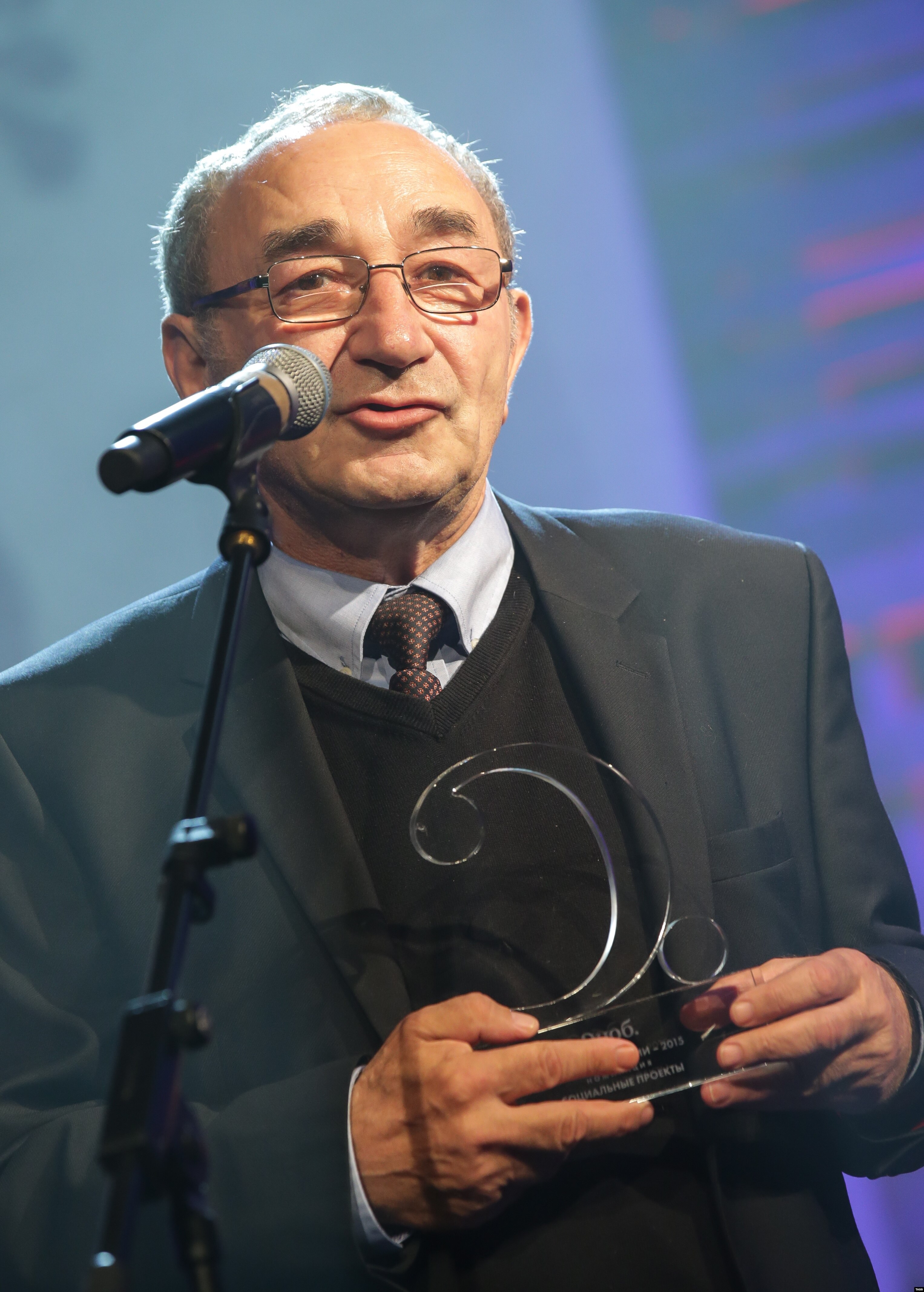
The brightest statements of Arseny Roginsky on the air of Radio Liberty
On December 18, Arseny Roginsky died in Israel - a Russian historian, human rights activist, public figure, chairman of the board of the human rights and charity society "Memorial".
Roginsky was born in the Arkhangelsk region in the family of a repressed engineer-Leninggrad, at the place of his exile. He graduated from the historical and philological faculty of the University of Tartu (1968) and lived in Leningrad. He worked as a bibliographer in the Public Library. M.E. Saltykova-Shchedrin, then a teacher of the Russian language and literature in evening schools.
In 1975-1981, he compiled and edited samizdat collections of historical works "Memory". On February 4, 1977, a search was carried out in Roginsky’s apartment. After a second search in March 1979, he was, at the request of the KGB, he was dismissed from the school in which he worked. In April 1981, Roginsky was strongly proposed to emigrate from the USSR, but he did not.
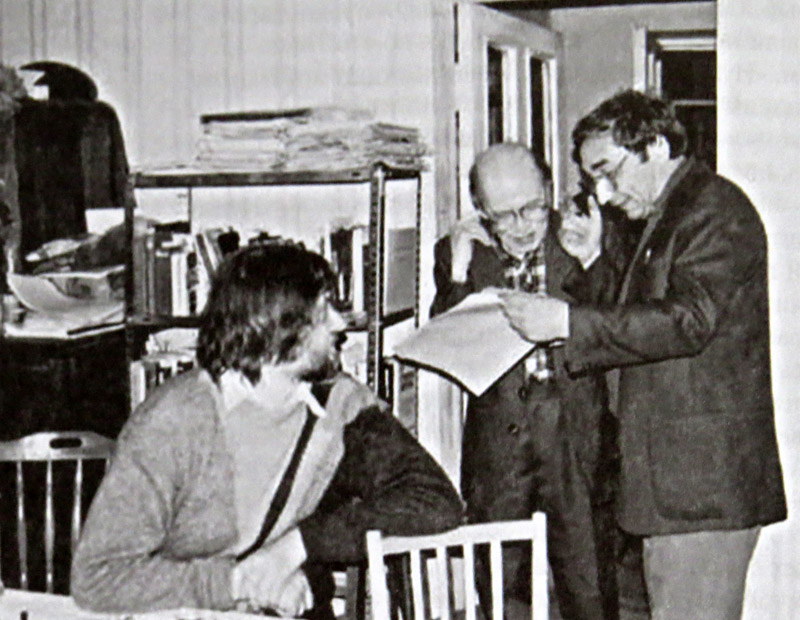
In 1981, he was arrested, sentenced to 4 years in prison of false charges of falsification of documents. Left the deadline completely; In 1985, he was released, in 1992 he was completely rehabilitated. In 1988-1989 He became one of the founders of the historical, educational, human rights and charitable society "Memorial", since 1998-the chairman of his board.
The voice of Arseny Roginsky sounded many times on the air of Radio Liberty - and in short comments on topical issues, and big interviews. Here are some of the fragments of these broadcasts:
1992, about the KGB after the defeat of the 1991 coup :
"For some reason, many people think that after August 1991 the KGB ceased to exist or became completely different. This is an absolutely incorrect point of view. A small reform occurred. Although, in principle, I think that those who have ever dealt with the KGB problem in life can confidently say: if there are organizations that are impossible to reform, then the KGB is the first of them. The first of them was completely previous. Generals, the deputies sometimes became the second deputies.
If there are organizations that cannot be reformed, then the KGB is the first of them
The KGB is currently acting, finally, on the basis of the law. This law is now a special situation, Yeltsin’s instruction, signed by him at the end of January. It seems to me that from many points of view, these legislative grounds for the actions of the KGB are very doubt. For example, one of the main functions of the KGB, according to this act, is the collection of information, analysis and forecasts for the country's leadership. That is, the KGB remains still an information structure, which can affect decision-making. The parliament almost does not control the activities of the KGB, there is no special commission, and the commission that should control, it is necessary to understand that this, firstly, is not a special function, and secondly, here is an example: the chairman of the parliamentary committee is the Deputy Minister of Security. That is, he controls himself. Of these three points that I brought to you, it is clear that the KGB remains dangerous for society and for the personality of the organization. This is the main conclusion. "
About the case of Raul Wallenberg:
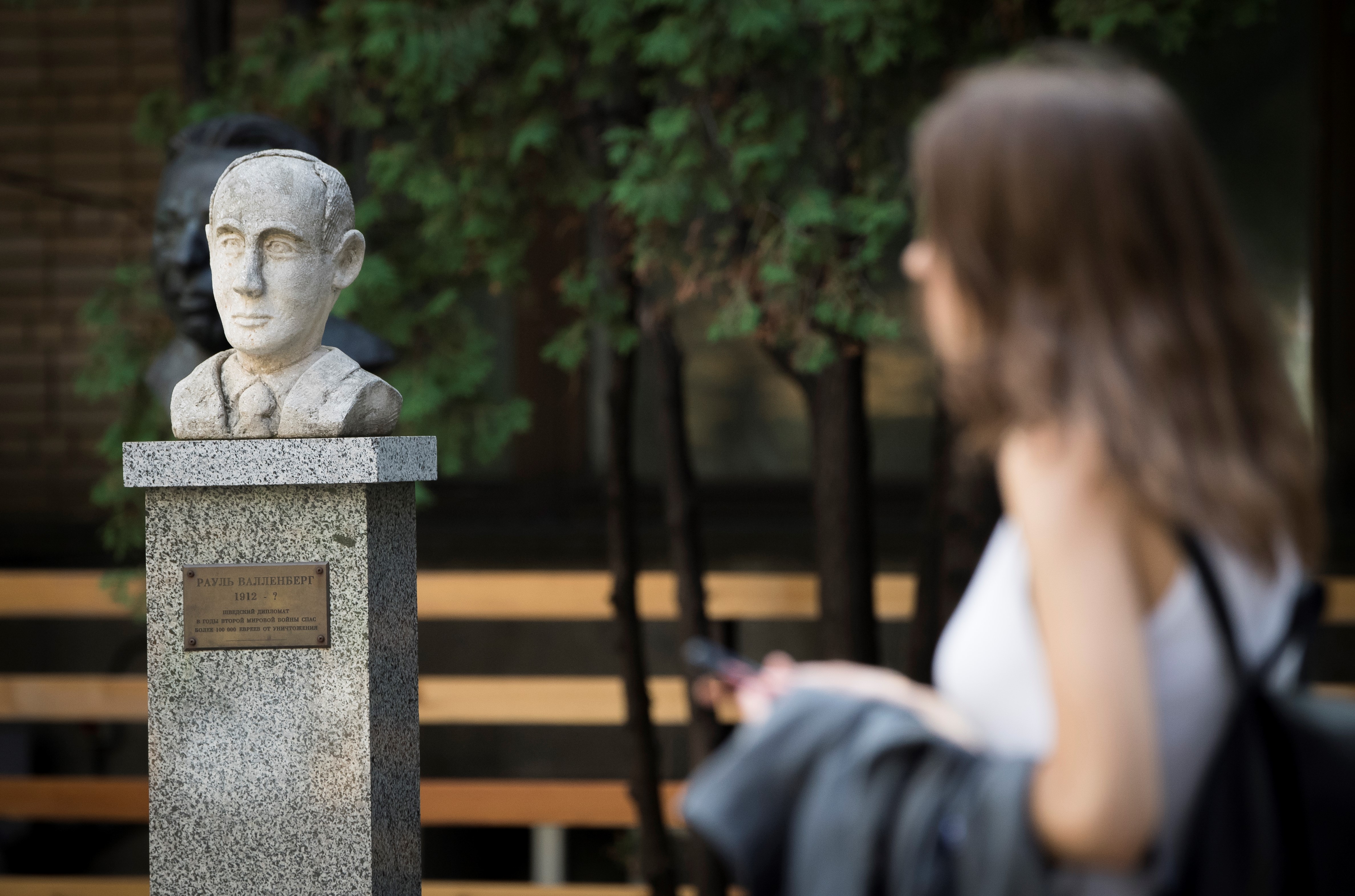
"Wallenberg is a very large figure and completely special in the history of the 20th century. We are happy to assist, to help everyone who is looking for the truth about the fate of Wallenberg. But what else is it for a" memorial ". Wallenberg was arrested, and this is a fact. And Wallenberg was gone, this is also a fact. We are engaged in the fate of people who suffered during the terror. Among these are these. It is not so few people who were arrested and then, it happens that the arrest was preserved only in family memory, but it happens that it is documented, but it is difficult to find out the further fate They opened a whole huge layer of sources associated with terror.
I recall 1990 and the first trip of our small group to Vladimir prison. Miraculously managed to get a work permit in a file cabinet. We went there, but did not know at all - and what we would find there, but how. Here is a prison, so we drove up to her, went inside and began to ask about Wallenberg. The prison officials who came from Moscow to be politely treated us, answered something like this: "You say exactly what you want, and we will look for ourselves." This is the same technique used by the current archivists in state, departmental Russian archives.
We were told: "Do you probably need a card index? We ourselves will find anything in it." And we did not know about any file cabinet. They did not want to let us at first to this file cabinet, but among us was a wonderful person, former political prisoner Mikhail Mikhailovich Molostyov. A very modest person who had to, as he later said, puff his cheeks, because he was a people's deputy of Russia, and the Russian parliament shortly before that was only elected. He began to demand, say: "I will call Yeltsin." And we were allowed to this file cabinet.
For the first time we saw cards that filled in special parts of the camps and prison on prisoners. This is one of the most important sources on the fate of the arrested people. In these cards, we first saw license plates in our lives. And then they realized how to find some cards with others, which of the prisoners under what number was listed. We saw that the cards reflected the transfer of prisoners from the camera to the camera. Marvin Makinen, who was with us then, did a very great work to monitor the intercom’s movement of prisoners, introducing many of these cards into the computer. There we also learned that there are personal affairs of prisoners. Before that, we knew about investigative affairs, but we did not know anything about the personal affairs of the prisoners.
Then we managed to get acquainted with the personal affairs of the prisoners already in Moscow, in the so -called special archive, now he is part of the military archive. We were given personal affairs of people who, obviously, at different times sat in the same cell with Wallenberg. In these personal affairs, among other things, we saw amazing things among other things: orders for transferring from a camera to a camera or from prison to prison. We saw there the receipts of calls for interrogations and many different documents according to which it was possible to establish the fate of the prisoner.
Then, a Russian-Swedish commission worked quite efficiently for several years. Many more documents were discovered: Prisoners registration journals, call magazines for prisoners for interrogations. You understand how important it is to compare them with the personal affairs of the prisoners, where small receipts about calls for interrogations: from which hour to which, which investigator calls and so on.
We began to open the internal "kitchen" of terror. This is what is the most important to me. We were looking for Wallenberg. But in fact, what is being done is absolutely important for the entire history of Soviet terror. You open new types of sources. You pave the paths on which people who are looking for unbearable Soviet prisoners who disappeared in the camps then go. They request this type of documents, they compare something. This connection of the fate of a very famous, very important person, a legendary person who has disappeared with the fate of the disappeared of our Soviet fellow citizens for us, the "memorial" is infinitely important. "
About the Great Terror in the year of its 70th anniversary (July 26, 2007) :
“Of course, terror has always been, and from the first day of the Bolshevik power it existed continuously. But the allocation of a large terror as something unusual large-scale and especially terrible, the people were called“ Ezhovshchina ”, and now we are simply saying a terror of the 37–38 years, in general legal. Because if we talk about the number of executed ones, then three years were discharged during these two years. A quarter, at least three quarters of all those who were sentenced to execution for all the years of Soviet power.
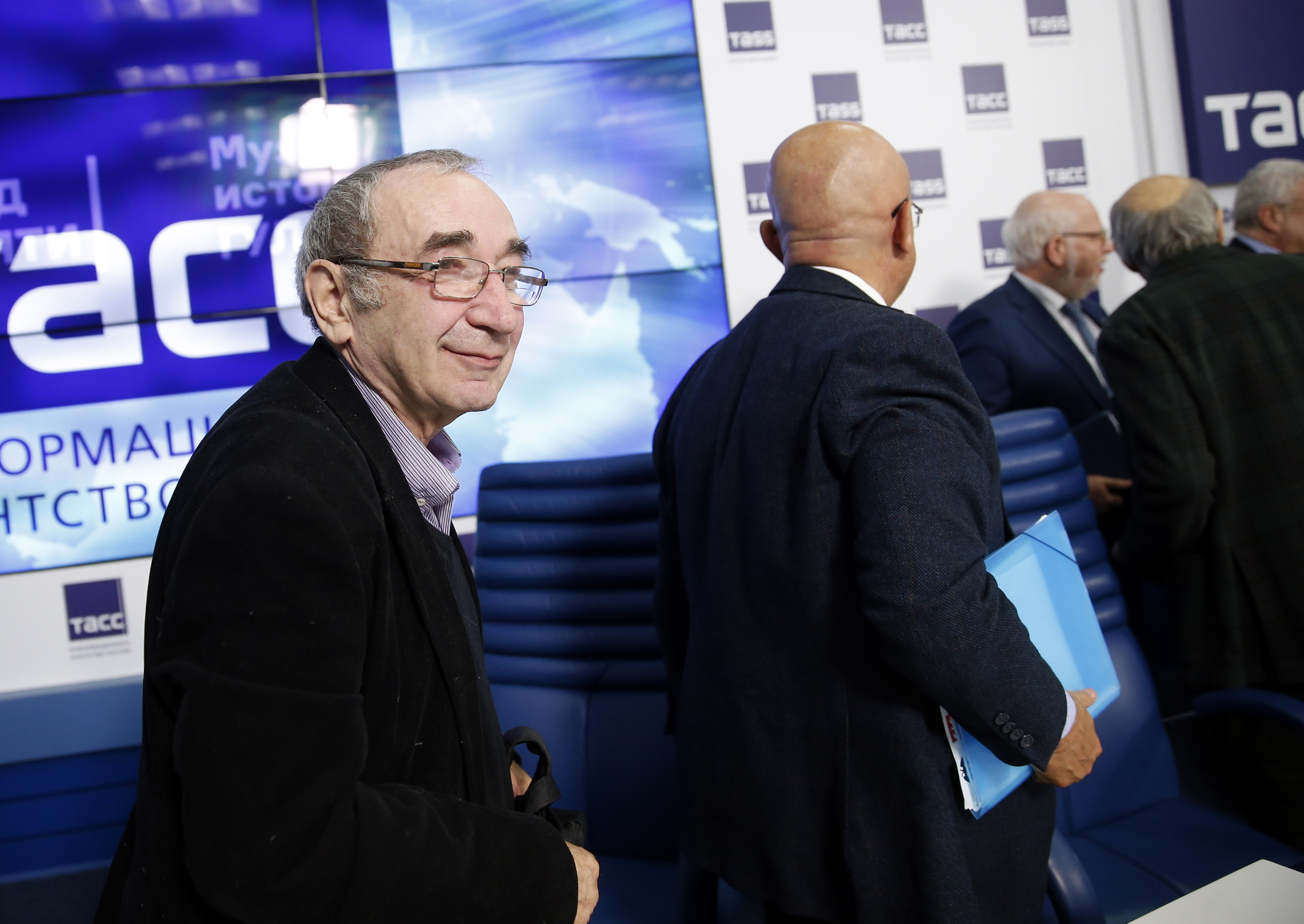
Why should not society forget about communist terror in the Soviet Union? Why should you keep your memory? Why do you even need to know your story? September 2015 :
"The question seems to me, not to remember. To remember - this is too little. We must remember and understand. Over the last quarter of a century, from the moment it has become allowed to speak publicly on these topics, hundreds of thousands of documents around terror have been published, and in fact the society knows about terror. It is not remembered that it does not remember, I cannot: it knows, but it does not understand it. Every The victims of the terror honor the victims of the terror, and President Putin honors the victims of the terror.
The understanding that our state and our regime were criminal - this cannot be taken in mind. Therefore, for the bulk of the population, which knows terror and is ready to honor the victims of terror, the question of the source and meaning of this terror is hidden. They believe that this is something like a medieval plague: we lived, lived, and then a terrible terror rolled up on us and killed everyone-oh, how bad ... And then it was somewhere, and we live again. When people understand that it was state terror, that terror was an integral part of the entire structure of this regime, that without terror this regime would not have lived even a year, only then there is a certain beginning of understanding, and only in this understanding there is a hope that the memory of the past will become the key to the lack of something in the future. And without understanding - only honor, put candles ... "
Arseny Roginsky in the program of Alexander Podrabinek "Dejavu", September 2015:
On the impact on the society of myths created and preserved for the sake of "expediency". November 2015 :
"In 1992, a special commission was formed for the transfer of documents of the KGB of the USSR for state storage. We [members of the" Memorial "] represented the working group of this commission. We gave us two or three tables in the KGB, and we read a lot of different regulations endlessly. All the documents we had to do with were not just secretly - these were" special folders "for all the years. We give all this to a photocopying of all this, as the head of the working group, to Anatoly Krashushkin [the head of the registration and archival funds of the MB - FSB of the Russian Federation]. Barannikov. Goes. Goes. What was going. "What was not there! Documents about which I was absolutely sure that no one would declassify them. Suitcases with the money that were carried by the fraternal committee. Some sabotage. Political murders. There was the most top secret of the state. And he completely says. Then one puts aside. Passes to the end, returns to this and says: and why was it? And what was it? I, as a former teacher of literature, simply could not want to declassify the report of Abakumov to Stalin from 1947 that, in fact, it is necessary about all these bastards who were hung, tortured and so on, and everything is ready to arrange for this process, but, unfortunately, a number of details that do not coincide with the “young novel” Guard ”! But he, Abakumov, understands how to get around all this, so that there are no discrepancies. The Minister Barannikov looks, everyone is calmly declassified, at this document and says:“ This is impossible. ”Why?! We go back with the Krayushkin, go to his office, and he replies:“ Inappropriately. ”Literature-or something else-formed a massive consciousness and something else-and formed a massive consciousness and something else. It is no different from the consciousness of a person who knows the fullness of information.
About the "Chronicle of current events", August 1, 2014 :
“The appearance of the“ chronicle ”was the feeling that we were offered our present in its genuine textured form. Because if the“ chronicle ”wrote that they arrested such and such as they searched such and such, I could firmly consider it as a reader, that they were arrested, and such and such a thing was searched. That is, there was a terrible contrast of this infinite newspaper and radio lies and these stories that really happened with what happened. It seems to me that this is the first joyful and shocking idea that we are offered to these pages all the time, that we have been stealing not only our past, we have always been stolen with this feeling, but we have been stealing our present. But this happens, and therefore the fact of truth against the abyss of some kind of surrounding lies, in my opinion, is the central meaning and meaning of what happened. "