
Translated material
"I cleaned 14 thousand Chekists"
The faces of the image of the People's Commissar Yezhov
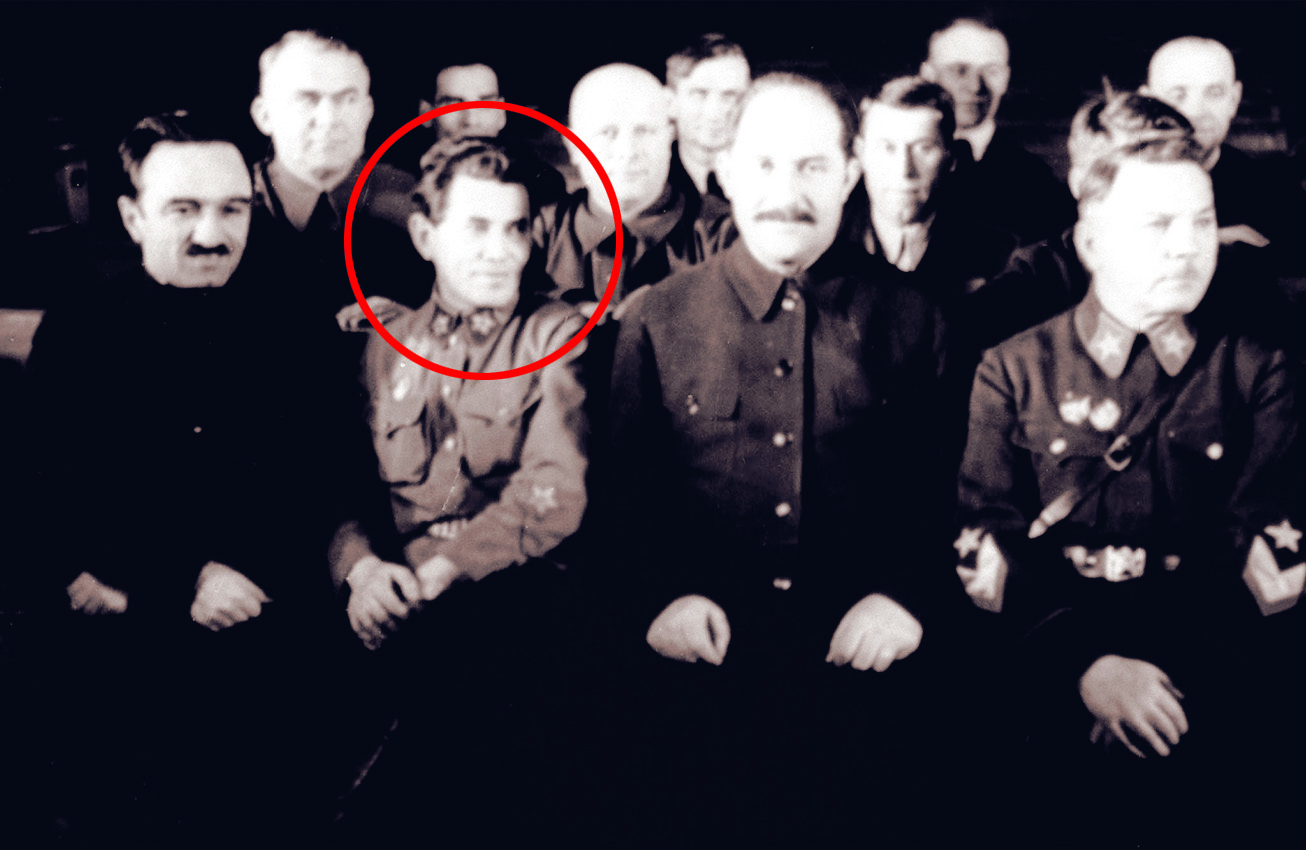
Photo: ITAR-TASS
In December 1937, the Cranes of the Soviets Burriously celebrated the twentieth anniversary of the Cheka -GPU -OGPU -NKVD. It was the peak of the fame of the People's Commissar Nikolai Yezhov. However, there was not so much time left before the disgrace of one of the most ominous figures of Soviet history.
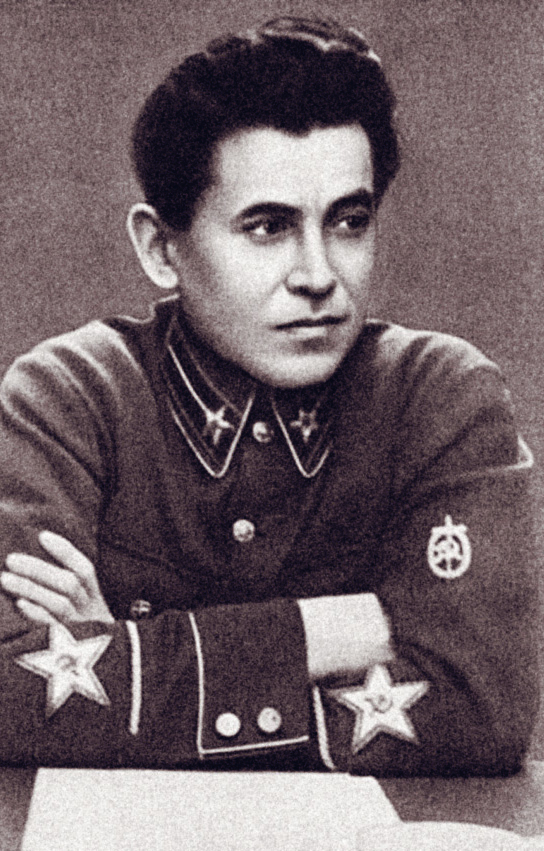
Yezhov Nikolai Ivanovich (April 19 (May 1), 1895 - February 4, 1940), member of the Bolshevik party since 1917, since 1921 at party work. In 1930-1934 - The head of the distribution department and department of the personnel of the Central Committee of the All -Union Communist Party of Bolsheviks (b), since 1934 - a member of the Central Committee of the All -Union Communist Party of Bolsheviks, the chairman of the control party commission under the Central Committee of the All -Union Communist Party of Bolsheviks, a member of the Code of Organization of the Central Committee, since 1935 - the Secretary of the Central Committee of the All -Union Communist Party of Bolsheviks (b) and a member of the executive committee of the Comintern. In 1937-1939 - Candidate for members of the Politburo of the Central Committee. From September 26, 1936 to November 25, 1938 - People's Commissar of Internal Affairs of the USSR, General Commissioner of State Security. Until April 9, 1939 - the People's Commissar of Water Transport. Arrested on April 10, 1939, shot on February 6, 1940
Stalin and Beria first wanted to arrest Yezhov’s wife as an “English spy” and make her testify against her husband. Evgenia Yezhova was especially vulnerable, since she had many lovers.
Lovers of Evgenia Yezhova
One of them, apparently, was the writer Mikhail Sholokhov. As Zinaida Glykin showed, an employee of the Foreign Commission of the Union of Writers, the US expert and a close friend of Yevgenia, who at times visited the Yezhovs, they met in the spring of 1938. Sholokhov was then in Moscow, and Yezhov invited him to his country. In the summer of the same year, Sholokhov again arrived in Moscow and visited Eugene in the editorial office of the magazine "USSR at a construction site" under the pretext of participating in the issue of the magazine, and then held it home. Returning to Moscow in August, he and Fadeev again went to Evgenia to the editorial office, after which the three of them had lunch at the National Hotel.
The next day, Sholokhov was again at Evgenia in the editorial office and this time invited her to his room in the same hotel where she stayed for several hours. The next day, returning to the cottage late in the evening and drinking heavily, Yezhov in a state of noticeable intoxication and nervousness took out a document from the portfolio and asked his wife with an embittage: “Did you live with Sholokhov?” It was a stenographic record of what was happening in Sholokhov’s room during the stay of Evgenia in him: at the direction of Yezhov, all the conversations were eavesdropping. Glykina wrote that Eugene was very excited, reading this document ... Having lost his temper, Yevgenia jumped to Eugenia and, according to Glykina, "began to beat her with fists in the face, chest and other parts of the body." Obviously, the marital disagreement soon ended, as after a few days Evgenia told Glykina that her husband destroyed the transcript. According to Glykina, in October, Yezhov told her that Sholokhov went to an appointment with Beria* and complained that Yezhov organized him surveillance, and as a result, Stalin personally was engaged in the trial.
* At that time, First Deputy People's Commissar of Internal Affairs
A little time passed, and Yezhov began to think about the need for a divorce. On September 18, 1938, he reported his decision to Eugene. She was completely confused and the next day she turned to Stalin for “help and protection” ... Stalin did not answer the letter.
In July 1938, almost two years after the arrest, the former husband Evgenia A.F. Gladun. In the same month, one of the alleged lovers of Eugene, Semyon Uritsky, was arrested. Previously, he was the editor of the "peasant newspaper", in which Eugene once worked, then became the director of the All-Union Book Chamber. Without a doubt, Yezhov himself organized his arrest. It is amazing that, unlike Gladun, Yezhov could not bring him under the shooting before Beria arrived in the NKVD, and Uritsky, thus, was able to give interesting testimonies against the hedgehogs. He testified that Eugene was in close relations with Isaac Babel, about which Yezhov found out, finding Babel's love letters in the things of his wife.
** Since April 1937-1st Deputy People's Commissar of Internal Affairs of the USSR, one of the closest employees of Yezhov. Arrested on April 6, 1939, shot on February 4, 1940.
In the fall of 1938, a series of arrests of people from the environment of Eugene began. The nephew and neighbor of Yezhov in the apartment Anatoly Babulin subsequently showed that at the end of October 1938, Frinovsky ** brought a document to Yezhov, which was very alarmed by the latter. The next day, Yezhov called his wife in the Crimea and asked her to immediately return to Moscow. From that moment on, he completely lost heart, drank more than the same and became very nervous. According to the sister of Yezhov Evdokia, in the fall of 1938, Eugene received an anonymous, accusing her of espionage and transferring secret information abroad.
After the return of Evgenia and Glykina from the Crimea, Yezhov settled them in the country; He came to them twice, almost did not talk to Eugenia and whispered about something with Glykina. A little later, on October 29, Eugene with a diagnosis of “astheno-depressive state” (cyclotimi) was placed in the Vorovsky sanatorium, a small hospital on the outskirts of Moscow for people suffering from nervous disorders, where the best Moscow doctors were assigned to it. On November 15, Glykin was arrested along with another close friend of Yevgenia, Zinaida Coriman, who worked as a technical editor in the journal "USSR at a construction site." This, apparently, was the machinations of Beria. It was logical to assume that it was the turn of Eugene.
After the arrest of the Two Zin, Eugene, in despair, again writes to Stalin. Evgenia Yezhova assured Stalin in her devotion and asked to tie at least someone from the Central Committee to talk to her. She was still hoping to prove her non -involvement in the "enemies" ...
And this time, Stalin left her letter unanswered. On November 19, Eugene lost consciousness as a result of an overdose of Lumino; Two days later, she died at the age of thirty -four years.
*** A long -standing acquaintance of Yezhova, political worker of the Red Army in the rank of divisional commissar
**** Old friend Yezhova
At the interrogation of V.K. Konstantinov *** showed that Yezhov, having received a letter from Eugenia from the hospital, sent her a sleeping pill (as Konstantinov Dementyev told her ****). Then he took a trinket and ordered the maid to take it to Eugene; Soon after, Eugene was poisoned. Dementiev thought that the transfer of this trinket was "a conditional sign that she should be poisoned." When Konstantinov later asked Yevgenia why Eugene committed suicide, he replied: “I, you think, was easy to part with Zhenya! She was a good woman, but she had to sacrifice her, because he must be saved. ”
It must be assumed that Yezhov and his wife agreed that she would be poisoned by receiving a signal. Yezhov gave such a signal on November 8, but Eugene was in no hurry, and only the arrest of the two “Zin” - Glykina and Coriman pushed her to action, since he clearly meant that her turn had now come.
A drunkard and a libertine
After the death of his wife, on the eve of his inevitable arrest, Yezhov returned to his youthful habits and inclinations. In a statement of April 24, 1939, he describes the period from November to December 1938 about his homosexual connections:
“In 1938, there were two cases of pederastical connection with Dementyev, with whom I had this connection, as they said above, back in 1924. The connection was in Moscow in the fall of 1938 in my apartment after removing me from the post of people's commissar. Dementiev lived with me then for about two months.
A little later, in 1938 there were two cases of pederasty between me and Konstantinov. I have been familiar with Konstantinov since 1918 by the army. He worked with me until 1921. After 1921, we almost did not meet. In 1938, at my invitation, he often began to visit my apartment and was two or three times in the country. ”
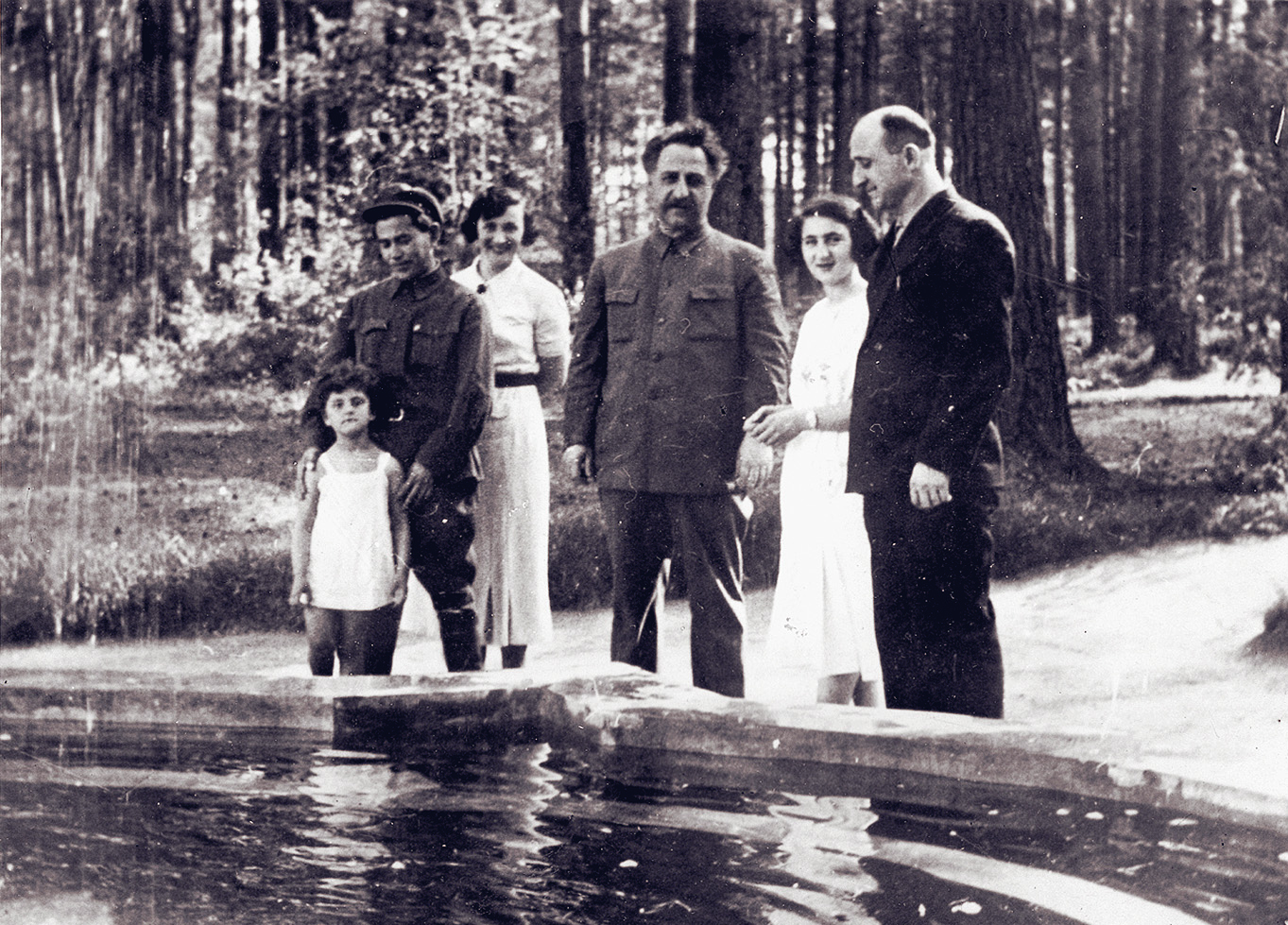
Yezhov depicts an approximate family man: next to the People's Commissar is Natasha Yezhova, behind him - Evgenia Yezhova photo is provided by Rosspen Publishing House
Dementiev showed that on his first visit to Moscow, he and Yezhov “engaged in pederasty”, or, as he still put it, “Yezhov was engaged in the most perverted forms of debauchery with me”. And Yezhov asked him to become his bodyguard, preferring to have a confidant in guard, and not Beria people.
This period was also described in his testimony Vladimir Konstantinov ... According to him, from October to December 1938, Yezhov often called him to drink in his Kremlin apartment. Once he asked Konstantinov to come with his wife Katerina and began to solder them. Drinking, Konstantinov fell asleep on the couch. When he woke up at night about an hour or two, the servant told him that his wife was in the bedroom with Yezhov; The door to the bedroom was closed. Soon she left the bedroom all the disheveled, and they went home. At home, she cried and told him that Yezhov was behaving like a pig.
The next evening, Yezhov again called Konstantinov to drink and, by the way, said to him: “I still spent the night with your Katyukha, and although she is an old, but a good woman.” Konstantinov, who was afraid of Ezhov, swallowed an insult. This time Yezhov got drunk worse than usual. They listened to the gramophone, and after dinner went to bed. As Konstantinov said: “As soon as I undressed and lay down in the bed, I look - Yezhov climbs to me and offers to engage in pederasty. It stunned me, and I pushed him away, he rolled onto his bed. Only I fell asleep, how I felt something in my mouth. Opening my eyes, I see - Yezhov sticks a member in my mouth. I jumped up, scolded him and threw it away with force, but he again climbed to me with vile offers. ”
Yezhov continued intimate relationships with women. Since the end of 1938, his nephew Anatoly brought “girls” to him at night: an employee of the People’s Commissariat of Foreign Trade Tatyana Petrov, for whom Yezhov looked after in 1934; Employee of the Sergo Ordzhonikidze machine plant Valentina Sharikov (under the New, 1939) and an employee of the People’s Commissariat of Water Transport Ekaterina Sychev (at the end of February 1939).
Arrest and execution
On April 10, Yezhov was arrested. The search of the apartment and the service office revealed traces of drunkenness and depression. In the written table and bookcases (filled mostly by the work of its victims), charged pistols and bottles of vodka hidden in different places were discovered. In the table box lay a package with bullets, which were shot by Zinoviev, Kamenev, Smirnov, and each bullet was wrapped in a separate piece of paper with the name of the executed.
On June 10, 1939, he was officially charged with many years of espionage ties with the circles of Poland, Germany, England and Japan; in the leadership of a conspiracy in the NKVD; In the preparation of the coup, organizing a number of murders, in sexual intercourse with men ("sodomia"). He was interrogated by the unkind fame of the executioners and sadists, employees of the Investigative Department of the NKVD A.A. Esaulov and B.V. Rhodes. As was customary, interrogations were carried out mainly at night. Yezhov could not bear the torture and signed under all testimonies.
Sergey Schwartz, Assistant Yezhov in the Central Committee, on November 20, 1938, were also arrested from Yezhov's close associates; Personal Secretary of Seraphim Ryzhov - December 17; Bodyguard Vasily Efimov - January 13, 1939. His sexual partners Ivan Dementyev and Vladimir Konstantinov were arrested no later than April 1939, their predecessor Yakov Boyarsky - July 5, 1939, and brother Evgenia Ilya Feigenberg - June 18, 1939. The first husband of Eugene, Gladun, was already executed by this time; Her second husband, Khayutin, was also repressed ... speaking of interrogations about the suspicious persons with whom his wife maintained relations, Yezhov mentioned Isaac Babel, Mikhail Koltsov, the People’s Commissar of Foreign Affairs (until May 1939) Maxim Litvinov, writer Ivan Kataev (who was shot on August 19, 1937), actor Topchanov and polar explorer Otto. Schmidt, with Babel and Schmidt, he called her lovers.
As for the case of Yezhov, his investigation ended on February 1, 1940 by the prosecution exposing him as the head of the conspiracy in the NKVD system; a spy that worked on the intelligence services of Poland, Germany, England and Japan; a conspirator who was preparing a coup d'etat; The culprit of attempts for the life of Stalin, Molotov and Beria and the Pest. Yezhov was accused of falsifying the case of mercury poisoning and the organization of murders of a number of persons, including his own wife, who was supposedly an English spy in the mid-1920s. He was not charged with pederasty or gross violations of the rule of law. The next day, Yezhov was brought to Beria’s office in the Sukhanovskaya prison, and there he heard what he himself spoke many times to another doomed. Beria promised to preserve life in exchange for recognition in court: “Do not think that you will be sure to be shot. If you confess and tell everything honestly, your life will be saved. ”
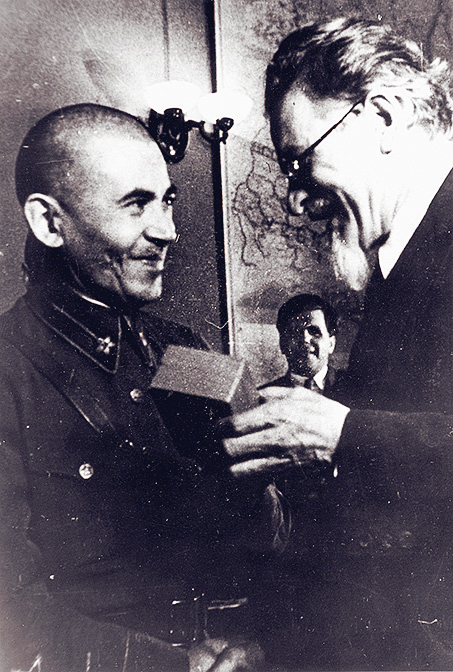
Order of Lenin. The same 1937 ...
Photos provided
Publishing house Rosspen
A closed court hearing of the Military Collegium of the Supreme Court, chaired by Vasily Ulrich in the Yezhov case, took place on February 3. Yezhov was allowed to make a statement in which he denied that he was a spy, terrorist or conspirator, saying that his confessions were tended out by the strongest beatings. Having mentioned the promise given by Beria the day before, he stated that he preferred death by lies. However, Yezhov admitted to his other crimes: “I cleaned 14 thousand Chekists. But my huge fault is that I cleaned them little ... Around me were enemies of the people, my enemies. ” He did not expect his life to be preserved, but asked him to be shot “calmly, without torment” and that his nephews would not repress; He also asked to take care of his mother (if she was still alive) and his daughter. Yezhov’s last words were intended for Stalin: “I ask you to convey to Stalin that everything that happened to me is just a combination of circumstances and the possibility is not excluded that the enemies attached their hands, which I looked at. Tell Stalin that I will die with his name on the lips. ”
After bringing the verdict, Yezhov’s body was put into a metal box and taken to the crematorium ... The cremated remains of Yezhov were dropped into the general grave in the Donskoy cemetery in Moscow, it was previously buried the ashes of an executed woman. Evgenia Yezhova rests in the same cemetery next to his three brothers. In the press and on the radio about the process over Yezhov and his execution, nothing was reported.
(From the book "Stalin's pet" - Nikolai Yezhov. "Rosspen, 2007)
Nikita Petrov - Deputy Chairman of the Scientific and Information and Educational Center "Memorial", author of works on the history, structure and personnel policy of the BCH -KGB bodies.
Mark Jansen is a teacher of the history of Eastern European countries at the University of Amsterdam, the author of scientific works on repression in the USSR.
First published in NT No. 44 of December 10, 2007