
Translated material
Full list of executioners
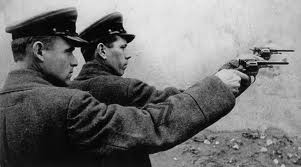
"Vodka, of course, drank to the loss of consciousness. Whatever you say, and the work was not easy. They tired so much that they sometimes barely held on their feet. But the cologne was washed. To the waist. Otherwise, they did not get rid of the smell of blood and gunpowder. Even the dogs shied away from us and if they barked, then from afar."
So many years later, one of the members of the NKVD special group, who worked in Moscow under the leadership of Vasily Blokhin - the future general of state security, who personally shot at least 5 thousand (according to other sources, up to 15 thousand) people, recalled his work. The functions of the special groups were parallest: to execute sentences and extrajudicial decisions on execution, adopted by various instances of the Stalin regime. In the spring of 1940, Blokhin and his executioners, together with the same "specialists" in the field, had to carry out a special task: to destroy more than 20 thousand Polish officers and civilians who fell into Soviet captivity in September 1939, when the USSR divided the territory of Poland with Nazi Germany.
The executions were carried out in several places - mainly in the Katynsky forest near Smolensk, prisons in Kalinin (now Tver) and Kharkov. In Katyn, the executed were buried in the ditches in the same place, at the site of death, from Kalinin and Kharkov the bodies were taken for burial not far - respectively, in the vicinity of the village of Mednaya and the city of Pyatikhatka. Nevertheless, in historiography, primarily Polish and European, this tragedy entered under the name of the "Katyn crime." Perhaps the most famous crime committed in the world committed by the BCH - OGPU - NKVD - MGB - KGB for their history, from the beginning of which today has been exactly a hundred years old.
The Katyn crime, on the one hand, is one of the most detailed studies, on the other hand, supporters of the old Soviet version of those events are still active. She shifted the guilt for the execution of the Poles to the occupying Nazi troops - and, accordingly, transferred the date of the tragedy from 1940 to a later date. The criminal case on the facts of the execution of Polish citizens was terminated in 2004 - in connection with the death of the perpetrators. Nevertheless, the Russian side still did not give Poland part (35 out of 183 volumes) of archival materials regarding Katyn-they remain classified.
Subscribe to us in Telegram
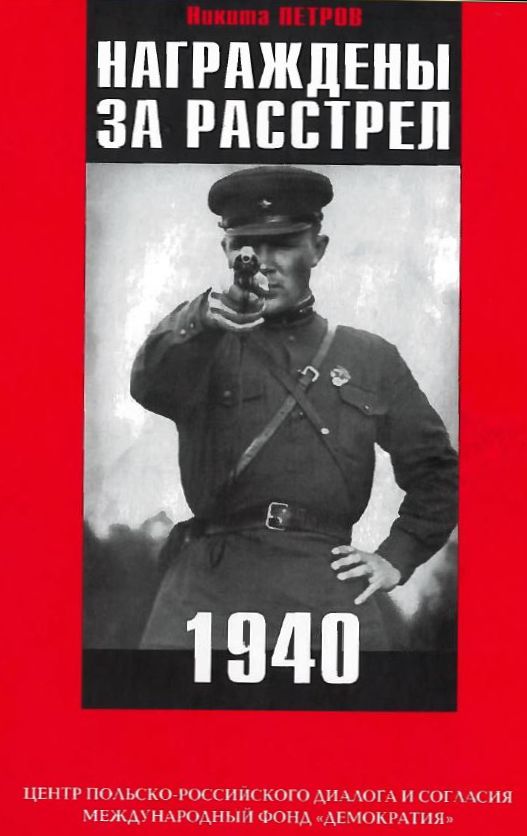
As for those guilty, their names - from ordinary performers to the highest leadership of the Soviet Union and the NKVD - are well known. The almost complete list of those involved in the Katyn crime is a secret order No. 001365, issued on October 26, 1940 - on awarding a large group of NKVD employees for the implementation of a particularly important task. As noted in the dedicated persons named in this order, the book was awarded for the execution of 1940, recently published by the Center for the Polish-Russian dialogue and consent , it is easy to establish that this task was the shooting of Polish prisoners in the Smolensk, Kalinin and Kharkov regions. The author of the book, Russian historian, deputy head of the Scientific and Information Council of the Memorial Society Nikita Petrov spoke about his study in an interview with Radio Liberty.
- You studied in detail the biographies of the NKVD employees involved in the executions of Polish officers in the Smolensk, Tver (then Kalinin) and Kharkov regions. At the same time, the main evidence that allows us to talk about the complicity of these people in this crime, you consider a secret order to award their award of October 26, 1940. It is clear that no shot Poles in the order are mentioned. Why are you sure that these awarded is actually a list of Katyn executioners?
- Everything is very simple here. Firstly, before I took up this matter, no one analyzed this list for what kind of people they took. The preamble of the order explicitly says "for the performance of a special assignment", and these are employees of the NKVD of Smolensk, Kalinin and Kharkov regions. We know very well that the executions took place there. But this is an indirect guess. And the actual nature of this order was discovered by the former head of the NKVD department in the Kalinin region Tokarev , who spoke in early 1991 a film crew, which came to the prosecutor with the corresponding request: they rewarded everyone who conducted this murder, but I haven’t, you will not find me on this list. But for the prosecutor’s office it was news then, they did not know at all that such a list exists. And Tokarev told them: you look in the archives, find it, there was such a list, they awarded everyone. And he spoke about the mechanism of compiling this list, that Vasily Blokhin , commandant (head of the commandant department of the administrative and economic department of the NKVD of the USSR.-Approx. RS) , who went to Kalinin for executions, just carried out these performances. Kobulov (Bogdan Kobulov, one of the closest employees of the head of the NKVD Lavrenty Beria. - Approx. RS) was against entering Tokarev’s list, because Tokarev refused direct participation before - more precisely, he said that this is new for me, I am weak in this matter, I am afraid that I would let me down.
They awarded with weapons, icons of honorary security officer, etc. And here only money
In a word, Tokarev reported a very important thing to the investigation, and then this order found the investigation in the archive. In addition to what the order is said and what contingent is listed there, I can say one more thing. I saw quite a few orders of the NKVD of those times on the awarding of employees. So, with two zeros, that is, a completely secret order usually touched workers who distinguished themselves abroad. Their names could not be disclosed, so they were called in a top secret order. Employees of the supervivement of prisons, employees of commandant’s offices, driver - all who are in the order we are talking about, awarded for Katyn, in other cases always went to ordinary open orders. Moreover, they were awarded with weapons, icons of the honorary security officer, etc. And here only money, that is, nothing that could leave, as they say, a noticeable sign on his chest. The completely secret nature of this order was unique, there was no other such in the history of our country.
- What amount was given to those who listed in the order?
- The amounts were from a monthly salary to 800 rubles.
-You mentioned Dmitry Tokarev, Major General of the KGB. In your book, his testimony is occupied by a large place. When working with these testimonies, you realized what motives they directed? He then, when he gave them, in 1991, as I understand it, was already a very old man. What, he decided to repent in the declining years-or were there any other motives?
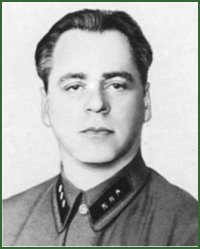
- As for the incentive motive, it is very simple. Tokarev perfectly understood that official people from the KGB department in the Vladimir region came to him - it all happened in Vladimir, where he lived. There was a sanction for this conversation, so there is nothing to hide. Tokarev was easier to admit, because it was not his decision. He knew very well that he was not awarded for the execution, because in general the heads of the NKVD of the Smolensk, Kalinin and Kharkov regions - they were then new -naked people, and in order to conduct these executions, people from Moscow, from the commandant's department, and senior operational superiors arrived. For example, the deputy head of the Main Transport Administration of the NKVD Sinegubov came to Tokarev, so he was responsible for everything. Tokarev in this sense was easy to admit. So the incentive motive was not to alleviate his soul. Simply, if the prosecutor’s office and people from the KGB came to him, it is clear that he will have to tell.
-When working with a large array of biographies of the NKVD, did you come across remorse, with some of their internal experiences? Or were they all convinced that everything was right, the party said - it is necessary, and we did our job?
- The reaction of each of them was very individual. There were people who did not regret for whom it was a craft, such as Blokhin. He did not live, of course, before a perestroika investigation. As a rule, all commandants, employees of the special group, who participated in these executions and parted in three areas, did not survive until the time of perestroika. Small executioners, warders, for whom it was Vnow, because the warders were not always involved in executions, many worried. There are even cases when they finished the life of suicide, such as, for example, one of the employees in the Smolensk region, I write about it in the book. There are those who were drunk, one of them, on a drunken business, even told his son that, they say, I killed a lot of Poles.
One of them, on a drunken business, even told his son that, they say, I killed a lot of Poles
- What was the mechanism for the death sentence of the dead by the Polish prisoner, how was the decision at the very top?
- The question of what to do with Polish officers was discussed since the end of 1939. There were ideas, for example, part of them to skip through a special meeting , that is, give them camp terms. It was about the prisoners of the Ostashkovsky camp (one of the places of maintenance of the Polish prisoners. - Note of the RS), because there were police officers, gendarmes, those who were classically considered enemies. Regarding simple officers who were sitting in Kozelsk or Starobelsk, there was even an idea to let go of them. But in the end, when all these proposals were shocked, Beria submitted a note to Stalin, and something did not suit him. I did not see the preliminary options for the note that Beria submitted, there, in my opinion, there was even a proposal to kill much more people than in the version that we know. In the end, on March 5, 1940, a note was submitted, an already updated option, which provided for the murder of almost 25 thousand Poles, among them 15 thousand officers, and the rest were civilians who were already arrested or had to arrest in the western regions (Ukraine and Belarusians occupied by the USSR in September 1939. - approx. RS) , that is, the so -called class enemies that did not accept Soviet power or had Soviet power or had Soviet power or had Soviet power or had the "Class of alien" origin, or suspicious in their social relations.
The selection was in the field - in prisoners of war camps and in the NKVD departments in the western regions of Belarus and Ukraine, and the decision was made by Politburo on April 5, 1940. This decision is known and published, it was already talking about the formation of the three and about the general limit on these executions - about 25 thousand. In fact, they were shot not much, but less - 22 thousand. Here the discrepancy is due to not prisoners of war, but civilians who were arrested less. The NKVD just unfolded the arrests of civilians only in April, who were later shot according to the decisions of a specially created three in Moscow. Accounting cases for officers who were in these three camps were sent to Moscow, decisions were made there, then the protocol of the corresponding decision of the triple went to the place, and people were transferred to the disposal of the regional departments of the NKVD. There was already a shooting according to the same scheme, according to which it was shot in 1937. By the way, the burial places of Polish officers coincide with the burial of the victims of terror of 1937–38. And in the Katyn forest there are the graves of our citizens who died during the years of large terror, and in copper there are burials of those who were shot in 1937–38, and in five -bells, not far from Kharkov, the same. Poles were buried next to mass burials of the times of large terror.
- This is very symbolic, because, as I understand it, this is not only geographically connected, but, according to your version, and politically. After all, the Polyakov was killed according to the same logic as the victims of great terror-as social class enemies?
- Absolutely. In the case of reprisals with Polish officers and civilians, two main motives of terror of 1937–38 came together. This is a social class motive-the destruction of people alien to the social origin of people who are not suitable in order to embed them into socialism, into a bright future. And the second is the national motive. After all, the national operations of the NKVD of 1937–38 are also the persecution of those who are allegedly related to abroad. And the mass reprisal of 1940 was also dictated by the fact that for Stalin Poland in March 1940 did not exist and should no longer exist in the future. There is no Poland as a state. And he did not need these people at all, they were superfluous, a burden. But, of course, after June 1940-you know what happened then ( the defeat of the Nazi Germany of France , which dramatically changed the military-political situation in Europe.-approx. RS) , Stalin regretted this decision, but never expressed it to anyone.
Stalin did not need these people at all, they were superfluous, a burden
-If you return to the performers of this Stalin order, firstly, who were members of the triple that you mentioned? Secondly, in general, the performers had in the past, in the features of origin, education, something in common that led them to the role of executioners-or is there a very motley picture?
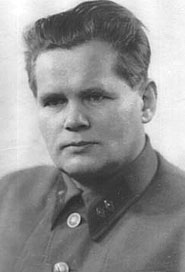
- On the one hand, the picture, of course, is motley. If we talk about the members of the three, everything is clear here - these are the closest people of Beria. At first, Beria himself had to be included in the three, but he was deleted in the original decision of the Politburo, Merkulov turned out to be there (Vsevolod Merkulov - another closest employee of Beria, like Bogdan Kobulov, was shot in 1953 with the “ chef.” - Note , Kobulov and Bashtakov , the head of the first workshop of the NKVD. The first special department prepared all the papers, and his representative must have participated when even enthusiastic decisions are being carried out.
As for the local performers, there is a very motley audience, but, for example, Smolensk shooters-those who worked in the commandant’s office or were warders in prisons, or drivers-are related to one thing: very many in the mid-20s were unemployed, then work in the Smolensk Harmebels, then flowed to the Embassy of the OGPU in the Western region in 1929 and arranged in 1929 watchmen, commandants. Such, I would say, is a very understandable work, you carry yourself a watch for a day in two. There is some general scheme. People were very simple, without great education. Although some have made some career.
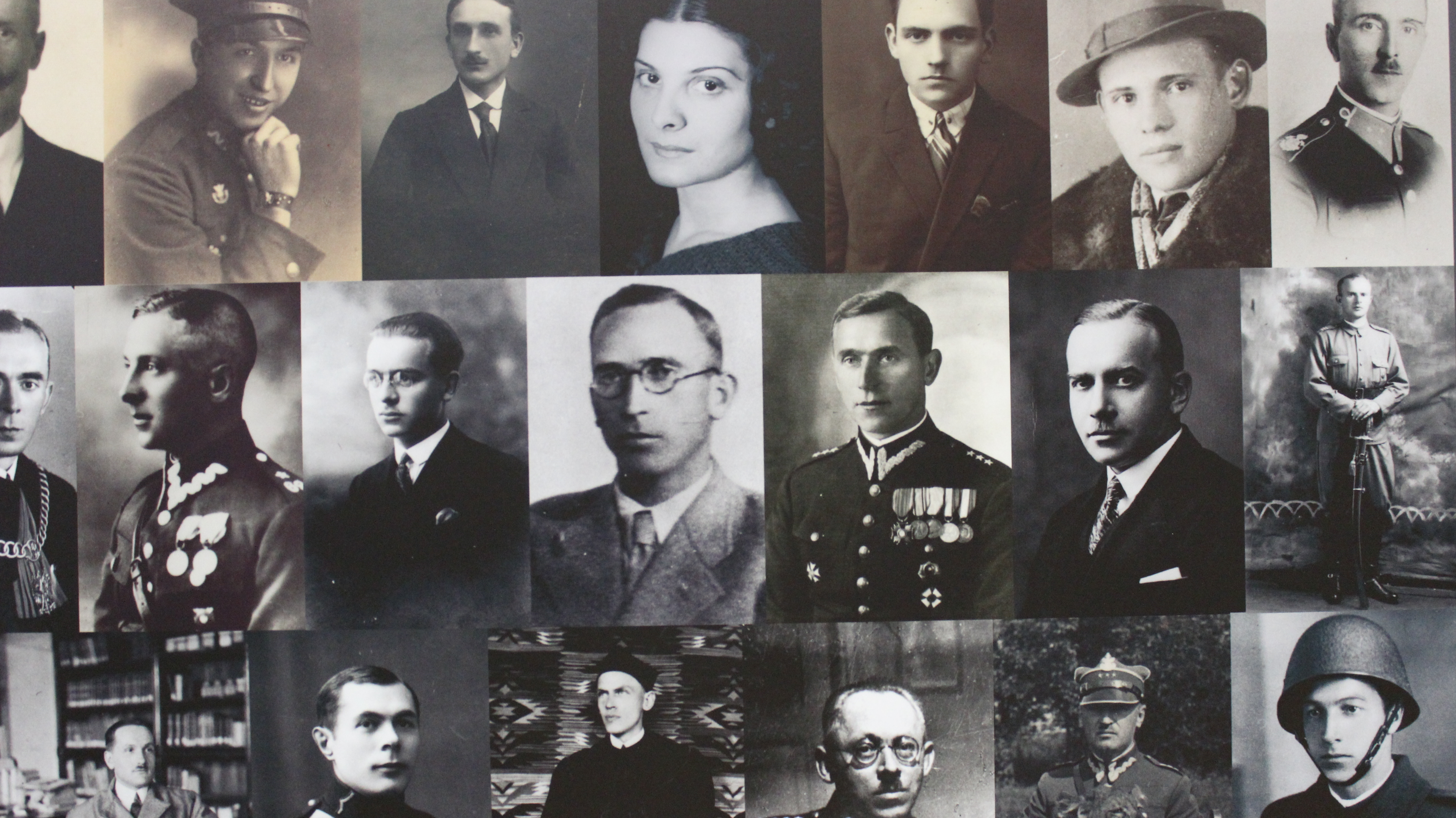
By the way, I am very pleased with the results that I managed to present in the book, because, you know, it is one thing when we talk about some executioners there at all, and another thing is when it comes to specific people: here is a person, here is his biography, photo. The ranks of people who in our country still doubt that the Katyn crime is the work of the NKVD, and they like to talk about what it was, they say, the Germans have done, the ranks of these people should thin out, if only because my book tells about specific executioners.
- Which of the biographies of the NKVD employees that you were engaged in when working on the book are most remembered?
- Let's say the commandant of the Kupri from the Kharkov Directorate of the NKVD is, of course, the genre of the Plutovsky novel. In fact, he almost got into prison in 1943, and much later was held accountable for theft of material resources from a base that he was in charge of in 1959. But those who were professionally engaged in the execution, that is, those very employees of the Blokhin special group and the local commandants are of particular interest. People, I would say, is a nightmal of life, including in Moscow and Moscow crematoriums, there are stories that are interesting not only with gloom, but also with a sort of cemetery romance.
- Yes, of course. To me, when I read your book, especially the former Denikin Colonel Peter Nesterenko remembered.
- The long -term director of the Don crematorium in Moscow. He was a nobleman by birth, fought for the White in a civil war, emigrated, lived in Paris, he became a gloomy specialist, but at that time a new and technologically progressive business - cremation. In the 20s, he was recruited by the OGPU, having worked for which Nesterenko returned to his homeland. There he became the head of the Don crematorium, cremated both the victims of the executions conducted by the NKVD, and the employees of this department, who then fell under the shaft of repression. Among them were the people with whom Nesterenko was friends. And in the summer of 1941, immediately after the start of the war, they came after him, sentenced to death and shot - though not in Moscow, but in Saratov.
- An amazing story.
- Yes, we say about such fate that they could come up with a writer, but here life itself comes up with literary plots.
You behave well, how to hint the Poles, then maybe we will give you something else in Katyn
- If we talk about the investigation of the Katyn crime, which was started under Gorbachev, when the Soviet Union finally pleaded guilty, and finished after the collapse of the USSR, how can one evaluate its results and conclusions? С чем связано нынешнее нежелание российских властей полностью рассекретить архивные материалы, связанные с Катынью? Казалось бы, уже столько лет прошло, и в живых никого не осталось из тех, кто был причастен.
Сегодня Кремль, с одной стороны официально, безусловно, признал вину Советского Союза, Сталина за Катынское преступление, с другой стороны, он всячески идеологически борется с нынешним польским государством
– Знаете, раньше у нас с коллегами, занимавшимися Катынским преступлением, было такое впечатление, что следствие идет и будет закрыто тогда, когда умрет последний исполнитель. Последний рядовой исполнитель Катынского преступления, кто был награжден этим приказом от 26 октября 1940 года, его фамилия Баринов, умер в 1996 году. С тех пор можно было бы, конечно, все обнародовать. Но тут уже работала другая система, тут была инерция. Сегодня Кремль, с одной стороны официально, безусловно, признал вину Советского Союза, Сталина, органов НКВД за Катынское преступление, с другой стороны, он всячески идеологически борется с нынешним польским государством. Отсюда и это злобное упрямство в том, чтобы не давать материалов по Катынскому делу. Все время распространяются, муссируются какие-то слухи о том, что поляки непременно потребуют денег на компенсации или еще чего-то. Если бы они хотели этих компенсаций, то уже давно потребовали бы, для этого им не нужно иметь оставшиеся тома дела, потому что у них достаточно материалов, которые доказывают советскую вину. Но те более сотни томов, которые были переданы в виде копий после смоленской катастрофы 2010 года , они больше не дополняются. Осталось 35 томов, которые российская сторона не собирается рассекречивать, или, как сказал прокурор Фридинский , не нашла возможным рассекретить. Вот все эти формулы бюрократические, они, с одной стороны, от упрямства, а с другой – это типичные политические манипуляции. Вы ведите себя хорошо, как бы намекают полякам, тогда, может быть, мы вам что-то еще дадим по Катыни. Это, я бы сказал, очень дурной политический метод, но тем не менее он, к сожалению, применяется, – говорит историк, автор книги "Награждены за расстрел. 1940" Никита Петров .