
Translated material
The face is in the crowd

On Friday, December 22, in the Moscow Cinema "Torch", the pre -premiere show of the film Leonor Serai "Young Woman", recognized by the best debut of the last Cannes festival, will be held. Maxim Semenov - about how any viewer can be in place of the heroine.
A young woman beats her head on the door of someone's apartment. Her name is Paul. She is 31 years old, she has no money, friends and roofs over her head, she hates Paris and in general France. Her many years of relations with a pretentious photographer who removes dull villages in the post -Soviet space has just ended, and now, having received sudden freedom, the floor should understand exactly how she wants to dispose of her.
The next one and a half hours this beautiful, but a little ridiculous woman in an orange coat will walk around the city, face different people, get a job and sometimes, at moments of evening longing, call the former. A series of funny and sad scenes. A string of random meetings, the scenery for which are streets, metro crossings or halls of a huge shopping center.
In the lightness with which Leonor Serai leads the narrative, something from the European cinema of the 60s is felt, and the change is more likely jokes and rather serious episodes to recall Ans Vard and her “Cleo from five to seven”. Fortunately, the heroine there tried to live in anticipation of an oncological diagnosis, and here ... Here the floor knows that she is mortal, because she is already 31, and where 31 is 40, and this is already a sufficient occasion in order not to postpone her affairs for tomorrow.
 © Blue Monday Productions
However, the “young woman” is not at all an old -fashioned kaleidoscope, collected from episodes of urban life. On the screen, everything is built in a very accurate and logical story of growing up. Sometimes playing along with his heroine, the Serai refuses all kinds of fairy -tale turns that the creators of stories about the female fate so love. Neither sudden heredines, nor lovers of millionaires, no profitable business.
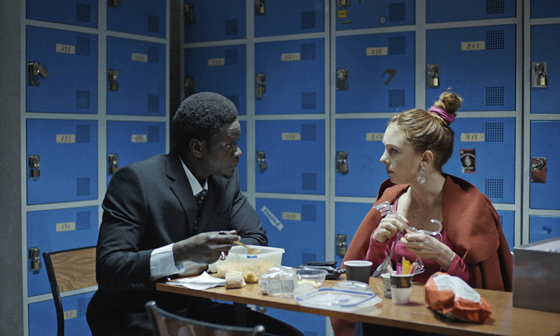
The path of floors to freedom is not a path to success in the usual sense, from the outside it may seem like a movement down the social ladder. The world of bohemian apartments, art galleries and emancipated bourgeois very quickly disappears from the frame. They are replaced by a shopping center in which the floor is arranged by the saleswoman, and the only representative of the upper floors of the society remaining in the film is a wealthy lady who hired the floor as a nanny for her daughter - looks at the heroine with hostility and misunderstanding.
 © Blue Monday Productions
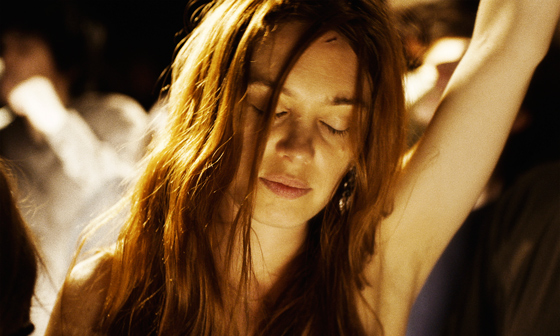
But what do we need to misunderstand the wealthy ladies? A meeting with them is a deviation in a series of everyday life, the event, although not entirely incredible, but rare and random. Moreover, the world around the floors is emphasized everyday, and in the full sense of these words she herself is a completely “normal” heroine. It is not an ideal like those who walk along the city alleys of the Renaissance Madonns, as it could be during the “July rain”. Not a witty flaer, an eternal hero of the author’s cinema, considering endless passages and indulging in non -stop intellectual thoughts. There is something in her movements, recognizable to pain ... Most of all she resembles people who fill the cars and platforms; This orange coat could well be in the public “Fashion of the Moscow Metro”. “Not so smart, but honest” - as she speaks of herself. Another random fellow traveler, a face in a street crowd, an ordinary person (and it is all the more remarkable that the former floors once built a career, having successfully photographed it-his picture belongs to eternity, but the floor lives here and now). One of us, walking somewhere on the sidelines of world history, constantly changing, but seeking to remain themselves, living barely noticeable ups and downs, such identical-and so different, if only to take a closer look.
 © Blue Monday Productions
In this eternal movement from the station to the station, happiness is in no way connected with the social staircase, and they usually learn about miracles and great deeds from newspaper messages. Sometimes you are lucky and you can win something by buying a box of flakes, sometimes a familiar face suddenly flashes in the car, but you move on, hoping that your decisions will lead you to happiness. And what do you care about the disapproval of the people with whom you would not communicate? Thoughts are spinning in my head, but the train drives up to the station, and someone will definitely touch the shoulder to ask: "Come out for the next?"