
Translated material
Arseny Borisovich Roginsky died

On December 18, 2017, Arseniy Borisovich Roginsky, a Russian historian, human rights activist and public figure, one of the creators and many years of the board of the International Human Rights, Human Rights and Charitable Society Memorial, died.
Arseny Borisovich was apparently the only political prisoner of the 1970-1980s, which was not only actually, but also formally convicted of his scientific activity. The struggle for scientific freedom and the right of man and society to knowledge about his past was, as it seems to me, the main work of his life.
Arseny Borisovich was born on March 30, 1946 in the Arkhangelsk region, where, after liberation from the camp, his father was serving a link. Boris Solomonovich was repeatedly arrested in 1951 and died during the investigation. After the rehabilitation of her father in 1955, the family returned to Leningrad.
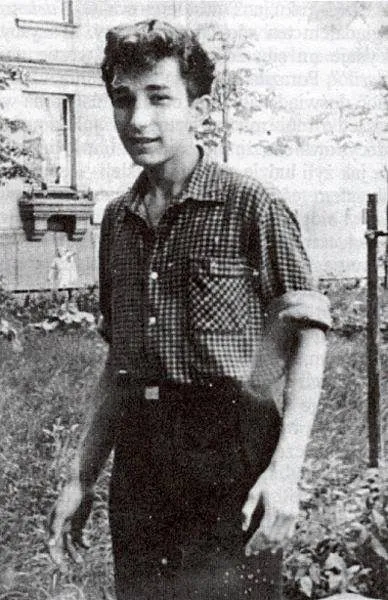
Although Roginsky never held scientific posts and did not have a degree, his whole life was associated with scientific research. In 1968, Arseniy Borisovich graduated from the History and Philology Faculty of Tartu University, where he was a favorite student of the famous professor Yuri Mikhailovich Lotman. As a student, he began to study the fate of little -known Decembrists and wider - the history of the liberation movement in pre -revolutionary Russia. Later, the main theme of his scientific interests was the history of state terror in the USSR and a civil confrontation of this terror.
In 1976-1981, Roginsky, together with a group of friends and like-minded people, compiled and edited five issues of the historical collection “Memory”, in which memoirs and documents on Russian history of the 20th century were published. The voices and history of life of specific people became the object of a meticulous scientific research, which sharply contrasted with careless pomp and false ideological stamps of official Soviet historiography. In the preface written by him to the first release of “memory”, in particular, it was said: “... our main historical secrets are a special kind. Millions of people are devoted to these secrets ... The editors' priorities and the subsequent publication of them are a priority of their task ... The editors considers it their duty to save all the doomed facts and names that are doomed to death, and, above all, the names of the dead, produced, slandered, as well as the names of those who executed, defeated, carried away. ”
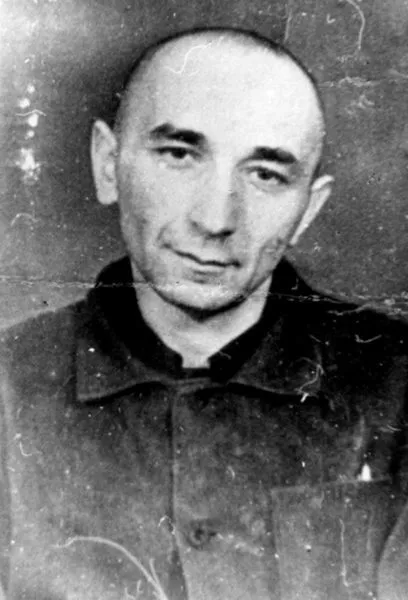
Despite the fact that initially the collections of “Memory” were published in Samizdat, i.e. They were printed in several copies on a typewriter, these were high -quality professional publications that introduced previously unknown texts that could not be published in official Soviet publications. All publications were equipped with detailed comments.
The emergence of such an indescribable publication, which undermined the state’s monopoly on historical knowledge, attracted the attention of the KGB. Back in 1977 and 1979, A. B. Roginsky was conducted, after which he was fired from the evening school in which he worked as a teacher. In April 1981, he and some other Leningraders, who participated in the Memory Publishing House, were invited to the OVIR and offered to emigrate from the USSR. Roginsky did not submit documents for departure.
He was arrested on August 12, 1981 on charges of Part 2 of Art. 196 of the Criminal Code of the RSFSR (systematic "Fake ... a document granting law ...") and part 3 of Art. 196 of the Criminal Code of the RSFSR ("Using a knowingly forgery document"). “Fake documents”, which were charged with him, are the so -called “relationship”, i.e. Letters from scientific and educational institutions with a request to provide Roginsky with the opportunity to work in the archives and departments of the manuscripts of libraries. At that time, without such letters, it was impossible to access the unpublished manuscripts and documents, the study of which forms the basis of the work of the historian scientist.
From November 25 to December 4 of the same year, the court took place. In defense of Roginsky, then still few people well -known, famous professors B.F. Egorov, Ya.S. Lurie and V.V. Pugachev, who praised him as a talented and productive researcher. Some foreign colleagues and Russian historians Yuri Davydov and Nathan Eidelman sent letters to his support, which were attached to the case. Nevertheless, the court sentenced Roginsky to 4 years of general regime camps, as the prosecutor asked. The term Arseny Borisovich was serving in the Komi Autonomous Soviet Socialist Republic and in the Murmansk region.
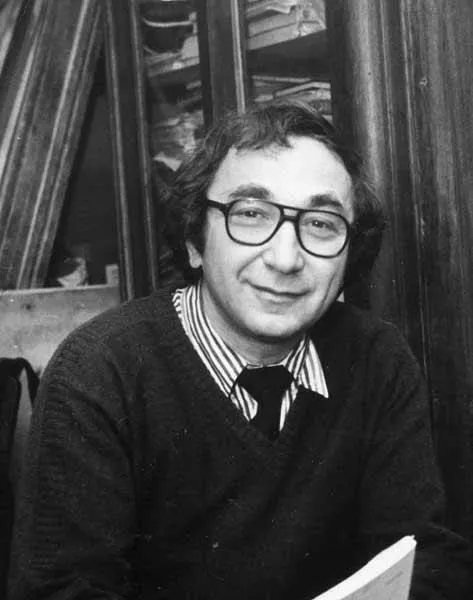
In his last word, Roginsky almost did not talk about his “criminal case”. His speech was mainly devoted to the right of the researcher and citizen to access information that constitutes the essence of historical science. His performance became a kind of manifesto, declaring the right of man and society as a keepsake.
“... The archive for me (of course, I mean only literary and historical archives) is a natural continuation of the library, and archival, unpublished sources do not fundamentally differ from published, they can be considered as accidentally unpublished or still unpublished. I consider it necessary to explain this now, because among people who are far from historical science, I often found many sincerely convinced that the archives are necessarily stored or super-secret or someone, and, perhaps, something discrediting documents. And that is why only the elected, clothed with “special trust” and what should be in the archive. Such an idea of the archives, of course, is completely erroneous. Just as a sounding attempt to divide the documents to more important or less important, more valuable and less valuable. Each document is important, each document is precious as evidence of our past.
... Every serious researcher of the Russian past is faced with the need to contact the archives. And not necessarily a professional, and often an amateur who may need unpublished documents for independent surveys and, for example, as an help when working on memories ...
In the current court hearing, it hardly makes sense to discuss what the creation of an artificial and often insurmountable barrier between the researcher and the document was needed, which caused this classification (otherwise you can’t say) documents of Russian history, but one thing, obvious: the consequence of the “petition” system, the “special storage” system, “special storage”, “limited use”, and the system of arbitrary resolution system Archival administrators, what to give out and what not to issue to the researcher is a consequence of all this is a reduction in work based on unpublished documents, and a narrowing of the circle of problems being studied, and repulsive from the science of people involved in the plans approved by any instances. And ultimately, all this system of measures to limit access to the original sources, to genuine historical information creates convenient ground for the wrong and even intentionally perverted interpretation of the Russian historical process. This system needs to be changed. ”
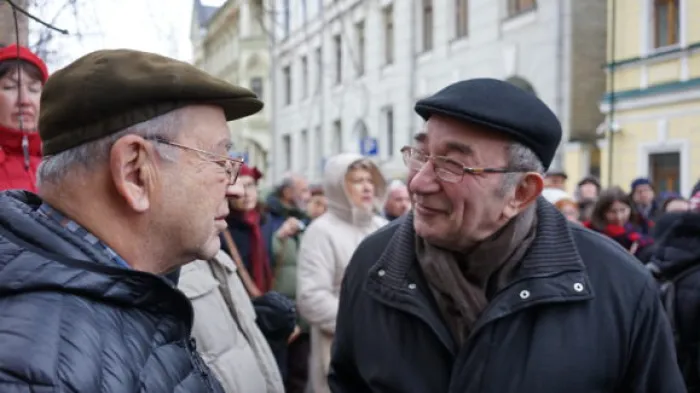
Unfortunately, these words are relevant now.
After liberation from the camp in 1985, Arseny Roginsky continued his research. Perestroika and publicity gradually opened access to historical documents and allowed Roginsky and his colleagues to expand their work to a national scale. In 1988, together with other human rights activists and historians, he founded the Memorial Society, which, along with perpetuating the memory of the victims of state terror, educational and human rights activities, engaged in titanic scientific work, drawing up the database of victims and executioners, issuing numerous collections of documents on state repressions and resistance to them. The Archive and Museum of Memorial, collected for almost 30 years of work, contain the most important documentary evidence of the tragic pages of the history of our country and about thousands of people, whose names and fate could disappear without a trace. In all this work, Arseniy Borisovich participated not only as a researcher, but also as an extremely talented organizer of the work of the Memorial International Society, the long -term chairman of the board of which he was.
The contribution of Roginsky and the “Memorial” to the education and restoration of historical memory cannot be overestimated. It is enough to name such promotions as “Return of Names”, when for 11 years now thousands of people gather on October 29 in Lubyanskaya Square in Moscow and in many cities of the country, so that, replacing each other, all day from morning to evening to call the names of compatriots who were executed during the years of large terror, and the All -Russian competition of historical research of schoolchildren “A person in history. Russia is the twentieth century. "
In the memory of everyone who knew him, Arseniy Borisovich remained extremely smart and charming, witty and ironic, brave and bright, and at the same time shyly, a modest person.
His death is an irreparable loss not only for relatives and friends, but for our whole country!
Farewell to Arseniy Roginsky will be held on December 22, on Friday, from 11.00 to 19.30 in the international “memorial” (carriage, 5/10, entrance from the carriage).
The funeral on December 23, 2017 at 14.30 at the Vvedensky cemetery (Cash Street, 1).
A. Ts.