
Translated material
White Mr. Poet
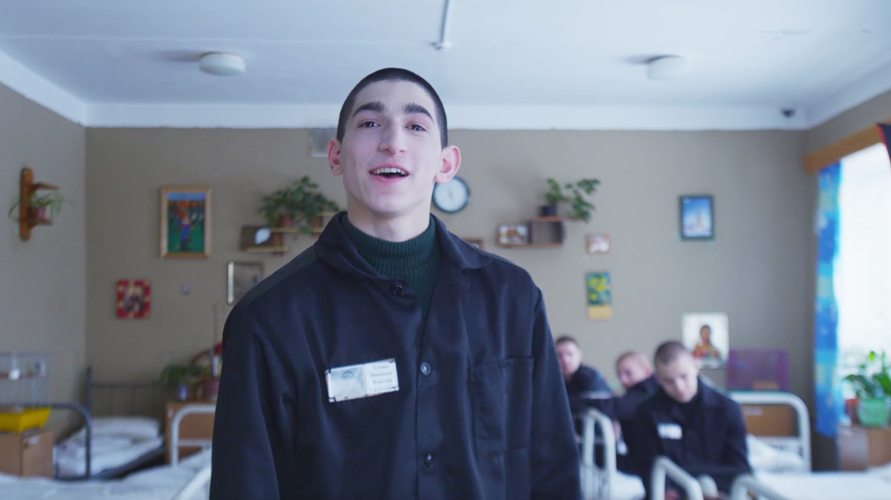
What is a video poetry in general, whether she needs a text or even a video who is a real video message, and who is unknown who-these questions are asked from year to year , and there is still no answers to them. Although the Wikipedia has an article dedicated to the phenomenon of video poetry, there is theoretical work about it, as well as the festivals of a poetic video - for example, the Fifth Leg, for the third time taking place in St. Petersburg (parallel to the award of Arkady Dragomoshchenko).
Well, the text, perhaps, is still necessary - after all, it is in response to a challenge by text that a genre is born, excellent from poetic cinema and adaptation. The very form of video poetry is the limit of a video medium (or, wider, cinema). The visualization of the text has always been an almost overwhelming test for cinema, genetically deprived of a metaphor (since the referent in the cinema practically coincides with the meaning) and therefore, either doomed to be vulgar “realistic” incarnation of literature, or forced to radically break with the elements of verbal - “goodbye, speech!”.
On the other hand, poetry, unlike prose, has always been a secret ally of cinema. In his desire to free the meaning of the dictatorship, the meaning of the dominant culture (in turn, equivalent to ideology), the experimental cinema of the 1970s (the so-called structural, or materialistic) was eagerly looking at the experience of poetry. The works of such authors as Peter Gidal or Hollis Frampton were desperate (and doomed) attempts to reproduce with visual means that subtle game with autonomous (from the speaker) structures of the language, which is usually conducted by poetry operating on the verge of aphasia and signsing. For example, Frampton's “Tsorna Theorem” is a canonical example of pure video poetry, in which a video working with found text (street signs) repeats futuristic experiments with phonemes striving to gather in lexemes - but all the time again slipping into the nomenclature order (images of words in the film are organized according to the alphabetical principle), not yet awarded), not yet visible) certainty of meaningful meaning.
In the light of this example, a significant part of the works of our contemporaries and compatriots who sent their videos to the Fifth Leg contest, alas, looks terribly distant from understanding the boundaries of the capabilities and features of the visual. The logocentrism of Russian culture has always seemed to me a journalistic myth - but here is live evidence: either non -reflexive, literal visualization of a poetic text, or associative, so to speak, a video sequence in the spirit of a musical video. Of course, often such a visual solution of a congenial adaptable pop poet, as, for example, in the video of Ingleva or Zarema Zaudinova (text of Alexandra Shilyaeva), in which the theme of poetic work is not the phenomenon of speech and questions of her autonomy, structure, form, articulation, actually signs, but emotional experiences of a lyrical hero, coinciding, in general with, with general, with, with a general, with a general, with a general, with a general, with a general, with a total of author.
But it is worth the authors to allow in their videos at least the minimum gap between the image and the text, as the light painting becomes a powerful amplifier of the sound writing, giving it not formal multi -layer, not visual crutches, but real multidimensionality. This happens, for example, in the work of Rufi Dzhenerbekova and Maria Vilkovskaya “New Bush” (one of the two winners of the competition): the same playing along the border of siblification is added to the text and phonetic game, the game of images simultaneously associated with the text and at the same time forming inside it - and inside, with each other, new syntactic (or pre -syntactic?), Speaking of sensible connections.
Another remarkable example of inextricable, complementary audio and video is the work of Yegor Sevastyanov for verses by Eduard Lukoyanov: a text that encounters a supermarket advertising proposals in one stanza and events from the reports of political/military news is read out by an optimistic voice in the parking lot in front of Molly (the static camera documents the dull ranks of the parked cars and rare buyers, the casualtily rushing over the field. vision).
Another tactic (according to the experience of last year’s competition, we will call it a synthetic, that is, a gap between text and visual media, decisive, even voluntarist, rethinking of poetry by video means) was chosen by Maria Polyakova, the author of the second work of the winning. Her “alphabet” on the text of Prigov “ABC 9” was shot in the Kolpino colony for minors: prisoners and employees of the FSIN say separate stanzas of the Prigovsky primer on the camera, in the letter for each. The effect of such a reading is double. On the one hand, the release of the work of Prigov, who lives the dead nomenclature of letters that endow the alphabetical order by the meaning - lively, mystical, ironic - is intensified by similar directorial technique: participation in the shooting clearly becomes a holiday for both convicts and guards/educators, each of them, pronouncing a short text in front of the camera, becomes universal subject, and not prisoners, determined only by his number and article of the Criminal Code. On the other hand, the text of Prigov here himself ceases to be the object of a refined, elitist culture, closed in his own symbolic system, incomprehensible to strangers (like modern poetry in general), and is overgrown with brutal muscles of street, even thieves, poetics, discovering in itself a living, and not a posterior or exaggerated “poetic” word.
It is curious that a similar technique of direct, spectacular gesture causes embarrassment and suspicion of the cultural community, as if pure affects (and an autonomous, independent judgment) is a terribly compromised thing. Going in that Polyakova accurately and successfully works with video, and with poetry, and with the viewer, the jury immediately thought - but how does she work with performers? Is there any operation? Was anyone affected by feelings in the process of filming? The conditions and context of the production of the ABC are unknown - and although common sense suggests that the main source of suffering of people on the screen is the Russian system of execution of punishments, the author’s guilty suspicion of the author’s guilt for several minutes hung in the hall for several minutes.
The same emotional rejection was caused by the impressive work of Andrei Silvestrov “Invisible Football”. Here, the poem by Dmitry Danilov, dedicated to the lower football, is read out in the snowy void of virtual reality (the only VR work in the competition). The viewer is in a white field in private with white -colored, an almost naked actor of the Buto Theater, frozen in, as it seems, an eternal blow to a non -existent ball. The tactfulness of the new, unusual media completely obscured the delicacy of the visual solution - so much so that the experts of the poetic flank expressed proposals to consider “invisible football” separately from other works: this, they say, not even a video even.
A similar effect - the “experience” of the group of Esther Shubes, which fell into a crevice between poetic and cinematic contexts, has an extremely interesting work. This video dioptich on the texts of Ida Buryel (fragment of the book “MA”) and Alexander Averbukh (fragment of the cycle “Temporary but corrective failures”) is devoted to disasters - what happened to both humanity and the planet even before its appearance. The fragment of Berriel, the pantastrophe, is a fragment from the Berod - the collapse of the Pangea protocol, the text of the Averbukh - documentary poetry working with the diaries of the time of the Great Patriotic War (alas, the meaning and context of this fragment was not read by spectators who are unfamiliar with literary material). Video - super -effective in itself (this “self -defense” became the main argument “against” in the discussion of work) documentary frames of the burning Zeppelin “Gindenburg” and the scientific macro -carbonization of blood circulation in the capillaries of the hut, found by the authors at the LSDF. As in the appropriate texts, tectonics and history are refracted here more than intimacy - into physiological bodily (the body as a microcosm in which wars and natural disasters also occur). In addition, the use of the same video material to illustrate such different texts seems to be a sufficient reflection on the versatility and excessive entertainment of these personnel that suppresses any superior text.
The slightly articulated, working on the subtle faces of the faul art or even the literalism of work, on the contrary, enjoyed almost unanimous sympathy of both the literary and the cinematic part of the jury. Firstly, this is a “Ferris wheel”, where the types of Soviet bas-reliefs on the space theme and the chronicle of the entertainment park, quite witty-bluish, serve as a background for the poem of Alexandra Tsibuli (it is also the co-author of the video), intersecting the images of the text. Secondly-the "laws" of Anastasia Weber (verses by Anna Glazova). Here, an intentionally Amateur video, until the finals, is kept by vulgar-poetic illustrativeness, rhymeing the passenger sleeping in the metro and the wolf zoo sleeping in the metro (“so that a wolf is a wolf, so that red spots go under the skin over the heart when they look at you”-it is repeated by the scenes with refrain). The camera with a threat monitors the defenseless passenger (it is amazing how the gadget's gadget loses neutrality and becomes a potential means of hidden aggression) - but the banality of the material itself erases any nuances of execution.
Unfortunately, the main opening of the festival - for me personally - was not work, but shocking the impossibility of dialogue. And between the participants of the jury - the literary and kinematographic fractions, as it turned out, speak completely different languages, and it is the literary environment that is more prone to methodological reflection and disputing the methods and goals of work (it is worth remembering that the methods of film critics were generally historically borrowed from criticism of literary). And between representatives of Russian and international contexts: the attack on the jury of the one -year -old is indicative here (her work “only two words” was also in the competition) - accusing the collegium of criminal inattention to propaganda cisgender normative, objectification and racism contained, according to Masha, in terms of competitive work (we will notice the most uninteresting from an artistic point of view), and in discussion of the problems, “for a long time,“ for a long time already Resolved ”in the world (apparently, in another, civilized world), one -year -old involuntarily ended up in the colonial suremist position of the ambassador of civilization in a barbaric country - with a blindness inherent in the local cultural characteristics and nuances of development. For example, the mentioned elements of racism are obviously the work of Shepeleva “White Mr. Creator”, appealing, like some other works of the author, not at all to racial theory, but to the Yakut epos and pantheon (Shepeleva - from Yakutia and actively uses his Yakut identity in poetic creativity).
This is the absence of a common language, generally perplexing terminology, intelligible landmarks, allowing, albeit for a short time, to come to a fundamental consensus regarding what is good and what is bad (at least in the genre of video poetry), it may theoretically seem like an attractive, this victory over Western totalitarian positivism. In fact, this, as in France of 1968, ends with the illegible cacophony of replicas, hum, noise of unproductive polemics-and this problem of the impossibility of choosing between, roughly speaking, the Bolshevik and Maoist tactics of cultural resistance to the norm remains still unresolved.