
Translated material
Fortress Russia: with amenities
The state in 2018 will continue to protect its economic achievements
Photo: Logoysk.by
The main result of 2017 in the economy is the completion of the construction of the “Fortress of Russia 2.0”: according to the results of the year, a building designed to protect the country's economy from external and internal threats is almost completed, and not according to military-mobilization patterns. In 2018, living in the fortress fortified by moderate economic liberalism will probably be more comfortable, and the lag from the rest of the world in the pace of development will be just as invisible as in 2017. Moreover, questions will be justified about why in this space it is so stuffy, despite the comfort supported by the administration inside the structure.
Non -chatter scenario
The opponent of the current Russian government was quite natural to expect the realization of the worst of his own predictions in the economic sphere in 2017 - and it was 2017 who, apparently, became one of the most unsuccessful classes for this year. Not that negative moments in economic life this year were not enough. And not that the majority of forecasts prophesying the Russian economy were not based on anything in the economy. But in any rational picture of the economic collapse of the regime, behind which, in this logic, either political collapse or military dictatorship should not be formed. By the end of 2017, a few positive news from Russia was simply refused to believe. Disputes about whether Rosstat deceives the population of the Russian Federation, reporting a decrease in consumer inflation index to 2.5% in November 2017, they are no less exciting than stupid, but by the end of 2017, the supporters of the version of the advancing economic collapse of the Vladimir Putin’s model had to be quite noticeable from reality, selectively ignoring the infrequent, but incidental news demonstrating that the authorities not only leads the country into the long-indicated abnormalities and disasters, but also performs some actions that do not fit into the range of “meaningless” to the “destructive”, which is not familiar to its critics.
Can't they do something meaningful or at least shallow? So to say is worse than any heresy.
So, for me, an informal discussion was an informal discussion by experts of the next promotion of Russia in the Doing Business rating in November 2017: recall, now the Russian Federation was in 35th place, in 2016 it was at the 40th, in 2012-for one hundred and twentieth. Three versions were widespread, explaining how the Russian executive branch manages to get from the World Bank (WB) that controls the compilation of the rating, such a result.
The first was “bribed”: counterarguments that, apparently, Russia succeeded the first among two hundred countries of the world over the years and for some reason this failed for many years to China, met with shocking shoulders. The second - they “twisted”: strictly speaking, neither the WB nor the Russian government hide that this was exactly what, since for several years the Russian authorities and the WB led quite detailed and completely open negotiations that Russia needs to do in this rating to rise, and not to fall and not stand at the bottom. The problem of this version is that it is incompatible with the device of the rating itself-it rather soullessly captures measurable indicators, somehow the cost and speed of connecting to the infrastructure, the number and duration of steps in the procedures at customs and in the tax service, in order to “twist” something in it, you need to correct something in essence. Moreover, for a number of reasons, it is almost inevitable for Russia to enter the top-25 countries with the most attractive environment for medium-sized businesses-and how this can be combined with future Egyptian executions, it is incomprehensible (in practice, to some extent, but more on that below).
The third version is “one rating means nothing.” It is also true, if such ratings (and generally measurable indicators of investment attractiveness, quality of the business environment, macroeconomic indicators - with all reservations about what they actually mean) there were few. There are many of them, and there were noticeably fewer reasons for the prediction of the economic catastrophe in them in 2017.
Instead, a picture was found in them, which is not too convenient for either the authorities or its unpretentious opponents: the Russian economy continues to develop, but not at all the way the supporters and opponents of Vladimir Putin expect it from it. There is no rapid and progressive growth. There is no rapid and inevitable degradation. There is quite comfortable, especially by Russian standards, preserving the level achieved: neither ours nor yours.
The Russian economy continues to develop, but not at all the way supporters and opponents of Vladimir Putin expect this from it.
Invention of Nevalyashki
If we talk about the main results of 2017, then the key event in it is actually financial and budget stabilization. Now we see only its first results, there are not so many of them, but they are already founded. A decrease in inflation, and the transition of the entire economy to a stable real real loan rates without large bankruptcy and without general economic depression or recession - this is not such a small event to ignore it. In fact, of course, there are bankruptcies (although not as large-scale as it was expected-the Central Bank, for example, had to nationalize three rather large banks, a rather big VIM-Avia airline and dozens of developers), and problems in entire sectors of the economy. Changes can not at all, apparently, to occur without banking crash and without leaving the business of entire categories of company owners, who have existed in reality for years, where your organizational skills made de facto free money in the economy. Nevertheless, even when in November 2017, information about problems with the general issue in industry to assume that by the spring-summer of 2018, the country will be covered by strikes and marches of empty pots, only a very passionate oppositionist can be very passionate about. Rather, we have to record the dissatisfaction of representatives of medium -sized businesses who will demand the continuation of the banquet of 2005-2013: you give a loan to everyone at the zero rate, otherwise we do not know how to live on.
Of course, on a blue eye, it can be assumed that the decline in metallurgy in 2017 is due to the fact that the construction of the bridge in the Crimea annexed by Ukraine is approaching the completion, and the entire crop of 2017 will rot in the warehouses of a loser country. But where in this case to put an increase of 25% of the mortgage and a boom of housing construction, which will soon allow the deeply depressed construction industry as a whole (industrial buildings are really almost not built, if you do not take into account the unimaginable activity in agricultural and port construction) to go into a formal plus. Finally, even if we do not believe that the growth in the auto industry will last long, then where to put, for example, the growing export of chemical products? And there are a lot of such, so that the authorities say: yes, there are still unresolved problems, the prospects are foggy and not defined, but those who talk about the future inevitable collapse of the regime give out what they want for the real one - perhaps we do not go there, but in any case in a disaster in the coming years, you are scared in vain in vain. Check-they prophesied the same thing in 2008, and in 2012, and in 2015: their expectations came true?
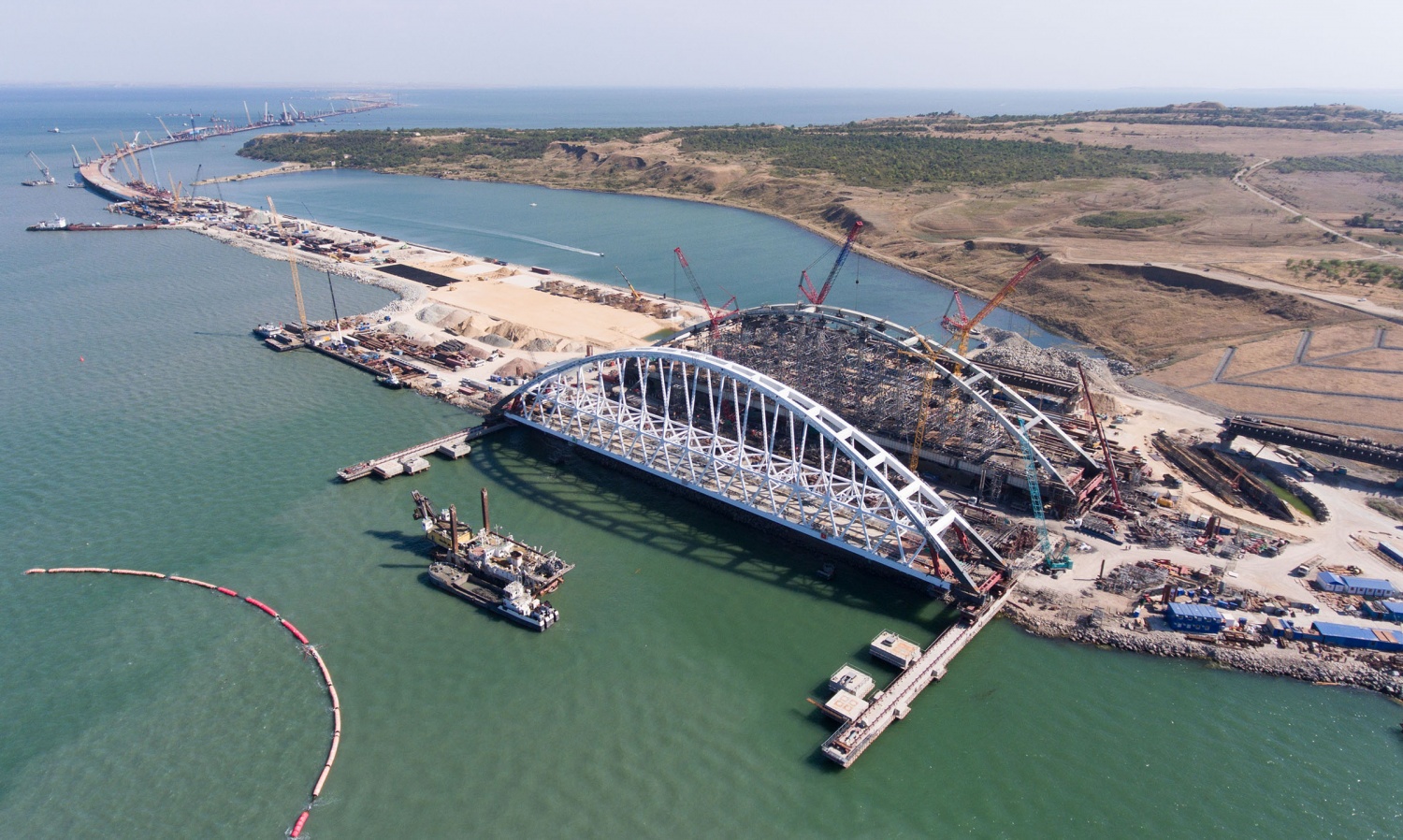
Construction of the Crimean bridge photo: pro-Taman.ru
Of course, it can be assumed that the decline in metallurgy in 2017 is due to the fact that the construction of the bridge in the Crimea annexed by Ukraine is approaching the completion. But where in this case to put an increase of 25% of the mortgage and boom of housing construction
Without impoverishment and increase
Throughout 2017, real (minus inflation) wages grew in Russia - and real disposable income also fell. This effect is not finally explained, but as of December it is clear how it should not be explained. This is not a deception of workers. This is not a reduction in the profit of private owners - they are relatively stable. This is not a mass entry of fellow citizens into loans - even taking into account new mortgages and consumer loans, the total debt of households in the economy (as well as the total debt of companies) is not particularly growing. So far, the only version in which you have to believe is the combination of stagnation in a poorly observed “gray” sector of the economy, where medium -sized companies are predominantly concentrated, a reduction in “gray” and unofficial payments, as well as a general reduction in economic “shadows”.
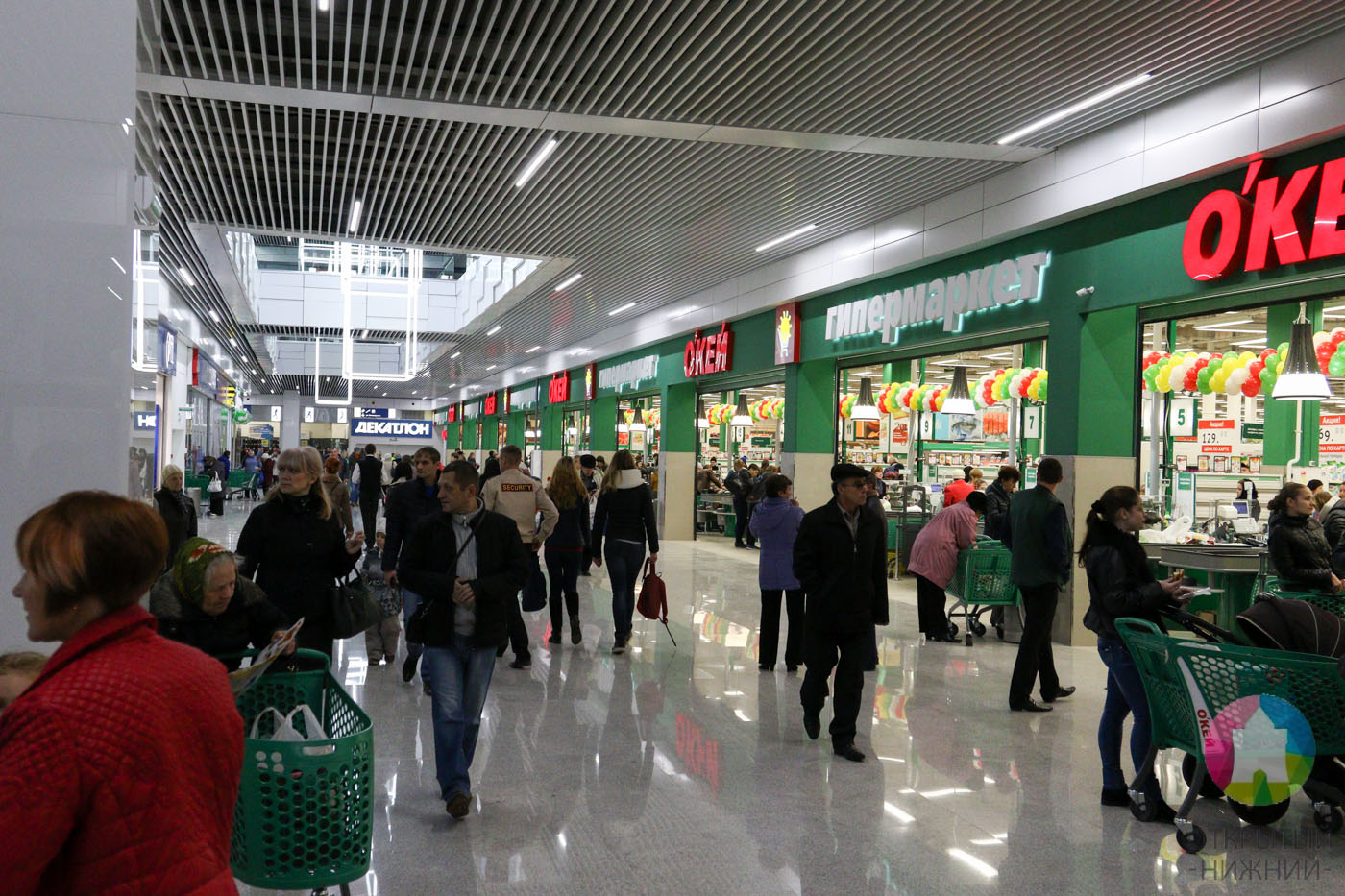
It would seem - is it bad that the “shadow” is reduced? Somewhere it is bad, in any case, do not think that this is definitely good. According to the results of financial stabilization of 2017, the alleged crisis of medium -sized companies in Russia is a large problem, the “shadow” itself is a rather effective damper of most economic shocks, and the strengthening of positions on the market of large companies, as a rule, are near state or state -owned ones, is a problem that is even considered in the Russian White House. However, in any case, when the Minister of Economics Maxim Oreshkin states that in 2018, real salaries will grow by 4%, and the real disposable income will cease to decline and, most likely, will grow - he has more grounds for this than the recession that suggest next year (reduction of GDP - the chances of this is small), the growth of social stratification (it is stable or even reduced), unemployment, unemployment, unemployment. (it is reduced), mortality and incidence (they are stable or decreased) and generally tangibly bad.
Yes, 1-2% of GDP growth for 2018–2020 is a lag from world growth of GDP, which is supposedly 3.5%: the US economy is growing, China will be supposed to grow by 5-6% (and, it is possible, will reach the Russian GDP per capita, although there is also a reverse hypothesis - that China’s economy will cease to grow at such a pace in the next 10 years), India - into - on the India - to - on the same 7% (from a very low start - five times less than in the Russian Federation), the only major economy with which we will grow at about the same pace is much richer than we, the European Union. The World Bank in 2017 already confidently believed that Russia is in a “trap of medium income” with a long (from 7 years) period of low stature and stagnation.
When the Minister of Economics Maxim Oreshkin states that in 2018, real salaries will grow by 4%, and the real disposable income will cease to decline and, most likely, will grow - he has more grounds for this than those who suggest next year
Risks
Even with an extremely negative attitude towards the current government, it makes sense to accept the main result of 2017 in the economy: “The Russian Fortress” has been built. And it was not built according to the scheme of the mobilization economy, but rather according to the textbooks of macroeconomics. And in a first approximation she was a success - in any case, as a fortress. Built by the Economic Bloc of the White House (in the broad sense - both the Central Bank and some of the governor’s corps and a number of state -owned companies are included there) in recent years the design looks for the coming years of stable. It is so stable that by the end of 2017 there is an almost single opinion among investors: the economic sanctions of 2018 can be unpleasant and even dangerous to specific people who will be in sanctions lists, but will not create big problems to the Russian economy as a whole.
The main risk is to miss the moment when the world economy is supposed to switch to new technological platforms. “Industry 4.0” is not fiction, and its achievements cannot be bought or imported
Quite a lot has already been said about the distant consequences of this strategy, but they are all really distant. Indeed, economic freedoms are nonlinear, but are associated with political. The thesis that the nationalization of the economy leads to a decrease in the efficiency of its work has not gone anywhere, like most problems associated with the structural restructuring of the world economy - it, apparently, will not be effectively integrated in the future only by superficial “digitalization” sponsored by the state. Finally, the consideration that economic development in authoritarian states somehow destabilizes the regime is apparently also true. Otherwise, Vladimir Putin would not have to literally plant Igor Sechin and Vladimir Yevtushenkov in December, who was almost doomed to sign a settlement agreement with each other.
The main risk is to miss the moment when the world economy is supposed to switch to new technological platforms. “Industry 4.0” (with all reservations that it is largely artificial now and is stimulated by state expenses in many countries of the world) is not fiction, and the problem is that its achievements, as it is supposed, cannot be bought or imported. If in short, the “digital factory” in today's sense of this technology can be bought in Finland or in Germany, but without the appropriate business device, including small ones, around it, in the appropriate ecosystem, it will not be profitable either in the domestic market or for export, moreover, it cannot be developed - it is assumed that this ecosystem is developing under the right conditions. The "fortress" does not imply the existence of such an ecosystem, it remains entirely in the 20th century. However, now it’s generally difficult to say that in the future world there will be with countries that will not be able to master new technological and managerial technologies - there are about half of them, Russia is clearly among them, and no one really knows what they will be busy in the economy of the future. But this is a question of 2023–2030, not 2018–2020s.
Increase in the middle level of trouble
What to wait for in 2018? Most likely, the “fortress Russia” will be a little more embellished. So, for example, there are little doubts that at the current levels of oil prices or even slightly lower (the best oil price forecast is always the current level of oil price) in 2018, the income of the population will cease to decline, there will be no budget crisis, consumption in Russia will remain at the level of 2017 or will be slightly higher due to a small increase in salaries and maintaining at the current level of real pensions, inflation will remain within 4% annual, dollar. The ruble will be stable, the unemployment rate will be the same as in 2017, or less, industrial production will not fall and will not grow.
At the price of oil below $ 40 for a barrel, we will return to the same situation as in 2014 - in essence, the “Russian fortress” is not built in order to withstand the whole world, but in order to survive the possible reduction of export revenues, but the efforts of government economists for the past three years increased the strength of the strength of the “fortresses” in this scenario. Paradoxically, now, with a greater likelihood, the whole structure can go with a sharp increase in oil prices - however, no one predicts them.