
Translated material
"Upward movement": three seconds of victory
Russian -made basketball blockbuster - the best New Year's premiere
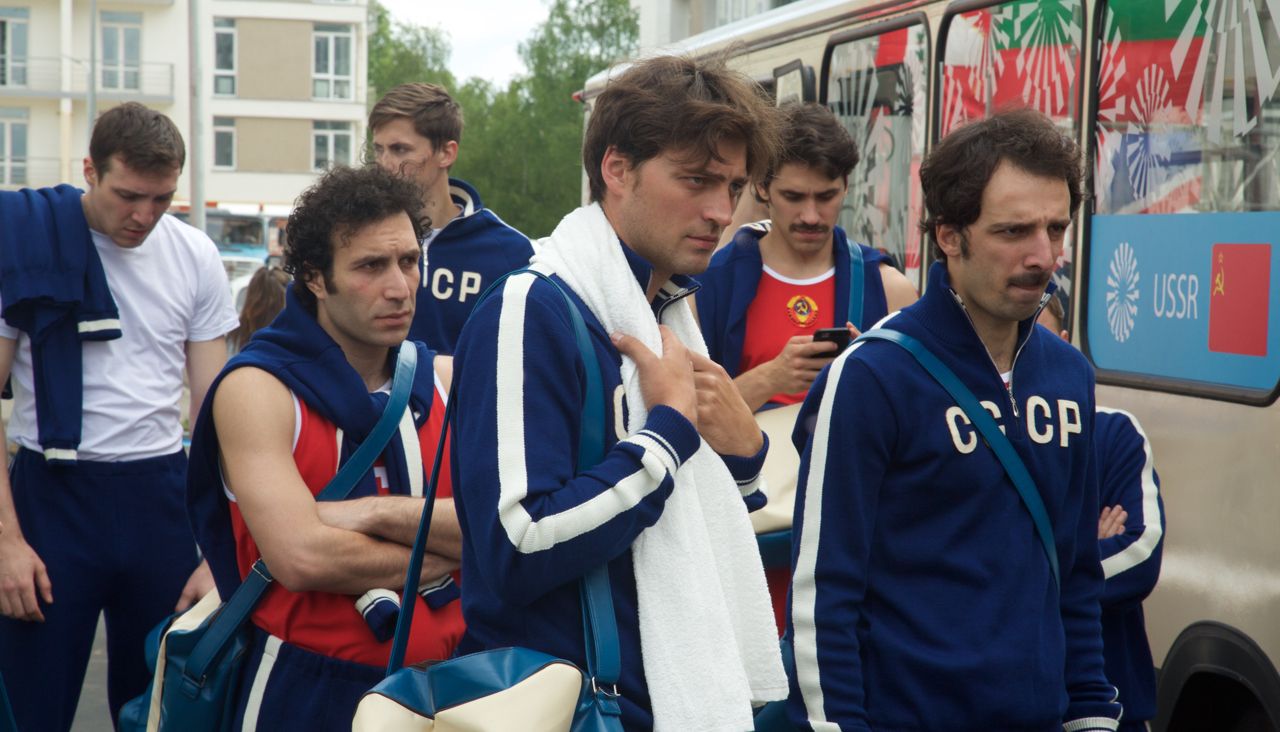
2017 was a shock year for Russian cinema-both for fees, and by the number of truly bright paintings. According to the film critic of Anton Dolina, the sports blockbuster "Movement Up", with which many will celebrate the New Year (there will be no comparable premieres in the rental), spectacularly completes the season.
“From the creators of“ Legends No. 17 ” - an announcement that explains a lot and obliges something. In “Movement Up” the same producers, Trith Studio, and the same screenwriter Nikolai Kulikov. But the main coincidence is in the genre: a blockbuster about the legendary victories of Soviet sports. In the case of "upward movement" the material is even more spectacular. In 1972, at the Olympics in Munich for the first time in 36 years, the American basketball team lost-not to anyone, but the Soviet team. The most curious thing is that the outcome of the match decided the last three seconds added by the referee. On the one hand, the plot is extremely cinematic. On the other hand, it can last only three seconds. The point is small: create a whole film around this moment.
The task is not so simple. Not everyone is fond of sports, not everyone has heard about the sensational plot or remembers. The recreation of the atmosphere of the USSR in the early 1970s is an expensive and complex process, but critics will still be found. They will accommodate a movie with reality, look for ten differences (they will find more). There is already a scandal: some prototypes (or their heirs) blessed the project, others sharply opposed him, and as a result, the legendary coach Vladimir Kondrashin, in order to avoid a judicial claim, became fictional Vladimir Gaundzhin on the screen. They changed the names of other characters, mainly related to the unofficial backstage of the legendary match and the personal life of the main characters. At the same time, all the players of the national team retained the surnames and a certain external resemblance to those whose roles play. However, all these nuances will pass by the viewer, who is interested in another: spectacle.
The "upward movement" is divided into two parts. The first is sustained in a completely Hollywood spirit. This is a very high -quality movie, professionally invented and collected, using all suitable cliches and acting on emotions (TRITE today, it seems, is the Russian studio that is closest to the definition of “Our Hollywood”). The authorities appoints the new coach to the basketball team, he gets acquainted with the players and forms the team, makes a sensational statement about his intention to defeat the American team and slowly moves towards this - we know, feasible - victory.
The second part is actually a match shown unusually meticulously. And this is a real triumph, comparable to what was won in 1972 Munich. All plot threads converge in one nervous tubal, and it is virtually impossible to break away from an unheard of technical spectacle. Artists play at the limit - exactly like their characters. The excitement is transmitted to the most apathetic spectators. For the first time in many years, Rapid was used in the case (“flight is the natural state of the basketball player,” says the coach). Even some operator and musical generalization of the picture, the lack of bright individual handwriting in these important areas, becomes a dignity: the match shot several operator teams, and on the screen it looks no less vital and at the same time exciting than a real sports duel. Technical tricks become as if invisible; We find ourselves in the stands, or even on the field. At times, I would like to draw a parallel with the Olympia Leni Rifenshtal - probably the greatest sports film in the history of cinema. Probably, we must clarify that the author of these lines to any sport and sports cinema is completely indifferent, so the victory of the film over his distrust is also a serious conquest.
Like a real Hollywood cinema, “upward movement” is the result of a team game. It is hard to say who, in this situation, director Anton Megerdichev, coach or captain of the national team. In any case, his experience in the movie about sports (“Fight with Shadow-2”) and the ability to create Saspens (“Metro”) here came in handy, as well as a unique sense of mounting rhythm. However, he is a sunbeam, the actors are more interesting to the viewer. Vladimir Mashkov as a coach mobilizes all his abilities, and the parallel with the game of Oleg Menshikov in Legend No. 17 will be justified. Marat Basharov (a disgusting official under the national team), Andrei Smolyakov (the minister of the regime familiar to compromises), Sergey Garmash (the power head of the state sports), Victoria Tolstoganova (coach wife) excellently play a “retinue”, which allows the hero to formulate the position and defend it until the last.
But, of course, the most important achievement of “upward movement” is in another. The basketball team in the film is an amazingly harmonious, coordinated and strong ensemble, which does not include a single truly famous artist: Ivan Kolesnikov, Kirill Zaitsev, Alexander Ryapolov, Kuzma Sapkin, Irakli Mikava, Otar Lordidkipanidze, James Tratas (tall and textured Lithuanian actor, perhaps the most bright of all, although allocate one of all, although allocating one Unjust). Separately, the small, but remarkably bright work of Alexandra Revenko, the actress of the Gogol Center, who first played in such a big movie. In this sense, “upward movement” is a really sports film that takes more playing and coherence than someone else's individual talent or charisma. This is also a Hollywood property that is extremely rare for domestic cinema.
It is clear that the viewer’s attitude to the “upward movement” is sewn in the very plan of the picture. For the majority, this is a nostalgic big movie about the conquests of the mythical great country - the USSR, whose heirs we were lucky. For a minority, a portion of tendential state propaganda on the topic "Once our packed Americans." Two polar positions will appear especially brightly against the background of recent Olympic revelations and scandals. However, the film, if you look at it, is much more complicated than these familiar patterns.
The most interesting underwater flow in the “upward movement” is associated precisely with the theme of patriotism. The struggle of Soviet and American athletes is a competition of two approaches. The Americans together sing the anthem, wave the flags, chant "USA!"; They really fight with the Communists from the Empire of Evil for the honor of their native country. Soviet basketball players have a different motivation. From the very beginning of the film, they receive one click from their homeland after another. Upon returning from the triumphal match, they are humiliated by customs officers. Bureaucrats are rude and insisted on their own. A seriously ill child is not allowed to perform surgery abroad. At every step, it is blackmail and crushed, not giving relief to anything: in the USSR it is impossible to be treated or marry of his own free will. Even cozy -looking machines with soda are spitting with water. It is not surprising that among the central characters there is an active anti -Soviet - Litovets Paulauskas. Yes, and the rest do not burn with the desire to suffer behind the power. In general, when at the beginning of the film Gaified the Guarantor says “there are no eternal empires,” I would like to attribute these words not only to the invincible USA, but also to the Soviet border state.
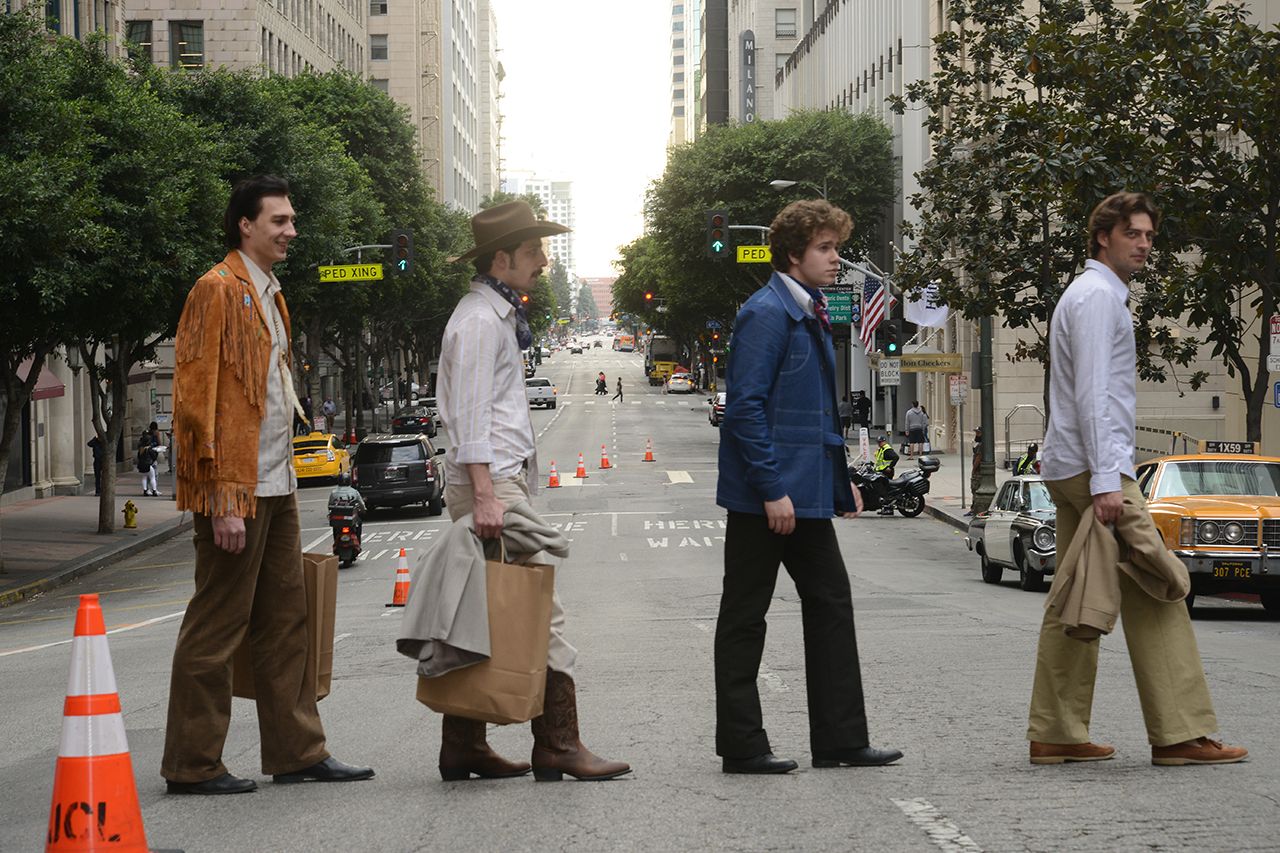
So why are basketball players fighting, setting an impossible goal? The answer comes at the moment shown in the film clearly, but delicately, is a terrorist attack at the Munich Olympiad. Politics in its very bloodthirsty production prevails over a surface sports utopia, forcing to forget about the borders for a while. A sense of kinship is above state interests and political strife. The heroes of the "Movement Up" go on the field not to fight for the prestige of the empire, but for their personal dignity. There is no higher freedom for a person than overcoming circumstances; For a person, there is no higher value than a brotherhood.
In the "Movement Up" there is no other Fatherland, except for a friend-fool who sometimes infuriates that unbearable; except for a sick child, who may not be able to cure something; In addition to the groom, who has a heart sarcoma, and he will only have nothing to live after the wedding. And there is no other happiness, except for tiny, albeit stretched out in screen time, three seconds - however, went down in history.
Anton Dolin