
Translated material
Long rulers
Vladimir Putin, who announced a new campaign in power, has someone to compete with
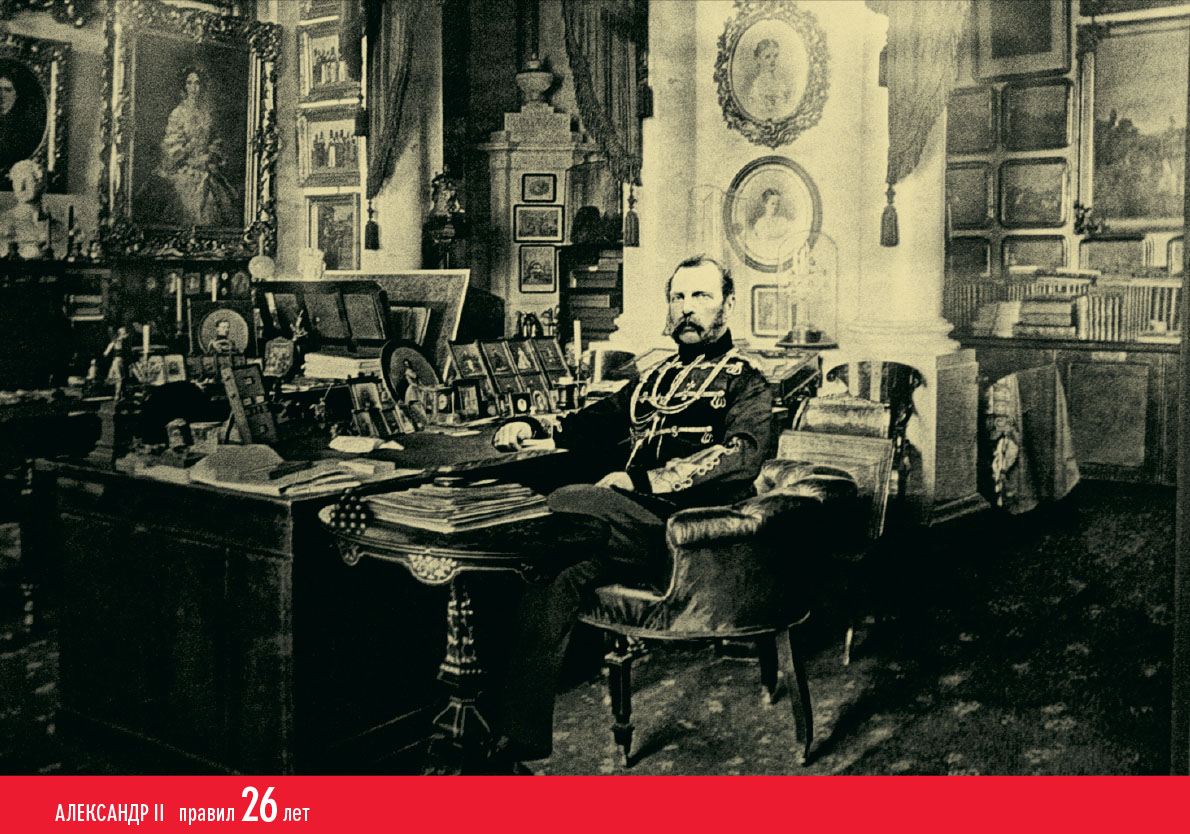
The longest period of reformist rule in Russia is the reign of Alexander II, called the liberator for the abolition of serfdom. Under him, judicial reform began, zemstvos (local self -government) appeared, other liberal transformations were carried out. The tsar-reformer died as a result of a terrorist attack organized by the Popular Volya party
Political scientists predict that taking into account another very likely presidential term, the total length of Vladimir Putin’s stay as a formal or actual head of state may be 24 years.
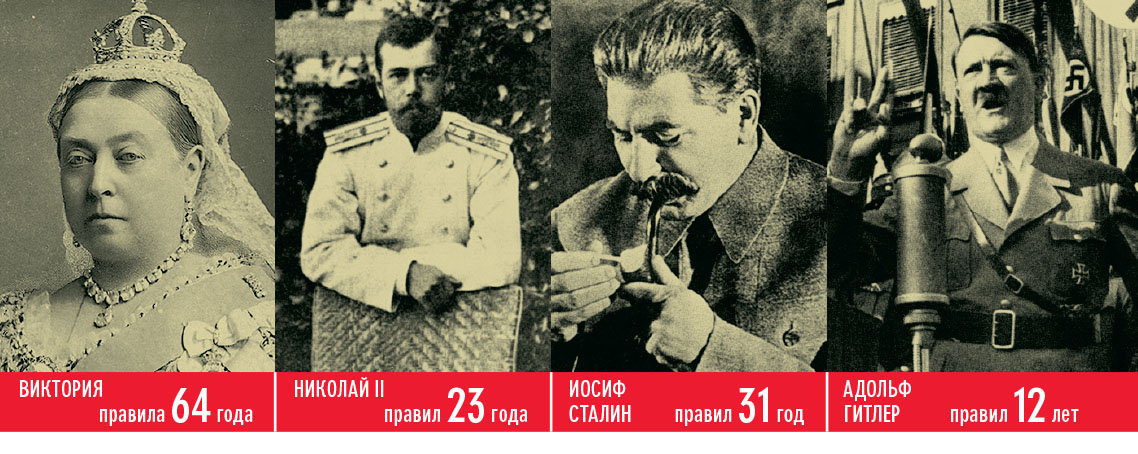
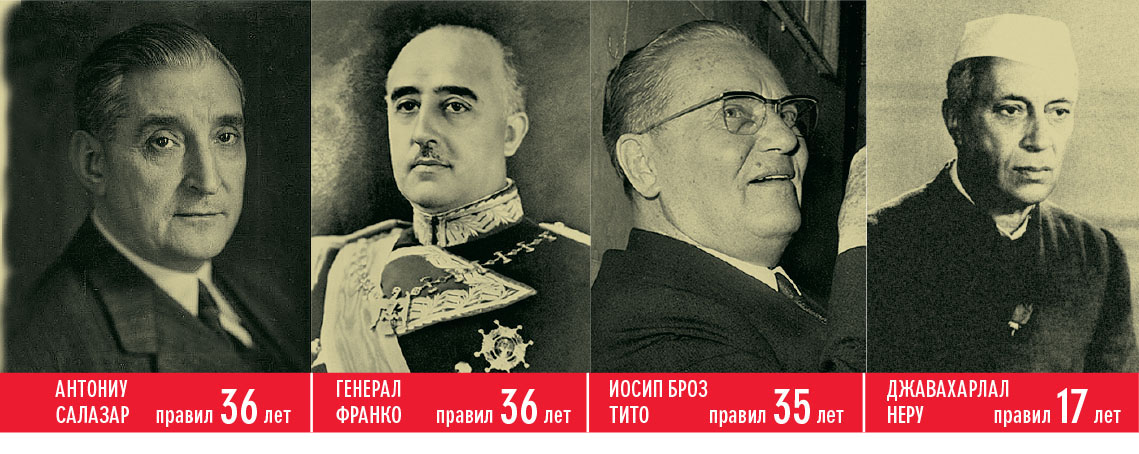
24 years - the figure is not unique. Especially when it comes to the dictator's reign. In recent history alone, so many years in power were the “Red Dracula” of Chaushescu (1965–1989) and Saddam Hussein (1979-2003). The general sad result unites them - both were eventually executed. Among the leaders of the USSR only Stalin ruled longer: since 1922, when he became general secretary of the Central Committee of the CPSU (b), and to death in 1953. However, the “leader of the peoples” managed to fully concentrate power in his hands only after the defeat of the Bukharin “right slope” in 1929. If from this moment the time of his absolute power is considered, then it turns out the same 24 years. The Brezhnev era against this background does not look so impressive: only 18 years old, from October 1964 to November 1982. As many rules in the GDR, Erich Honecker (1971–1989), eventually, fell on trial. Communist dictators in some other, “fraternal” and not very countries were in power a little longer. Mao Zedong - 27 years old (1949–1976), liberal against the backdrop of other colleagues on the social camp, Josip Broz Tito - 35. No wonder Koba envied him. The record holder among the communist rulers was Fidel Castro, who officially stayed as the leader of the Cuban Revolution from 1959 until the spring of 2011, when, due to health reasons, he was forced to finally transfer power to his brother Raul*.
* In his own words, Fidel Castro de facto left all the posts five years earlier, but formally this happened only in April 2011
The royal share
Against the backdrop of Soviet leaders, the last Russian king looks a little more modest. From the beginning of the reign in 1894, before the abdication in February 1917, Nicholas II served the duties of the “master of the Russian land” only 23 years. But his great -grandfather, Nicholas I, was in power for 30 years (1825–1855), exactly the first “stagnation” in Russian history continued so much: from the execution of the Decembrists to a shameful loss in the Crimean war. It was then that the third branch appeared in Russia and the theory of official nationality with the famous triad “Orthodoxy - autocracy - nationality” was created to this day.
The Nikolaev era is one of the longest periods of the reign of the same person in Russian history. It is customary to associate this time with the omnipotence of officials, Nicholas himself, as you know, said that it was not he who controls the country, but his ceremony. Which, however, did not prevent the tsar from interfering in the solution of the smallest issues: acting in the “manual control” mode, he personally approved military forms for various military branches. All civilian officials began to wear uniform under Nicholas. But the industrial revolution, which has reached the next peak in Western European countries, Russia once again missed. The steam engine, which became the norm for Europe, was known in Russia only by the Tsarskoye Selo Railway (then Rublevka) and with great difficulty built the St. Petersburg-Moscow highway. The rest of the country knew little about this miracle - approximately as in the era of today's “stability” new generation high -speed railways are available only to the extremely narrow circle of Russians from the capital's cities. The then 30-year stability turned into stagnation, the lack of changes in politics strongly slowed down the development of the country against the background of the then world leaders. The clumsy foreign policy, perhaps the main content of which was the struggle against democratic revolutions on a pan -European scale, perhaps for the first time united all the main European powers against Russia. However, the country was not ready for a large war: neither the modern fleet, nor the army appropriate for the industrial era, nor the railways along which the troops could quickly be transferred to the place of military operations at the right time did not turn out to be. And the Nikolaev “Vertical” itself was too clumsy and too corrupt to answer the challenges that the country faced in the middle of the 19th century.
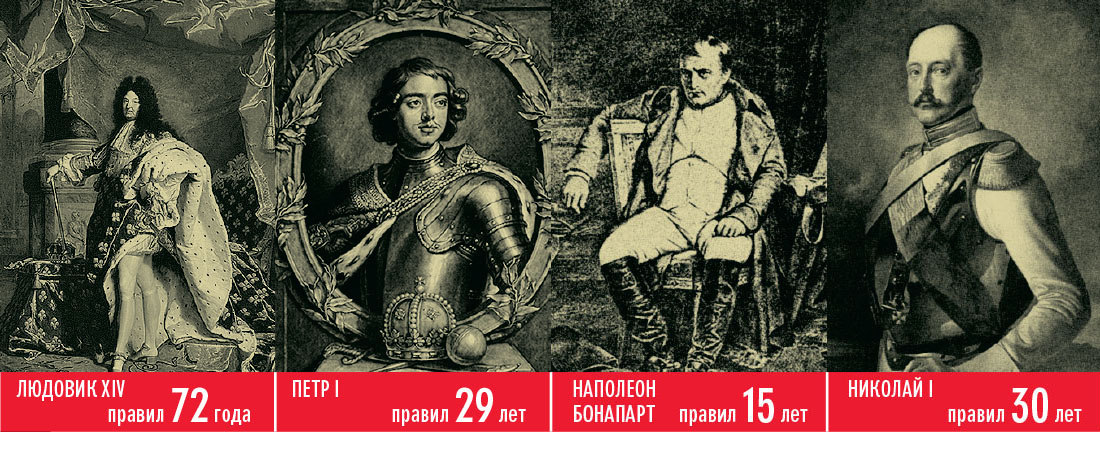
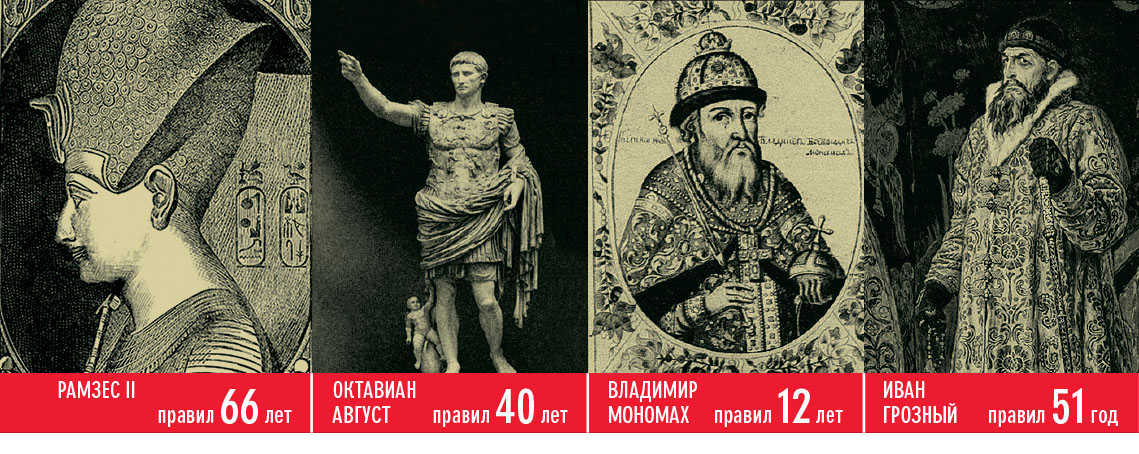
The first liberal perestroika replaced the Nikolaev stagnation, when the word “publicity” was first entered in Russia for the first time under Alexander II, serfdom was canceled, zemstvo and jury courts appeared, and lasted 26 years. The reign of the predecessor and at the same time autocratic tyrant Peter I-29 years old (1696–1725) took place somewhat longer, except for the period of his compassion, together with his brother Ivan under the regency of Princess Sophia (1682–1696). The longest of all Russian kings - 51 years - was formally in power Ivan the Terrible (1533–1584). The most gloomy were the last twenty years of his reign: in 1564, the tsar, as you know, staged his voluntary resignation, retired to the Alexander Sloboda, after which he sustained even wider powers and, relying on the support of the “loving people”, arranged an unprecedented oprichnaya terror. By the way, Tsar Ivan, who loved to amuse himself and the audience, in 1575, for a short time, made Simeon Bekbulatovich “Grand Duke” for himself, and then again took power into his own hands **.
** The New Times wrote in detail about this in No. 13 dated March 31, 2008
Whatever the “progressive role of the Army Army”, historians who relate themselves to the champions of Russian statehood, the reign of Ivan the Terrible was actually a very heavy blow precisely in the state. Experiments with an oprichnina undermined the role of class-representative institutions-the Boyar Duma and Zemstvo Cathedrals. Arbitrariness reigned in the country, in which no controlled “sovereign servants” quickly turned into ordinary bandits who robbed their own population. The country was completely exhausted by a long and meaningless war in the Baltic states, which was lost as a result. It is not surprising that some time after the death of John Vasilyevich, despite all the attempts of his successors to leve the situation, Russia turned out to be covered by an unprecedented trouble.
The limits of life
Vladimir Monomakh, whose hat is still mentally trying on the Russian rulers, was in power in Kyiv for only 12 years (1113–1125), to rule exactly so many limits of his own life allowed him. The lifelong government was the norm for the monarchs of antiquity and the Middle Ages, the “anointed of God”, whose authorities did not require a different explanation, except for their contemporaries of the fact that they were chosen to the kingdom by providence itself.
*** Hereinafter, the materials of the Felix Lurie directory "Russian and world history in the tables" are used. SPb., 1995.
The first in the world history of the monarchs-long-livers belonged to the ruled at the turn of the XIV and XIII centuries BC The Egyptian pharaoh Ramses II, known for the countless wives and concubines, as well as the fact that under him the first agreement was concluded in world history on the division of spheres of influence - between Egypt and the Hittite kingdom. The rule of Ramses II lasted 66 years ***. Having ruled at the previous line of millennia - before and after the Nativity of Christ - Tsar Herod I Great (37 BC - 4 years old AD) with his 40 years looks rather modest. Meanwhile, in Rome, about the same amount, the era of the principle of Octavian Augustus lasted. However, usually the majority of Roman emperors are not long. Caligula, who made his horse senator, was in power for only four years, one might say, the usual term of the board of the American president. Only, unlike most American presidents, leaving their post on the basis of the law and free elections, the Emperor's rule was interrupted as a result of a conspiracy and murder. Military coups arranged by the court guard are a famous scourge of sole rulers, whether in ancient Rome, noble Russia or Latin American republics.
In the case of luck, the monarch could nourish his subjects for decades, certainly receiving the titles of “sun -like”, “divine”, “ruler of the world”, etc. The classic example is the French king Louis XIV, the owner of the luxurious residence in Versailles, famous for his aphorism about the state: “Do you think, gentlemen, the state is you? He asked angrily, turning to his parliament. - You are mistaken! The state is me! " The reign of the Sun King lasted 72 years (1643–1715). And this record can be considered a symbolic apogee of the entire monarchical period of world history.
12 years for collapse
The age of rationalism, the era of enlightenment and the followed by the Great French Revolution of 1789 deprived the old monarchical order of the usual foundations. The invisible will of the Almighty could no longer be perceived as a serious argument in the eyes of an increasing number of people in Europe, and then in the rest of the world. The people were proclaimed a new source of power, and elections began to be used as a mechanism for the implementation of popular will. That is why the power of Queen Victoria, who was on the throne of the British Empire for 64 years (1837–1901), was formally limited by the elected parliament, and a significant part of the powers of the executive branch was already with the Prime Minister appointed by the Koroleva to represent the parliamentary majority. Formed, not by the executive vertical, but as a result of free elections. Of course, the Uzurpators of the authorities were always located. But their positions were not so strong. Along with direct violence and repression, I had to come up with all kinds of tricks so that everything looked legal: to imitate elections, popular love, make populist gestures, agree with elites.
The terms of government became more modest. The sole protectorate of Oliver Cromwell, who usurped power after the English revolution, lasted only five years (1653–1658). Napoleon Bonaparte from the moment of the coup of the 18th Bruster has been by the sole ruler of France for about 15 years. His nephew Louis Napoleon III, whose time has become a symbol of the heyday of corruption and the arbitrariness of the “new rich” in France, was in power in a total of 22 years (1848–1870). As a result, the case ended in the first advent of the Germans in Paris.
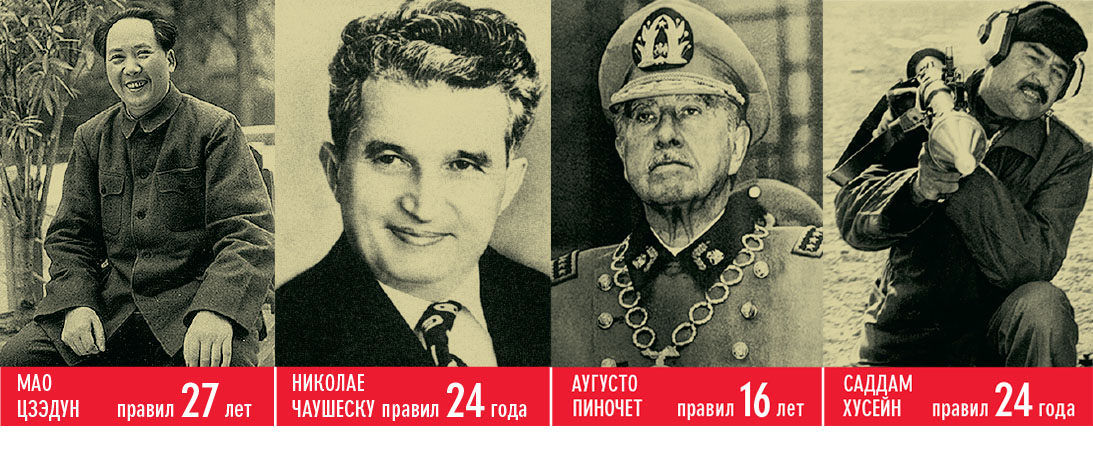
In the next century, Hitler was enough for 12 years to bring Germany to the most monstrous collapse in its history. In Europe of the 20th century, the dictators of Franco in Spain (1939–1975) and Salazar in Portugal (1932–1968) - 36 years each, ruled. The Salazarovsky regime, however, did not last long after the dictator left, until in 1974 he was overthrown as a result of the Portuguese “clove revolution”. General Pinochet, who was equally beloved by some of our liberals in power, was only 16 years old, after which he left his post relatively voluntarily.
A special way back
Periodic legal change of leaders is today the norm in most countries of the world. Especially those that are considered developed or dynamically developing. And this applies not only to the West, who is not loved by domestic advocates of the “special path”. Countries, whose successful experience is often appealing to us recently, in fact, have been used to one degree or another by civilized rotation mechanisms and a change of power. In India, for example, after Javaharlal Ner, who ruled this country immediately after gaining independence for 17 years (1947–1964), government change quite democratically. After the transition to a civil government in Brazil since the mid-1980s, the eighth legally elected president has been in power. Even in China, while maintaining the communist dictatorship, the fifth generation of senior leadership since the time of Mao Zedong ruled. The current chairman of the PRC Xi Jinping was elected to his post in 2012. His predecessors Jiang Zemin and Hu Jintao peacefully left this post after 10 years of successful rule each, and Dan Xiaopin held a formal post of head of state and only 8 years. So if the notorious Brik exists, then Russia with two more terms of President Putin will look in it a clear “white crow”.
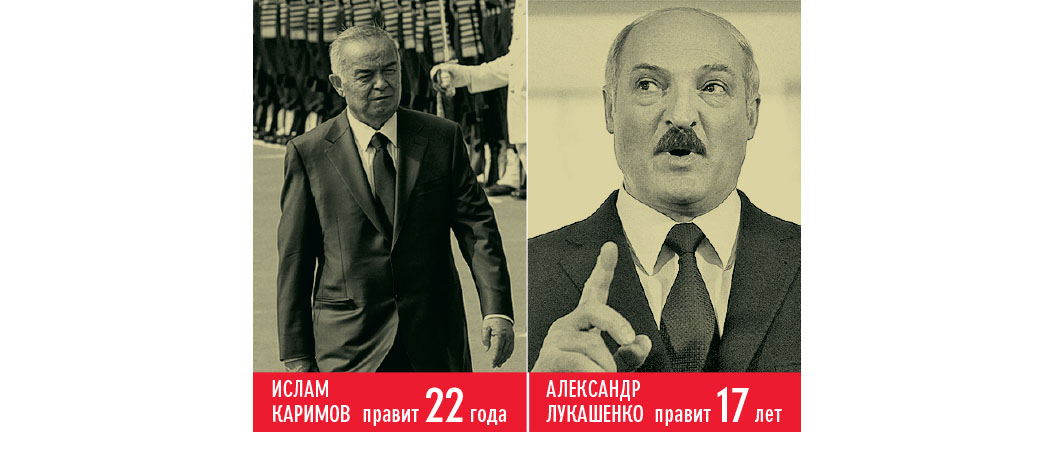
After the collapse of the modes of Mubarak and Gaddafi in the world, there are not so many rulers who claim to be life -long. A significant part of them was and is in the space of the former USSR. Karimov in Uzbekistan ruled from 1989 to 2016, Nazarbayev in power in Kazakhstan-from 1989, Rahmon in Tajikistan-since 1992, Lukashenko in Belarus-since 1994 ... and Turkmenbashi would undoubtedly remain at his post, if not for the sudden death in 2006.
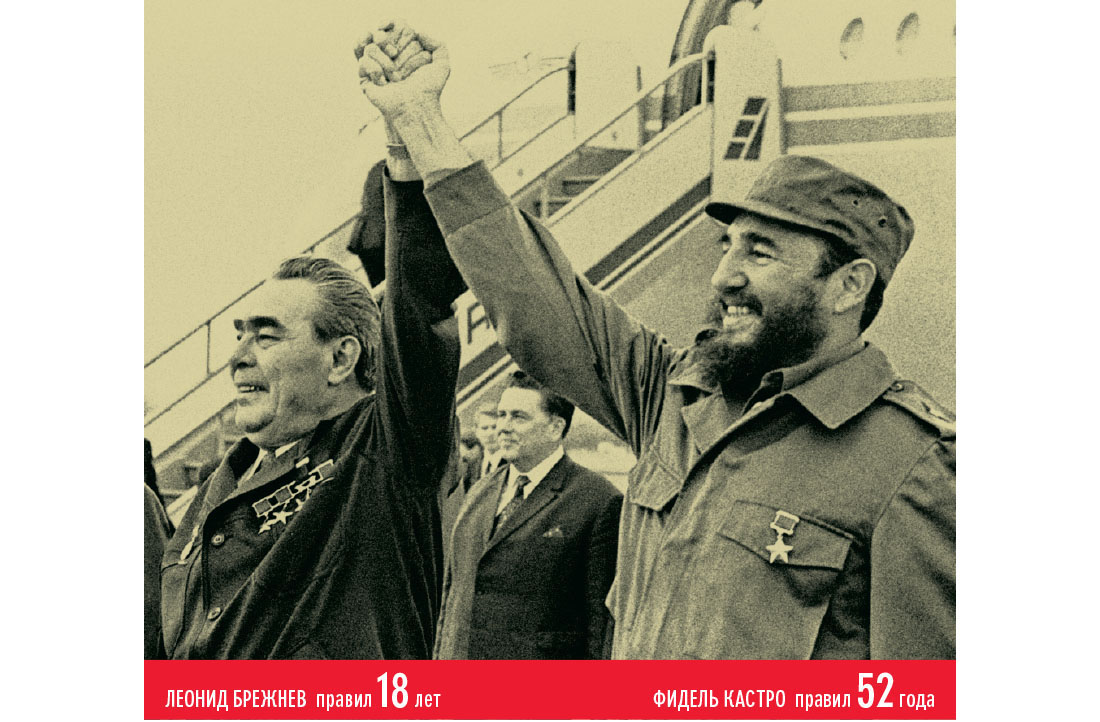
The Soviet leaders treated the revolutionary Cuba and its leader with particular tenderness.
The Secretary Generals changed, and the leader remained unchanged
Meanwhile, all of us, in the recent past, Soviet citizens, in fact, could continue to live under the rule of the only ruler. If Mikhail Gorbachev refused to carry out democratic reforms in the country, almost nothing in the political realities of the late USSR would prevent him from staying as the General Secretary of the Central Committee of the CPSU today. Many modest workers of Leningrad and other cities of the vast Soviet Motherland, if there were no perestroika, would surely perceive it for granted. However, instead of the next lifelong government over the past quarter century, Russia has experienced a whole era of freedom. Unprecedentedly long in the scale of their own history. And now we again turn back - during the time of the Secretary Generals and kings.
First published in NT No. 36 of October 31, 2011