
Translated material
Knocked from below
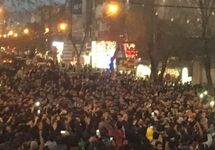
In Iran, anti -government street protests intensified, after two demonstrators were shot in the city of Dorud on Saturday evening, Reuters reports . The authorities accused the "enemies of the revolution" and "foreign agents" of their death.
The protests began with dissatisfaction with increasing food prices and have been going on for three days. Numerous demonstrations are held in many cities of Iran. Protesters express dissatisfaction with the state of the country's economy, the actions of the authorities and the participation of Iran in the war in Syria. In the city of Abkhar in the north of the country, the demonstrators set fire to huge posters with a portrait of the Supreme Ayatolla Iran Ali Khameni.
Participants in the protests set fire to police cars, attack buildings of banks and government institutions. In Arak, in the central part of Iran, the protesters set fire to the headquarters of the Property Organization of the Basij - the Iranian Polovnoye militia, which is part of the Corps of the Guardians of the Islamic Revolution.
Iranian security forces are used to accelerate protesting tear gas. Dozens of demonstrators were arrested. "Those who damage public security violate the rule of law and create riots, bear responsibility for their actions and pay a great price," the head of the country's Ministry of Internal Affairs said.
On Sunday night, the Iranian authorities began to block mobile Internet, Inquireer.com reports . Several leading providers are disabled in Tehran.
By the evening of Sunday, the Supreme National Security Council of Iran was completely blocked by Telegram, Samzi Popular Messenger in the country, and Instagram social network, Associated Press reports . It is alleged that this decision is temporary and is made to "maintain peace and security of citizens."
The protests became the largest demonstration of public disagreement with the policy of the Iranian authorities since large -scale processions in support of reforms and against elections in 2009.
In 2009, many thousands of manifestos and supporters of Mirkhosyn Musavi, leading the political rival of President Mahmud Akhmadinejad, were held in Iran. The demonstrations began after Akhmadinejad was declared the winner in the presidential election. Supporters of Musavi, who is considered a representative of the reformist wing, refused to recognize the official results of the vote and insisted on the victory of their candidate. According to law enforcement agencies, at least 30 people were killed in protests. Opposition groups argued that the number of dead exceeded 70 people.