
Translated material
Tale of lost time
As an American family has been fighting for five years for the right to complete the adoption of a girl from Russia. Report "Medusa"
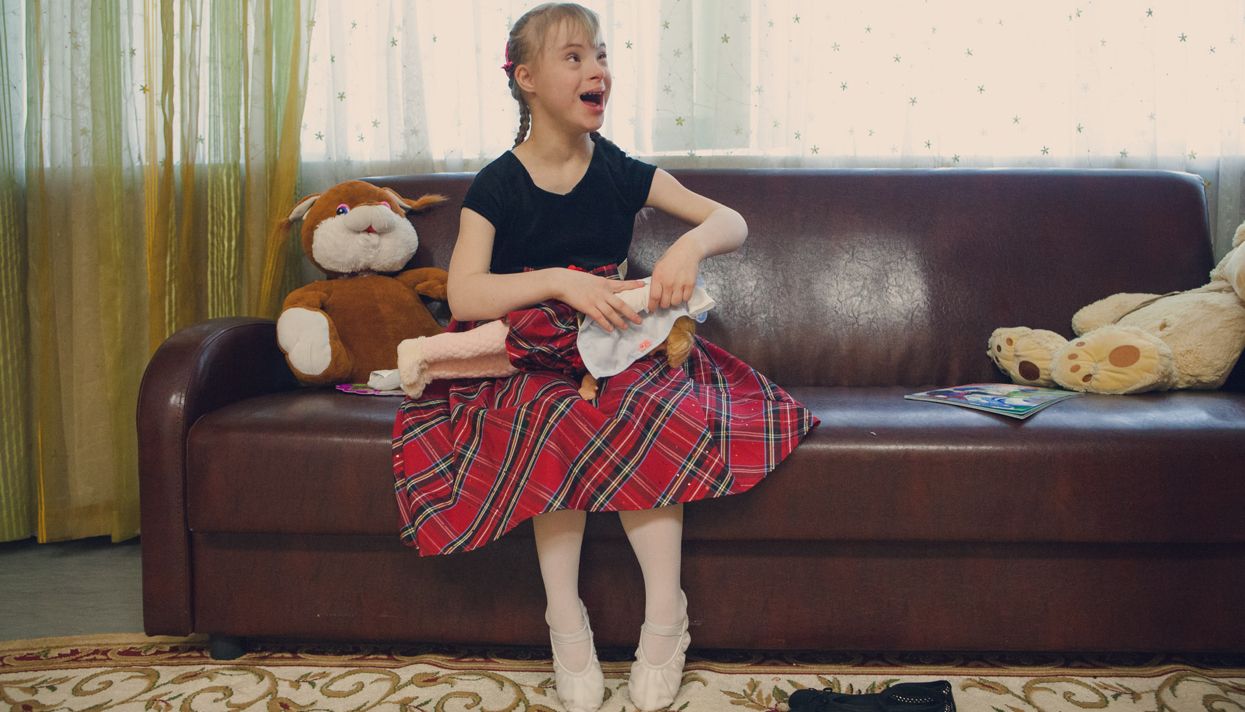
In December 2012, the Morris family from the American city of San Diego did not have enough for several days to complete the adoption of the Russian girl Lera with Dowun Syndrome- the Law of Dima Yakovlev entered into force, which forbade US citizens to adopt children from Russia. Morriers, like about thirty families who were in a similar position, began to fight: they created their own association, filed it on Russia in the European court, but only monetary compensation could win. Five years after the entry into force of the "anti -Sirot" law, they still continue to attempts to adopt Leru. The journalist of Echo of Moscow in St. Petersburg Maxim Yarygin met with a girl in the Peterhof boarding school and talked with her failed American family.
The southwestern outskirts of St. Petersburg, Petrodvortsovy district. In total, five kilometers from here are the famous Peterhof fountains and the residence of Vladimir Putin in Strelna, and here are broken roads, abandoned buildings and wastelands, including a boarding house No. 1 for children with mental development deviations. Along the way, we and my colleagues are in the store in the store-buy some sweets on the New Year's holiday in the boarding school.
One -story building behind an iron fence is painted in the colors of the rainbow. The pedestrian paths are all covered with ice to him, it is necessary to go along the rut remaining from the cars.
- To whom? From which group? - asks the woman who opened the door.
Upon learning that we came to Lera, the woman calls one of the colleagues and says: "Here relatives arrived." This is not true, however, the words about the arrivals of relatives are instantly scattered throughout the institution, and now we are already solemnly leading to the assembly hall.
“Come on, go further ... There, in the front row, maybe there are places,” they whisper to us. There are no free places, you have to sit on the floor. Open adults are around - parents (many give their children with deviations here, as they cannot cope with them) and educators. Many children are in wheelchairs.
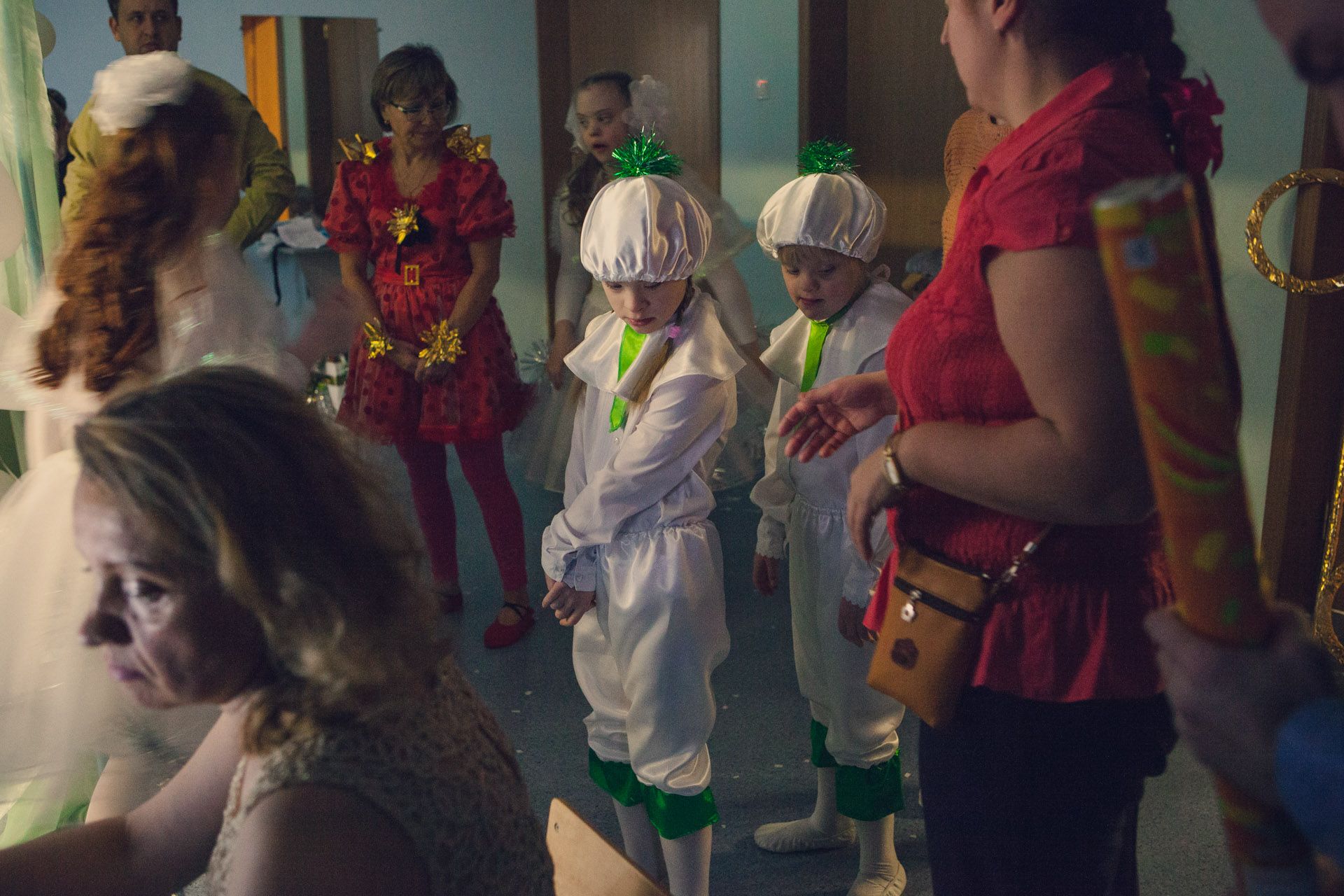
Children and educators play the "Tale of Lost Time." The presentation is also involved in the 12-year-old Lera. She has a Down syndrome, and she was supposed to be adopted by an American family five years ago. A few days before the adoption, a ban on the adoption of Russian children by US citizens - and Lera remained on the outskirts of St. Petersburg.
Complete confusion
A resident of the California city of San Diego Catherine Morris is now 49 years old, she is a housewife, and is engaged in raising children. She and her husband, engineer Stephen Morris, have four of them. These are three of their sons-two adults-and a 10-year-old daughter, adopted in the United States in 2010. In the summer of 2012, the family decided to adopt a child from Russia - Lerus.
The Morrisov family flew to get acquainted with Leroy in July 2012. According to Katrin, she wanted to adopt the child with just Dawn syndrome.
“We knew that we could ensure the right care and comfort, because I worked with such children before,” the woman explains. - I know: they have great potential, if they give them everything they need for rehabilitation and study. We decided to adopt a child from Russia - we always loved Russian culture, plus in the USA there are very few children with Down syndrome, which can be adopted. Almost everyone who did not terminate the pregnancy, learning about this, grow and raise such children on their own. But we knew that in Russia the situation is different. ” (According to the data that Kommersant cited , up to 50% of mothers refuse children with Down syndrome in Russia; in Soviet times, this indicator was much higher.)
In October 2012, Morrisa submitted all the documents to the St. Petersburg City Court for the adoption of Lera. On November 26, the court returned them and decided by December 30, 2012 to fix all the shortcomings.
The bill, which will prohibit the adoption of Lera, Katrin Morris found on the girl’s birthday - December 19. Even when the law was signed by President Putin on December 28, the Morris family thought that they would still be allowed to finish the procedure - after all, it was started when even the ideas of this law did not exist yet. “There was a complete confusion - it is generally not clear who will have time to adopt the child, and who is no longer there,” says Catherine Morris about those days. - The next four months, representatives of our government called us, said that they were trying to settle the issue of adoption with the Russian authorities. But in April 2013, we were told: "We stopped negotiating, you can adopt a child from another country, but not from Russia." " Then an official response came from the Russian authorities, it said that the appeal of Morrisov on the adoption was “returned to the database”.
Christmas miracle from Putin
Katrin Morris wrote to the Russian charitable organization Dawnside Ap, which helps families where children have Down syndrome. She asked to find a new family to Lera. She was told that this would be almost impossible - usually children with such a syndrome are not taken to foster families.
Then Morris began to fight. Due to the adoption procedure adopted in December 2012, in addition to Morris, they did not manage to complete another 30 American families. They were organized in a community called Parents United. Together, they are trying to find any ways to help children who have almost become part of their families. They collect money, try to attract American authorities and public organizations to the campaign for the abolition of Russian law - or at least for allowing the procedure that has begun before the ban.
Parents United wrote letters to the presidents Putin, Obama and Trump. For example, Putin in December 2013, Katrin Morris and other families asked to commit a “Christmas miracle” - and allow to complete the adoption. “We met beautiful Russian children whom your government has chosen for us many months ago. We loved these children. We held these children in our arms, and they conquered our hearts. We experience parental love for them, we dream of hugging them again and celebrating the New Year with them. As a parent, you are familiar with the joy and depth of paternal love, ”said American families to Russian president. There was no answer to him.
Parents United filed a lawsuit in the European Court of Human Rights - and won. In January 2017, the court admitted that their right to fair trial in Russia was violated-all trials to adopt by citizens of the United States Russian children since December 2012 were simply interrupted. But the ECHR did not have enough authority to let the Americans complete the adoption.
“We were awarded about 3 thousand dollars. But I do not need money, I want Lera can find a house and family, ”says Morris.
Morris and her associates recorded a video in which they talked about their situation. In 2016, the documentary “On the Moon and Back” was shot about these families, it was shown in the US Congress. Morrisi intend to fight to the end-that is, four more years: at the end of 2021, Lera will be 16 years old, and from this age, adoption is prohibited by American laws.
Most guys are doing well
Every year, the Morris family transmits gifts to the Peterhof boarding house-LER, other children from her group and staff. They never did this personally: according to Catherine, Russian officials warned her that such an act would contradict the law on adoption. Therefore, she sends packages with things and toys through friends and friends. This year she sent all the girls on a doll, and Lera was also a checkered dress and ballet shoes.
The director of the Peterhof boarding house No. 1 Valery Asikritov has been working here since its founding in 1986. According to him, orphans and children who were brought here, learning about the diagnosis, in the boarding school approximately in half (more than 300 wards live here). “Parents are simply not able to support such a child. Yes, and society is not ready for this. And the guys need constant medical care, says Asikritov. —The we communicate, share experience - we work with the Germans. They come there buses, transported by clinics, everything is fast. And here you will go to the clinic with your child, you need to defend a huge queue, then to another office behind the coupon. Well, you yourself understand everything. "
The New Year's performance ends, pupils are conducted in groups. Children see us for the first time, but some immediately run to hug.
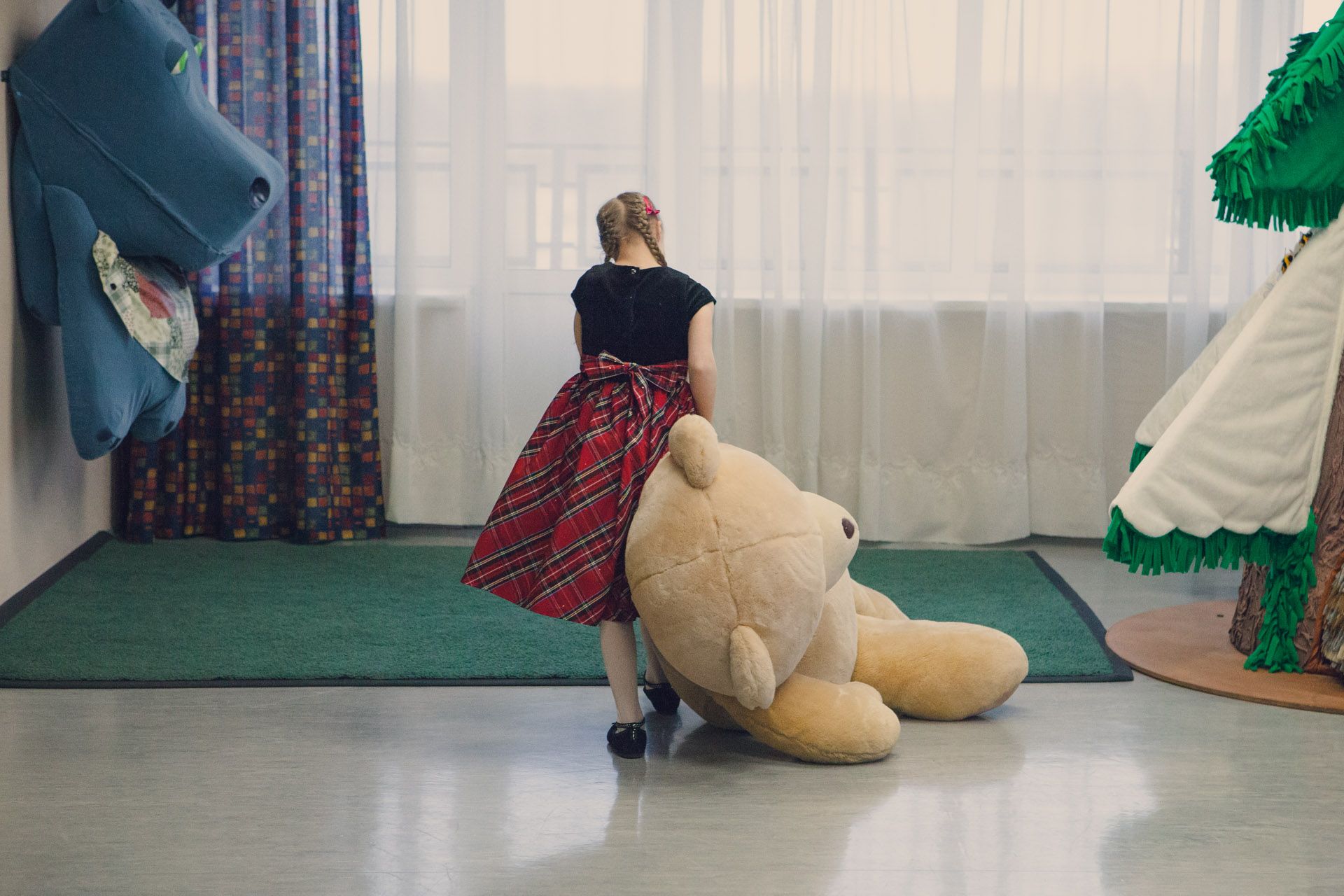
Lera also appears. Although we see each other for the first time, she knows that the guests came to her. Lera speaks with difficulty, but he understands everything. She immediately looks into a huge package brought, begins to get a gift from him for a gift. The girl immediately grabs the dress transferred to her and asks to help her to put on (it turns out to be just right); Then he runs to the game room, collects new and old toys in a pile and tries to hide them under a large carpet.
“As soon as this [prohibiting foreign adoption] the law appeared, I said that it would hit primarily in the most severe category of children,” Assycrites argues. - Well, they almost do not adopt them in Russia, and can create good conditions abroad. Here we had experience: one American family, took a boy with Down syndrome. We still maintain relations. And I see how he developed and changed, he became like his native children in this family. ”
“I communicate with many who adopted children from Russia. Most guys are very good, ”confirms Catherine Morris. - Some have features, including Down syndrome, but they study well, know how to read and go to school with other children. My heart hurts when I understand how much Lera missed, because we were not allowed to adopt her. ”
Maxim Yarygin , St. Petersburg