
Translated material
Titiev, Geriev, Kutaev. How human rights activists of Chechnya are accused of drug storage
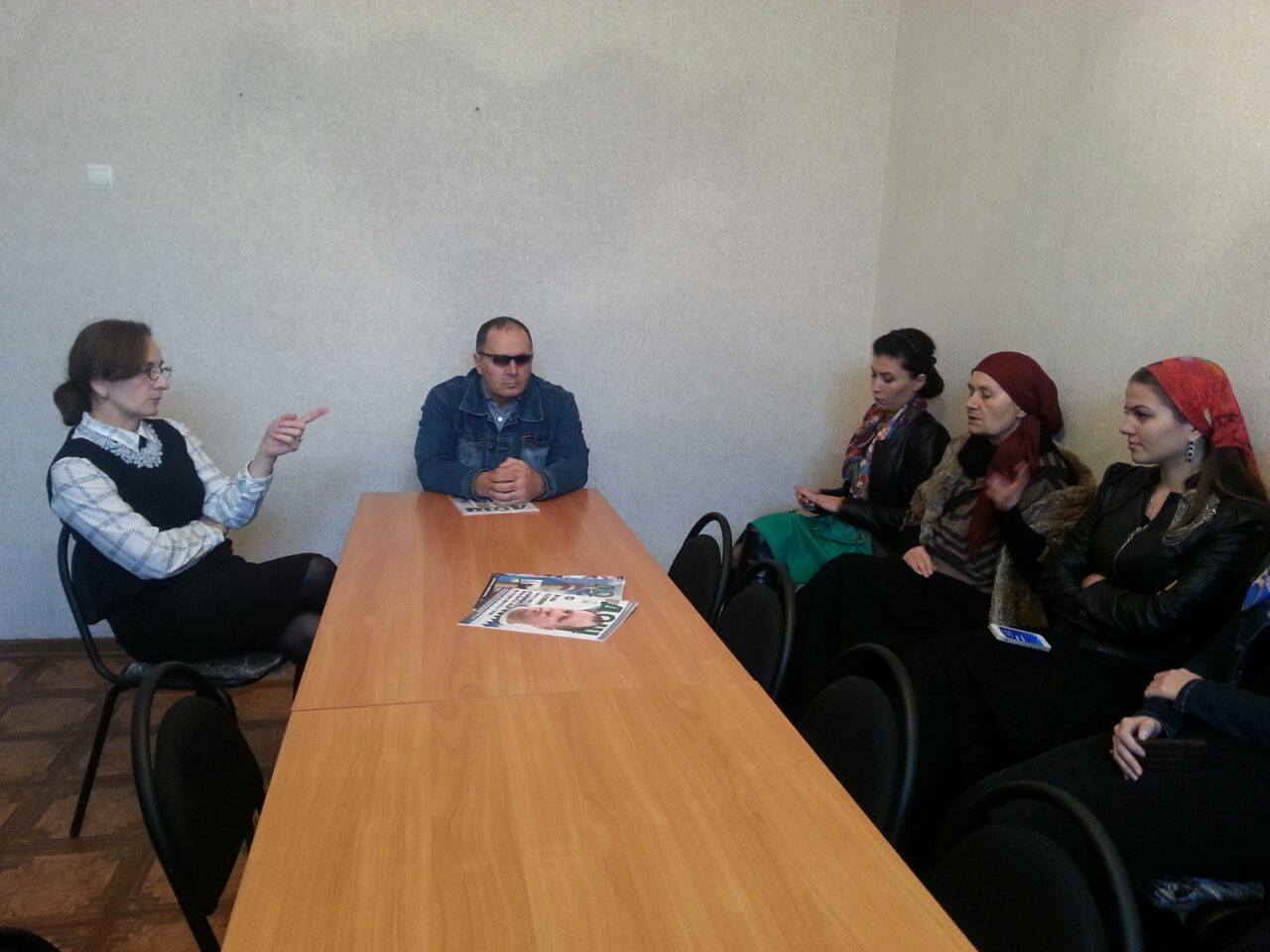
Oyub Titiev. Photo: Dosh Magazine
In Chechnya, on charges of drug storage, human rights activist Oyub Titiev was detained, who has been headed by the local Memorial branch since 2010. The Ministry of Internal Affairs of Chechnya argues that “during preventive measures” in the human rights activist was discovered “substance with the smell of marijuana”. Oleg Orlov, head of the Hot Pots program “Hot Pots” of the Memorial human rights center, is sure that the security forces threw drugs into Titiev’s car to prevent the investigation of 27 detainees in Chechnya. Under similar circumstances, public figure Ruslan Kutaev and journalist Jalaudi Geriev were already imprisoned.
The 60-year-old Oyub Titiev was detained by employees of the DPS of Chechnya on the morning of January 9, when he left his house in the village of Kurchali and went to meet his friend. The police stopped Titiev, searched his car, after which the human rights activist was detained to the police department in the Kurchaloevsky district.
“When looking for a car in her salon, police officers found a polymer package with a vegetable substance with a specific marijuana smell weighing about 180 grams,” the Ministry of Internal Affairs of the Chechen Republic said . According to the agency, Titiev is aimed at a medical examination, and the substance seized in his car is for examination.
For the past few months, Titiev and other employees of Memorial in Chechnya have worked in the case of 27 executed residents of the republic, says Oleg Orlov, head of the Hot Poles of the Memorial Human Rights Center: “We checked the information published by the New Gazeta, independently searched for confirmation. They worked on this case before the New Year and were going to continue this work. It was a priority for us. I think that the detention of Oyub is connected, inter alia, with this. We decided to remove us in this way. ”
According to Orlov, the lawyer is not allowed to Oyub Titiev all day, although the defender has been in the police department for several hours. The interests of the head of the Chechen "Memorial" are represented by lawyer Aslan Telhigov.
“The defender had a very short, episodic conversation with an investigator who told him that Oyub was involved in the 228th article of the Criminal Code, that is, for drugs. From here we can assume that during the search of his car, something was thrown there, ”says Orlov. - At the same time, the lawyer is now waiting, he did not see a single document on this case, there was not a single full conversation with the investigator and he also did not see Oyub. The case begins with the gross violation of the law of the law. ”
A member of the Human Rights Council under the head of Chechnya Hed Saratov was launched to Titiev. She told Novaya Gazeta that there were no visible traces of beatings in Titieva. The human rights activist categorically denies that a drug with drugs, allegedly found in the cabin of his car, belongs to him. Saratova says that Telkhigov’s lawyer was allowed to be detained with her.
Another defender of Titiev intends to become lawyer Petr Zaikin, who was engaged in the case of the Chechen human rights activist Ruslan Kutaev. On February 20, 2014, 57-year-old Kutaev was detained at home with his relative. During the search, the security forces found 3 grams of heroin in the pocket of the jacket of human rights activist.
Two days before the detention, Ruslan Kutaev held a scientific and historical conference dedicated to the deportation of the Chechen, Ingush and Balkarian peoples, the 70th anniversary of which was on February 23. The conference was organized despite the fact that the head of Chechnya Ramzan Kadyrov officially transferred mourning events in the republic on May 10, the 20th anniversary of the murder of his father Akhmat-Haji Kadyrov.
Close, acquaintances and colleagues Kutaev had no doubt that drugs were thrown by him. “They tortured me, beat every minute ... They were tortured in Grozny,” Kutaev himself said to his lawyer. He noted that he does not admit his guilt, but he is "tortured and threatened constantly." On July 7, 2014, the court in Chechnya sentenced Kutaev to the four years of the colony, and later the Supreme Court of the Republic reduced the term by two months. On December 20, the human rights activist was released.
“In my life, I have not drank a drop of alcohol! And everyone knows this - those who studied with me, who served in the army, a huge number of loved ones and friends. Everyone knows in Achkhoy-Martan! And when they accused me that I stored drugs, it caused not just indignation - it was hatred and contempt for those who started it against me. I did not suffer from this accusation at all - I knew that no one would ever believe this. Frankly, it was in my favor, ”he told Medusa after liberation. Drugs, according to Kutaev, were thrown back to him.
Another person involved in the case of drug storage in Chechnya was the correspondent of the "Caucasian Knot" by Jalaudi Geriyev. According to the investigation, he was detained on April 16, 2016 at the cemetery of one of the villages of Chechnya. During the search, the journalist found a large package of marijuana. The Memorial human rights center noted that the journalist was detained under other circumstances - on the morning of April 16, Geriev registered on a flight to Moscow and drove to Grozny Airport, but armed people pulled it out of the bus and put him in the car.
Goriev later said that the security forces were taken to the forest, beat, strangled and threatened with execution. They accused Geriev of working against the authorities of Chechnya and forced to confess to marijuana storage. The journalist later abandoned these testimonies. In September 2016, he was sentenced to three years in a general regime colony under Part 2 of Article 228 of the Criminal Code (large -scale drug trafficking).
In June 2017, Geriev filed a complaint with the European Court of Human Rights. “We assume a violation of the rights of Jalaudi, provided for in Articles 3, 6, 10 of the European Convention - the inadmissibility of brutal inhuman appeal and torture, the right to fair trial and the minimum guarantees of the rights of the defendant in the trial, as well as a violation of the right to freely expression of opinion,” said his lawyer Nadezhda Ermolaeva.