
Translated material
Heroes, outcasts, refuseniks
How the mass exchange of prisoners between Kyiv and Donbass passed
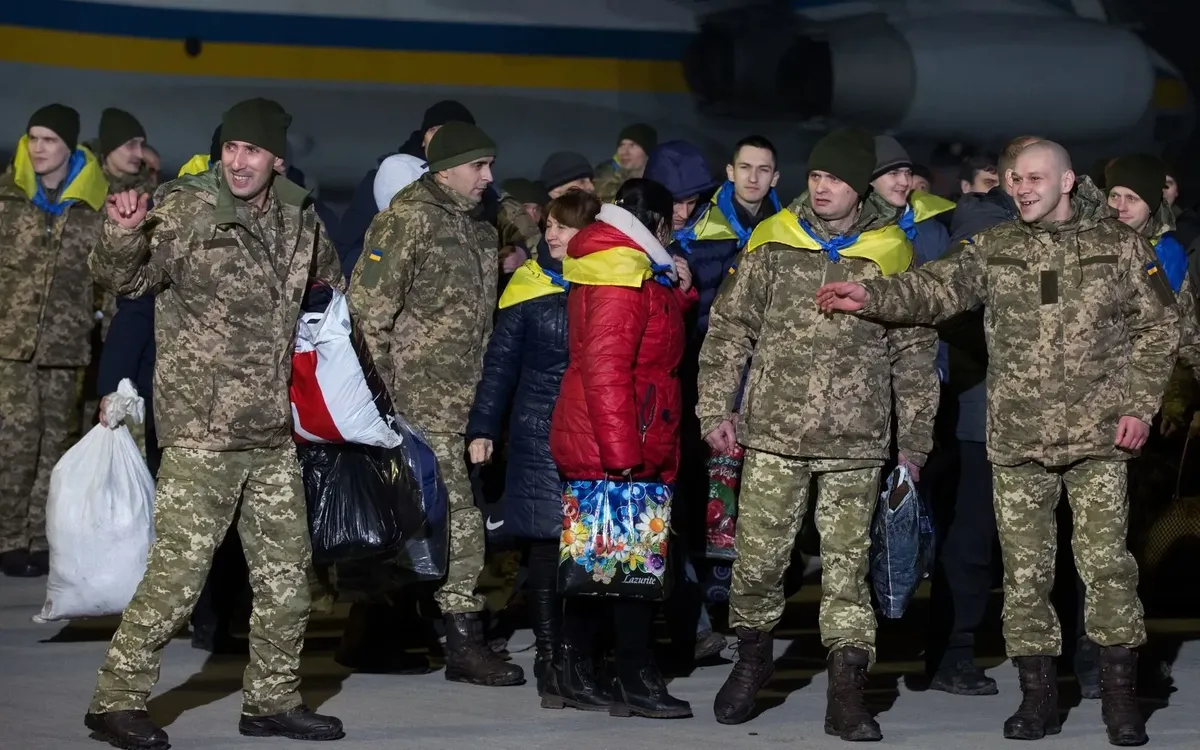
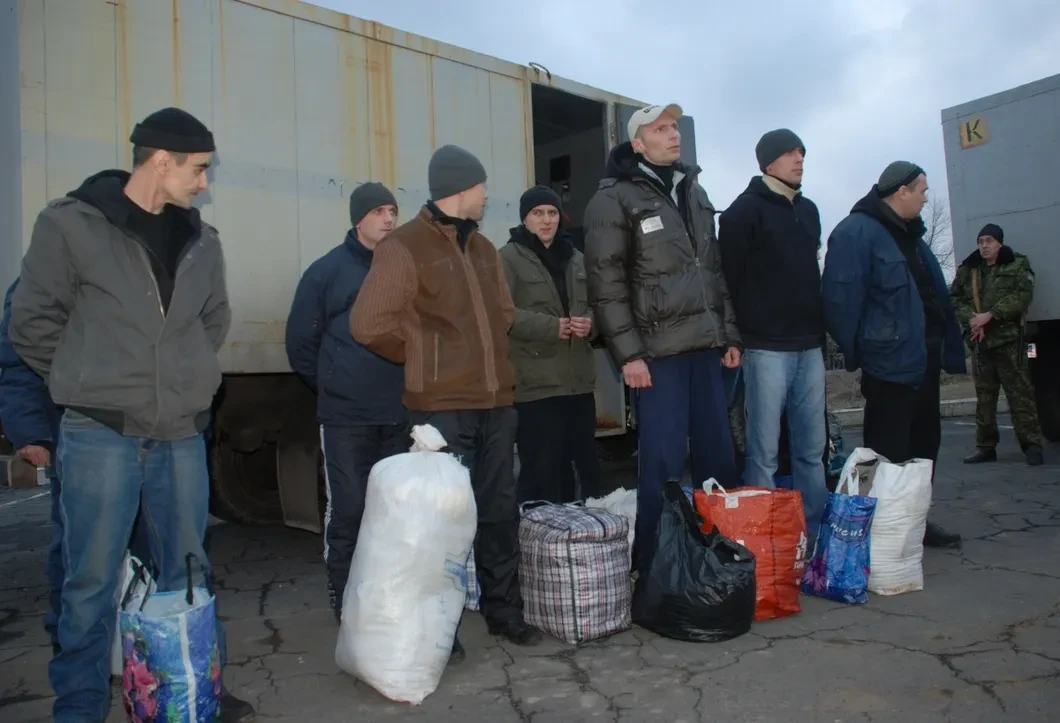
The exchange of the so -called “held persons” between Kiev and the self -proclaimed republics of Donbass nevertheless took place - for the first time in a year and a half. In September 2016, the scale was much more modest: the Ukrainian authorities transferred four and took two people, Yuri Suprun and Vladimir Zhemchugov, a disabled person, whose fate was told by the New Gazeta (see No. 104 of the New "of September 19, 2016). Now Kyiv and Lugansk were transferred to 74 people and took 233. This is less “plan”: the exchange was supposed to go through the scheme 306 to 74 - but still a great success.
At the end of December 2016, Taras Kolody, the last of the defenders of the Donetsk airport, was transferred to the Kyiv authorities. Then for the first time the church publicly acted as an intermediary. According to the Bishop of the UOC of the Moscow Patriarchate Clement (Supper), the colony of the DPR authorities was transferred at the request of Patriarch Kirill without oncoming conditions. True, at the same time, two Russian citizens held in the Secret prison of the SBU were unexpectedly taken out near Debaltseve and abandoned in the “gray zone”.
Over the past year, mutual and unilateral transfer of citizens of the Russian Federation and Ukraine occurred, but not exchanges between Kiev and Donbass.
The last mass exchange occurred in March 2015, just shortly after the Debaltsev operation and the conclusion of the Minsk agreements. Since then, their paragraph No. 6 (“all on all”) has been stubbornly ignored by the parties with indispensable shifting responsibility for the next disruption of negotiations. During this time, most of the “prisoners” on both sides of the conflict have already been convicted and turned into ordinary criminals from the point of view of law. Therefore, in the lists for exchange, which the parties were the last time verified (verified) back in May 2017, perhaps more than half were those who did not participate in the fighting in the Donbass.
Long path from the pre -trial detention center
The practice of “exchange” in the “DPR” or “LPR” of Ukrainians, who before detention in political articles have never been in the Donbass and, especially in the anti -terrorist operation zone, has a long history. So, back in December 2014, from the pre -trial detention center of Odessa, Vladislav Voitskhovsky was transferred to Lugansk, one of the surviving defenders of the House of Trade Unions. He celebrated the New Year already in combat positions. And where else was it possible to go in a foreign city without work, money and documents? Contrary to agreements, Ukraine still transfers its citizens with an incomplete package of documents or without them at all, moreover, there are frequent cases when criminal proceedings are reduced soon after the exchange.
It turns out that Kyiv itself makes from politically unreliable, but in general peaceful citizens of the “mercenaries” who really confront him with weapons in their hands. Vladislav Voitskhovsky, for example, still serves in the People’s Police "LPR".
But not everyone likes this prospect. If it is not possible to sit for long, it is much more profitable to free itself in the territory controlled by Kyiv and go out with legal status and all the necessary documents than to be in the Donbass without certain prospects and the ability to enter the territory controlled by Kyiv.
Obviously, guided by such motives, 29 people from the lists filed in May by the authorities of the self -proclaimed republics, in December, abandoned the exchange. Another 40 people during this time have already left the deadlines and ceased to be de jure and de facto “held persons”. For example, Anastasia Kovalenko, allegedly convicted of preparing a terrorist attack in Kyiv (we told her story in a large investigation about the situation with exchanges published almost two years ago), after liberation did not return to Lugansk, but remained in the capital of Ukraine, where she decided to start a new life.
This time, it was finally managed to exchange the Ukrainian military, Alexei Kirichenko and Evgeny Chudnetsov ( see No. 13 of the New ”dated February 8, 2016 ). Chudnetsov received a 30-year term at the DPR, so the exchange was his only chance. And Kirichenko is a captive record holder ( details - in No. 10 of February 1, 2016 ). He was among the defenders of the Saur-Mogila and first got to the basement, and then in a pre-trial detention center in the DPR on September 3, 2014. It turns out that he was not enough for the establishment of an “anti -record” - three and a half years in captivity.
By the way, most of the "held persons" were transferred to the "DPR". At the request of the Ukrainian side, the LPR gave 16 people, of which only 5 were fighters of the Armed Forces or volunteer battalions. In preparation for the exchange of the seven captured order of Igor Plotnitsky, who was then the head of the “LPR”, they allowed to call home and warn about the imminent return. As we know, Sergey Gladky, Anatoly Kucher, Vladislav Laktionov, Oleg Yakunin, Alexander Ishchuk, Valentin Bogdan and Artem Crina were indeed exchanged on December 27.
Those who have passed the exchange procedure early feel safe. They will be checked by special services for up to six months. This is partly an increased Chekist vigilance, but among the transmitted exchange and the truth can be recruited. In the end, the special services of both parties to the conflict act equally, because there are many immigrants from the SBU among the employees of the MGB of the self -proclaimed republics.
Fathers of the exchange
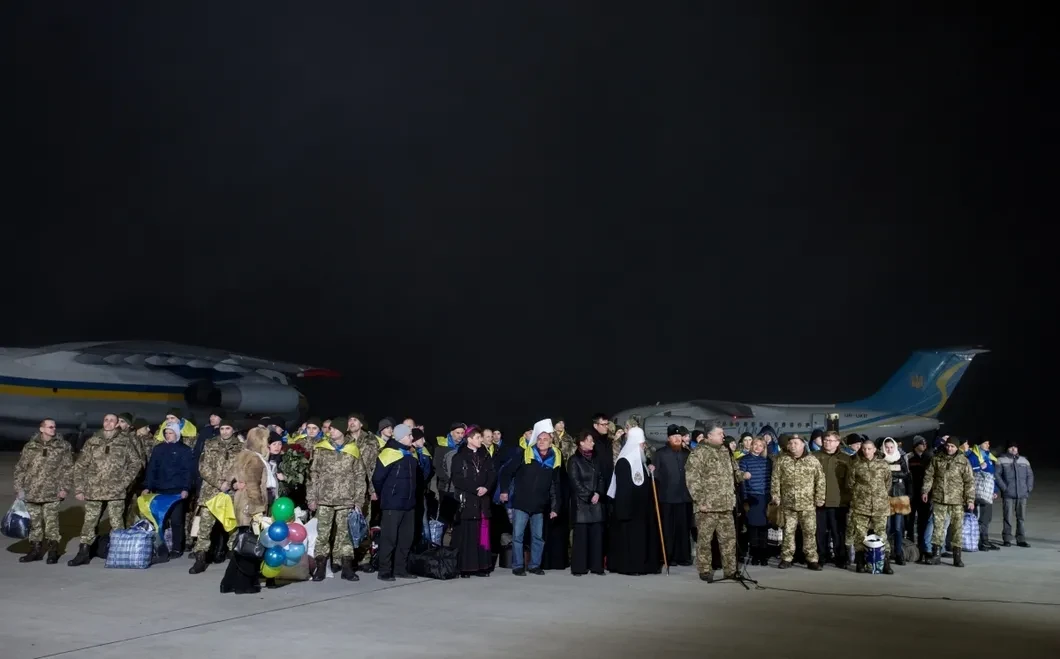
From a humanitarian point of view, the liberation of any person “held” by the war is an unconditional victory. But the exchange has a political side. For example, Petro Poroshenko flew into the ATO zone on this day and, putting on a military uniform, met the heroes. Among the first, he hugged and congratulated the fighters of the 40th motorized infantry battalion Nikolai Gerasimenko and Alexander Lazarenko, who were captured in February 2015 near Logvinovo as part of the Debaltsevo operation. Not everyone in Kyiv understood this step. In particular, the famous military volunteer Yuri Butusov on his Facebook asks the question of whether the Supreme Commander-in-Chief is ready to apologize to the heroes at the same time that it was the 40th battalion that was allegedly disbanded for the surrender of Logvinovo and defeat near Debaltseve?
Even less, apparently, Vitaly Shvaiko could count on an audience with the President of Ukraine. Since 2014, Schweiko headed the Lutuginsky scientific and production roller plant to the LPR, where military equipment was underway during all active hostilities from Ilovaysk to Debaltseve. We know several cases when the burned BTRs were re -melted at the factory, the crew members are still listed as missing.
Schweiko was a public figure, gave a lot of interviews in which he supported the LPR and Russia. But in March 2016, he was arrested by the LPR MGB for illegal operations with scrap metal.
Since 2014, Schweiko was on the Little Litigation Lists, but unexpectedly disappeared from there a month and a half before the exchange. And now he is already pressing his hand to the President of Ukraine.
Petro Poroshenko, by the way, is well acquainted with his cousin. Igor Schweiko was the Minister of Agrarian Policy in the Yatsenyuk office until December 2014, that is, under the President of Poroshenko. And now Igor Shvaiko is under investigation on charges of organizing riots near the Verkhovna Rada building in July 2015.
In general, it seems that the apparatus of Petro Poroshenko, let’s say, did not carefully prepare the supreme commander in chief for a visit to the ATO zone. Moreover, as far as we know, the President of Ukraine practically did not participate in the preparation and conduct of this exchange. A key role, and this is recognized by everyone who was directly related to the procedure, played by Viktor Medvedchuk.
Medvedchuk, the head of the Ukrainian Choice movement, holds the position of special representative of Ukraine on humanitarian issues in a tripartite contact group that implements the Minsk agreements. That is, in fairness, for the sake of Medvedchuk, not only the laurels for the current exchange should take on, but also part of the complaints about all the others that have not happened in the last year and nine months.
But this time Medvedchuk used three trump cards at once.
Firstly, he turned to Russian President Vladimir Putin, with whom, according to the persistent conviction of all Ukrainians, related relationships are associated. So or not, but it was after communicating with Medvedchuk to Putin for the first time in history personally called the heads of the self -proclaimed republics, and it became clear: the exchange would not break from Lugansk and Donetsk.
Secondly, Medvedchuk also found a public ally in Russia-Patriarch Kirill, who seems to intend to emphasize the role of the Russian Orthodox Church as a peacekeeper in a conflict in the Donbass.
Finally, as far as we know, Medvedchuk has been actively dating diplomats from Germany and France in recent months. It was the pressure of the European participants in the Norman Four that a breakdown of the exchange of an uncomfortable script for Kyiv.
Whether it was a single success or Medvedchuk will be able to become a really important figure from the point of view of the implementation of the Minsk agreements, we will find out soon. Discussion of the second stage of exchange is scheduled for January 10.